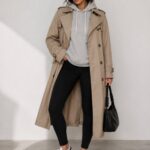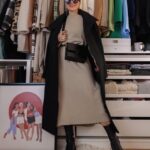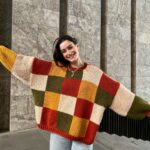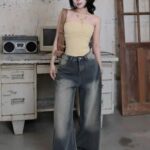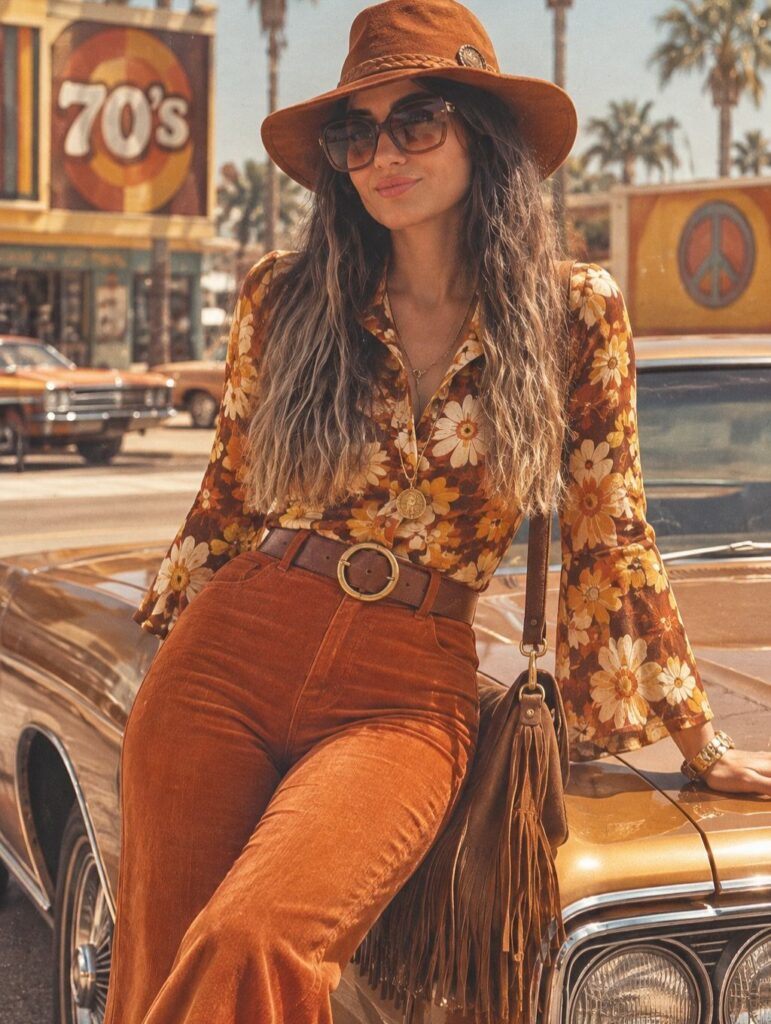
The 12 ideas below start small with a fringed crossbody bag over jeans you already own, and run all the way to a full sequined disco set that needs the right night out.
What decides which one belongs in your closet is how far you are willing to let the decade show: one piece reads as influence, head-to-toe reads as costume.
1. Bohemian Dresses
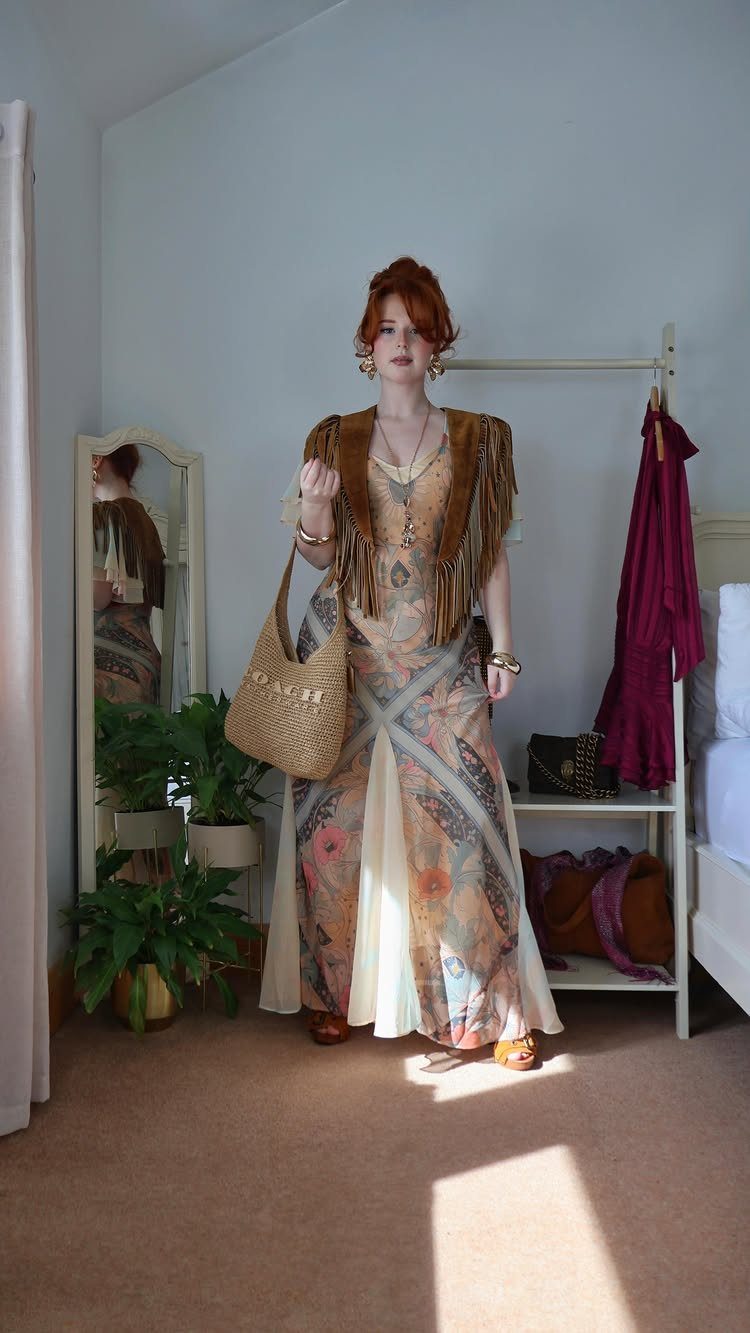
A boho maxi dress in bright cotton with a busy print reads as summer the moment you put it on.
The cut is forgiving and the fabric breathes, which matters when you are carrying a woven bag and walking somewhere warm.
Oversized sunglasses and one long strand of beads finish this look without piling on more fringe; the vest alone carries the 70s feel.
For a cooler day, a short tunic shift with embroidery or a denim jumper over a blouse keeps the same spirit. Low block heels finish it without trying too hard.
2. Bell-Bottoms
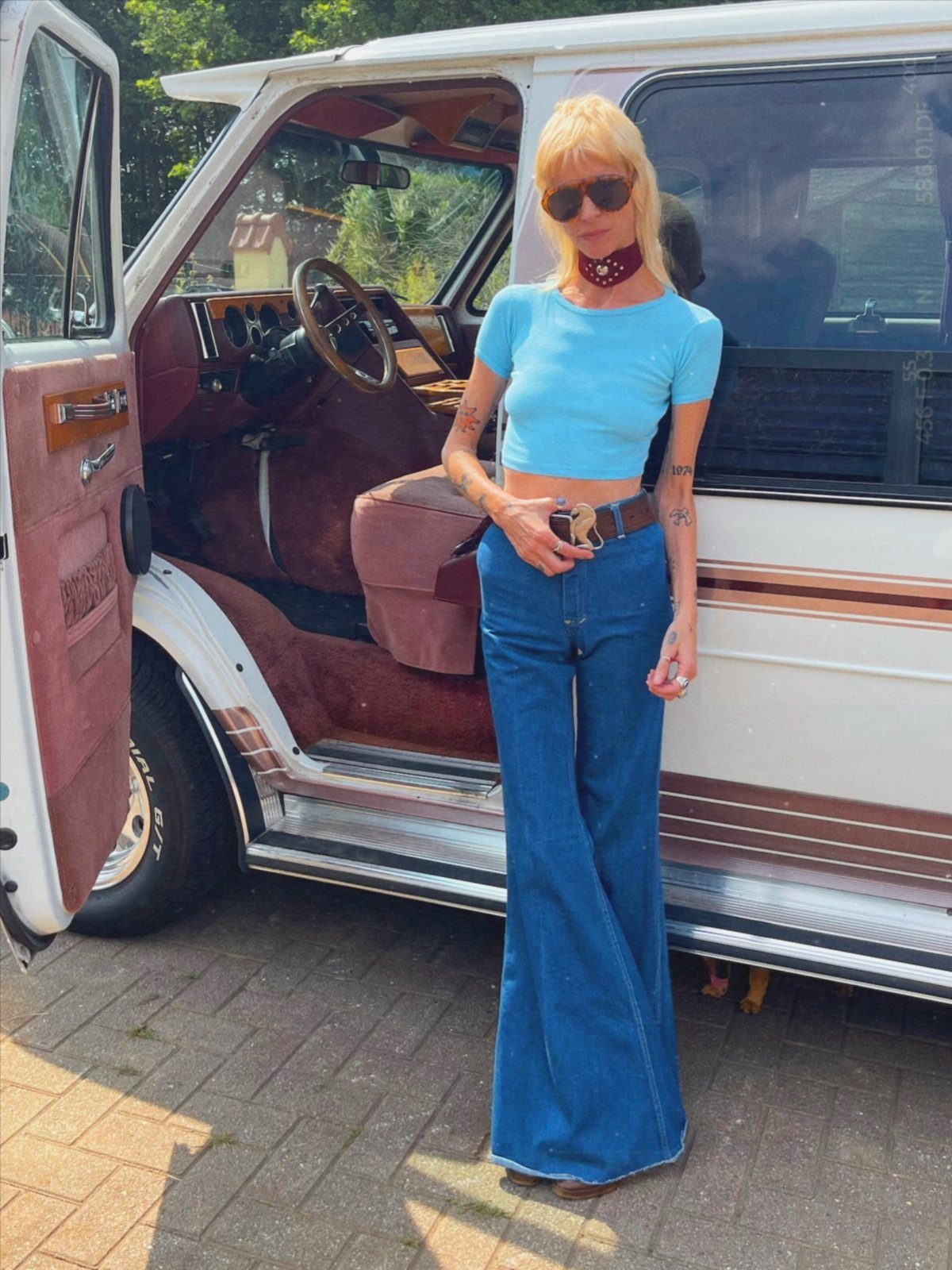
Bell-bottoms give you the longest leg line of any jean shape, period. The high waist and dramatic flare starting at the knee do the work that tailoring otherwise would.
I reach for them in dark denim when I want something that pairs with a fitted tee or a tucked blouse for daytime; bold colors read more costume and need a plainer top to balance.
The rise sits higher than most modern cuts, so check the measurement before ordering. They work with platforms, clogs, or a low boot, anything that adds a little height so the hem does not drag.
3. Platform Shoes
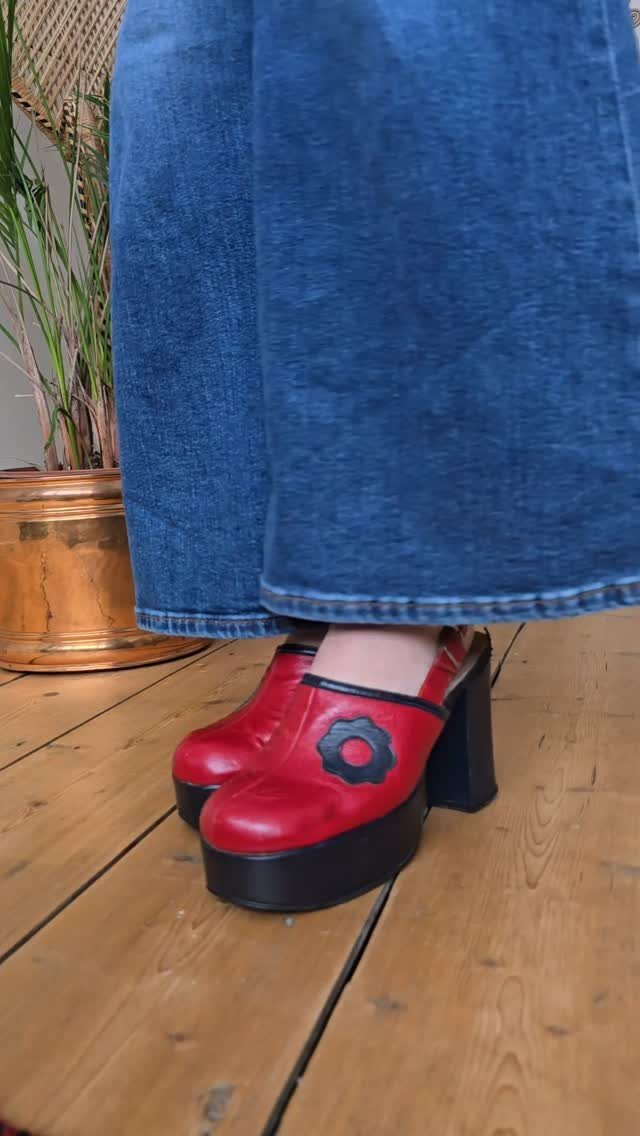
Platform shoes add inches without the pitch of a stiletto, which is why they stayed popular through a decade of dancing.
A chunky sole in red leather or a neutral suede works with flares, maxi dresses, or even straight jeans that need lift. I prefer a square toe for the true 70s line; round or pointed toes read later.
Thigh-high lace-up boots are the statement version if you already own the rest of the look. For daily wear, a platform loafer or ankle boot in black or brown is easier and still carries the silhouette.
4. Fringe Bags
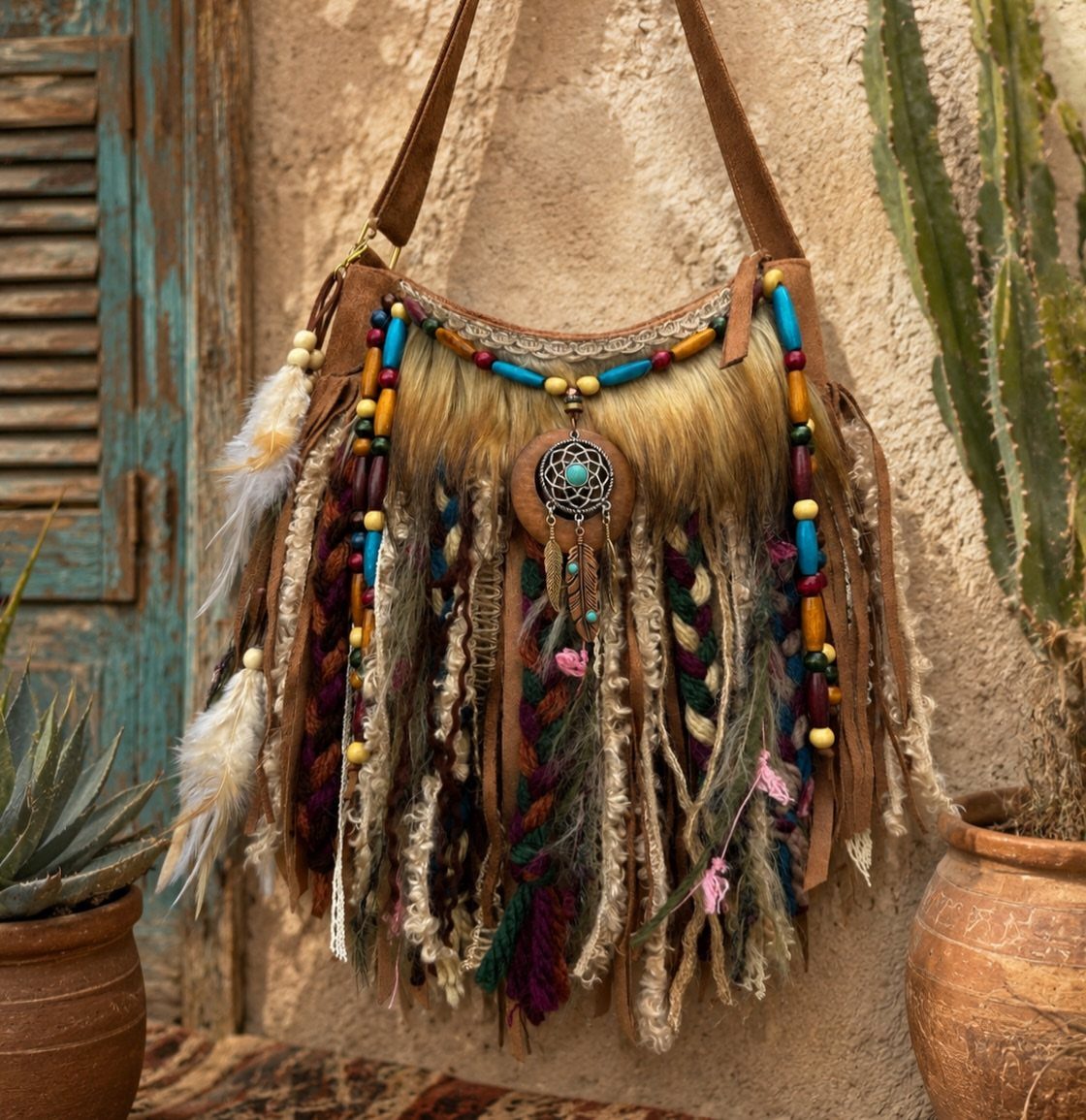
Fringe on a bag moves when you walk, and that motion is what makes it interesting.
The suede and yarn version is heavy with braid and bead detail, a piece that does not need much else. I would wear it with a simple dress or a plain tee and jeans so it stays the focus.
Fringe also shows up on vests and jackets if you want the texture closer in; a cropped suede jacket with denim and boots is the practical route.
The dreamcatcher medallion is optional. A plainer fringed crossbody in tan leather gives the same sway without the festival signaling.
5. Disco Outfits
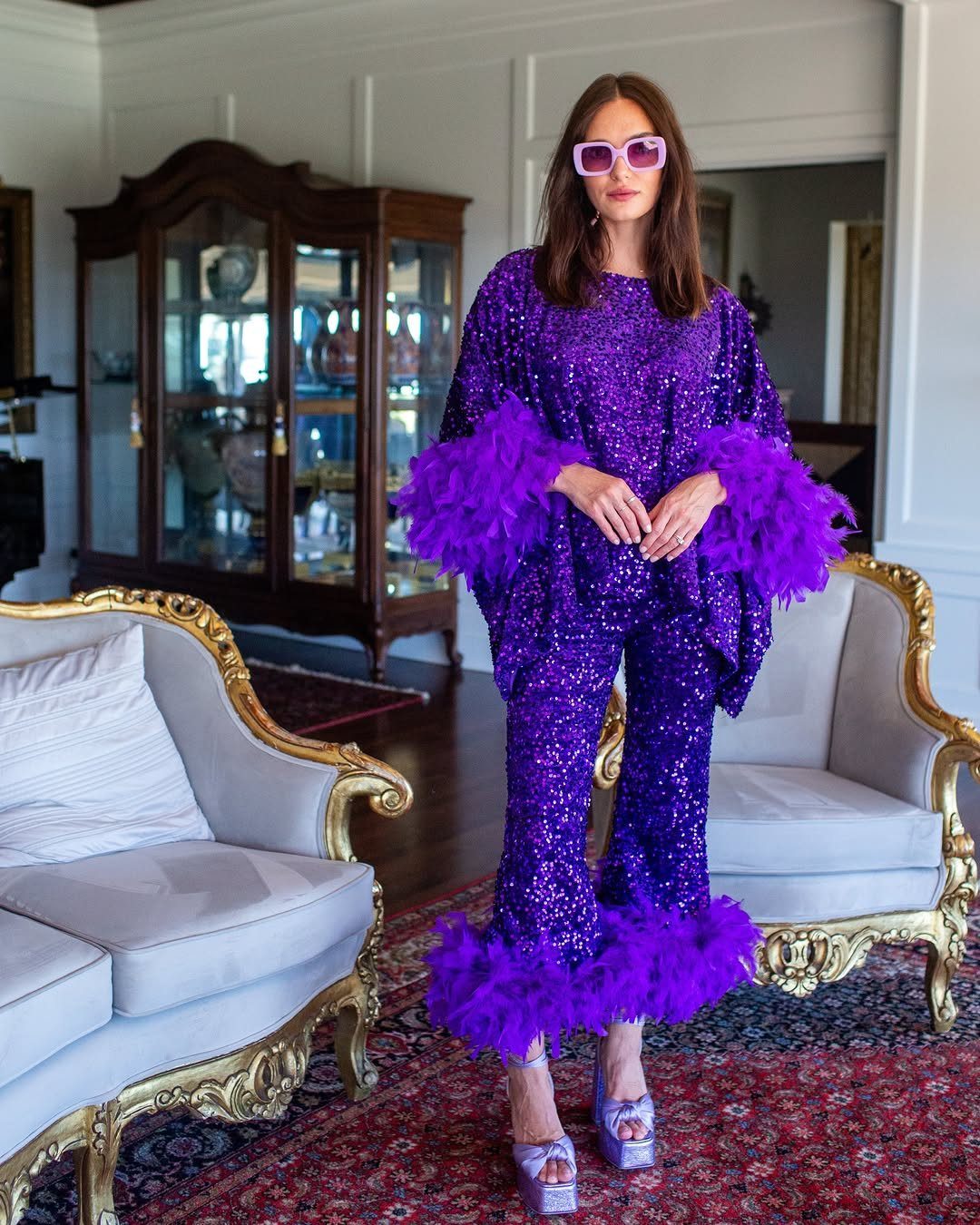
Disco dressing means synthetic shine that catches light when you move. A full sequined set in one color is the committed version; a single metallic piece is easier to wear and still reads.
I would look for polyester or satin in a halter cut or a wrap dress if I wanted to dance without overheating.
Platform heels in a matching or metallic finish complete it. This is not a look for subtlety, so if you hesitate at head-to-toe sparkle, add one sequined accessory to a black jumpsuit and call it enough.
6. Bold Patterns
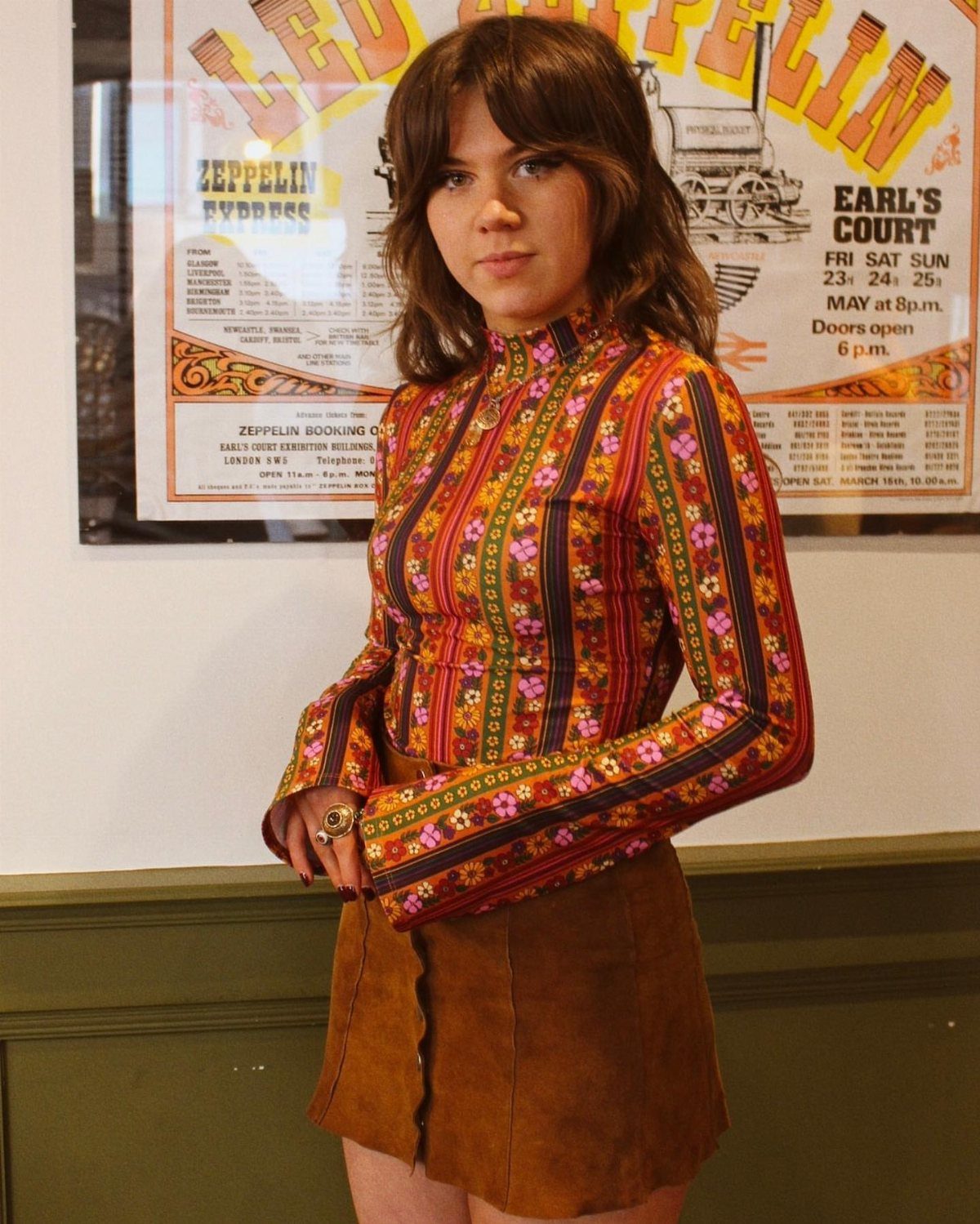
A 70s pattern is loud by design: florals, paisleys, and geometric shapes in colors like orange, brown, and turquoise that do not whisper.
The turtleneck mixes floral and stripe in one busy top, balanced by a plain suede skirt below. I would keep the bottom half neutral when the print is this dense.
Mixing two patterns works only when the colors share a family; two florals in complementary hues can pair, but I would test it in daylight before leaving the house.
7. Sweater Vest
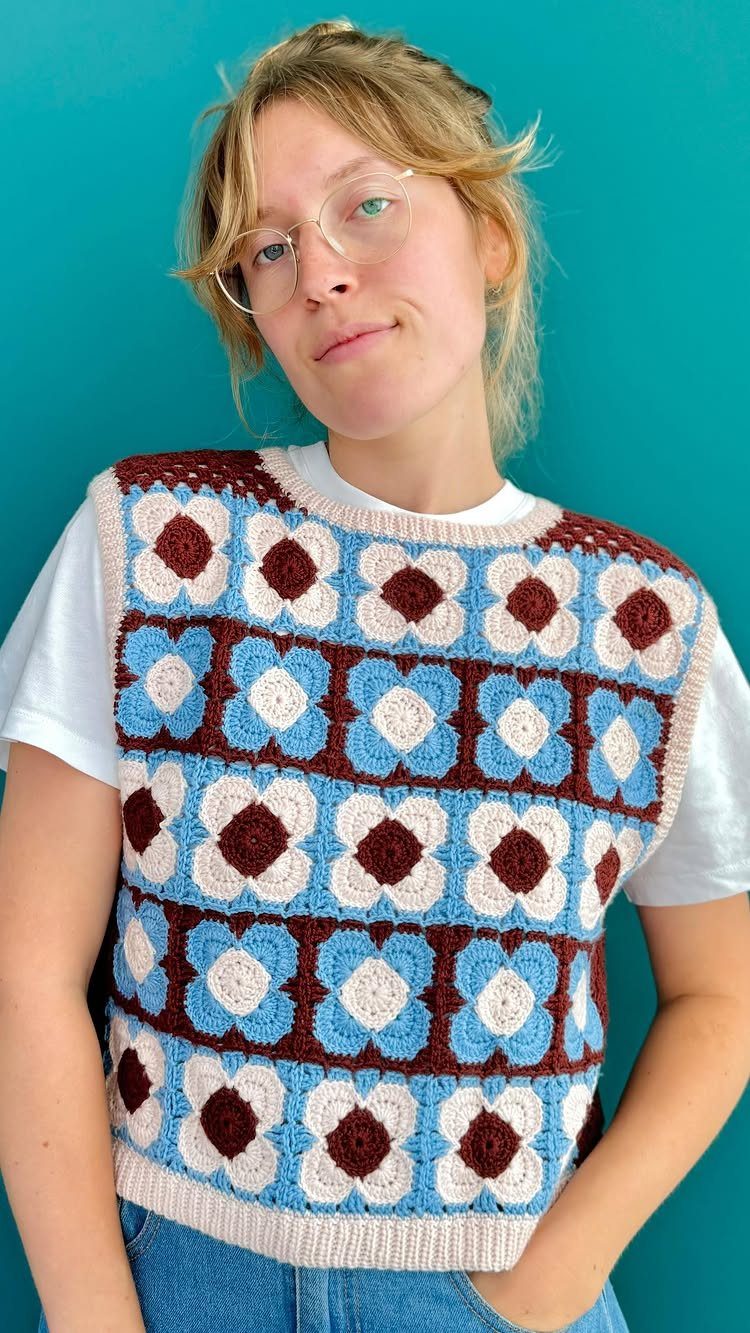
A crocheted vest in granny-square patches reads more 70s than any machine-knit version could. The open weave lets a white tee show through, which keeps the look from going costume.
I would check whether the armholes are deep enough to layer without bunching; a shallow cut rides up and looks stiff. Argyle in wool is the cooler-weather swap if crochet feels too festival.
Either way, the vest does the statement work, so the shirt and jeans stay plain. A V-neck flatters more necklines than crew, though crew holds its shape longer.
8. Denim-on-Denim Look
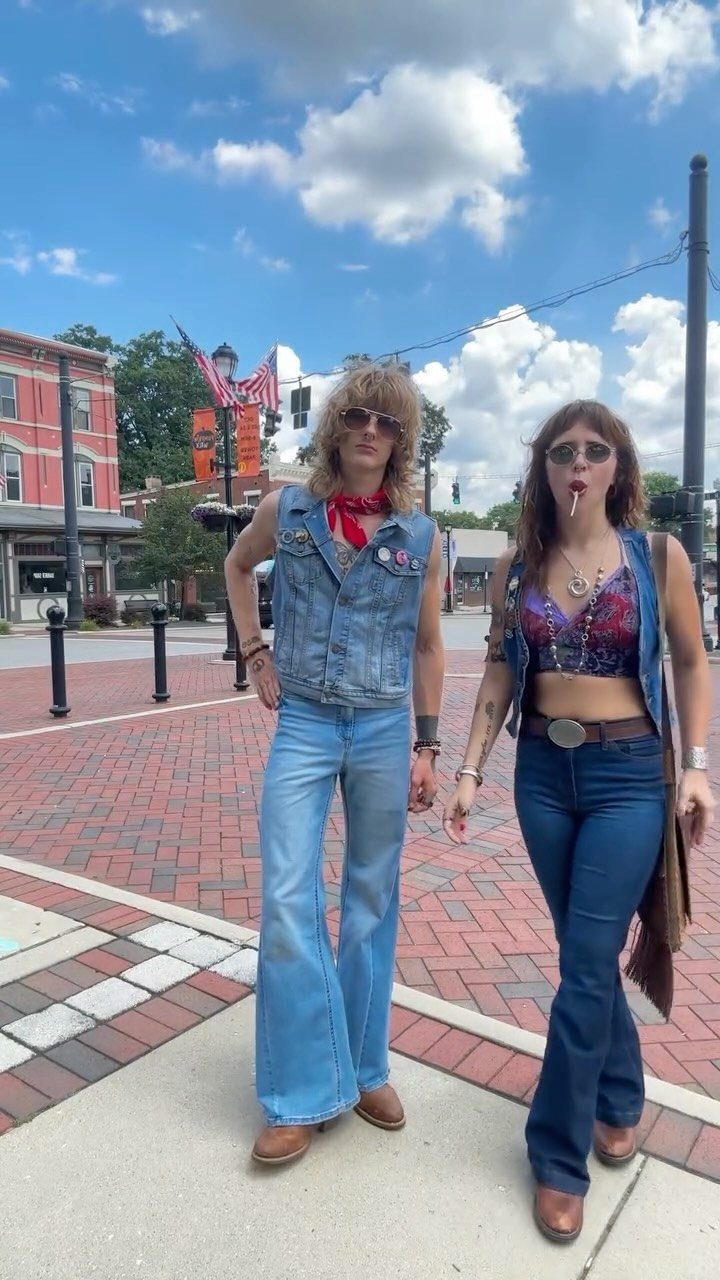
Matching denim top to bottom only works when the washes stay in the same family.
Dark denim head-to-toe is the safer route; mixing light and dark washes reads accidental unless the pieces share a clear contrast line at the waist or hem.
A denim vest over flares keeps the 70s lines without the weight of a full jacket.
I would look for high-rise flares with that slight thigh fade the era favored; the cut sits looser through the hips than modern skinny fits, which is what makes it read as period.
Acid wash is an option if you want the rock edge, but head-to-toe acid needs confidence.
9. Punk Style
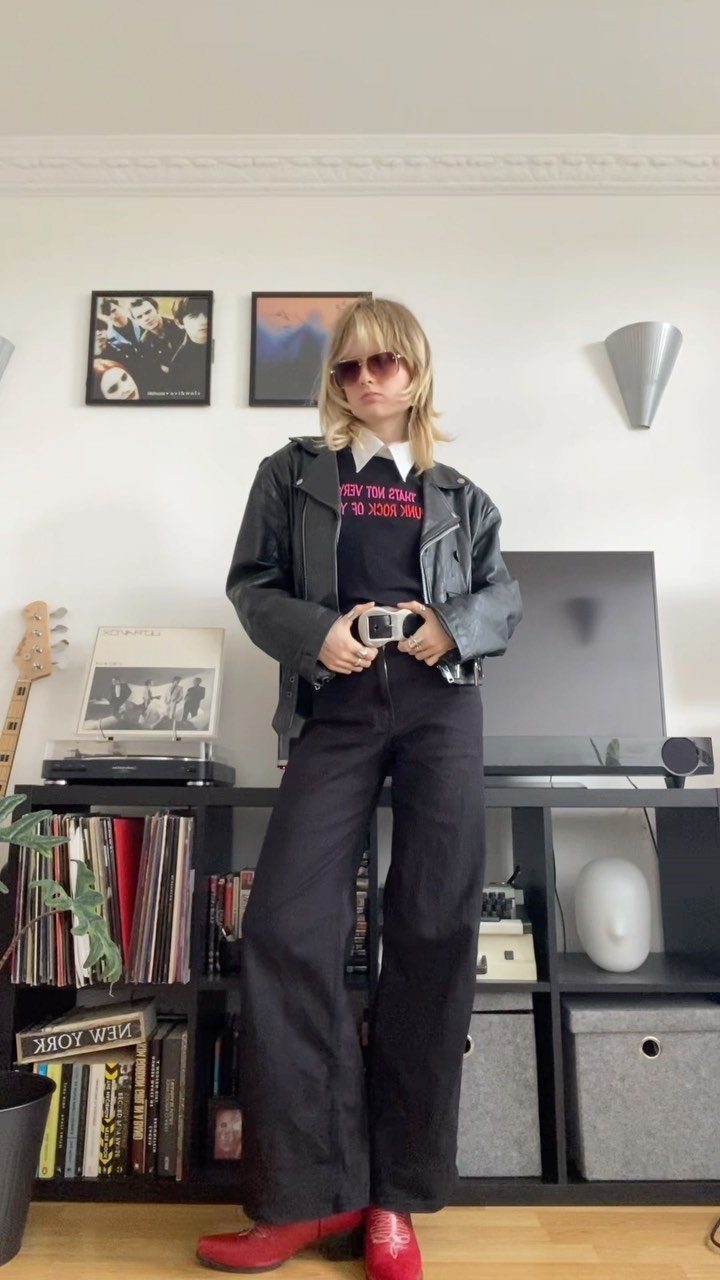
By the late 70s, punk had peeled away from glam and boho into something deliberately raw. A leather jacket over a graphic tee is the entry point; the rest is how far you push the distressing.
Ripped knees on dark jeans or scuffed hardware on the jacket carry the DIY spirit without requiring safety pins in your ear. I would start with one punk piece and keep the rest restrained; full head-to-toe reads tribute band.
Studded belts and chain details are easy to add and easier to remove if the mood shifts. Graphic tees with band imagery or blunt slogans do the era’s communication work.
10. Go with the Tie-Dye
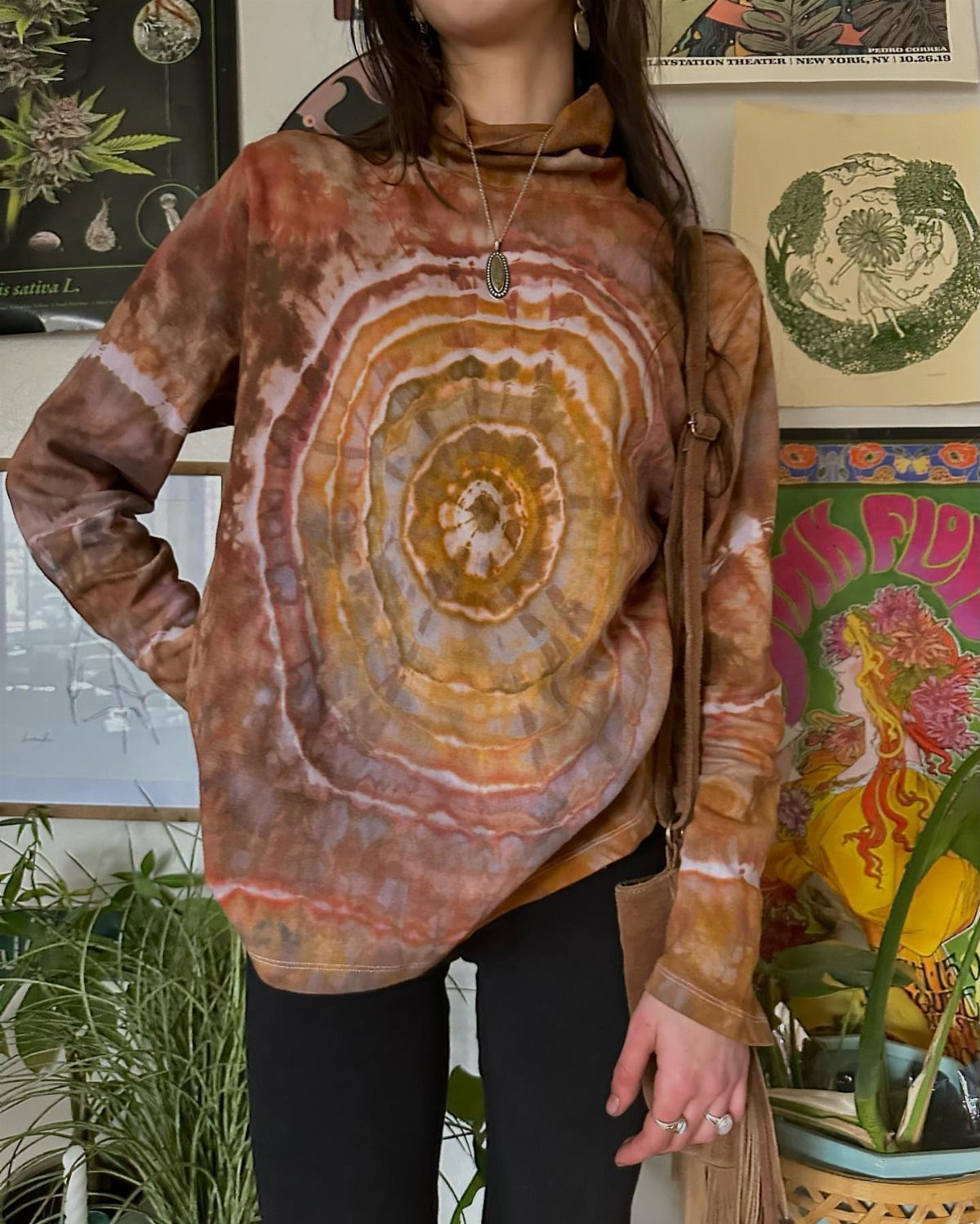
Concentric circles in rust and brown keep the 70s reference without the neon that screams summer camp. Tonal dye jobs in slate or ochre work for offices that allow subtle pattern; neon swirls stay weekend-only.
A long-sleeve turtleneck version extends the wear into fall better than a tee. If you want to try the technique yourself, an ombré fade is more forgiving than precise circles and still reads as updated rather than retro.
11. Boot-Cut Jeans
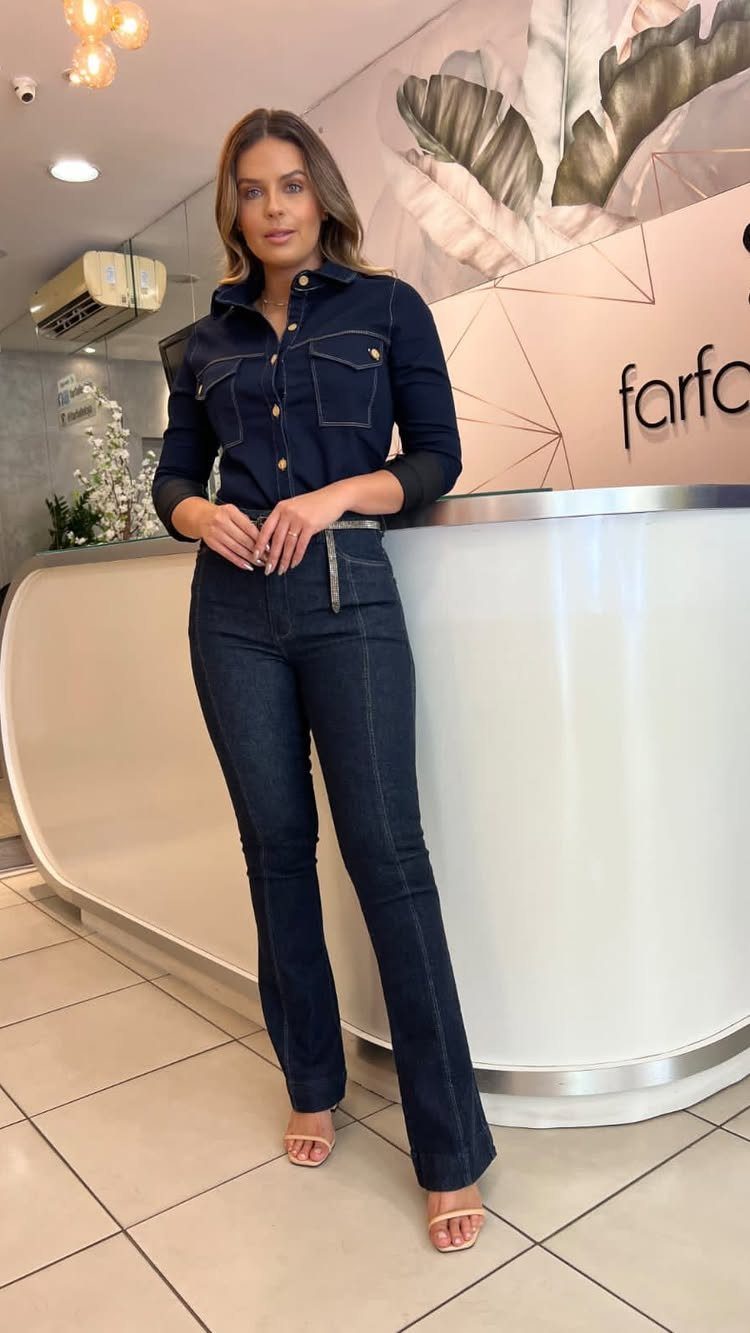
Boot-cut is the quieter cousin to bell-bottom: the flare starts lower, around mid-calf, and opens just enough to cover a heel.
Dark denim boot-cuts function like a jumpsuit or as separate pieces; either way, the leg line elongates without the drama of a full bell bottom.
A raw hem, as some current versions carry, adds a casual finish but shortens the leg visually. These pair with boots, loafers, or a low platform; the opening is too narrow for chunky soles.
12. Hot Pants
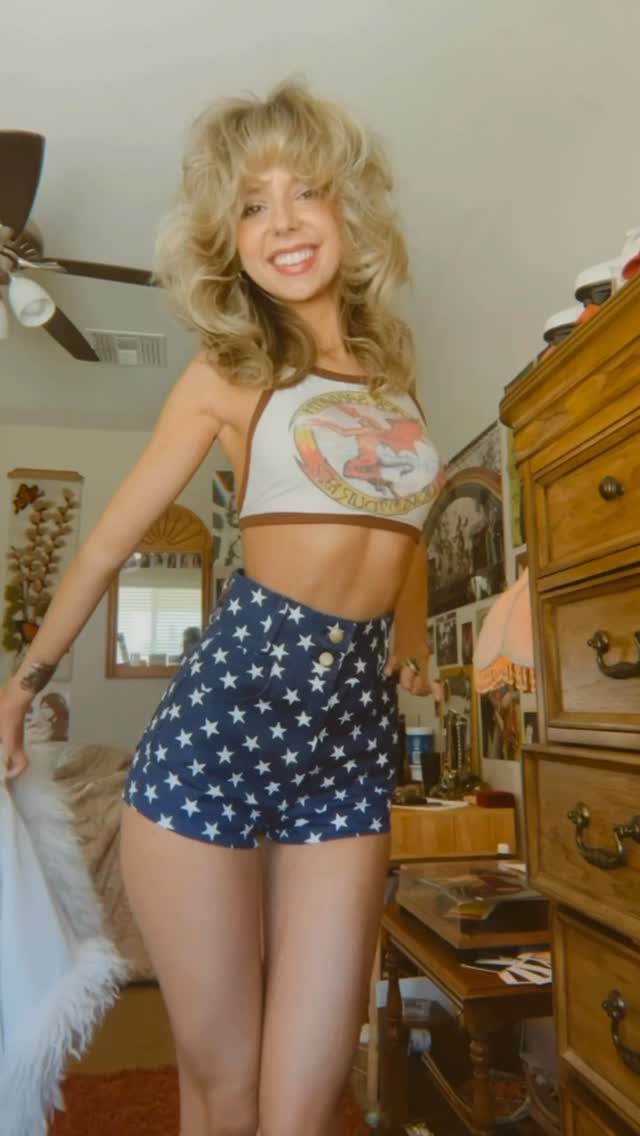
Short, fitted, and high-waisted, hot pants work when the leg is the feature you want to show. Star print in denim is playful; a solid black pair shifts to evening without changing the shape.
I would add tights or knee boots for coverage if the occasion or the weather demands it; the shorts stay the focus while the extras handle practicality.
A halter or crop top should hit right at the waistband to keep the proportion clean; anything longer or shorter throws off the line.
For beach days, roughed-up denim or bright activewear versions are the easy reach; for town, I would choose a darker wash and a tailored fabric.
Mixing Vintage with Modern
The trick to wearing vintage 70s pieces without looking like you are heading to a costume party is keeping the ratio at one retro item per outfit.
I would pair a single standout piece, say a muted floral blouse or a fringed suede jacket, with modern basics that ground it: crisp white tees, clean sneakers, or contemporary denim with no distressing.
The contrast in eras does the work.
Proportion matters as much as period.
A high-rise flare from any decade still needs a fitted top to balance the volume below; a boxy vintage jacket needs slim pants underneath. Color palette is another bridge.
Muted vintage prints sit more naturally beside today’s neutrals than they do beside other saturated 70s patterns. Let the one piece carry the memory while everything else stays current.
Accessorizing 70s Outfits
A wide belt with an oversized metal buckle does more than hold up flares; it breaks up a long torso and gives a flowing dress or tunic its shape.
I would choose leather in tan or dark brown, the finishes that read 70s without trying too hard.
The sunglasses I reach for are the big frames with lenses in amber or brown, never mirrored; that tint alone reads 70s without trying.
Chunky hoop earrings or a single statement cuff in gold or brass add weight without clutter; the 70s liked scale, not delicacy. A silk scarf at the neck or knotted through a ponytail is the quickest nod of all.
For bags, a leather crossbody in a clean shape balances a busy outfit. Woven totes work for daytime but read more beach than disco; I would keep texture in leather or suede for evening.
Styling Tips for 70s Fashion
Layering in 70s dressing is about creating depth without bulk. A fitted tee under a knit vest or a crocheted cardigan gives you the texture without the bulk, since the slim layer underneath keeps the whole shape from going sloppy.
The fitted-top-flared-bottom rule is the era’s core proportion, but it works only when the waist is defined.
Wide lapels on a blazer add structure to soft pieces beneath, but the jacket itself should fit close through the shoulders; 70s tailoring was not oversized. For color, one bold piece per outfit is enough.