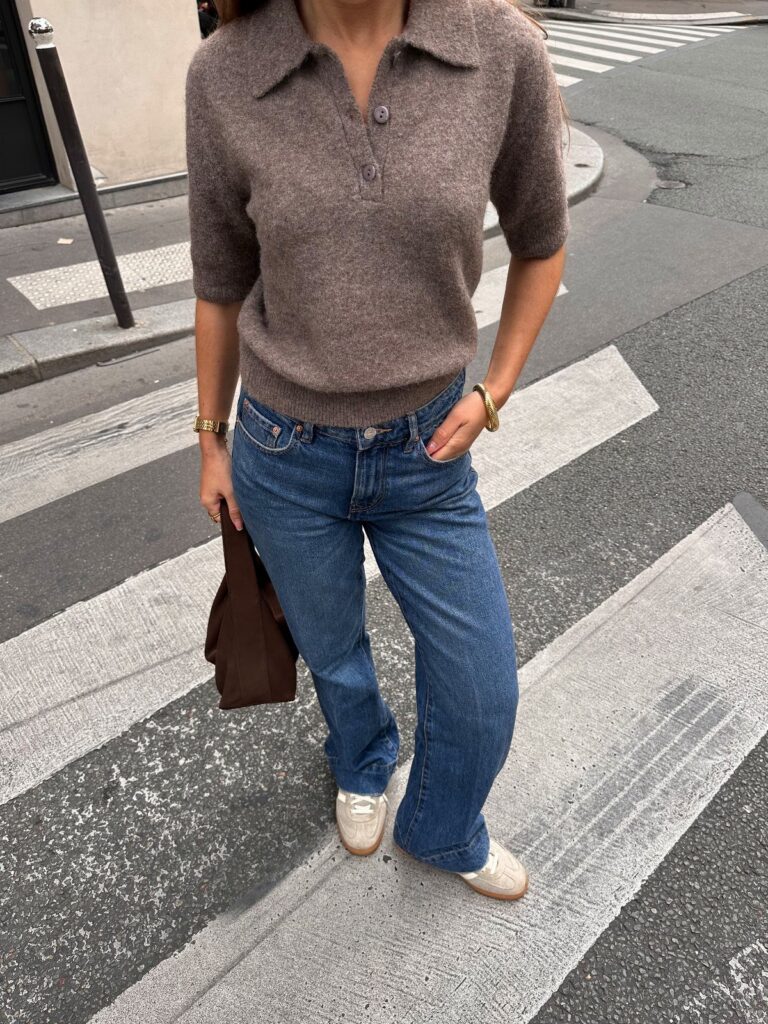
The 12 ideas below run from a simple sweaterdress and boots to a full plaid blazer and turtleneck layer stack, so the deciding factor is how much time you have to build the look and how many pieces you are willing to manage.
1. Sweaterdress + Over-the-Knee Boots
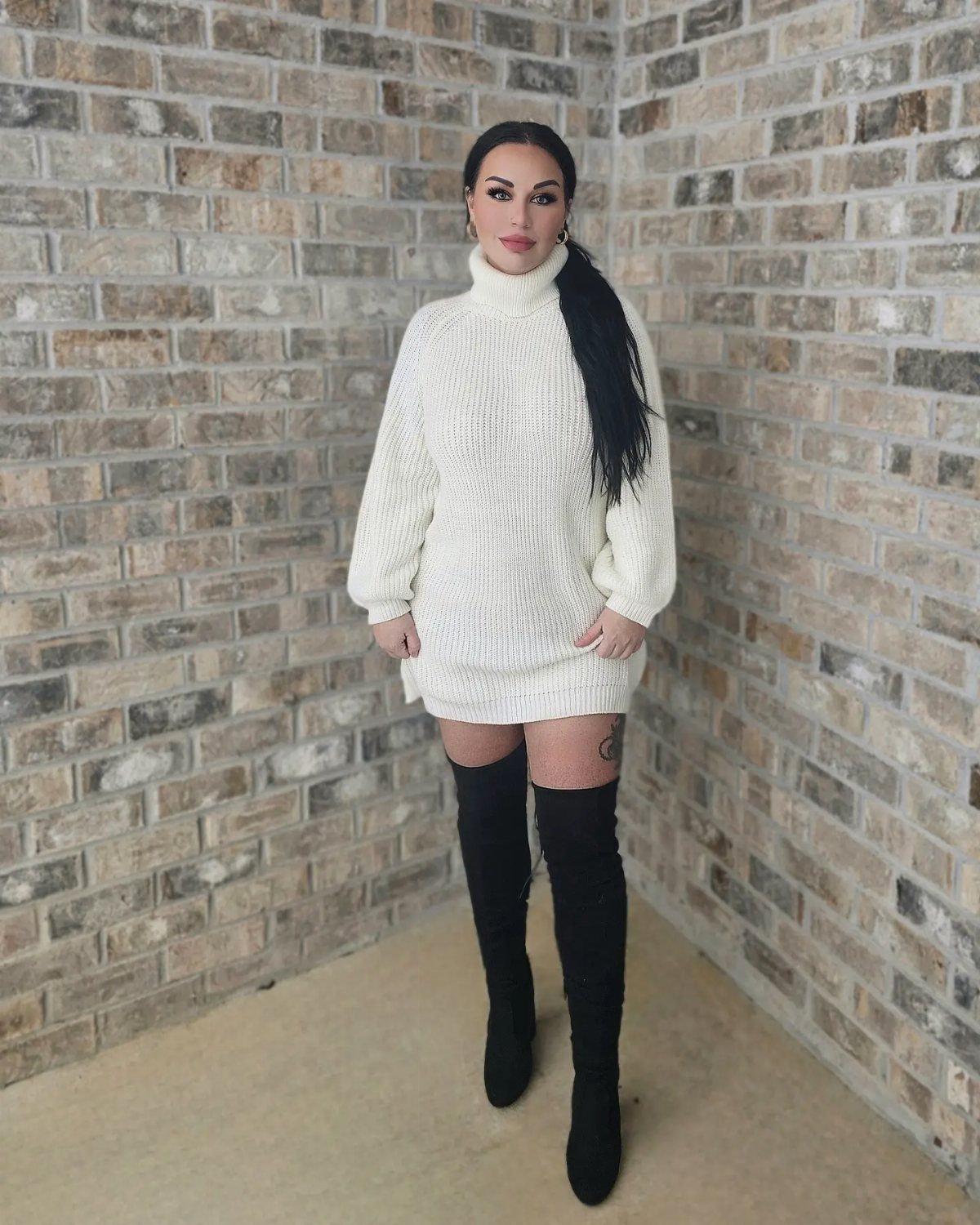
A sweaterdress with over-the-knee boots is the kind of outfit that handles both a crisp morning and a warm afternoon without asking you to change.
The boots do the leg-lengthening work that tights usually attempt, and the sweaterdress itself is one piece that reads as complete. A neutral cream or oatmeal knit against black boots keeps the shape readable from a distance.
Waterproof leather matters more than you’d think in early fall; sudden rain turns suede into a regret fast. The Taras boot runs XS to L if you need that range.
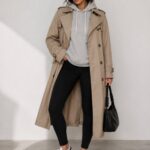
2. Trench Coat and Wide-Leg Jeans
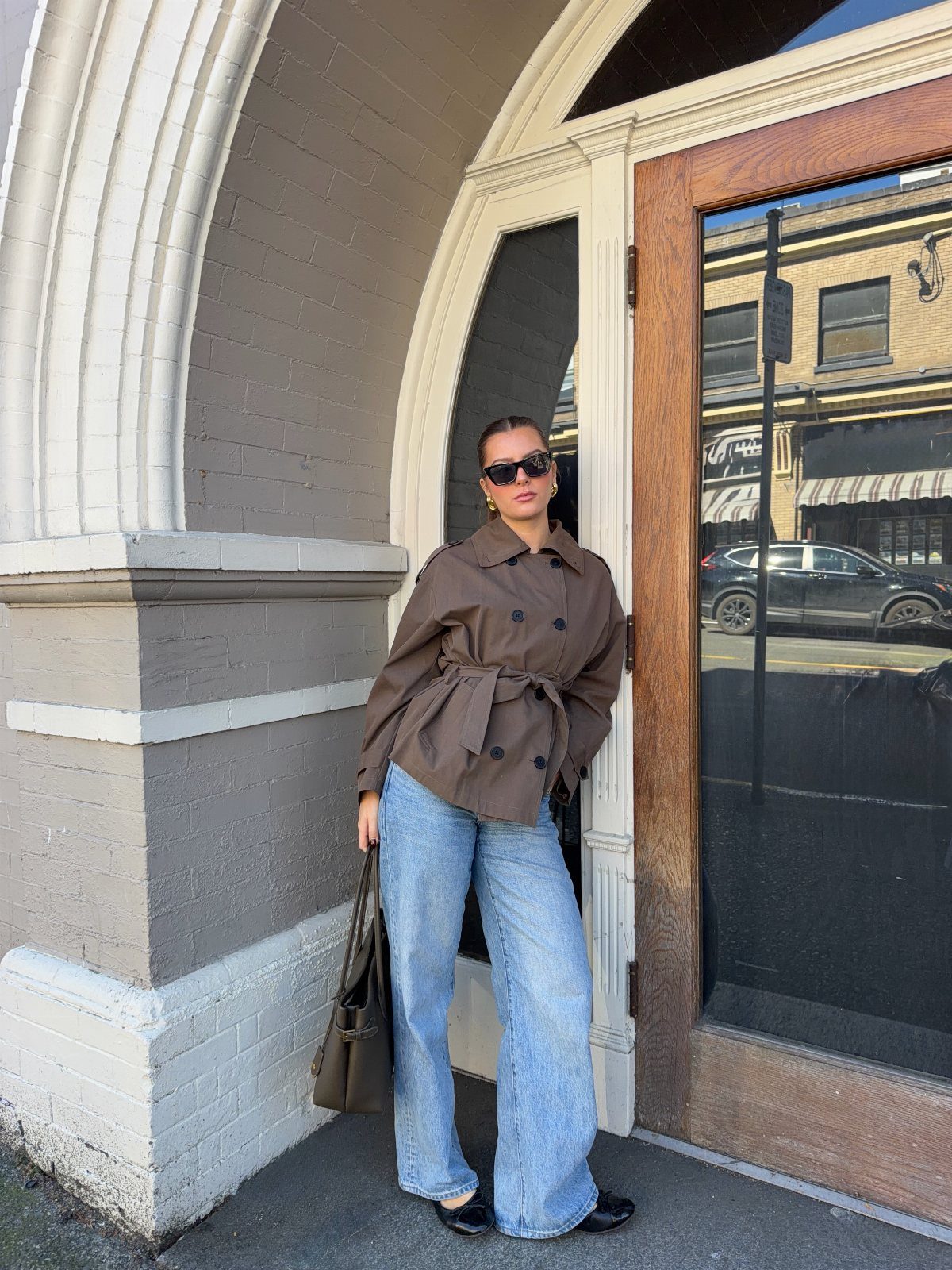
A cropped trench in brown, belted over wide-leg jeans, solves the proportion puzzle that long trenches often create with fuller pants. The crop keeps your waist visible, and the belt adds structure where a longer coat would swamp the line.
Check that your jeans sit at or just above your natural waist; low-rise wide legs under a cropped coat read accidental rather than intentional.
Dark wash denim lengthens what the wide cut visually shortens. Black flats finish it cleanly without competing for attention.
3. Trench Coat with Shorts and Tights
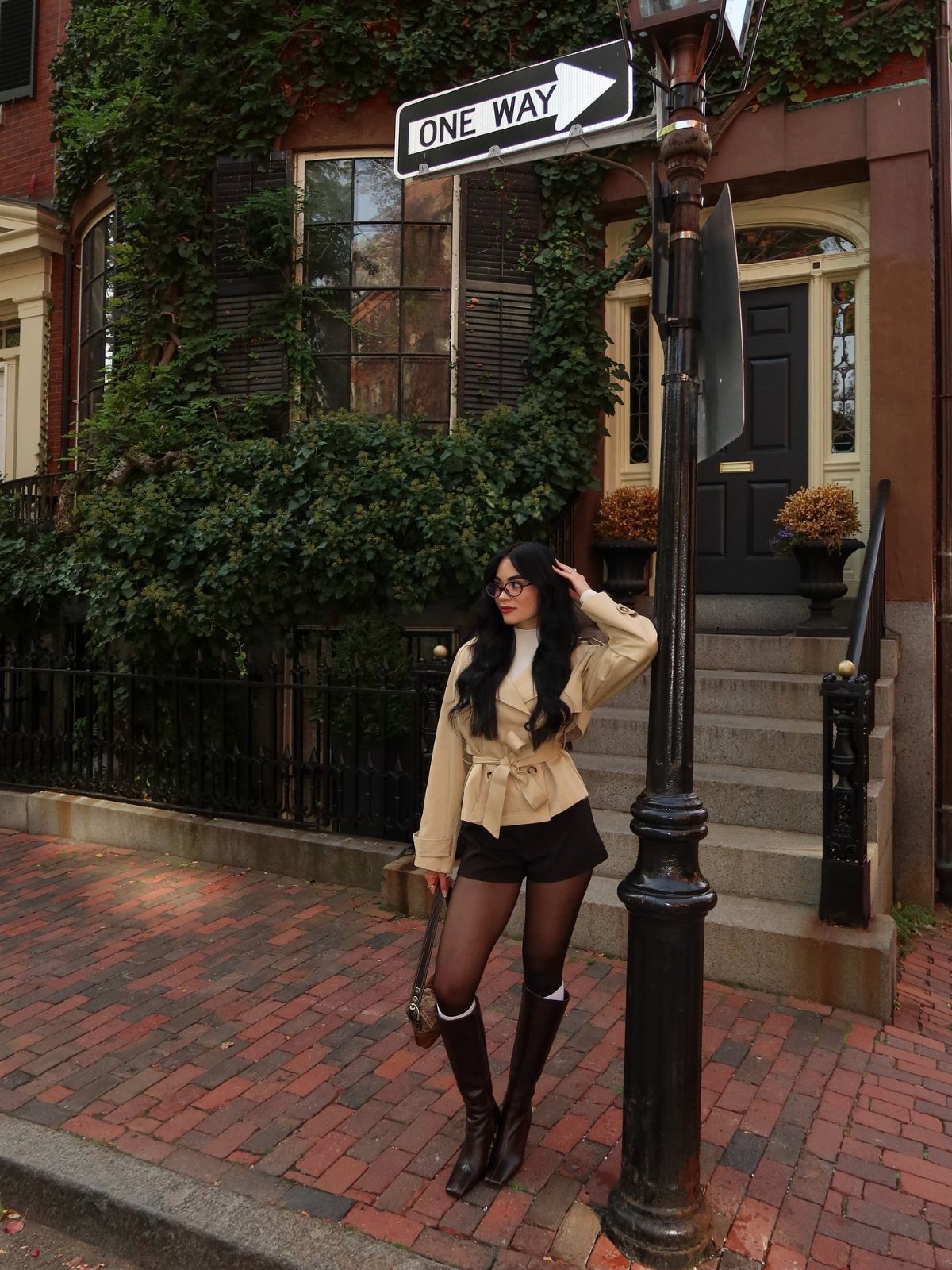
Shorts with tights under a trench is the move for days that start cool and climb toward mild.
The sheer black tights here are doing actual work, not just filling a style quota; they add warmth you can shed by stepping indoors without the bulk of swapping pants.
A white turtleneck underneath keeps the palette clean and autumnal at once.
The knee-high boots bridge the gap between the short hem and the coat’s longer line. If your office runs warm, this layers down easier than a dress and boots alone.
4. Barn Jacket and Blue Jeans
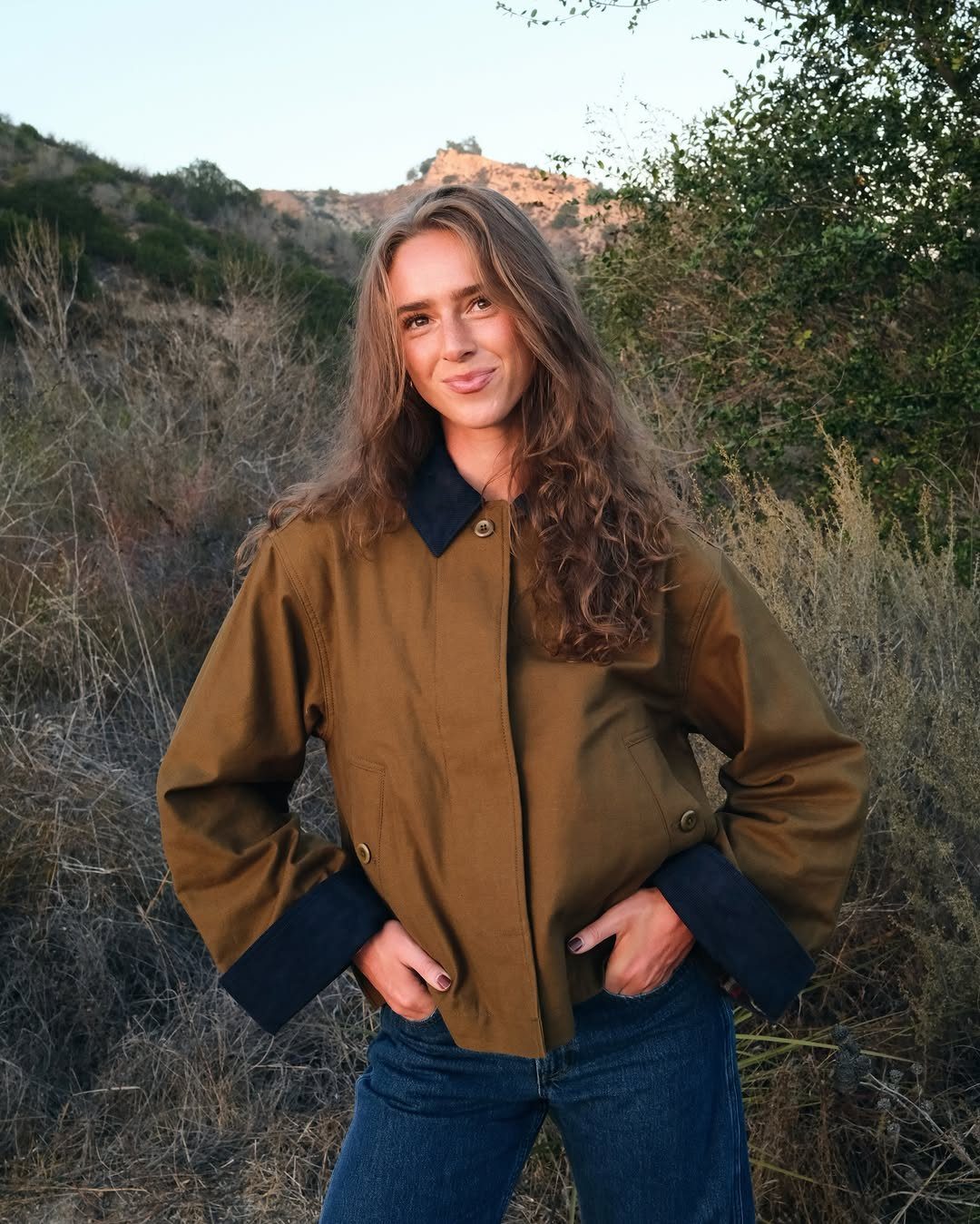
The barn jacket’s return makes sense once you wear one through a drizzly October Saturday.
The canvas sheds light rain, the roomy cut fits a sweater underneath, and the contrasting collar and cuffs add the kind of detail that elevates it from workwear to outfit.
I reach for mine most often with straight or slightly tapered blue jeans; the jacket’s volume needs a cleaner leg to balance it.
An oversized barn jacket works when the sleeves are rolled to show the navy lining, which keeps the shape from overwhelming a smaller frame.
5. Plaid Blazer and Denim Shirt
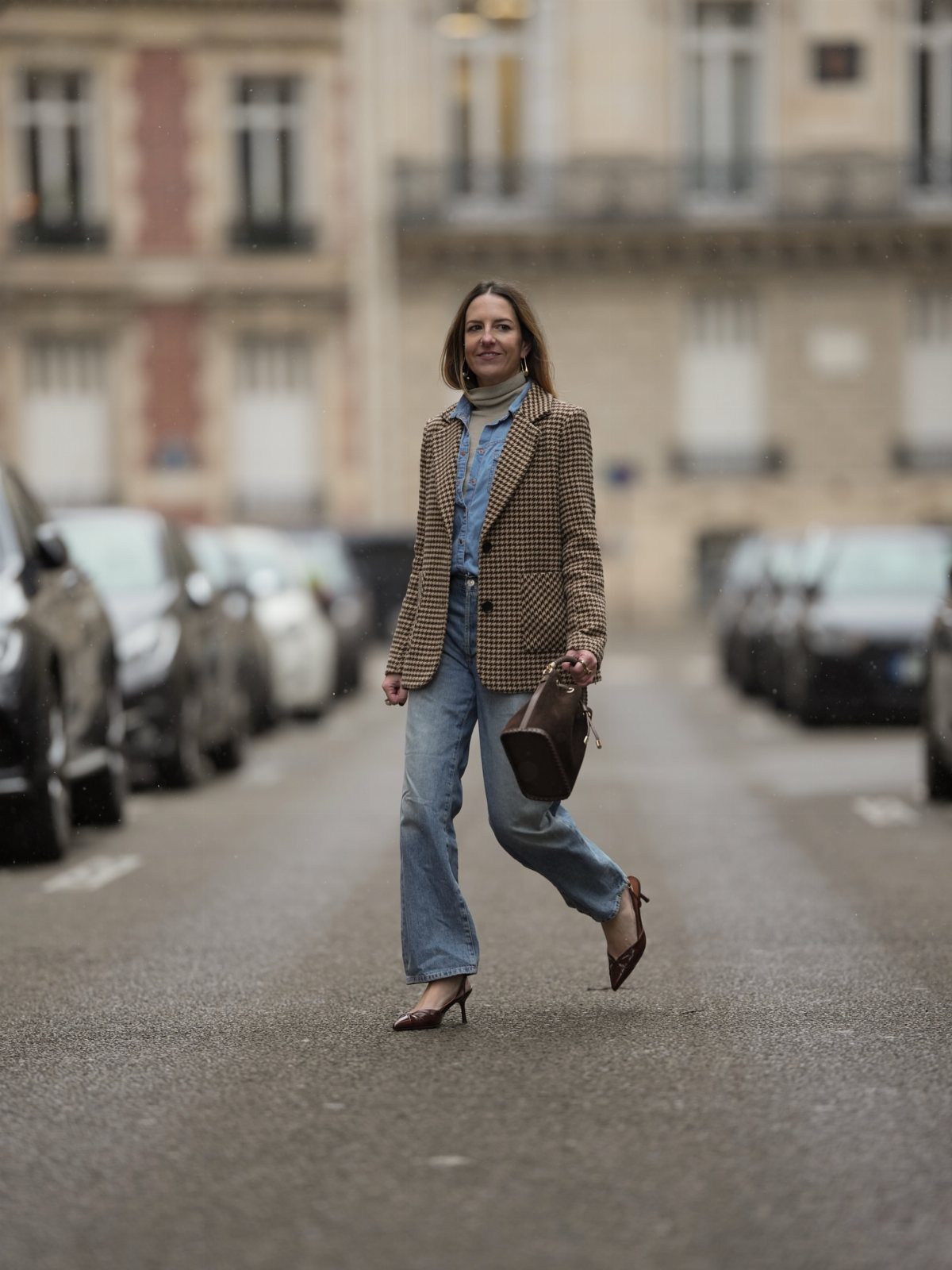
Layering a plaid blazer over a denim shirt and turtleneck sounds like too much until you see it done with a brown houndstooth and light-wash chambray.
The denim shirt acts as a buffer between the wool blazer and the knit turtleneck, stopping the itch and adding visible texture at the collar. Wide-leg jeans continue the relaxed line from the blazer’s boxy shape.
For early fall, I prefer this with a thin merino turtleneck rather than chunky knit; bulk under a structured blazer turns you rectangular fast. Heels lift the hem where flats would let it drag.
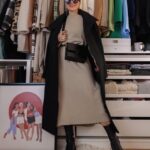
6. Turtleneck Sweater and Satin Skirt
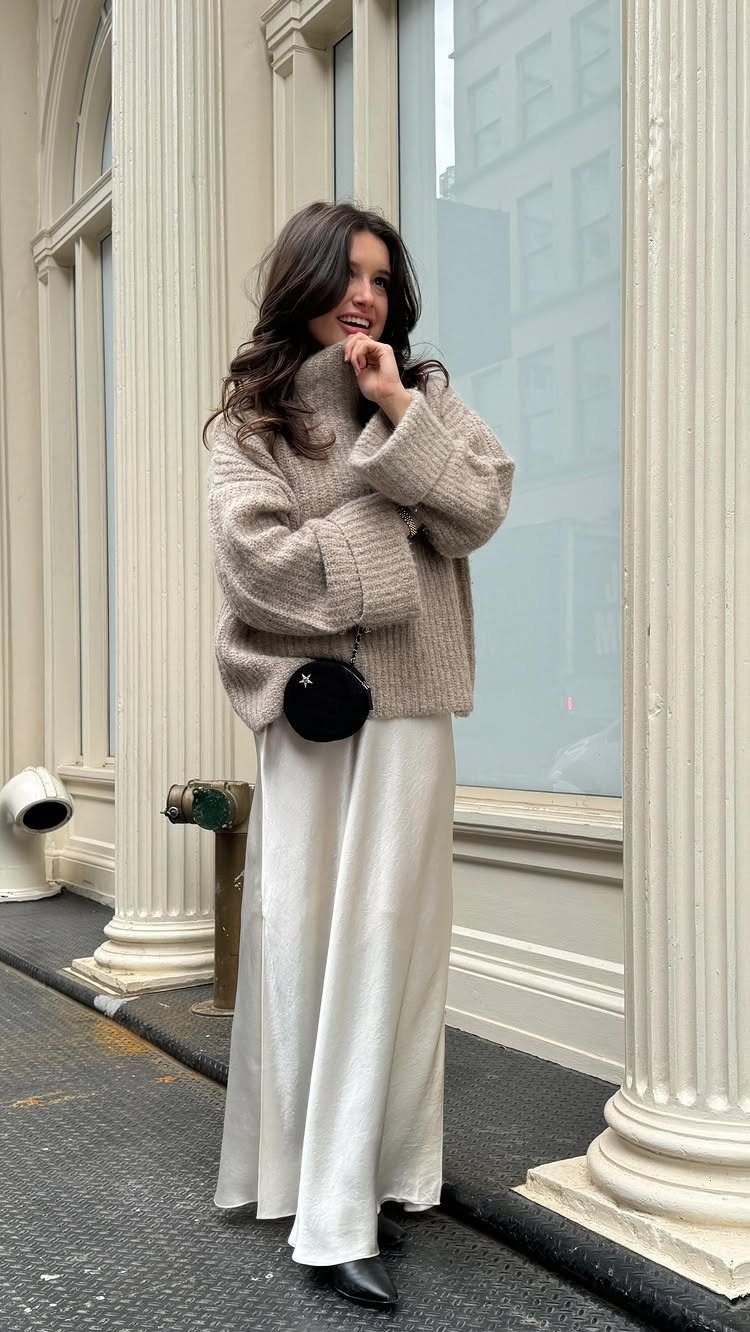
Chunky knit against satin skirt is a texture pairing that reads expensive without requiring actual cashmere.
The sweater’s heaviness needs the skirt’s fluidity to keep from looking like you gave up on the bottom half; the skirt’s dressiness needs the knit to keep from reading evening-only.
I wear this combination most in early fall with ankle boots rather than knee-high, since the maxi length hides the boot top and the shorter shaft keeps your leg from disappearing entirely.
A small crossbody sits above the waistline where a larger bag would compete with the skirt’s volume.
7. Utility Jacket and Casual Denim
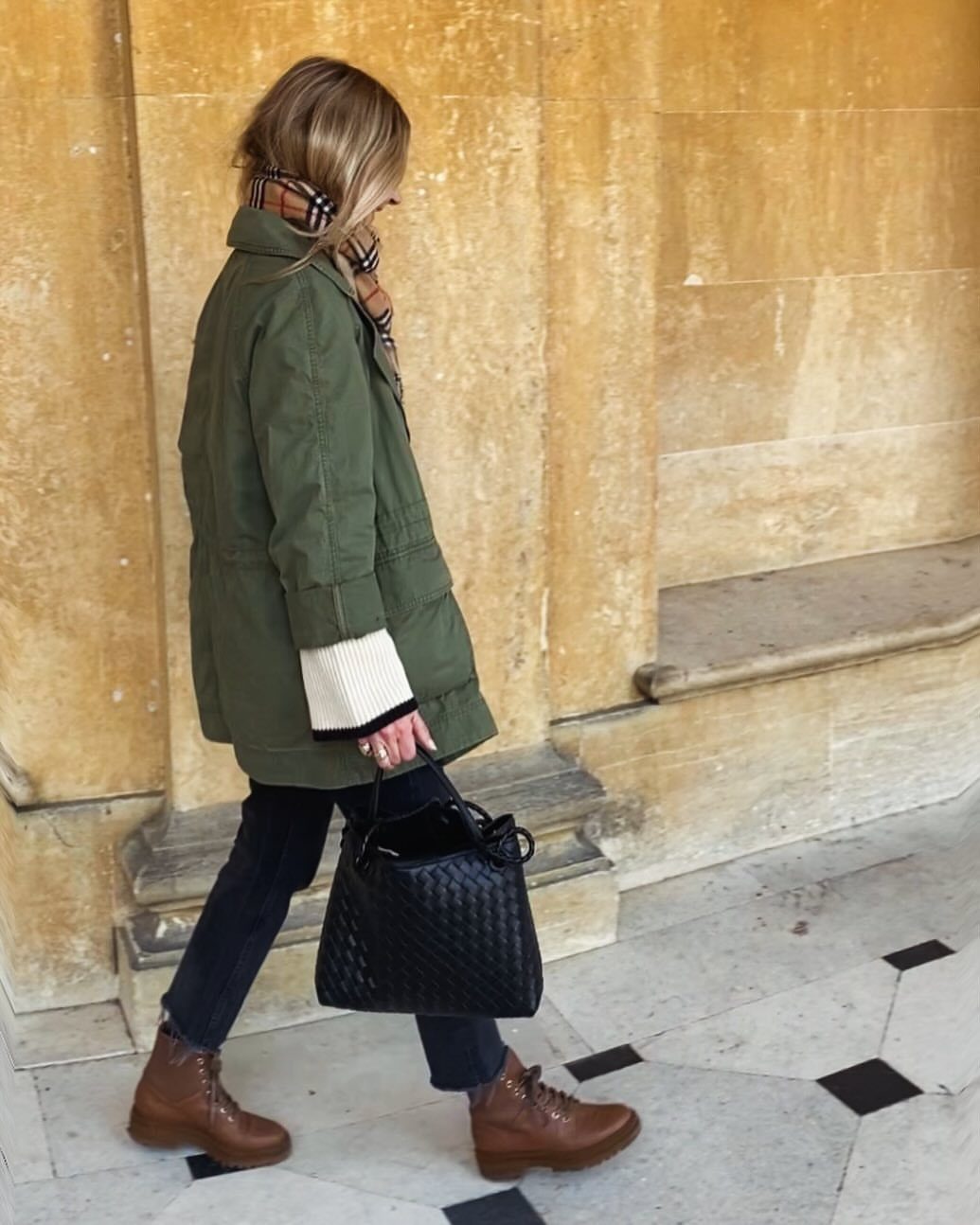
An olive utility jacket over dark jeans and lace-up boots is the kind of outfit that looks intentional without requiring much planning. The jacket’s pockets and hardware add interest that a plain jacket would need jewelry to match.
I like the plaid scarf here because it warms the neck without the commitment of a full layer; remove it by noon and the look still holds.
Brown boots with actual laces, not slip-ons, keep the utilitarian mood consistent from top to bottom. A woven tote fits the practical tone better than structured leather would.
8. Brown Cardigan and White Skirt
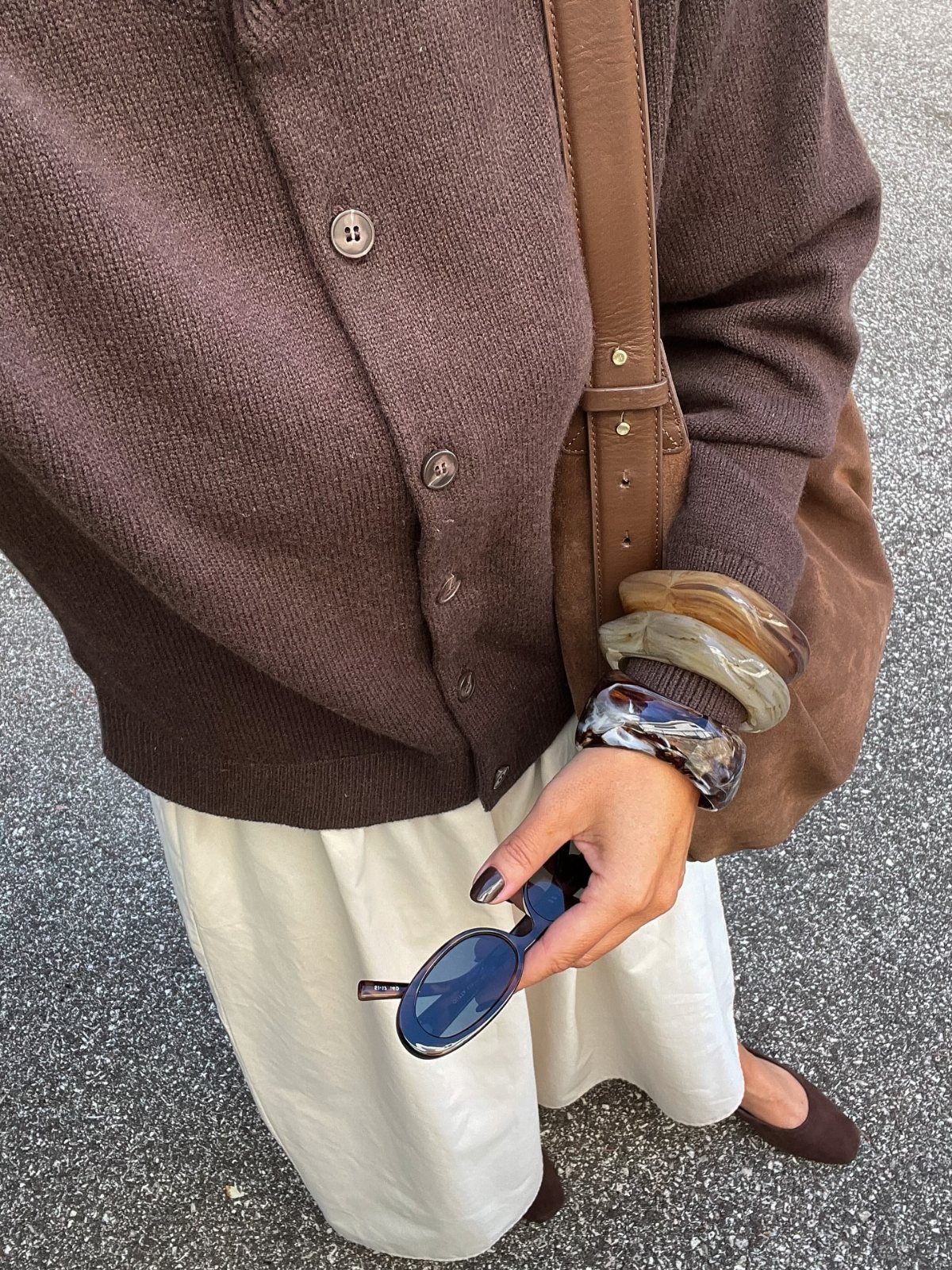
A brown cardigan buttoned over a white midi skirt keeps summer’s favorite bottom in rotation past Labor Day.
The chocolate tone on top grounds the white in a way that feels seasonal rather than stubborn; brown loafers continue that logic down to the feet.
Thick bangles and a shoulder bag in matching leather make this office-appropriate without adding another layer to manage.
I would check that the cardigan hits at or just below the waist; longer lengths divide a midi skirt awkwardly and shorten the leg. The button-front detail matters here, a pullover would read too casual against the skirt’s structure.
9. Double Denim Ensemble
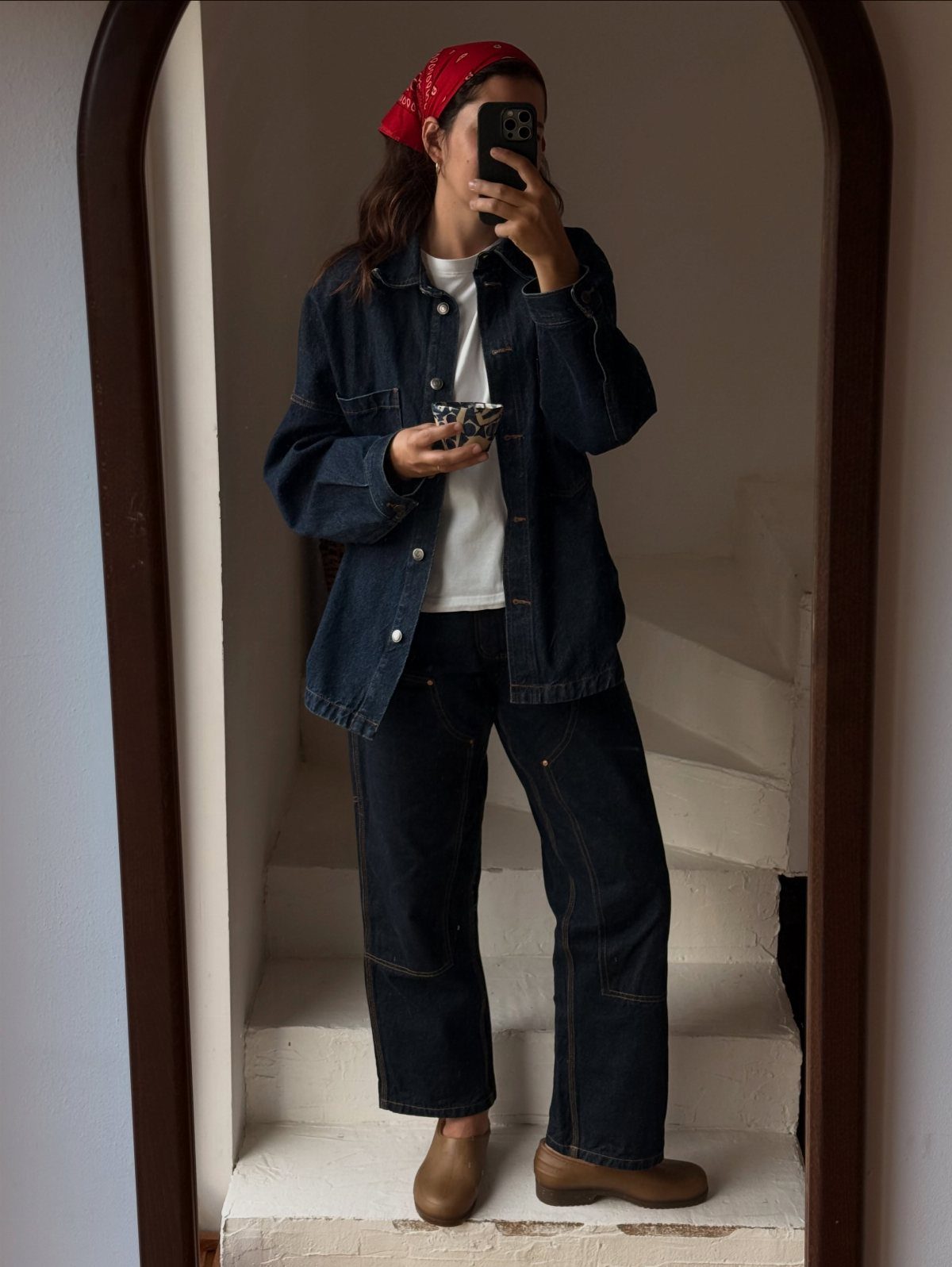
Matching dark denim jacket to dark denim jeans works when the wash is close enough to read as a set and different enough to avoid the onesie effect.
The white t-shirt visible at the collar and hem breaks the expanse exactly where needed; without it, the eye loses its resting place.
Tan loafers or clogs keep the feet lighter than black would, which matters more than you’d think with this much dark fabric.
A red bandana at the head is optional, but the principle behind it holds: one small warm accent keeps the palette from going flat.
Wide-leg jeans under a standard jacket length need the jacket to end at the hip, not below, or the silhouette turns blocky.
10. Oversized Scarf Coat
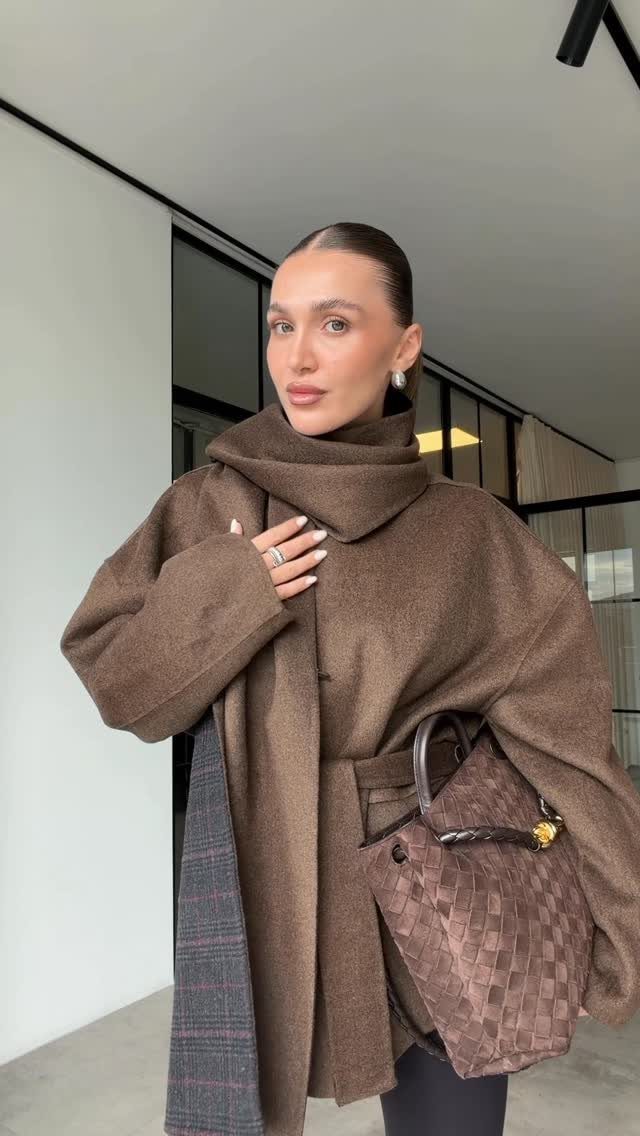
A scarf coat with the wrap built in solves the problem of owning dramatic outerwear that never quite gets styled.
The oversized brown wool here drapes rather than cinches, which means it works over a thin knit or a heavier sweater without looking different each time.
Straight-leg jeans and Mary Janes keep the bottom half simple; the coat is doing enough.
I would let the scarf hang loose on milder days and wrap it once when the temperature drops, the coat’s cut allows both without looking wrong.
A sock that shows just above the Mary Jane strap adds a small intentional detail that keeps the look from defaulting to plain.
11. Leather Jacket and Tailored Trousers
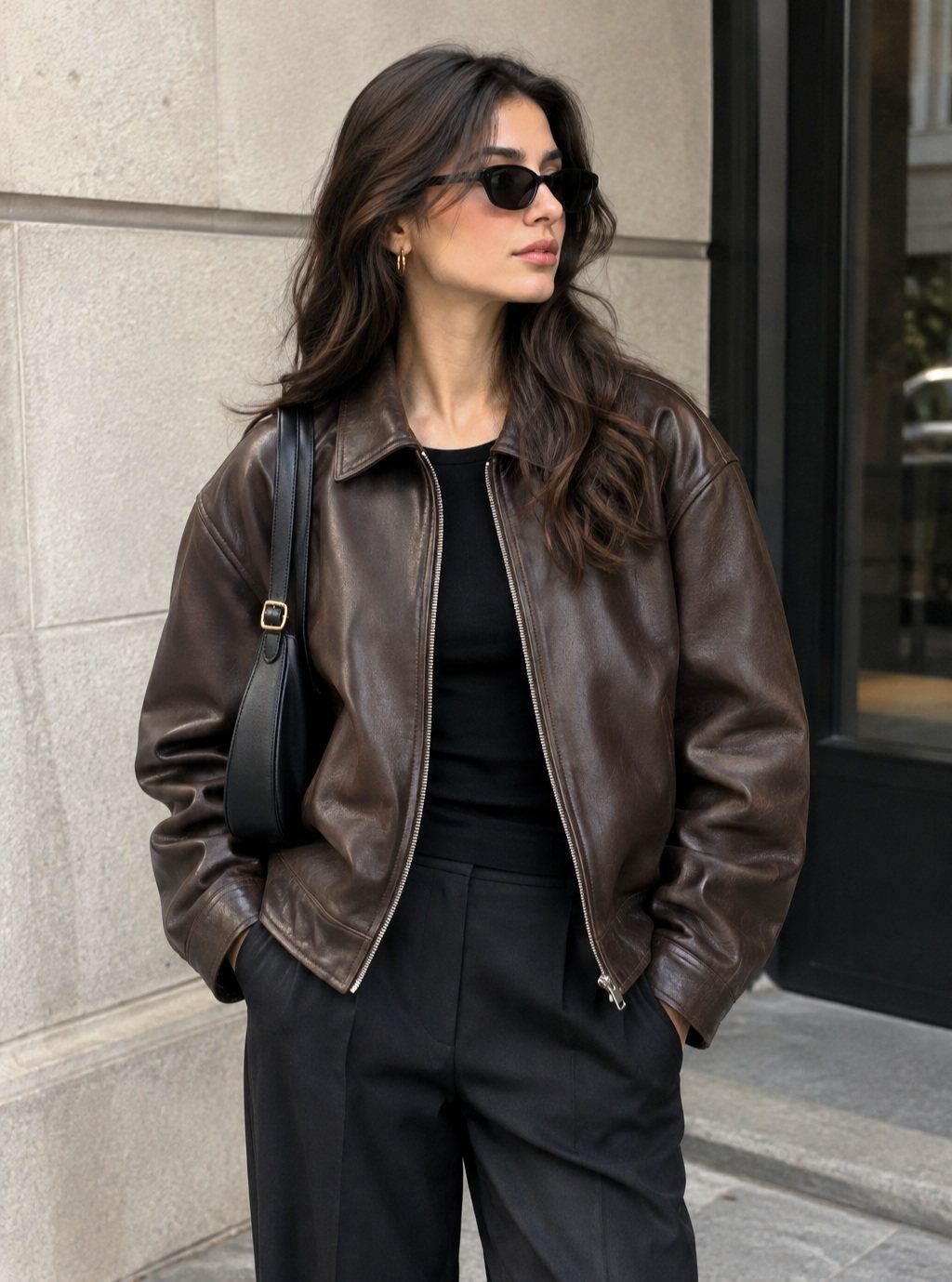
A brown leather jacket over black tailored trousers is quieter than black-on-black and more polished than jeans would allow.
The jacket’s richness does the work of a statement piece while the trousers keep the line clean enough for dinner or a meeting.
A shoulder bag in matching black keeps the palette tight so the jacket and trousers stay the focus.
Check that the trousers are pressed with a sharp crease; the leather’s texture needs that contrast to avoid looking like you grabbed the wrong pants.
This is one case where the jacket should fit close to the body, an oversized cut fights the trousers’ structure.
12. Collared Sweater and Mini Skirt
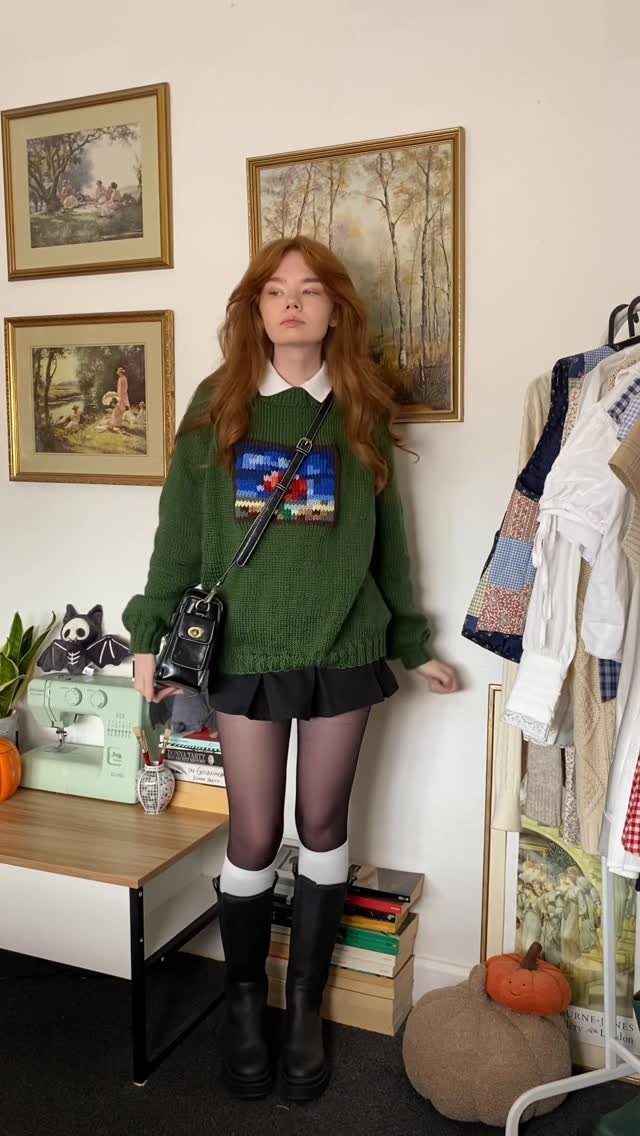
A green knit sweater layered over a white collared shirt, with a black pleated mini and tights, is the school-uniform formula made adult by fit and color choice.
The collar and cuffs need to show enough to read as deliberate; anything too short looks like an accident, a longer fold looks like a plan.
Black tights and tall boots extend the leg line that the mini starts and the sweater’s bulk could interrupt.
I would keep the skirt’s pleats pressed, the sweater’s texture against crushed fabric reads sloppy fast. The green here is bright enough to read against the white, adding color that feels seasonal without the neon of spring.
Layering Techniques
The real test of an early fall outfit is whether you can subtract one piece at 2 PM and still look dressed.
A base layer in breathable cotton or thin merino handles the warm hours without trapping heat against your skin.
I learned this after one October morning in a synthetic turtleneck that felt fine in the cool air and became a sauna by noon.
Summer pieces stay relevant when they function as middle layers. A short-sleeve knit under a blazer, a denim shirt over a t-shirt: both add warmth you can tie around your waist later.
The denim shirt trick I picked up from the plaid blazer entry above works because chambray is substantial enough to read as fall but light enough to wear all day.
Bottoms need the same adaptability. Jeans with some stretch handle temperature swings better than rigid denim; a midi skirt with tights lets you remove the tights if the afternoon warms.
The mistake is building an outfit around one thick sweater and nothing underneath it. That works for December, not September.
Shoes matter more than their share of attention. A boot that breathes, like unlined leather, gets you through a warm afternoon; a fully lined boot starts to feel like a decision you’ll regret by 1 PM.
Color Palette Suggestions
Brown has dominated recent fall collections so thoroughly that calling it a trend understates the case. Chocolate brown head-to-toe appeared at Bottega Veneta and has filtered down to every price tier since.
The value of brown is its range. Milk chocolate against camel reads as contrast; espresso against chocolate reads as depth.
Both work. What fails is a single brown in flat, unvaried blocks, which turns you into a furniture sample.
Olive green carries the same earthy logic without the same saturation risk.
It pairs cleanly with both warm and cool neutrals, which brown sometimes struggles to do. An olive trench over off-white jeans, as one source styled it, bridges summer’s lightness and fall’s gravity without either winning.
Khaki and beige function as your paler anchors.
They keep dark browns from going heavy, and they let you wear white-adjacent bottoms past Labor Day without the brightness shouting "August." The off-white jean in early fall is a deliberate choice, not a refusal to accept the season.
Muted does not mean dull.
A deep forest green sweater over a white collar, the green kept bright enough to read against the white, adds color that feels seasonal without the neon of spring. Saturation level matters more than stripping out color entirely.
Accessorizing Tips
A scarf in early fall is rarely about warmth; it’s about adding visible texture where a jacket would be too much.
The plaid scarf in the utility jacket entry above does this: present at 8 AM, pocketed by noon, and the outfit doesn’t collapse without it.
Bags should shift weight with the season. Straw, at first glance, seems too summery for September, but a straw tote in early fall extends the farmer’s market logic into apple-picking season.
The material lightens an otherwise dark palette. Leather takes over gradually; by late October the straw looks out of place, but early fall it reads as transitional intelligence, not confusion.
Shoes do more signaling than bags. Suede clogs slip on easily for variable weather, but suede’s water sensitivity makes them a fair-weather-only choice.
Waterproof leather, even in the same silhouette, extends your range by weeks. The cost difference between suede and treated leather usually pays back in wearability the first rainy Saturday.
Belts add structure where fall layers want to hide it.
A leather belt over a trench’s self-belt, or in place of it, defines a waist that the coat’s volume would otherwise swallow. This matters most with wide-leg pants, where the eye needs a horizontal line to anchor the vertical one.
Small hardware on a bag or boots, the buckles and eyelets, replaces jewelry that gets lost under sleeves.
I notice this most when I’ve forgotten earrings: a boot with visible lacing or a bag with a brass clasp still gives the eye something to rest on.
Any editor will tell you that fall is when fashion is in its prime.
— Elle
Frequently Asked Questions
Which type of clothes do we wear in fall season?
Early fall calls for pieces that layer and subtract easily: sweaterdresses with boots, trenches over jeans or shorts with tights, barn jackets, utility jackets, and blazers over thin knits or denim shirts.
The key is breathable base layers in cotton or thin merino, with middle layers you can tie around your waist or pocket by afternoon.
What is in fashion for autumn 2026?
Earthy tones dominate, with brown so prevalent it has moved past trend status into standard fall dressing.
Olive green, khaki, and beige function as the key supporting colors, while muted but not dull saturation levels keep palettes seasonal without going flat.