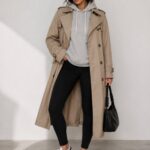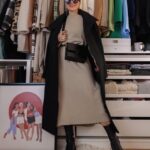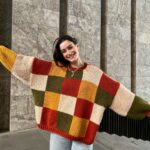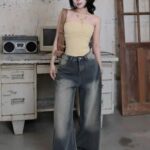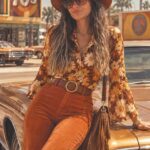
These aesthetic outfit ideas move from an Amazon turtleneck to full leather-on-leather looks, and the right one depends on whether your day demands you actually sit down in it or only stand and pose.
Pleated skirts, baggy cargo pants, and sequined minis all appear, but the waist construction on that pleat or the rise on those cargos matters more than the aesthetic label you started with.
A cropped burgundy cardigan over a matching pleated mini holds its shape through lunch; a low-rise jean with a crop top does not, and that difference in function is what sorts the list, not the mood board you pinned last night.
1. Wide-leg Denim Jeans
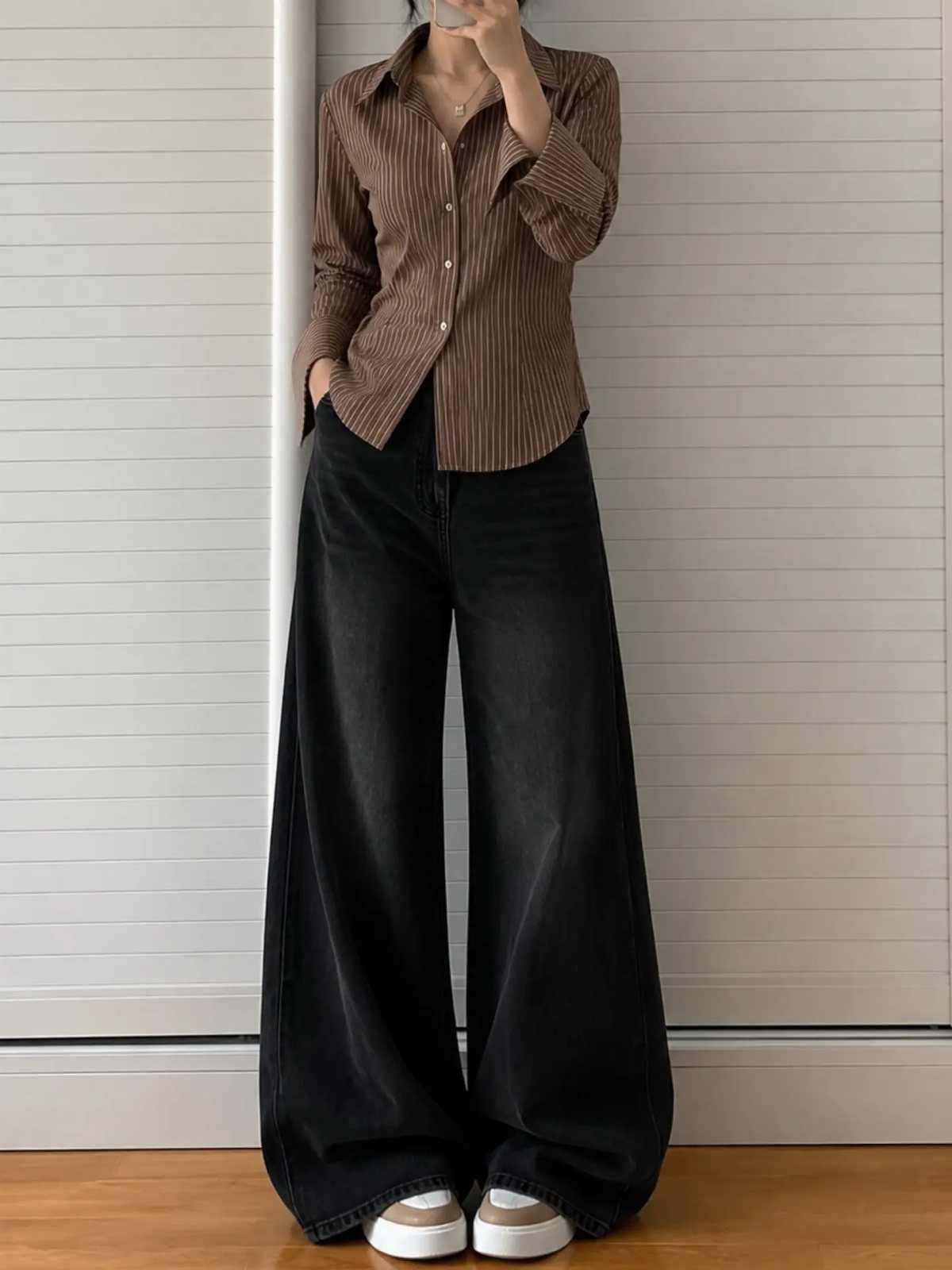
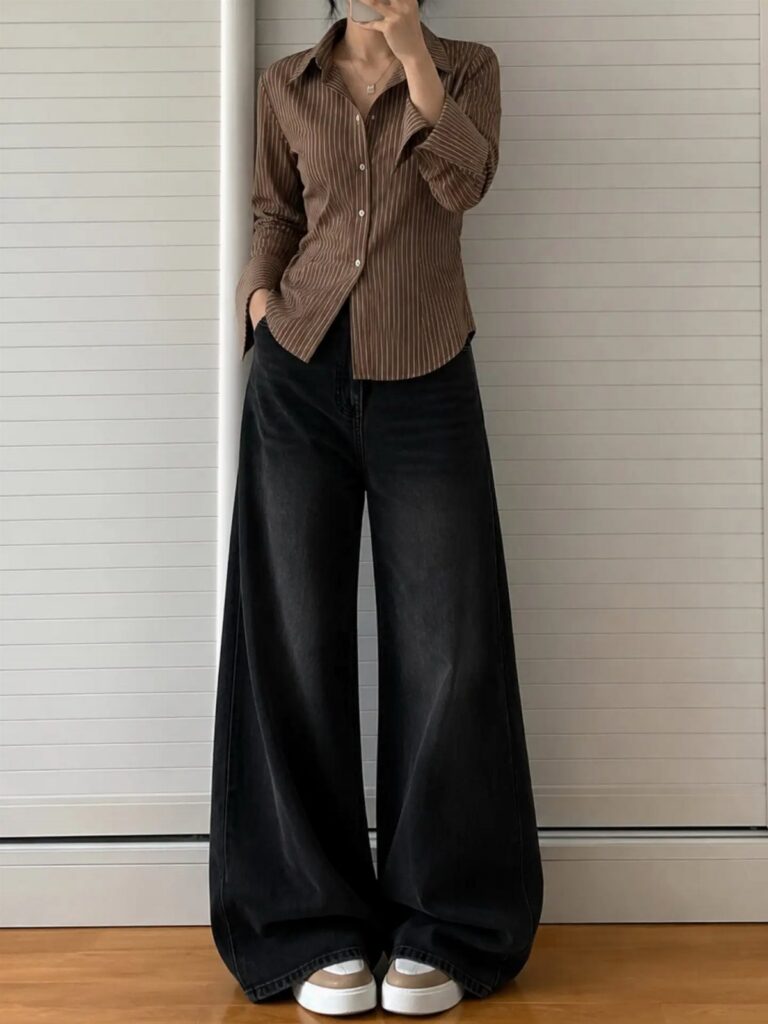
Wide-leg denim jeans carry more fabric below the knee than straight or skinny cuts, which changes how the whole silhouette reads.
A low hip rise with a full, almost trouser-like leg needs a fitted or half-tucked top so the waistline still registers.
For a similar effect, dark washes read more formal and lengthen the leg, while light washes stay casual.
A striped button-down, like the brown one visible here, picks up the borrowed-from-the-boys energy without looking sloppy. Cream sneakers keep the palette grounded.
I would add a structured bag rather than a slouchy one; the jeans already supply enough ease.
2. Oversized Graphic Tees
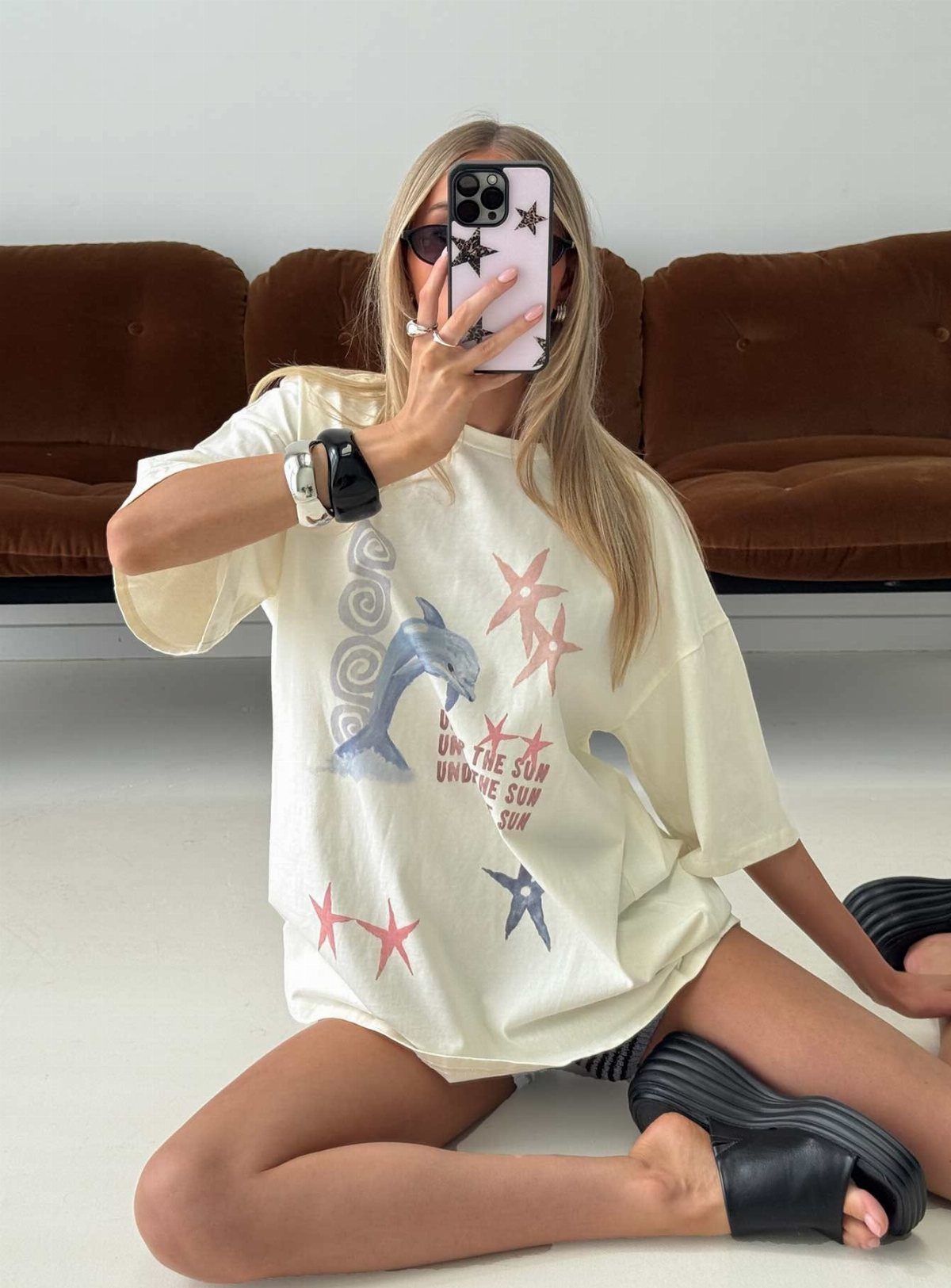
Oversized graphic tees solve the problem of wanting to look like you tried when you did not. A cream dolphin print busy enough that jewelry feels optional saves decision-making on rushed mornings.
Balance matters most. A tee this boxy needs either a shorter bottom half, like cutoff shorts, or a pant wide enough to balance it, baggy denim or cargos.
Tucking rarely works; the fabric is too much and the print interrupts. Let it hang and add a shoe with some weight, chunky sandals or sneakers, so the eye does not stop at the ankle.
I keep one or two from small brands whose graphics I actually like, since fast-fashion prints tend to crack after a few washes.
3. Cropped Knit Tops
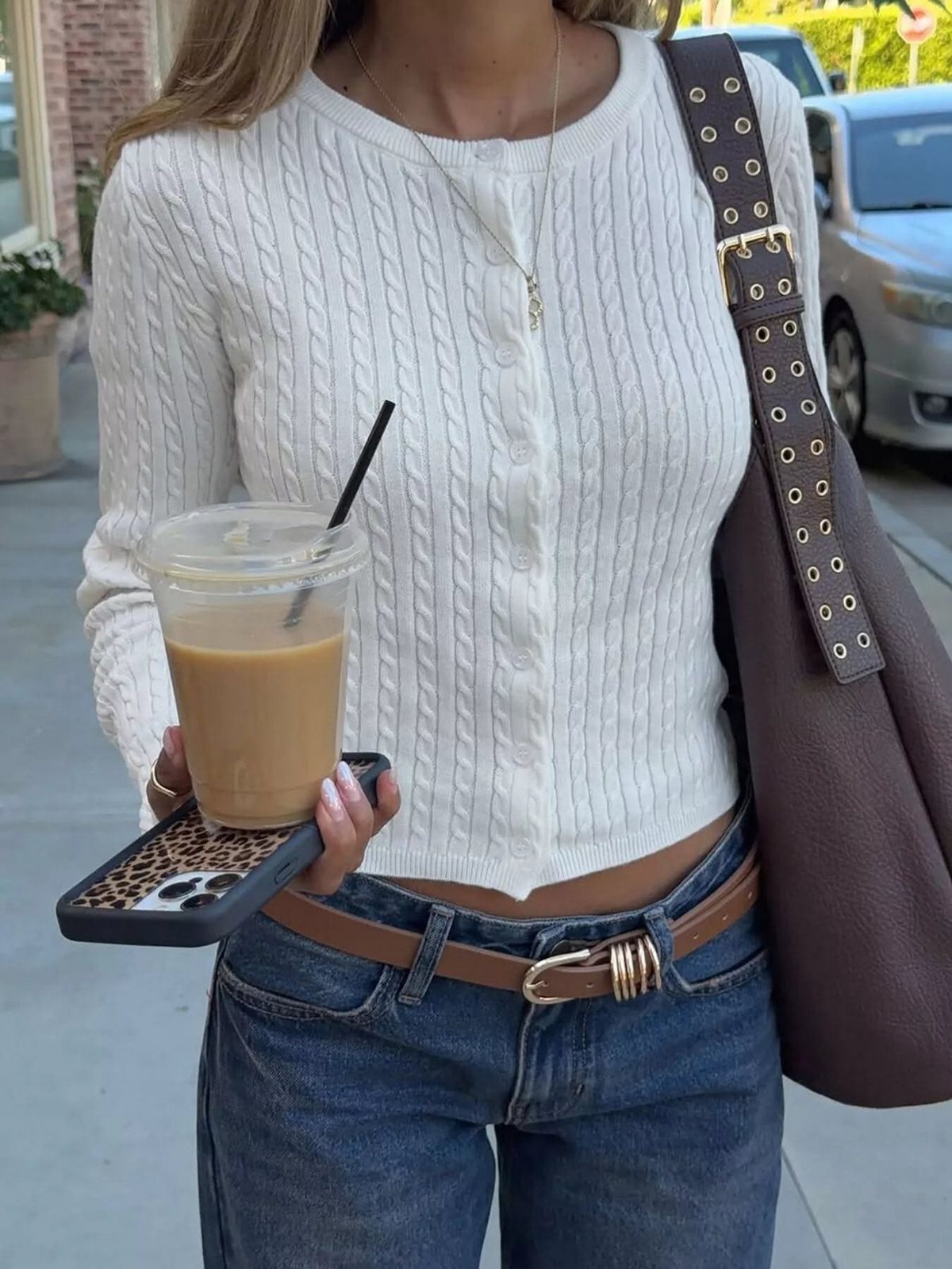
A cropped knit exposes enough midriff to read deliberate, not accidental, but cable texture and buttons keep it from feeling too bare. That tension is what makes the piece useful: it dresses up jeans without requiring a full separate bottom.
High-waisted pants or skirts are non-negotiable unless you are built for low-rise.
The ribbed or fitted versions layer more cleanly under cardigans than bulky cable knits do. For cooler days, a cropped cardigan in the same gauge works the same waist emphasis with more coverage.
I would skip necklaces here; the neckline and buttons already hold the eye.
4. Baggy Denim or Cargo Pants
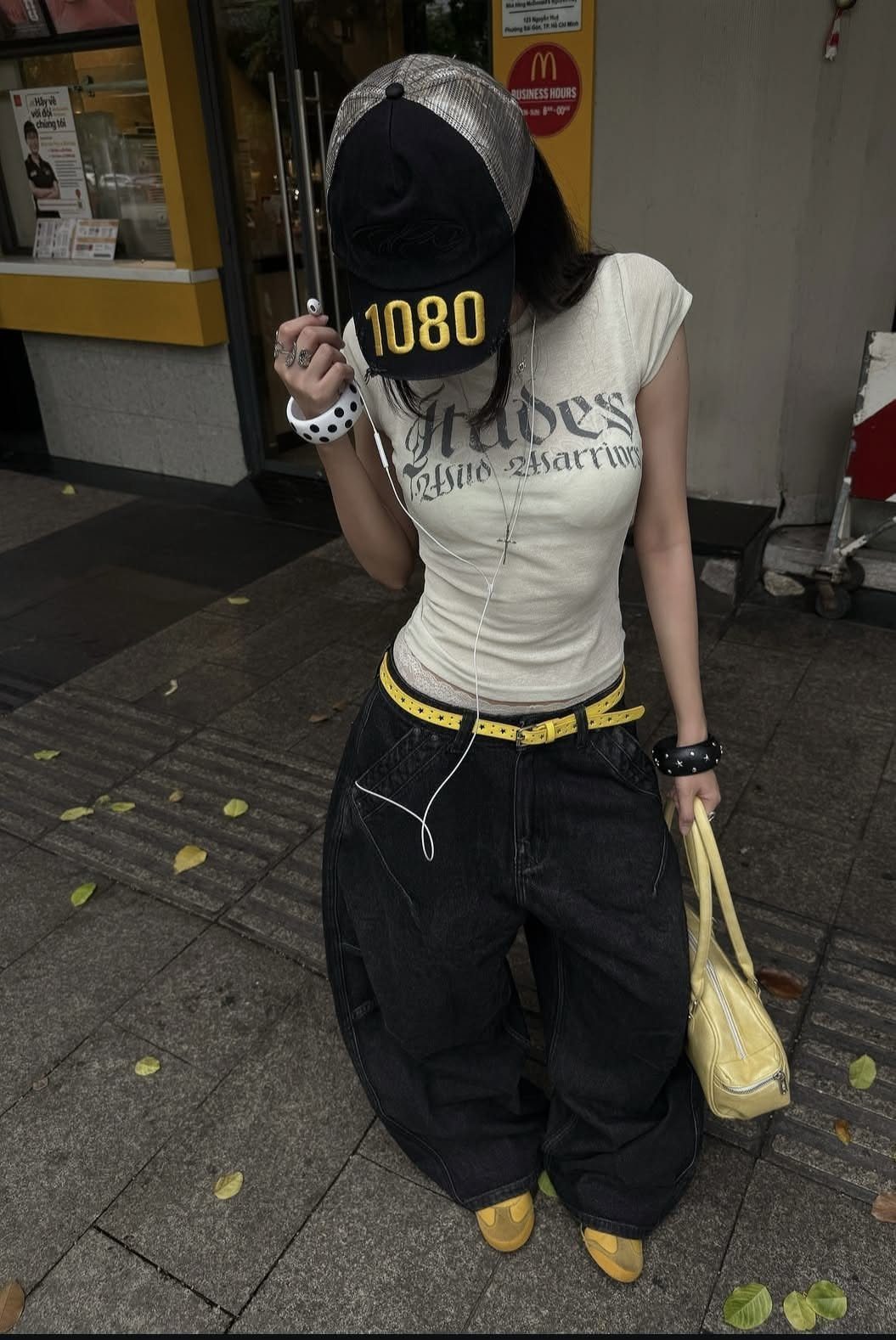
Baggy denim or cargo pants have the most impact when the top half contradicts them.
The fitted "Hades" tee and narrow cap above keep the wearer from swimming in fabric, and the yellow accessories pick up the graphic’s energy without competing.
Black denim this wide reads streetwear; olive or tan cargos lean more utilitarian.
Either way, the waistband should sit flat, a belt helps, and the hem needs to break cleanly over the shoe. Pooling fabric at the ankle ruins the line.
I have learned to check the rise before buying: too low and the bagginess reads accidental, too high and the crotch drops awkwardly.
5. Neutral Cardigans
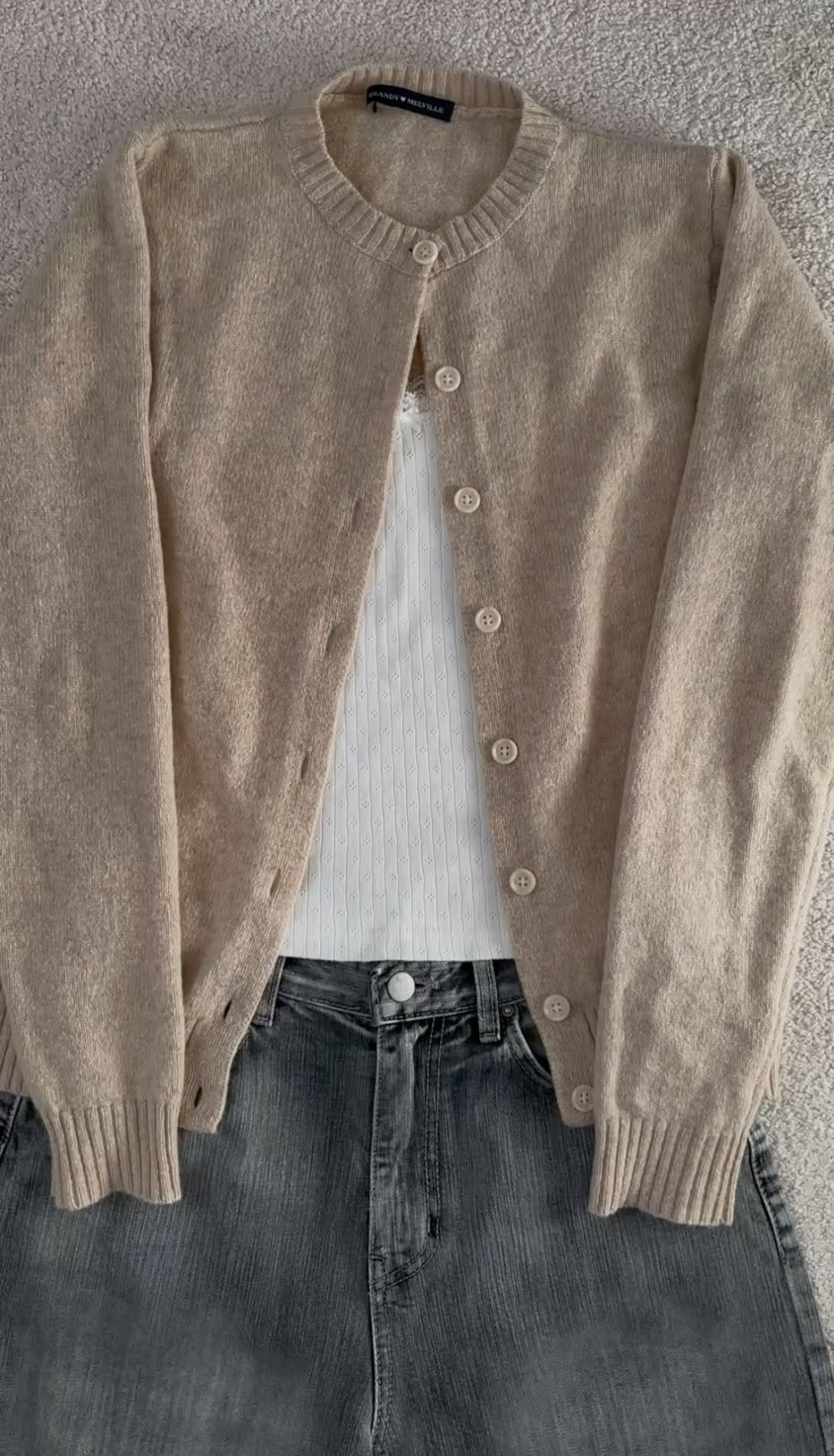
A neutral cardigan is the piece I reach for when the day has no single temperature. A beige button-up layers over a camisole without adding bulk, and the tone works with any denim wash from faded grey to dark indigo.
The Brandy Melville tag visible here signals a particular fit: cropped, slim-armed, meant to wear open or just barely closed.
For a longer torso or more coverage, look for a similar gauge in a longer line from a brand that sizes in actual numbers. Green, camel, or oatmeal all function as neutrals if your closet leans warm.
I would keep the base layer simple; the cardigan is doing the work.
6. Mini Skirts
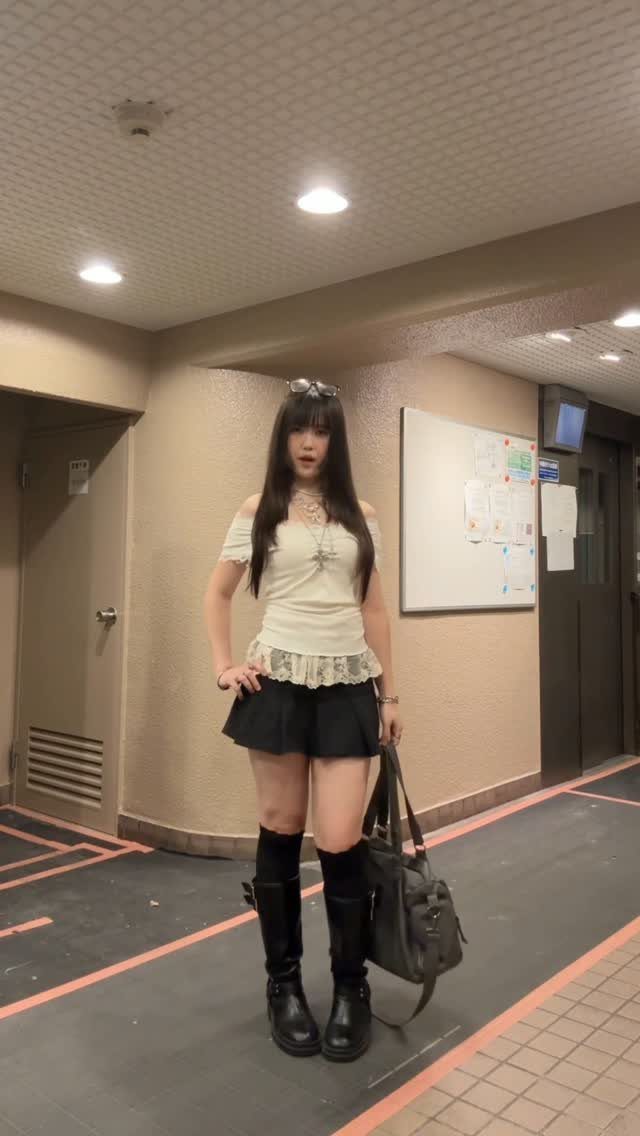
Mini skirts trade coverage for leg line, so the rest of the outfit needs to decide whether the look reads school uniform or something else.
An off-the-shoulder top and boots push toward evening; sneakers and a crewneck take the same skirt to a coffee shop.
Pleated versions hold their shape and move well, which matters more than it sounds, a stiff mini rides up and needs constant adjustment.
Knee-high socks extend the season into fall and add a layer of texture that bare legs do not.
I find the most wearable length hits mid-thigh, short enough to feel intentional, long enough to sit down in.
7. Burgundy and Brown Tops
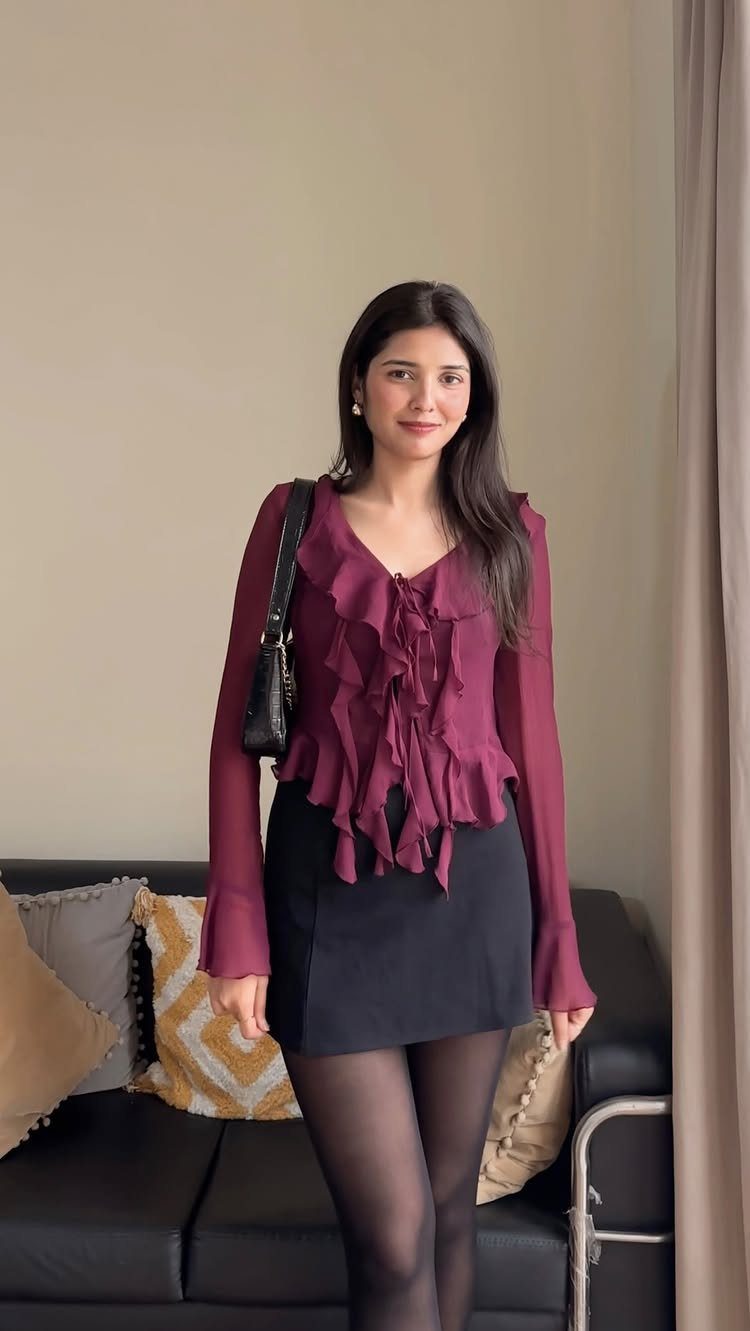
Burgundy and brown read as richer versions of the black and navy most people already own.
A sheer burgundy blouse with ruffle detail works across seasons; in fall it pairs with a brown leather bag and boots, in spring with a black mini and tights.
Keep the tones in the same family.
A brown that leans orange fights a burgundy that leans purple. Chocolate, cognac, and oxblood play together; tan and wine do not.
I would add these colors through accessories first if the palette feels unfamiliar. A burgundy bag or brown belt tests the water without committing a whole garment.
8. Graphic Crop Tops
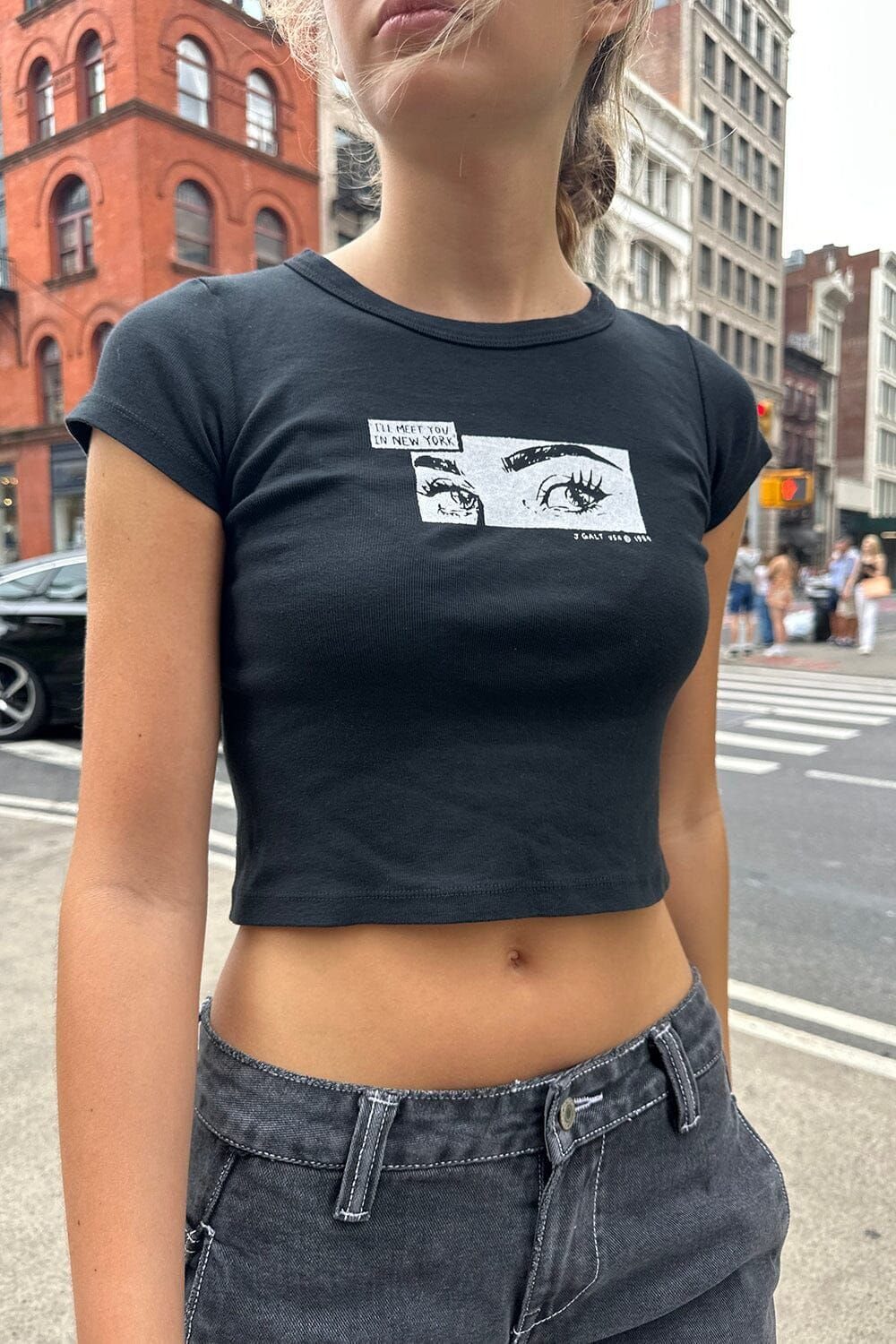
A graphic crop top does half the styling work by announcing a mood before you have said anything.
The New York print here reads city weekend; swap it for a band logo or abstract face and the same cut of top goes to a concert or gallery opening.
High-waisted bottoms are non-negotiable.
The crop shows skin at the narrowest point of the torso, and a low rise breaks that line entirely. Dark denim or a structured mini skirt keeps the look from tipping into costume territory.
I skip necklaces with busy graphics; the print is already the statement. Small hoops or a single ring finish without competing.
9. Flared Jeans
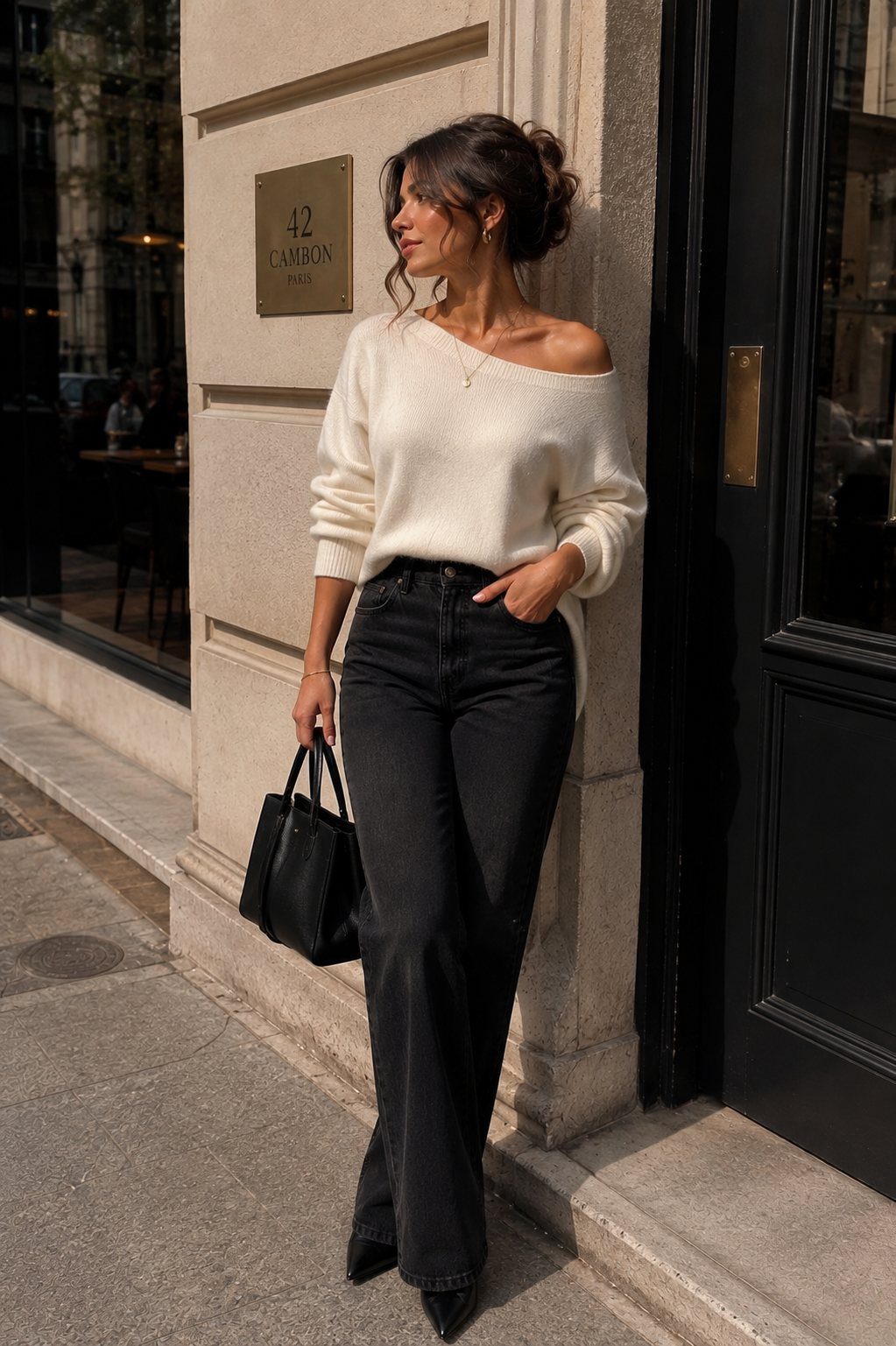
Flared jeans widen from the knee down, which balances hips and lengthens the leg in a way skinny cuts do not. Black flared jeans worn with an off-shoulder cream sweater keep the silhouette clean and the palette simple.
A fitted top works best; the flare supplies the volume, so a loose sweater on top needs to be tucked or cropped to avoid a shapeless middle.
For shoes, a slight heel or platform sits under the hem more naturally than flats, which can leave the pant dragging.
I find dark washes more versatile than light for this cut. The drama is already in the shape; indigo or black lets you wear them to dinner without overthinking.
10. Chunky Sneakers
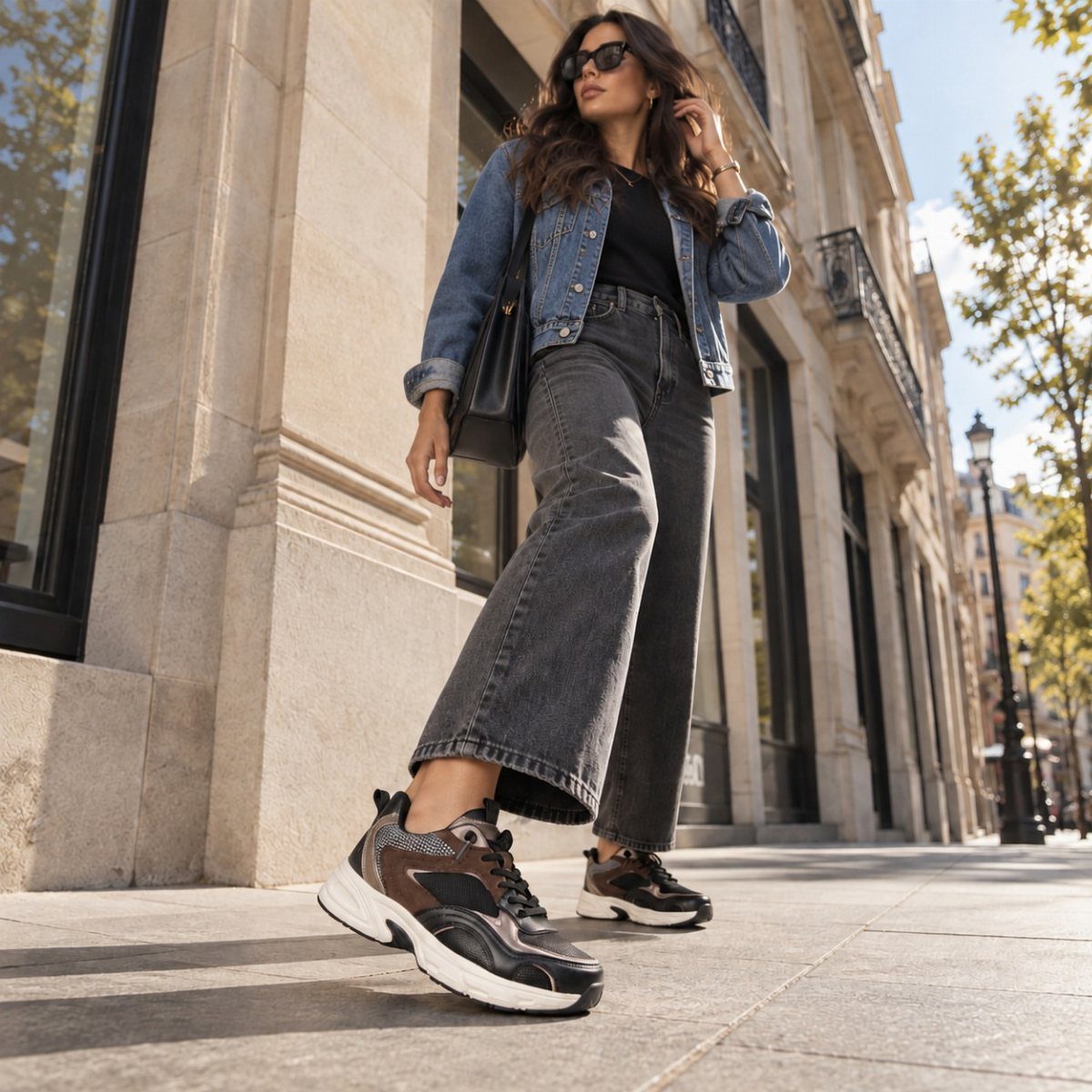
Chunky sneakers add literal weight to an outfit, which sounds wrong until you see how they ground wide-leg pants or long skirts that would otherwise float.
The faded black denim and oversized denim jacket here get their structure from the shoe’s platform sole.
Not every casual look needs them.
With leggings or a narrow trouser, the bulk sits at the foot like an afterthought. They work best when some part of the outfit is already oversized, a boxy tee, a long coat, baggy jeans, so the proportion reads intentional.
I would choose white or cream for maximum versatility; the colored panels on trendier pairs date faster than the silhouette itself.
11. Brown Leather Jackets
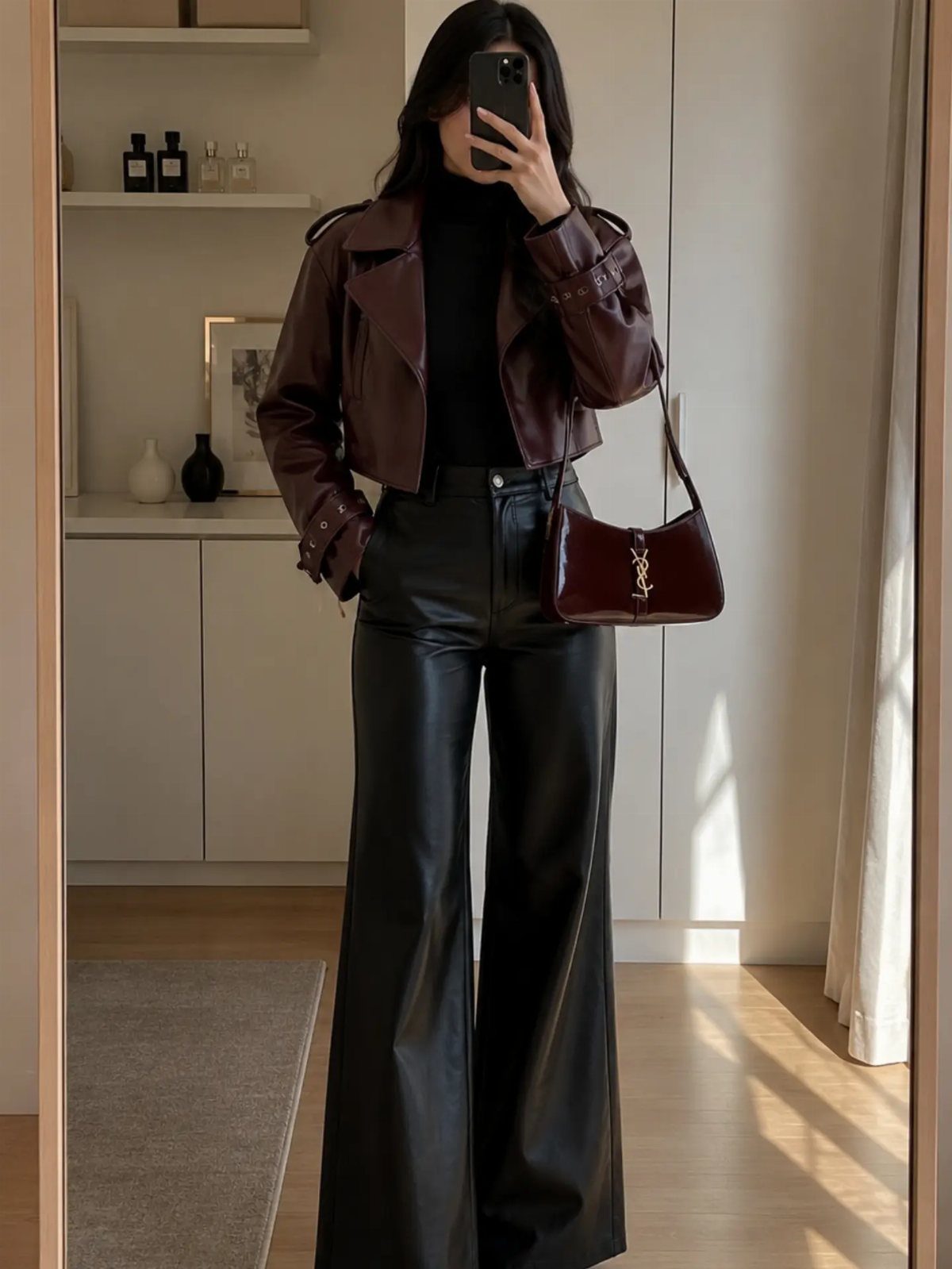
A brown leather jacket carries less visual noise than black, which means it softens an outfit rather than hardening it. The cropped burgundy-brown version here, worn over a black turtleneck with matching leather trousers, reads pulled-together rather than aggressively edgy.
The length matters. A cropped cut like this one works with high-waisted pants or dresses; a longer bomber or moto style needs a slimmer leg to avoid bulk.
Real leather develops patina; vegan versions crack or peel after a few seasons of hard wear.
I would layer this over a floral midi dress for contrast, or commit to the full leather-on-leather look. Halfway, a leather jacket with sweatpants, rarely lands.
12. Pleated Skirts
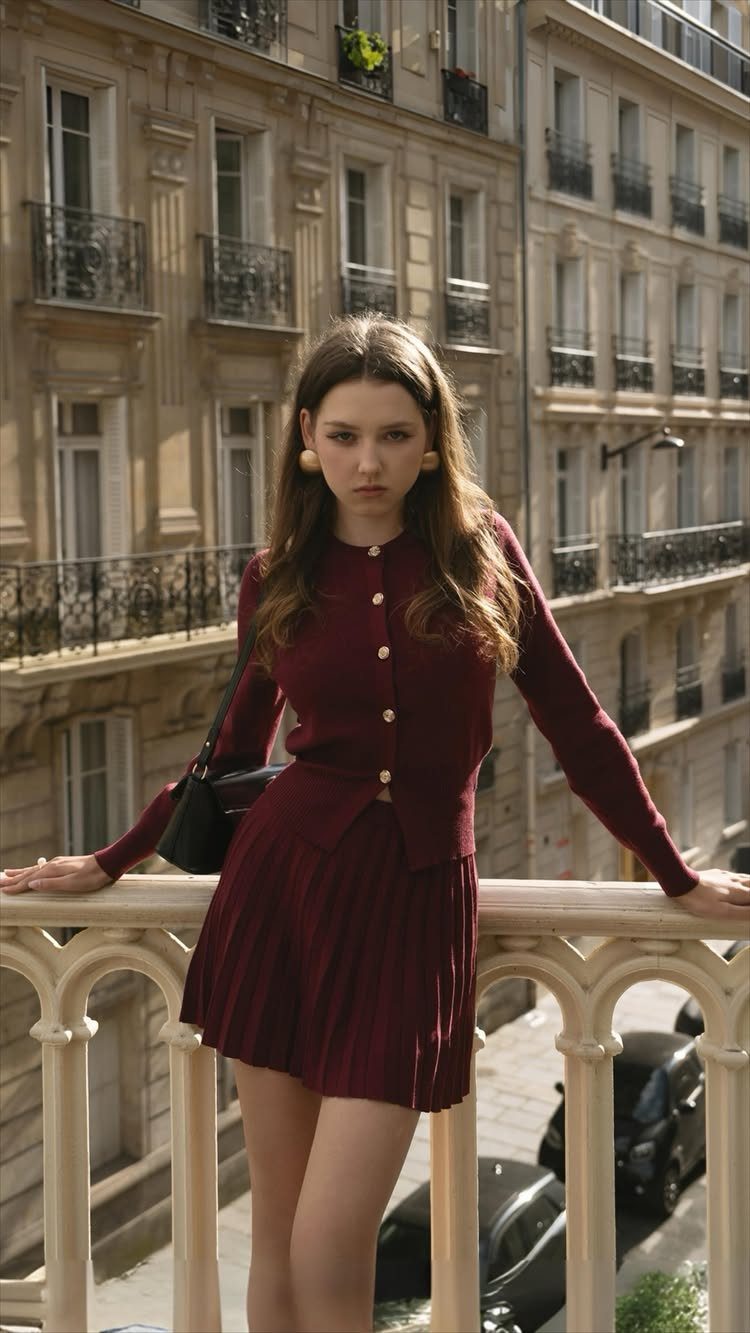
Pleats hold a press and move with a swing that flat fabrics cannot replicate.
The matching burgundy cardigan and mini here use the pleat as texture in an otherwise simple shape; the gold earrings pick up the warmth without adding pattern.
The mini length keeps it young; a midi or maxi pleat reads more office or occasion.
For daytime, a fitted tee or thin turtleneck tucks in cleanly. For evening, an oversized sweater half-tucked at the front keeps the skirt visible without trying too hard.
I check the waistband construction before buying. Pleats sewn flat at the band hold their shape through sitting; those that start below it tend to belly out by noon.
13. Loungewear Sets
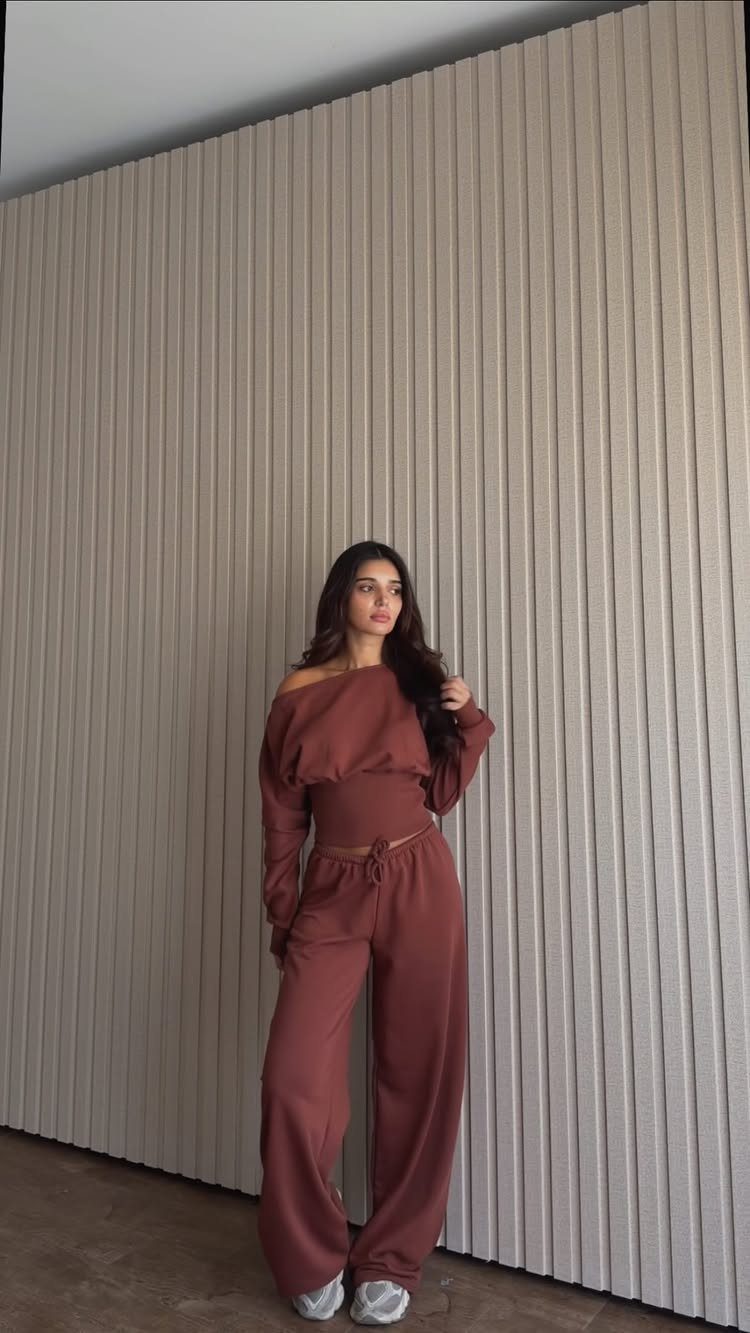
A matching loungewear set reads intentional in a way that sweatpants and a random tee do not.
An off-the-shoulder cut adds structure to something otherwise soft, and wide-leg pants balance a cropped top so the silhouette still registers as an outfit.
Fabric weight matters more than you’d think. Too thin and it reads as pajamas; too thick and it loses the ease that makes loungewear appealing.
A ribbed knit or substantial cotton blend walks that line. Sneakers rather than slippers push the look out of the house without forcing it.
I would stick to warm neutrals, terracotta, chocolate, or oatmeal, since brights in this category tend to look like gym class.
14. Pastel Tops and Bottoms
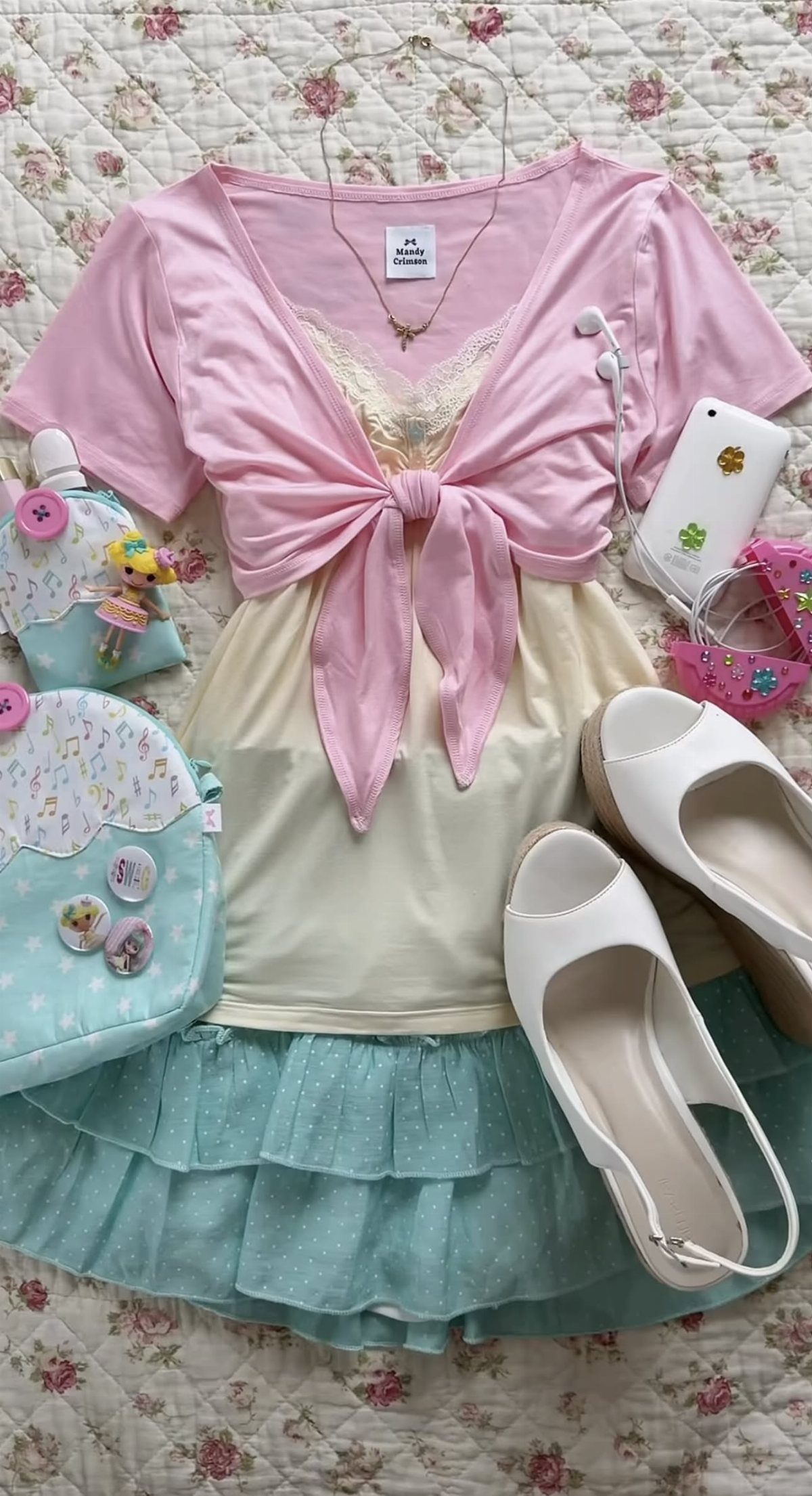
Pastel reads differently than neon or jewel tones because it softens the silhouette rather than sharpening it. A mint skirt with a cream camisole and pink cardigan layers 3 pale shades without clashing because none fight for dominance.
The risk is sweetness overload.
One deeper tone, a dusty rose against powder blue, or a single neutral anchor, cream or pale grey, keeps the look from feeling like a costume. White sneakers or a natural straw bag ground the palette without darkening it.
I would add pastels through accessories first if the full look feels too young. A single pale piece against denim tests whether the tone flatters your coloring before you commit to head-to-toe.
15. Layered Necklaces
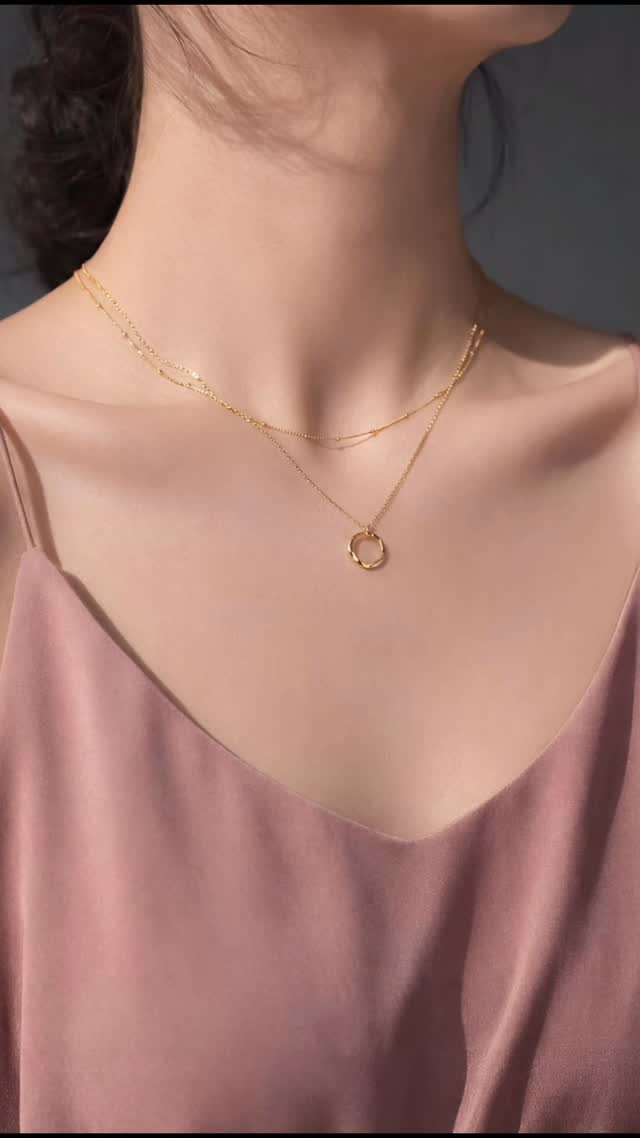
Layered necklaces solve the problem of a bare neckline without the formality of a single statement piece. Two thin chains at different lengths, a shorter beaded strand and a longer pendant, create movement where one chain would sit static.
The spacing matters more than the individual pieces. A one-inch gap between chains tangles; three or more lets each sit in its own zone.
V-neck or scoop necklines give the layers room to fall; a high crew swallows them. Mixed metals can work, but matching tones is the safer bet for daily wear.
I start with a choker-length chain and add a mid-chest pendant, then stop. A third layer rarely adds enough to justify the tangle risk.
16. Statement Jewelry
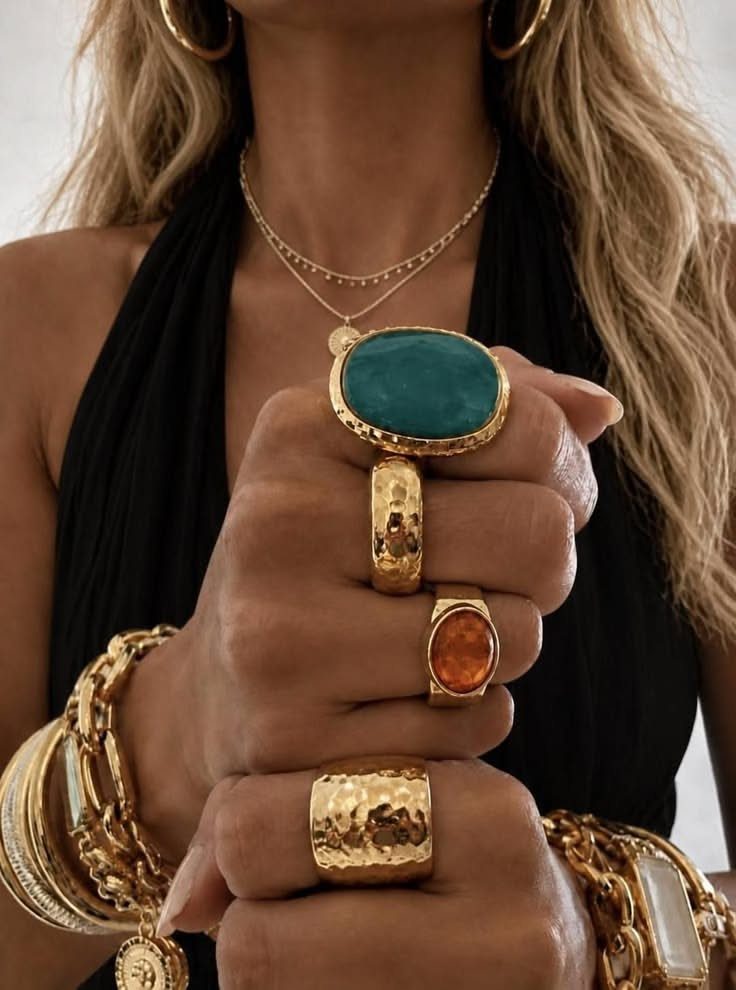
Statement jewelry carries an outfit when the clothing underneath is simple. A black halter top with stacked gold rings, chunky bracelets, and layered necklaces reads deliberate rather than unfinished because the metal supplies all the interest.
The limit is one zone. Ears, neck, wrists, and fingers all screaming at once looks like a jewelry box exploded.
If the rings are oversized and the bracelets thick, keep earrings small or skip them entirely. Turquoise and amber stones warm up gold in a way that silver and clear stones do not.
I would build slowly, one bold piece at a time, since statement jewelry photographed well does not always wear well through a full day.
17. Soft Boy Aesthetic
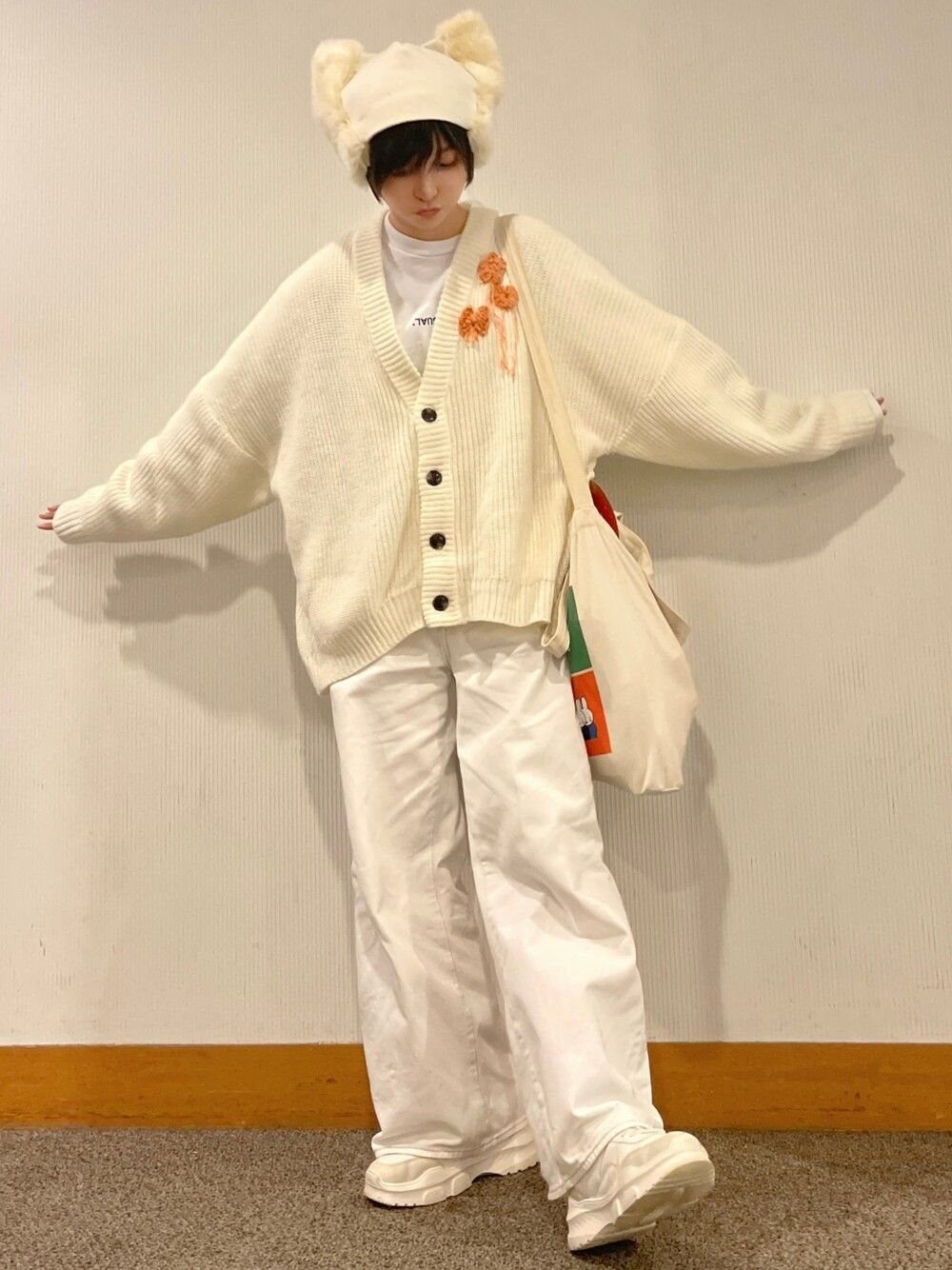
Soft boy style borrows from vintage menswear but keeps the fit relaxed and the palette muted.
An oversized cream cardigan with floral detail, wide white pants, and a plush hat reads gentle without tipping into costume because each piece is functional, not merely decorative.
The silhouette depends on contrast. A fitted bottom with the same oversized top would read as a different style entirely; the baggy pant continues the ease of the cardigan.
Pastel or neutral tones keep the look cohesive, and the accessories, tote bag, bear hat, add personality without demanding attention.
I would swap the hat for a simple beanie for everyday wear. The plush version photographs well but draws more notice than most want at the grocery store.
18. Low-rise Jeans and Crop Tops
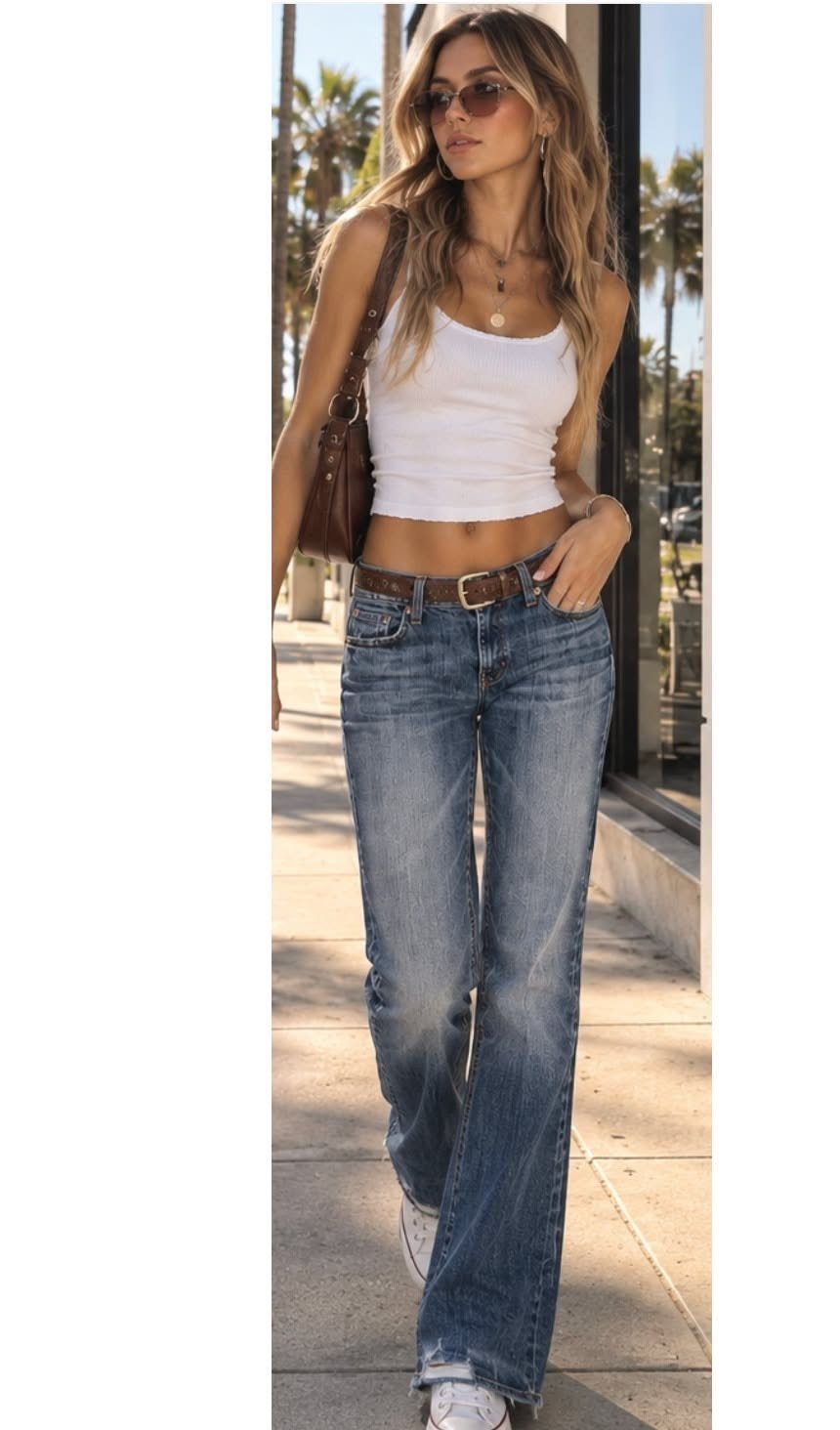
Low-rise jeans sit below the natural waist, which changes how a crop top reads.
Rather than exposing a sliver of midriff above a high band, the gap is longer and lower, which means the top itself needs to be shorter or the look becomes unintentionally revealing.
A white cropped tank and blue denim with a belt keeps the palette clean and the waist defined.
The belt matters here; without it, the eye has no landing place between the 2 pieces. Sneakers keep it daytime; swapping to a heeled sandal pushes it toward evening.
I find this combination works best on longer torsos. A short waist can handle high-rise better; low-rise shortens the leg line in a way that needs height to balance.
19. Cottagecore Aesthetic
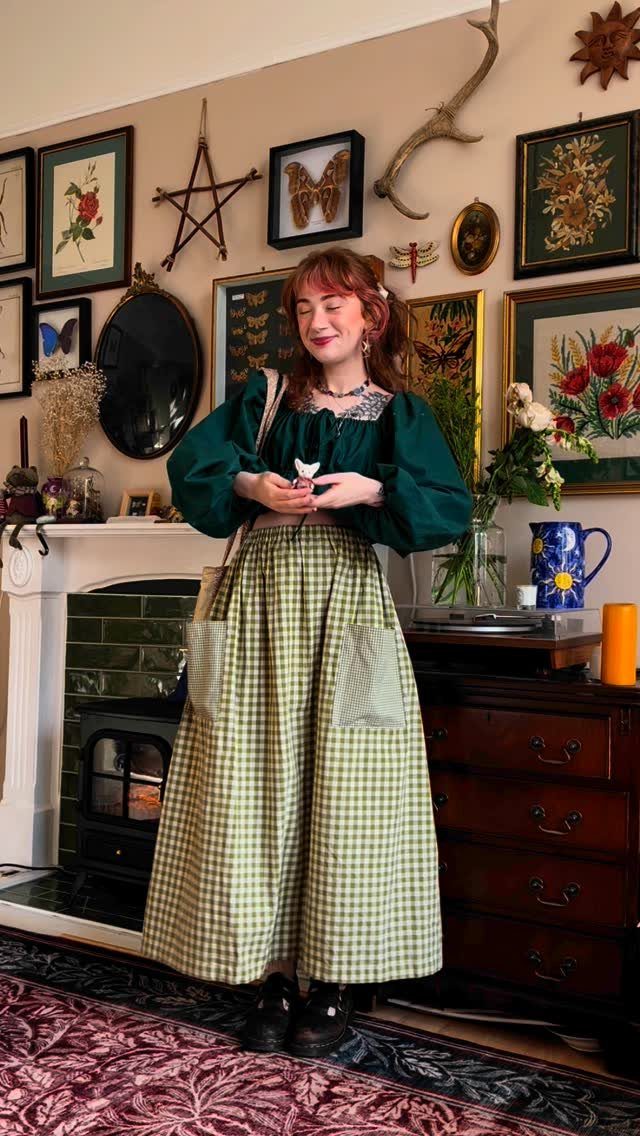
Cottagecore leans on pieces that already exist in most closets: a peasant blouse with gathered sleeves, a midi skirt in small-check gingham, colors pulled from garden and field.
The look works because nothing fits too precisely; ease reads as romantic rather than sloppy.
Natural fibers carry it better than synthetics.
Cotton and linen wrinkle, but that creasing suits the aesthetic in a way stiff polyester does not. Florals read as the default; gingham, stripes, or a solid moss green keep it from becoming one-note.
I would ground the sweetness with one practical piece. A woven basket bag or leather ankle boots remind the eye this is clothing for walking in, not only for posing.
20. Old Money Aesthetic
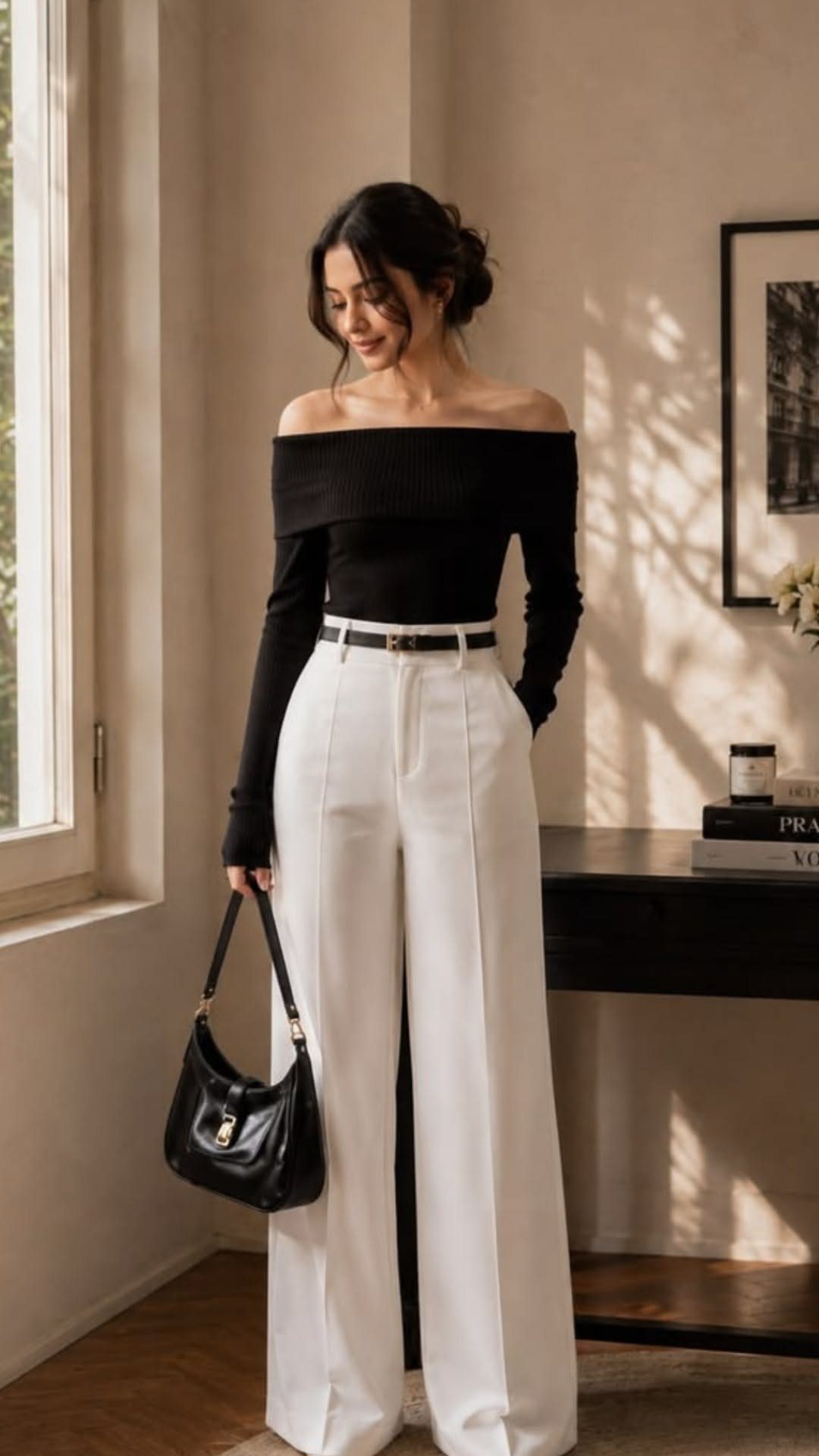
Old money style is less about price than about restraint.
An off-shoulder black knit with wide white trousers and a slim belt gives the silhouette structure without shouting; the palette stays in navy, cream, camel, and black because those colors do not trend.
Tailoring matters more than label. Trousers should break cleanly at the shoe; a belt should match shoes or bag, not both.
The fabrics read quality through weight and finish: wool crepe, silk knit, polished cotton. Anything that pills, clings, or shines cheaply betrays the effort.
Start with a white button-down and tan wide-leg trousers.
Add a brown leather belt and matching bag, white loafers or slim sneakers. The outfit costs the same as fast fashion; it simply asks for better choices.
21. Festival Outfits
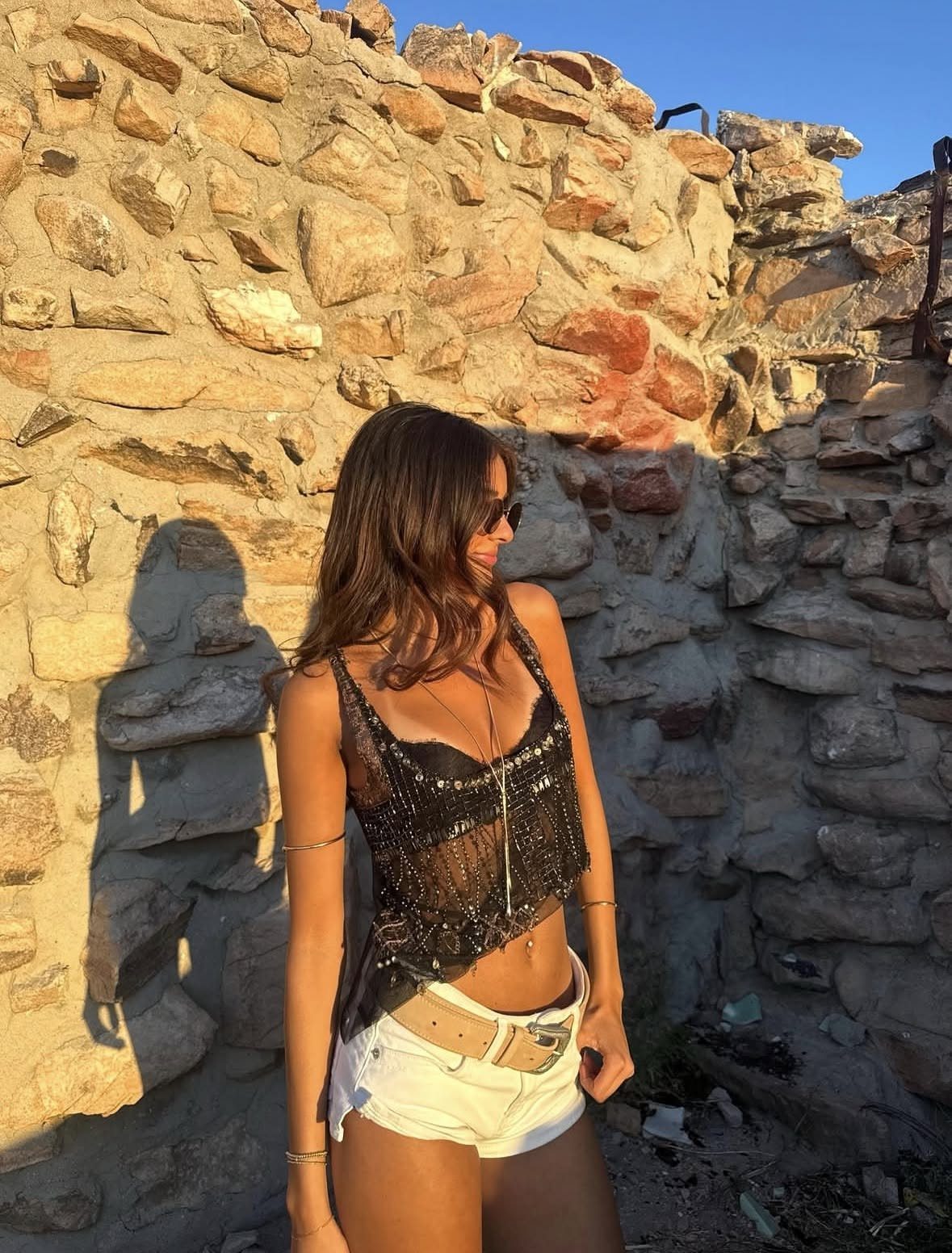
Festival dressing is the one context where more actually works.
The sheer black beaded top here gains permission from its setting; the same piece on city streets reads as costume. White denim shorts and a Western belt ground the sparkle in something functional, pockets and all.
Day events need sun coverage.
A long-sleeve sheer layer protects without adding heat; a hat does more than accessorize. Night sets run cold, so a jacket tied at the waist or stashed in a crossbody bag saves the evening.
I would choose one zone for attention.
Sequins, fringe, or bold color in a single piece; the rest supports. A silver sequin skirt and white boots work because the top is plain ribbed knit, not competing.
22. Cozy Fall Outfits
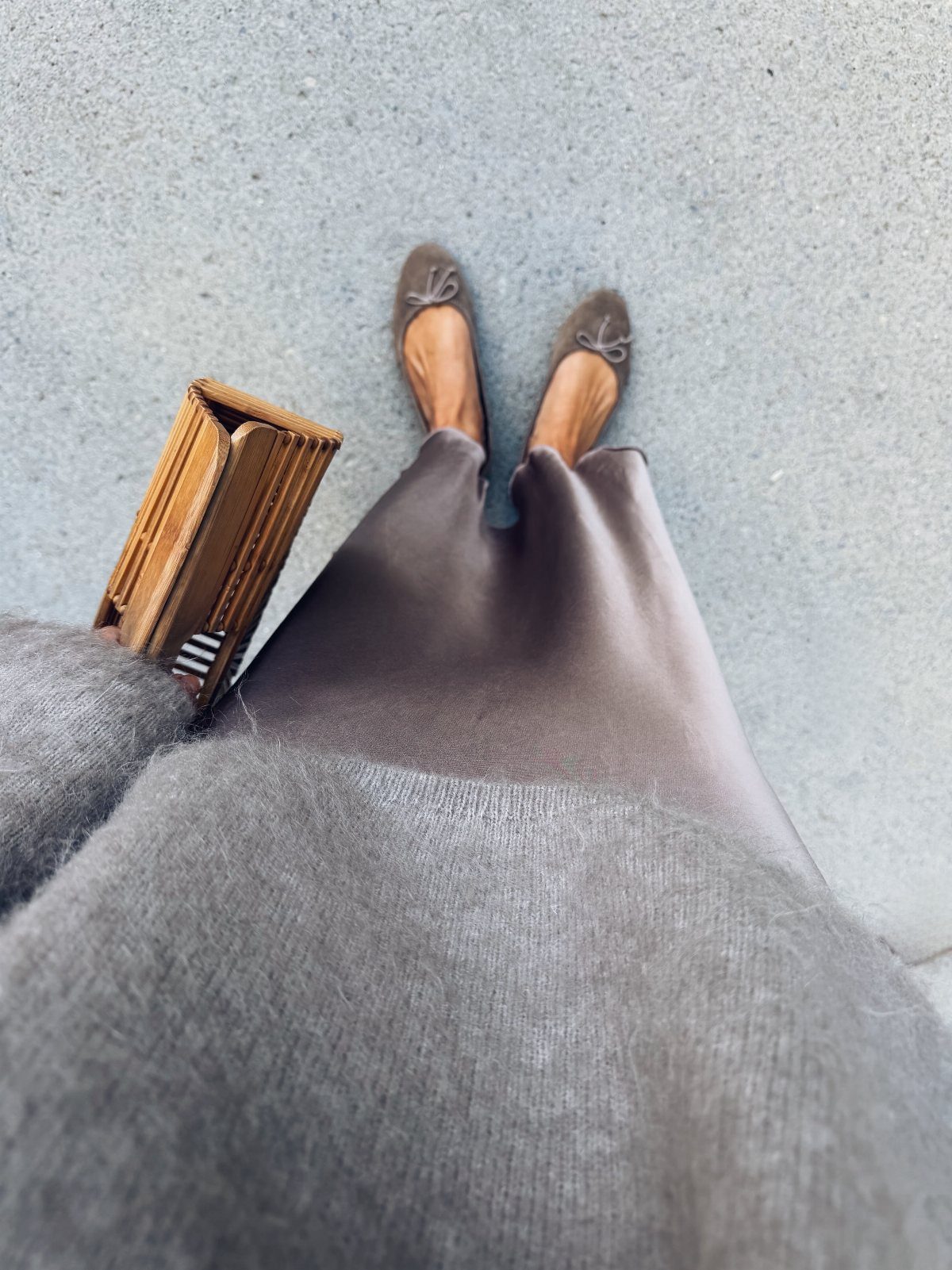
Cozy fall dressing is about texture more than silhouette.
A fuzzy grey knit against a satin midi skirt mixes matte and shine; the taupe and brown palette keeps the contrast gentle rather than jarring. Ballet flats continue the softness where boots would weigh it down.
Layering needs hierarchy. A thin turtleneck under a cardigan under a coat offers three temperatures in one outfit; a bulky sweater under a bulky jacket offers none.
Scarves work best when they contrast the knit: smooth silk against wool, chunky knit against a sleek coat.
Keep the grey and taupe story or shift to burgundy with charcoal denim. Gold jewelry warms either palette; silver reads cooler than most autumn complexions need.
23. Bratz Aesthetic
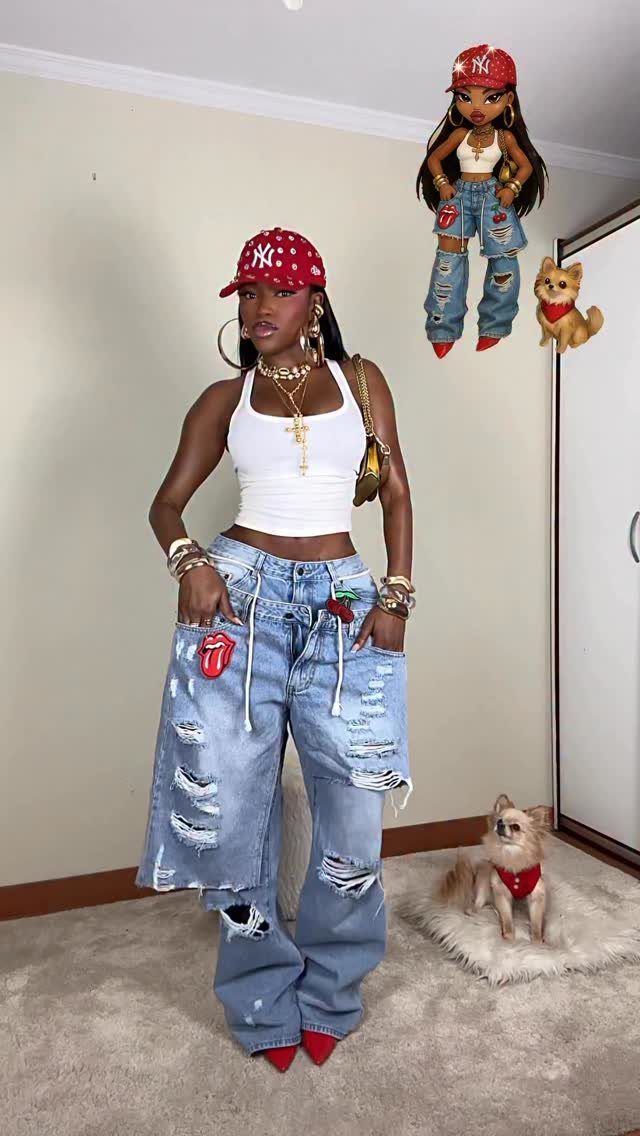
Bratz style takes the exaggerated proportions of Y2K fashion and pushes them further: oversized ripped denim, a shrunken top, accessories that read as toys.
A red cap repeats a color from the doll reference without turning the whole look into costume.
Commit to one statement.
Ripped jeans this wide demand a fitted or cropped top; a loose layer on both ends loses shape entirely. Jewelry piles on, but in a single metal or color story; mixed messages read as accident.
Borrow the pink monologue for a single piece, a beret, a cardigan, boots, rather than head-to-toe. One Bratz reference lets the rest of the outfit function normally.
24. Glitz and Glam Outfits
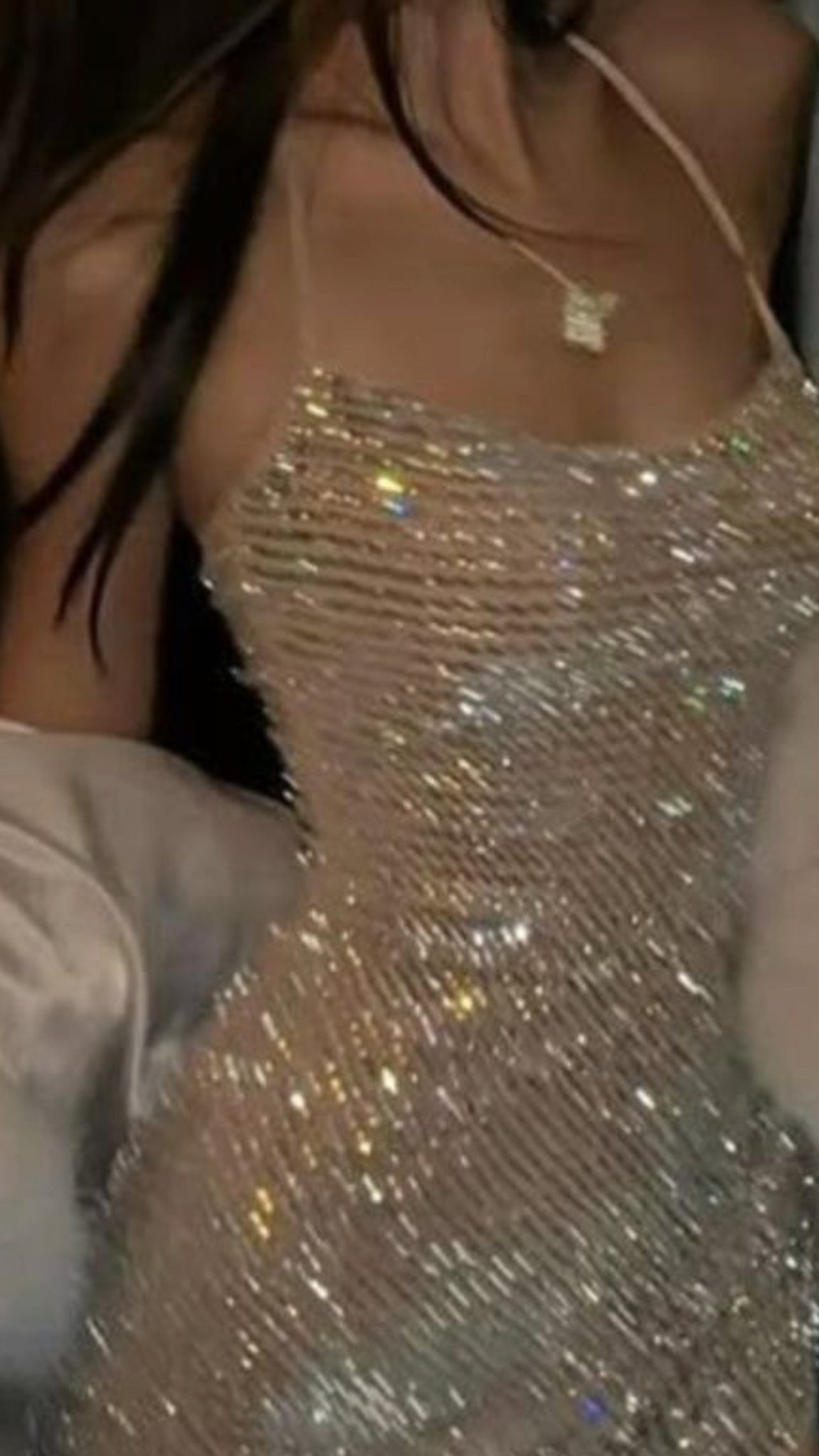
Glitz and glam dressing answers a specific invitation: the dress code said so, or the host demands it.
A sequined mini in silver catches light at every movement; the thin straps and short length balance the fabric’s weight so the overall effect stays light.
Metallics read as neutrals in this context.
Silver, gold, rose gold mix more freely than daytime rules allow; one tone should dominate. A black moto jacket over a silver sequin maxi works because the jacket is the exception, not half the conversation.
I would keep accessories in the same metal family as the dress.
A gold necklace against silver sequins only works when the rest of the hardware matches; mixed metals read as accident rather than intention. One bold piece, a clutch or a cuff, outperforms scattered small shine.
25. Casual Summer Outfits
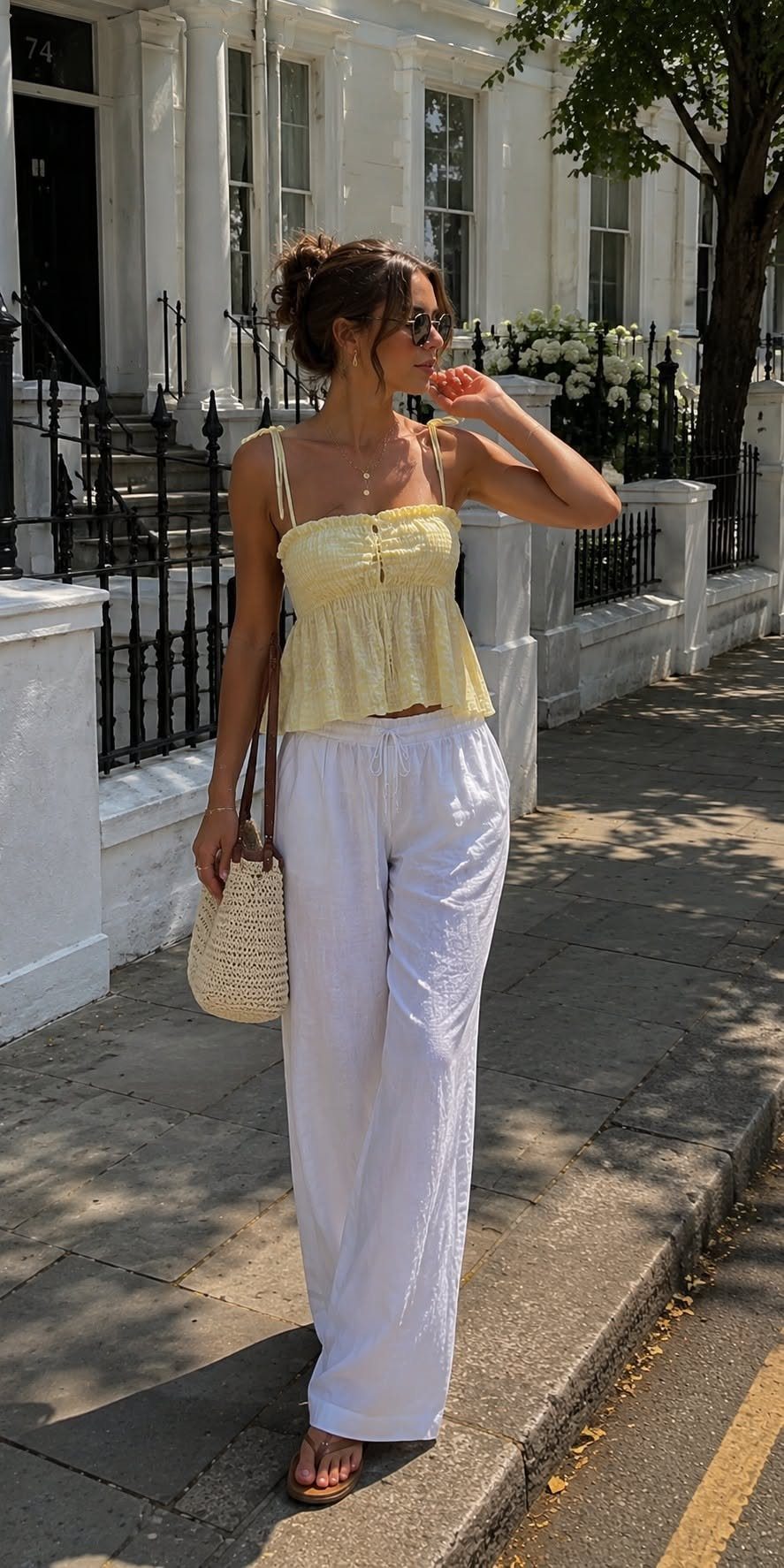
Casual summer dressing lives or dies by fabric choice.
Linen trousers and a spaghetti-strap top in pale yellow let air move; denim shorts and a tank would serve the same function with less polish. The woven bag repeats the texture story without adding weight.
White dominates these palettes because it reflects heat rather than absorbing it.
A single warm accent, butter or terracotta, keeps the look from washing out paler complexions. Sandals should be walkable; city summer days cover more ground than resort afternoons.
I would skip the structured handbag entirely. A crossbody or tote in rattan or canvas completes the ease rather than fighting it.
26. Layering Basics
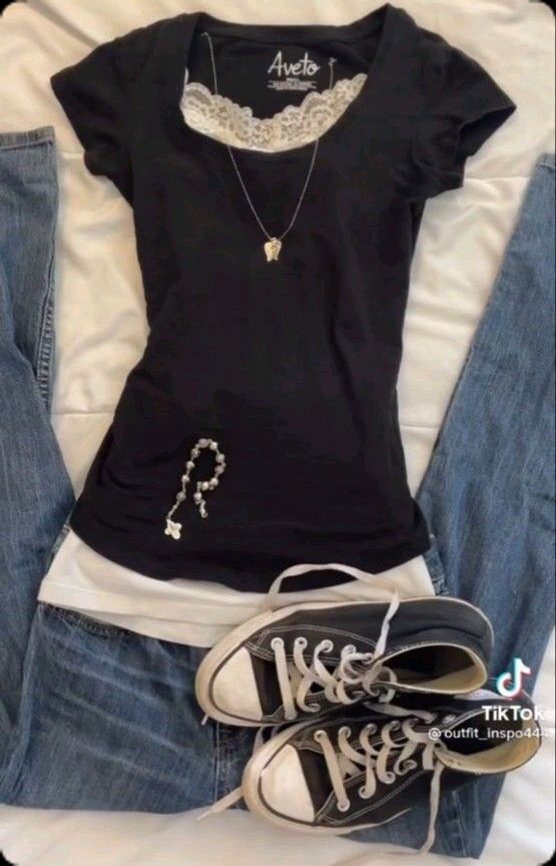
Layering basics are the pieces you reach for when a single top feels incomplete.
A black scoop tee over a white lace camisole adds one visible edge of contrast at the neckline and hem; that slight reveal is what makes it work.
The base layer should be thinner than what covers it.
A camisole or fitted tank sits flat; a bulky thermal beneath a tee reads as accident. Cardigans enter when temperatures drop, but the same rule holds: the underlayer must be sleek enough to stay smooth.
Stick to black, white, grey, and denim blue. These colors layer without competing, and each piece earns its place in multiple combinations.
27. Vintage-inspired Outfits
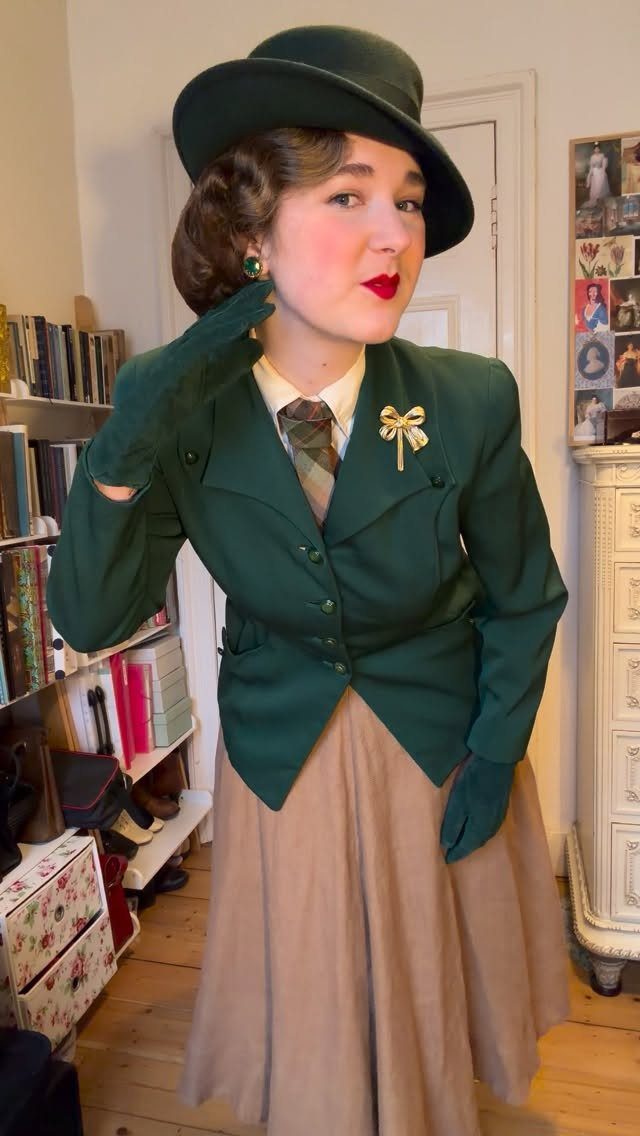
Vintage-inspired dressing borrows silhouette and detail from a specific era rather than copying it exactly. The 1940s reference here shows in the tailored jacket, midi length, and gloves; the forest green and brown palette keeps it wearable rather than theatrical.
Accessories do the era’s work.
A brooch, a structured hat, or gloves signal period faster than clothing cuts alone. Modern fabrics improve wearability: a wool-blend jacket holds its shape without the maintenance of true vintage.
One element per outfit is usually enough. The full ensemble photographed reads as costume on most streets; a single vintage piece, the jacket alone or the brooch on a contemporary coat, borrows the mood without the commitment.
28. Athleisure Outfits
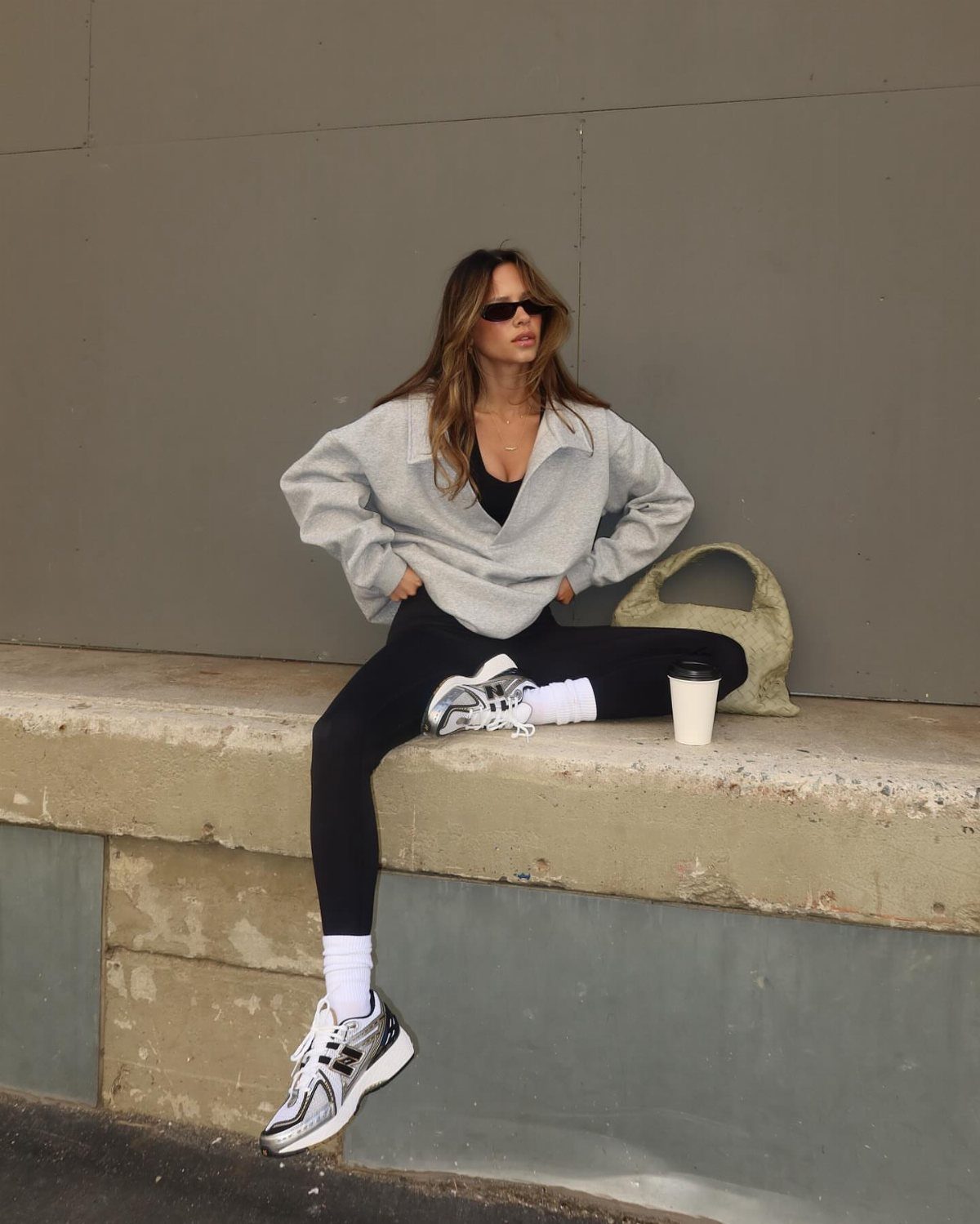
Athleisure succeeds when the sporty pieces look intentional and the casual pieces look chosen.
An oversized grey pullover with black leggings and chunky sneakers reads as an outfit because the proportions balance: volume on top, fitted below, substantial footwear anchoring both.
The leggings should be matte and opaque.
Shiny compression fabric belongs in the gym; cotton-blend or brushed jersey transitions to coffee runs and errands. Sunglasses and a structured bag pull the look past pure gym wear without contradicting it.
I would reserve this for days with one or two stops, not a full schedule. The comfort is real, but repeated sitting in leggings loses its appeal by hour four.
29. Casual Chic Outfits
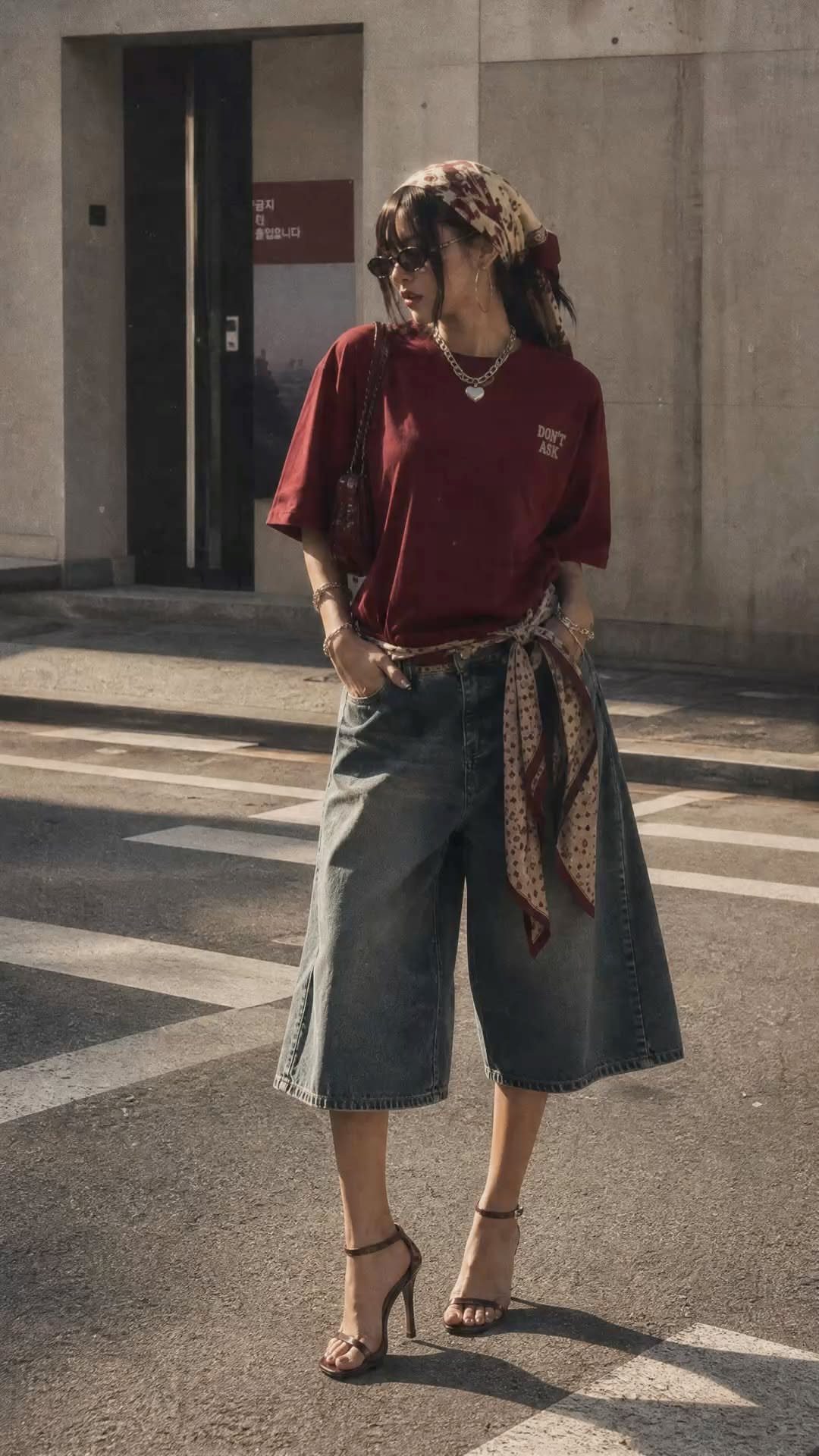
Casual chic is the tension between 2 impulses, not a blend.
A graphic tee and denim bermuda shorts read as weekend; strappy heels and a silk scarf dragged in from elsewhere read as effort. The collision is the style.
The accessories must be good.
Cheap heels with a casual base look like a mistake; well-made ones look like a choice. The graphic should be worn, not crisp; a too-new tee against polished elements feels like a first attempt.
Bermuda or culotte cuts need height from the shoe; flats with this proportion shorten the leg. I would try a low block heel if strappy feels too exposed for the day’s plans.
30. Streetwear Looks
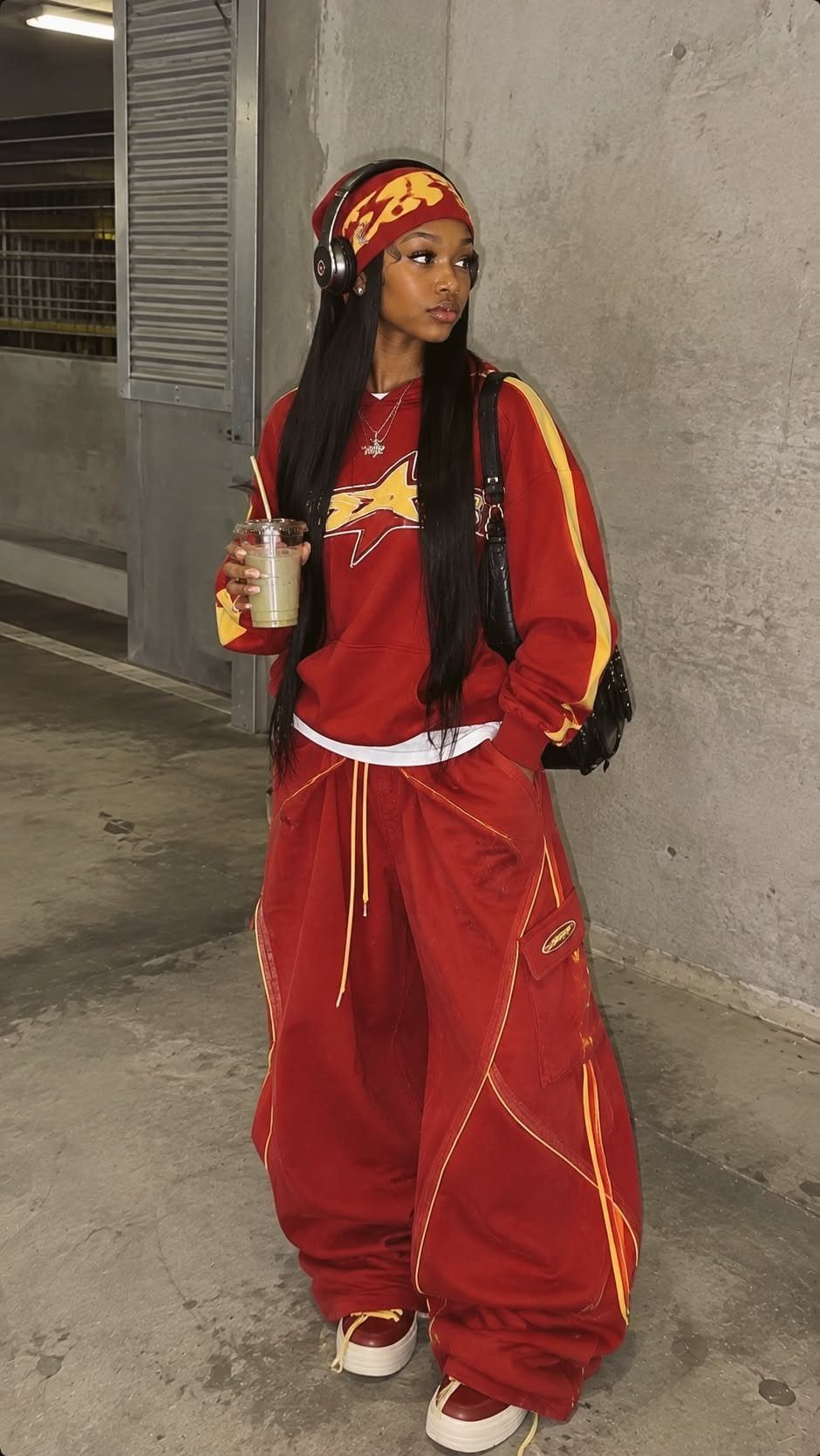
Streetwear takes scale from sportswear and attitude from nowhere else. An oversized tracksuit in bold red with headphones and beanie reads as uniform because every piece agrees on proportion: large, larger, largest.
Color commitment separates this from loungewear.
The full red story here, jersey to beanie, makes a statement that grey or black would not. Gold jewelry and a bandana add detail without breaking the color field; they read as customization, not contradiction.
The sneakers should be substantial.
A slim or minimalist shoe disappears under wide pants; chunky soles continue the volume the outfit demands. I would check pocket depth before buying: streetwear tracksuits without functional pockets miss half the point.
How to Style Outfits
Start every outfit with one piece that already fits well, then build outward. A jacket or cardigan adds warmth and structure; leave the bottom button open so the layer moves with you rather than pulling.
Texture mixing works when the weights differ: a chunky knit over a smooth camisole, or crisp cotton against soft leather. 2 textures of the same weight, like fleece on fleece, read as a mistake.
The fitted-versus-oversized balance depends on what you need the eye to notice.
Wide pants need a closer top so your shape still registers; a boxy tee needs either a short bottom or an equally wide leg so the proportions read as chosen.
Belts help when the waist disappears under layers. A half-tuck, front only, defines the waistline without looking studied.
Accessorizing Outfits
A bag should relate to the outfit’s volume, not match it.
Structured bags sharpen relaxed shapes; slouchy bags work with cleaner lines. I reach for leather or leather-alike totes in camel or black most often because they bridge casual and put-together without demanding attention.
Shoes ground the whole look literally and visually.
Hats and hair accessories do the work of jewelry when necklaces tangle or compete. A beanie in winter, a simple clip in summer: these finish an outfit without adding another layer to manage.
Color Coordination
Complementary colors sit opposite each other on the wheel, blue and orange, purple and yellow, green and red.
Used at full saturation they fight; dial one or both to muted or dusty versions and they harmonize. A rust pant with a dusty blue sweater works where bright orange and royal blue would shout.
Soft hues layer more easily than bold ones because none dominates. Three pastels of similar intensity, mint, cream, and pale pink, read as intentional; one neon piece among them breaks the cohesion entirely.
If you want to test a soft palette, start with two pieces in neighboring tones, a sage top with an olive bottom, then add a third only when those two feel settled.
Neutrals are not absence of color.
Warm neutrals, camel, chocolate, oatmeal, suit skin with yellow or olive undertones; cool neutrals, grey, true black, icy beige, suit pink or blue undertones. Most people know which flatters by which makes them look tired versus rested.
Frequently Asked Questions
What are some outfit aesthetics?
Soft boy, cottagecore, and old money aesthetics are solid starting points, and festival dressing or Y2K-influenced pieces like low-rise jeans with crop tops still have plenty of room to play.
Soft boy borrows from vintage menswear with relaxed fits and muted palettes; cottagecore uses peasant blouses and midi skirts in natural fibers; old money relies on restraint, tailoring, and a navy-cream-camel-black palette.
Each works with pieces already in most closets rather than requiring a full wardrobe overhaul.
What should I wear to look aesthetic?
Wide-leg jeans with a fitted or half-tucked top, oversized graphic tees balanced by shorter bottoms or baggy pants, and cropped knit tops with high-waisted bottoms all create intentional silhouettes.
Proportion does the heavy lifting: volume on one half needs structure on the other, or the whole thing goes shapeless. Neutral cardigans, pleated skirts, and burgundy or brown tops in place of basic black add warmth without demanding attention.