These outfits range from a styling trick you can do with what is already in your closet to investment coats that need checking fill weight before buying, and the one that works for you depends on whether your winter day is spent moving between heated interiors or standing in a slush puddle waiting for a rideshare.
1. Wool Coat Layered Over a Sweater
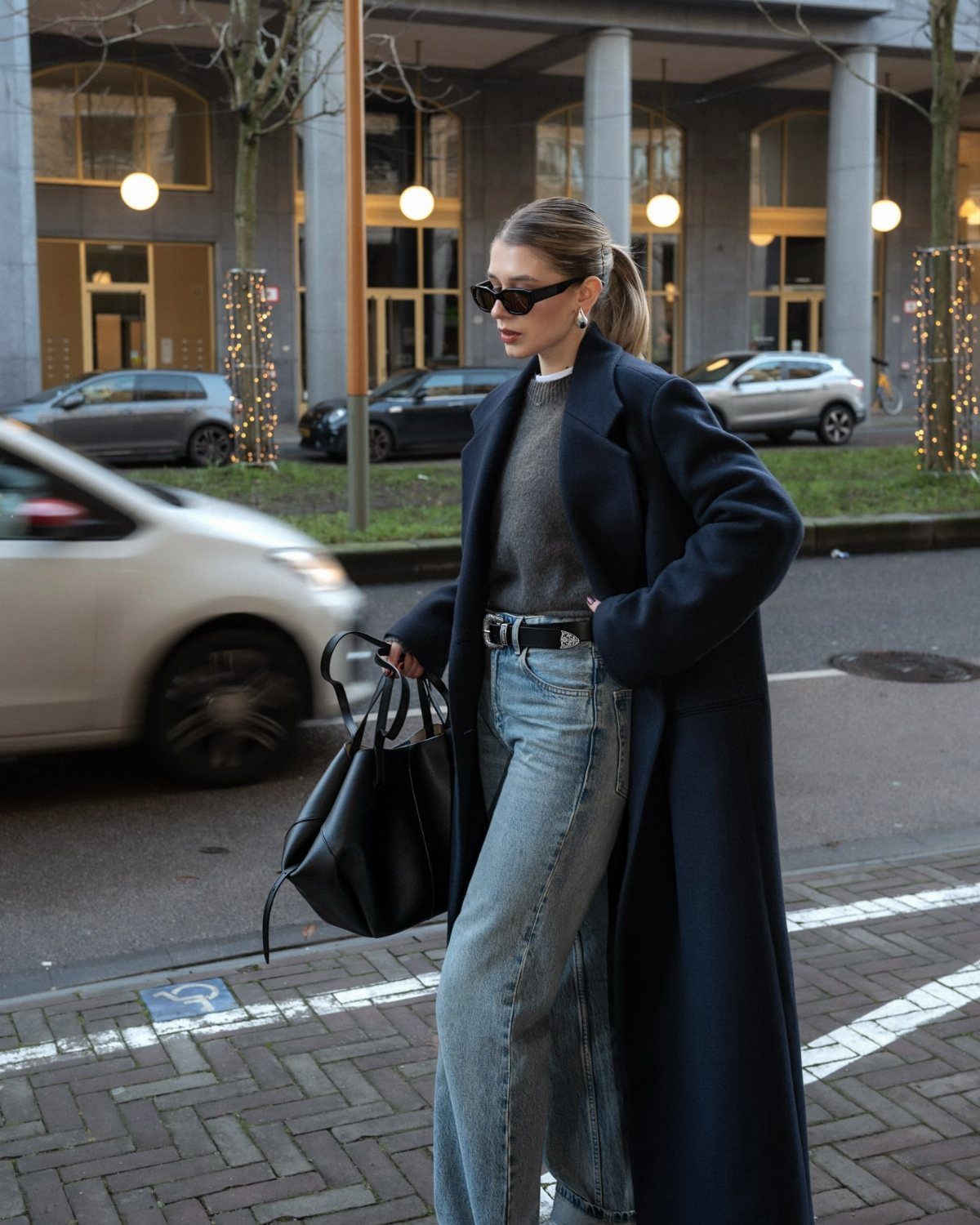
A navy wool coat thrown over a grey sweater and light-wash jeans looks pulled-together without trying hard. The coat does the heavy lifting: structure, warmth, and that polished silhouette that works for the office or a Saturday walk.
If your coat hits mid-thigh or lower, keep the sweater relatively slim so you don’t add bulk where the layers stack.
I prefer a cashmere scarf in a contrasting texture when I want something shorter than full-length outerwear, though the long coat here needs nothing extra.
Belted styles like the Bernardo or Macy’s Walker Coat also layer well over work dresses, high-waisted trousers, or dark denim. A suede skirt underneath is another winter weekday option.
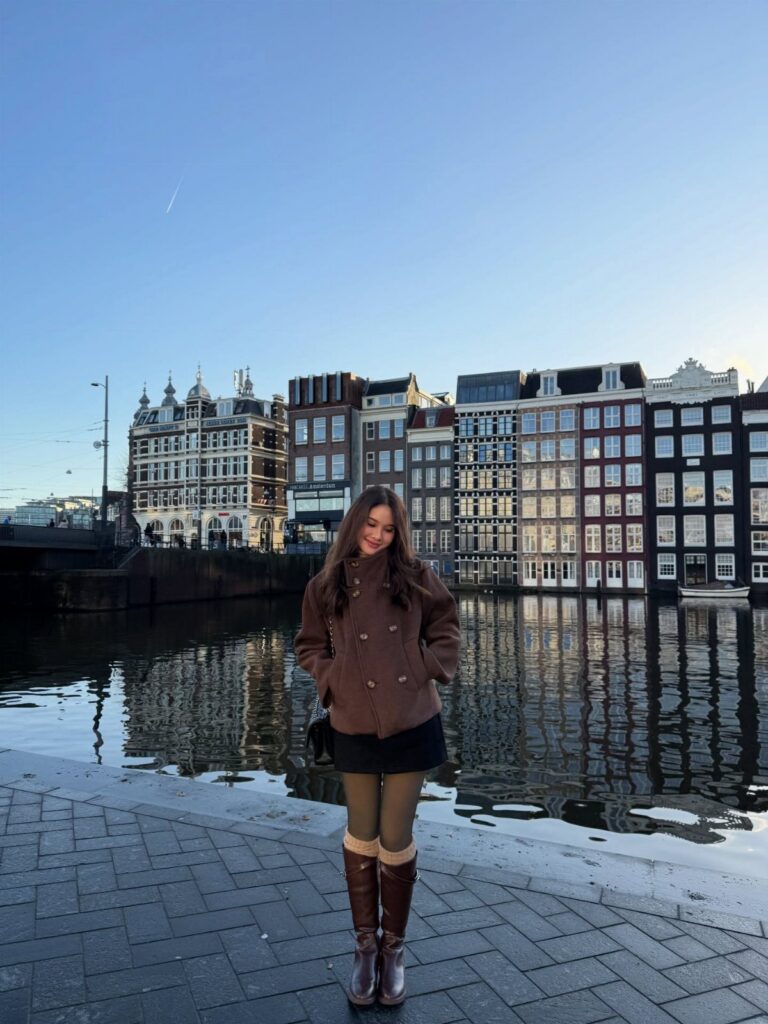
2. Mini Skirt + Tights
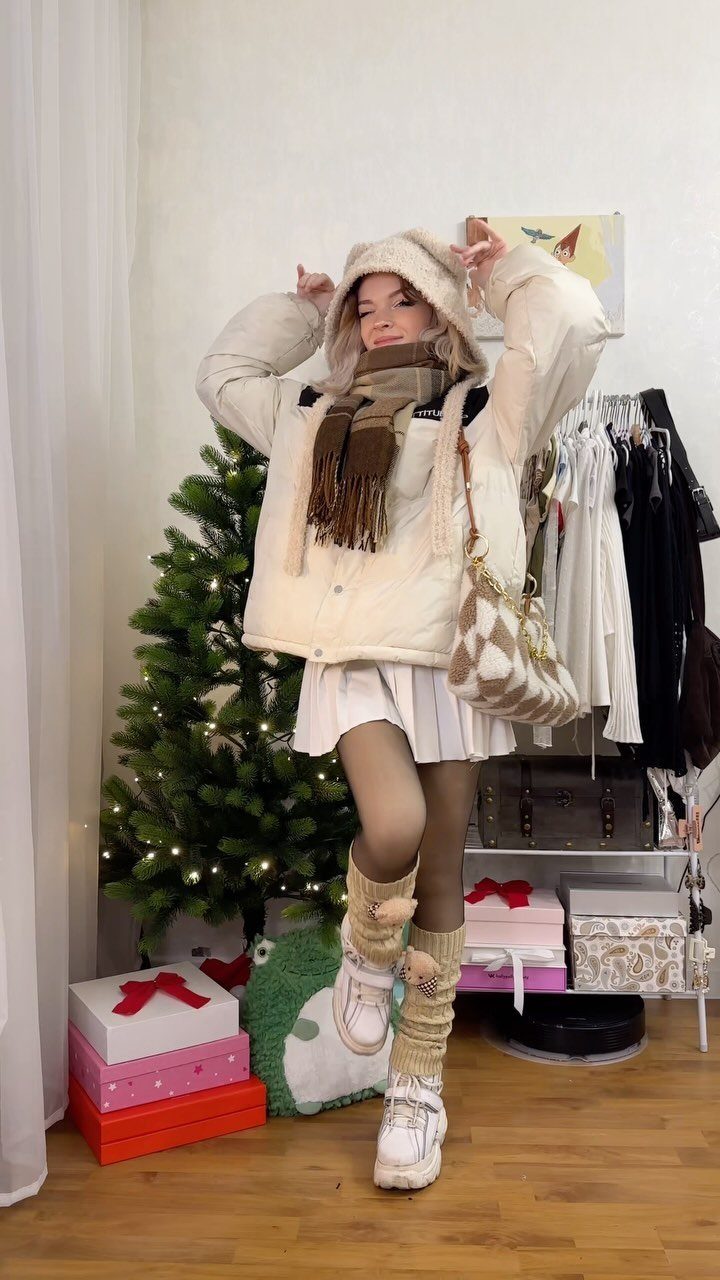
Mini skirts in winter need tights and boots; without them, the look is just cold. A pleated mini skirt stays wearable in winter with tights, leg warmers, and a puffer jacket layered on top.
I like riding boots for this, paired with a knit top, when I have meetings early and plans after.
Mango reliably stocks good skirts for this formula. A plaid mini with tights, booties, and a fur coat shifts the same pieces toward date night; add statement earrings and a clutch if you’re dressing it up.
For day wear, a cable-knit sweater and a coat on top handle most temperatures. The cable detail adds the kind of texture that makes tights feel intentional rather than last-resort.
3. Quilted Jacket
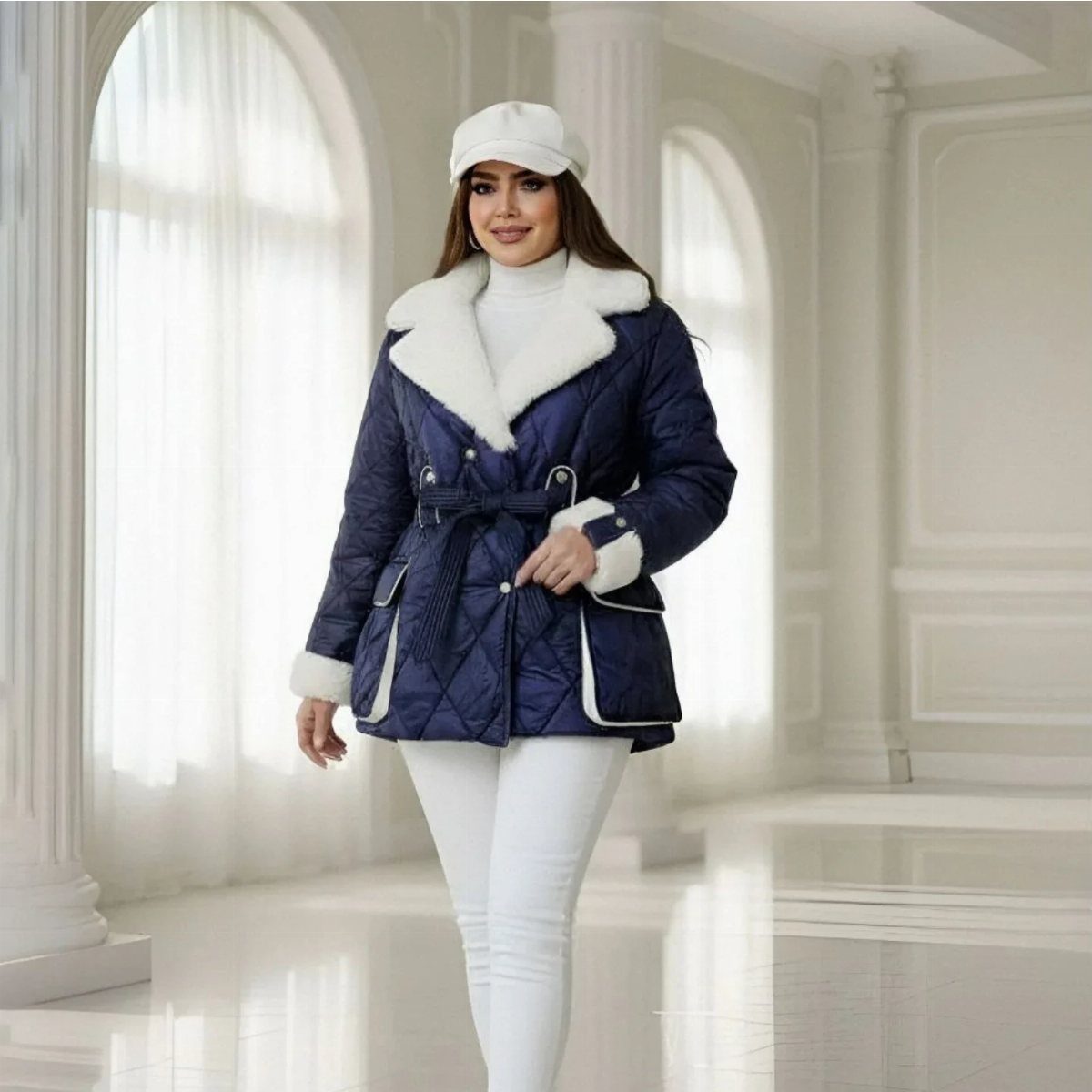
Quilted jackets bridge sporty and polished better than puffers, and the navy with white trim here keeps the look clean rather than rugged. Layer over a turtleneck and white trousers to keep the silhouette streamlined.
Size down in most quilted styles; they run generous and the shape matters more than the stuffing.
For colder stretches, a chunky knit underneath and a switch to boots with thick socks handles the shift. Shearling-lined versions add warmth without adding bulk at the hem, and gold hoops finish the look without competing.
4. Cable Knit Sweater + Jeans
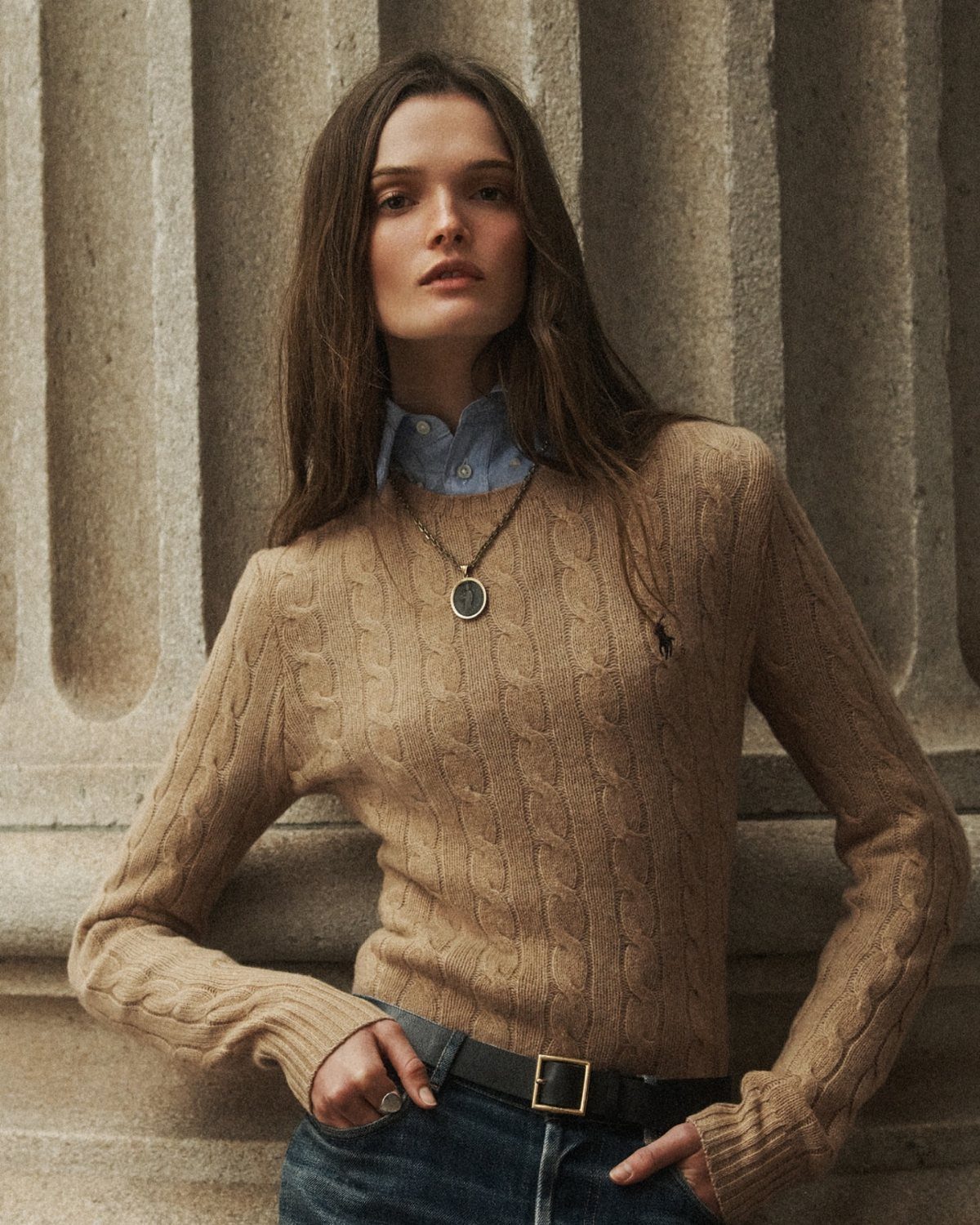
A cable knit over a button-down with jeans is the winter uniform I return to most. The texture carries the outfit; the shirt collar and cuffs give it a little structure without requiring any additional pieces.
If the sweater is fitted, tucking it into a maxi skirt dresses it up. Here the proportions are straightforward: relaxed knit, straight leg denim, a black belt to anchor the waist.
No figures on what this costs because the range is too wide to be useful; budget retailers and specialty mills both do cables now, and the difference is in the fiber and the weight of the knit.
Check the label for wool content if you want warmth that lasts past the car door.
5. Sweater Dress + Tall Boots
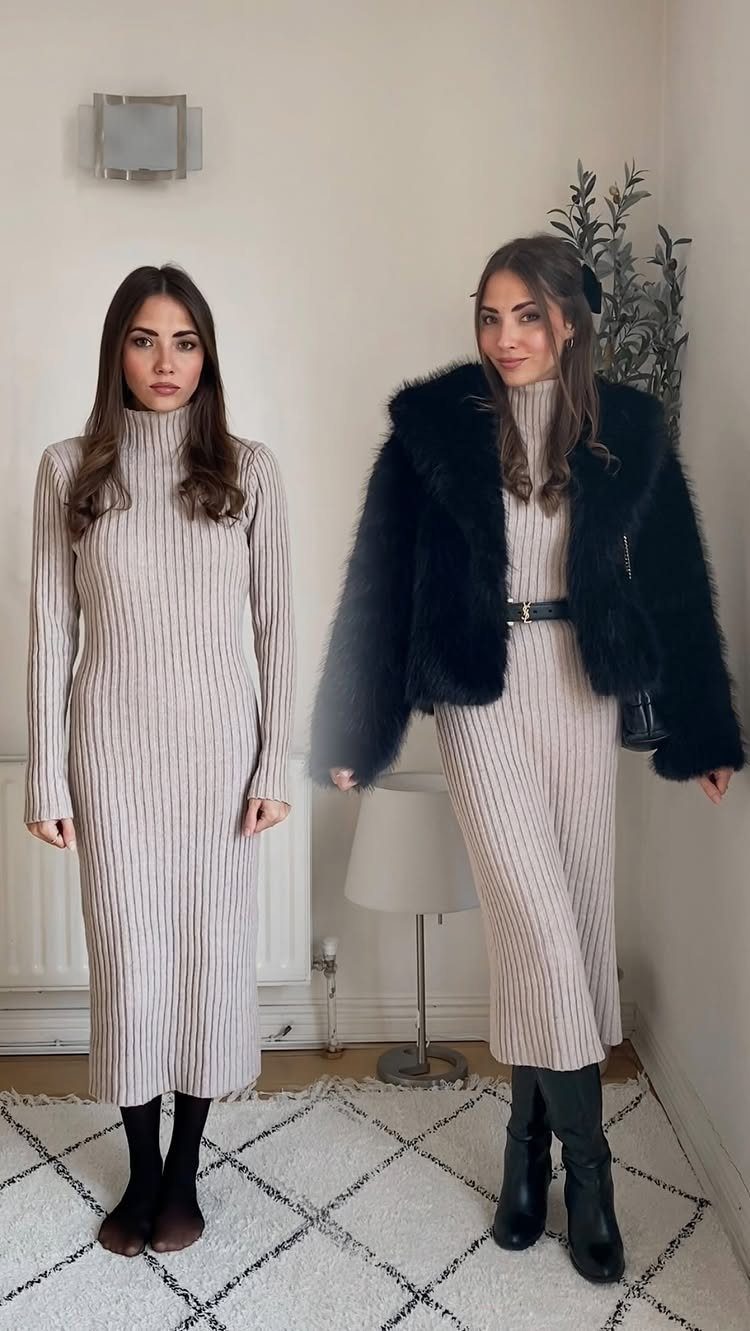
A ribbed sweater dress and tall boots solve winter date nights without requiring separate top and bottom planning.
Long sleeves are non-negotiable for me in winter unless I’m inside the whole evening. Even a shorter dress works if you add tights underneath; tall suede boots cover more leg and let you skip the tights on milder nights.
Me + Em makes reliable knit dresses with enough structure to wear without constant adjusting. A coat in camel or black on top pulls it together if you’re walking from the car or standing in line outside.
6. Matching Knit Set
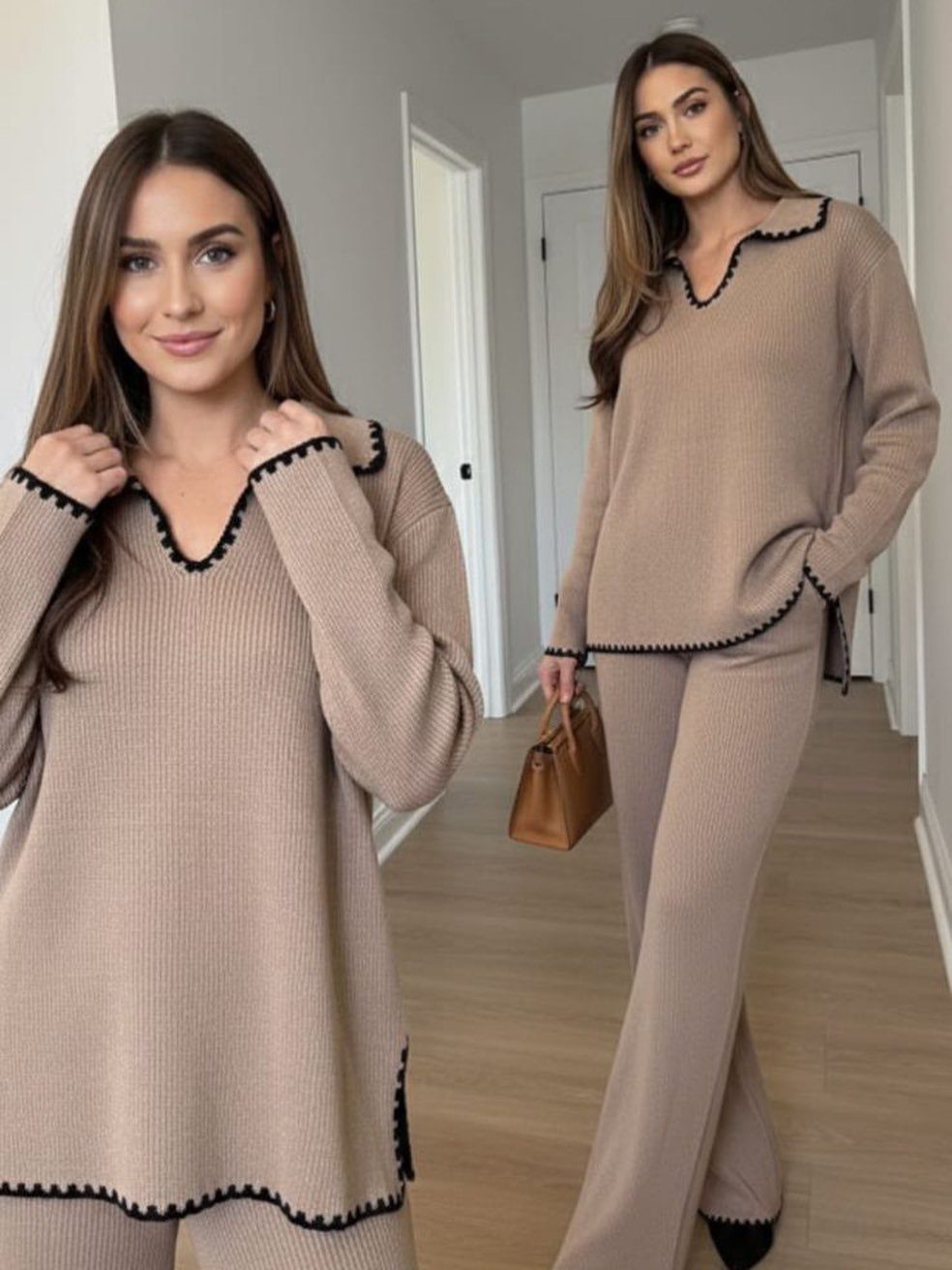
Matching knit sets solve the outfit question without solving the pajama problem badly. The ribbed top and wide-leg pants here have black contrast stitching that defines the shape so the look reads put-together rather than lounge-only.
For travel, separates remix better than a one-piece: same pieces, different arrangements once you land.
The set I tried from Kilte ran more luxe in person than the photos suggested, and I sized to a 2 in their cut. Adidas Gazelle sneakers work for daytime; switch to loafers or boots and the pants still hold up.
If you want texture without the match, an oversized cable knit with leather trousers or a fitted knit tucked into a maxi skirt hits the same cozy-polished note with more moving parts.
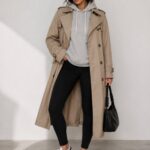
7. Trousers + Converse
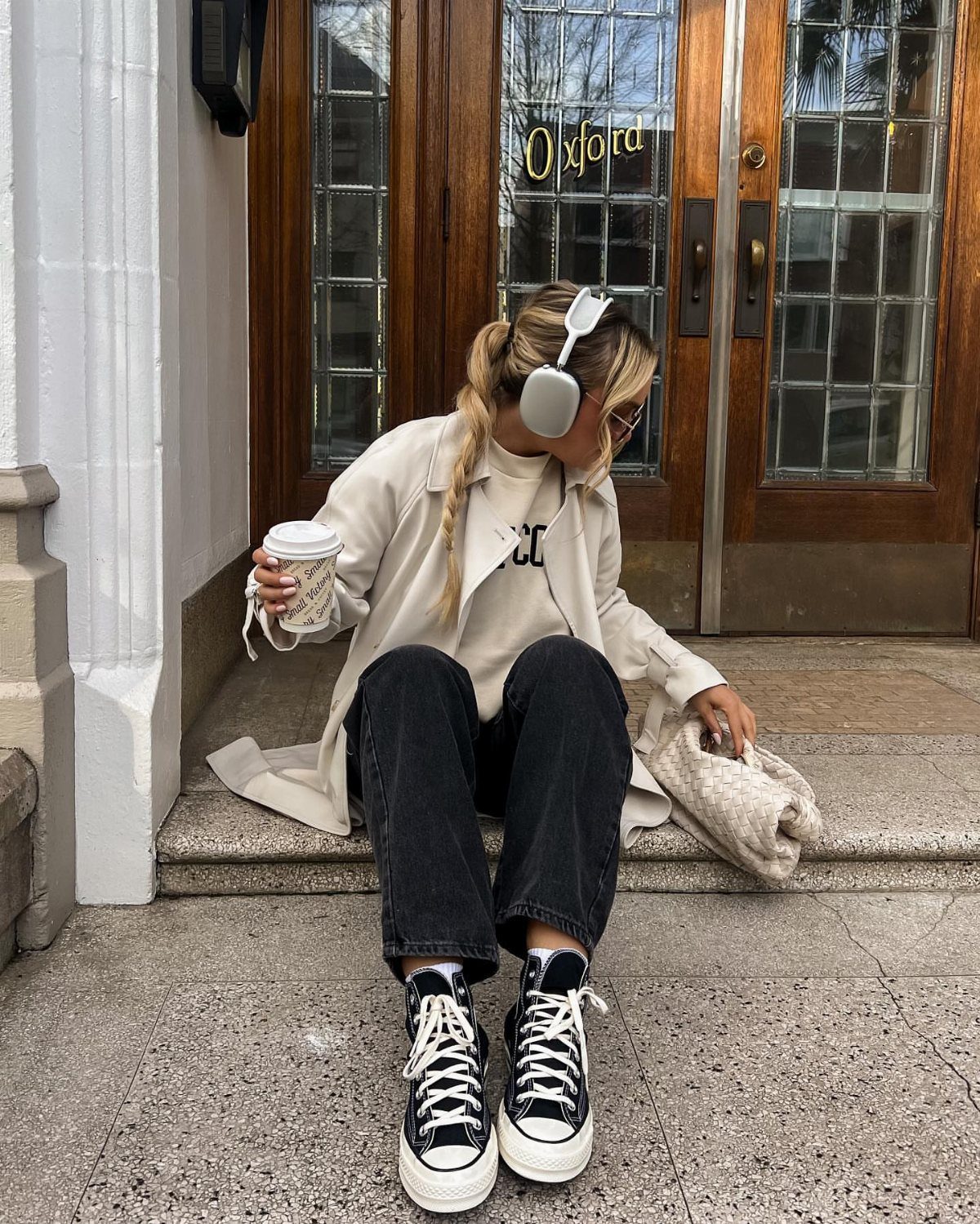
Trousers with Converse sneakers bridge the gap between put-together and practical, especially on travel days when you are walking through airports or standing in lines.
The trench coat here adds length and structure without reading formal, and the sweatshirt underneath keeps it grounded.
I size up in the Aritzia Effortless Pant for comfort on long days; the cut still holds its shape.
Swap the high-tops for ballet flats when you land and the same trousers work for dinner. The Sezane Betty Jacket runs generous in an L, so check the shoulder seam before ordering.
8. Sherpa Coat
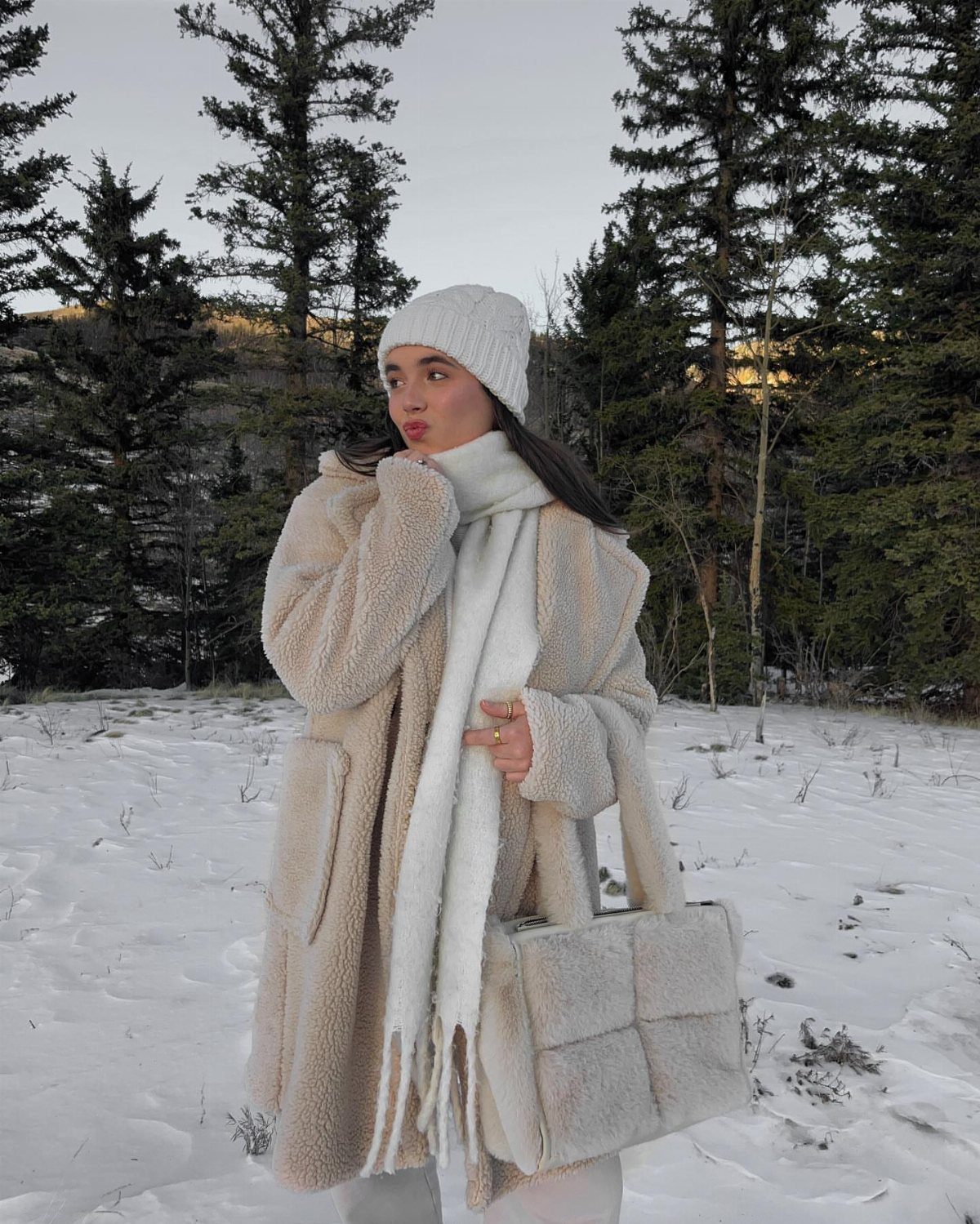
Sherpa reads casual by default, so the piece to watch is whether the coat has enough structure to leave the house in.
This one does: the cream color and clean edges keep it from sliding into blanket territory, and the matching accessories pull it into an actual outfit.
Some sherpa jackets zip off at the waist to become a cropped moto version.
That is worth checking before you buy; two shapes for one coat works for travel, but the zip line can add bulk at the hip when worn long.
Pair with a dressier boot if the rest of the look needs lifting.
9. Pastel Coat + Ballet Flats
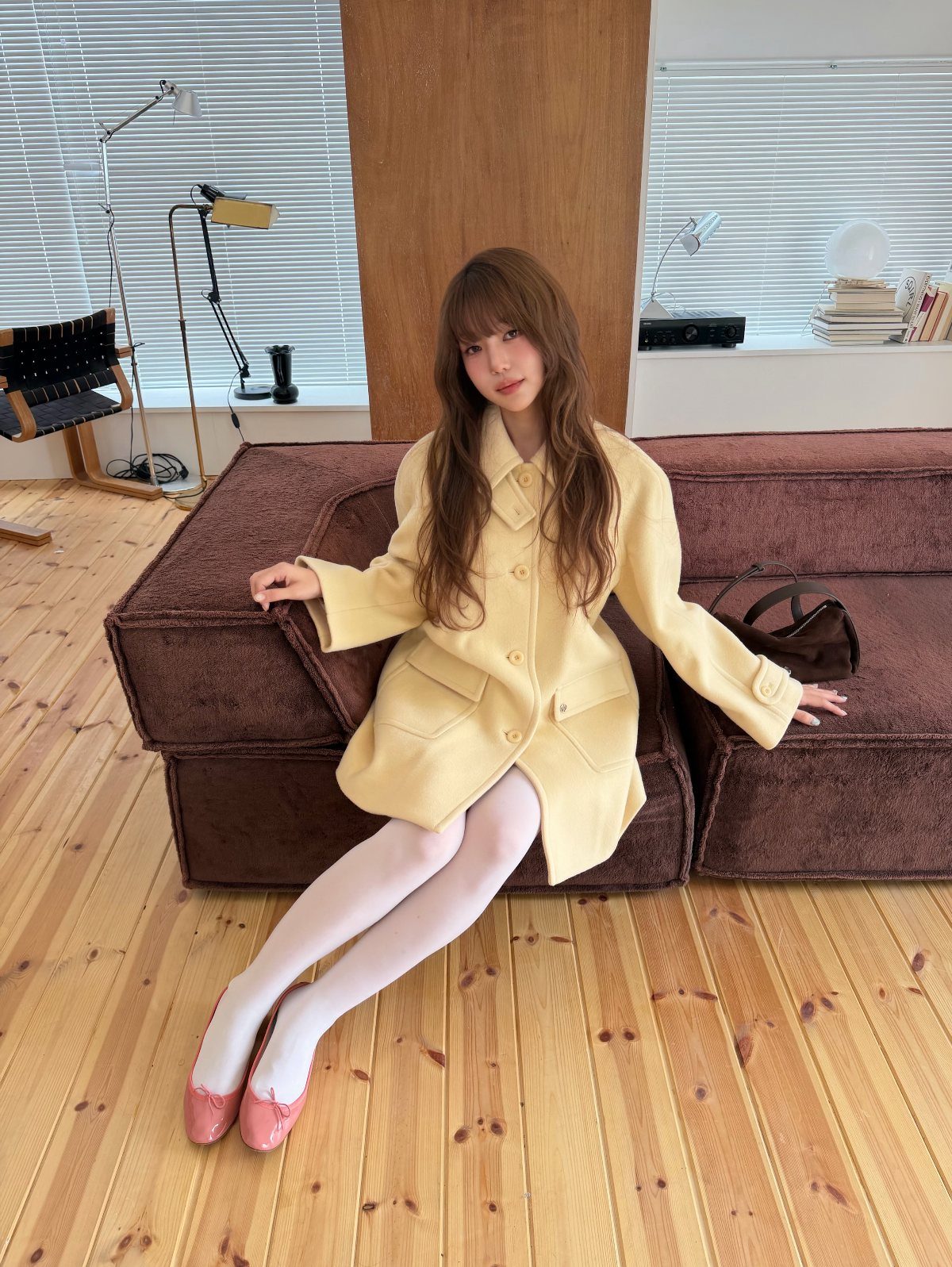
A pastel coat in winter works because it is unexpected; the yellow here reads cheerful against grey skies without trying too hard.
White tights keep the line light from hem to shoe, and the pink ballet flats add a second soft color that would fight a darker coat.
Ballet flats with a strap stay on better than the slip-on kind; Larroudé makes my favorite pair for dry winter days when the sidewalks are clear.
10. Long Puffer Coat
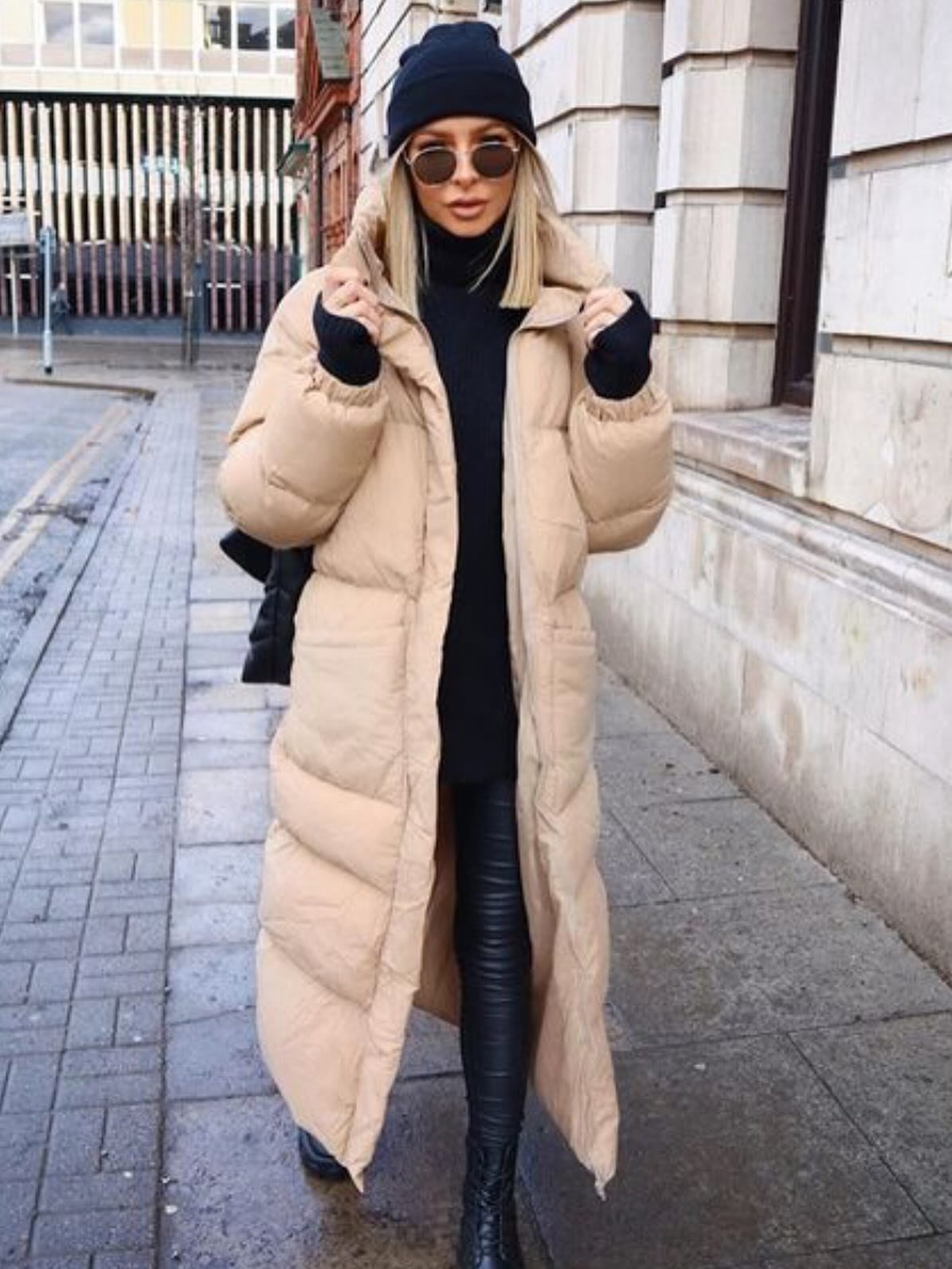
A full-length puffer is the coat you reach for when the temperature drops and you still have to look like you tried.
Leather or coated trousers underneath shift the same coat toward evening; add heels and the look works for a restaurant that requires a reservation.
For daytime, leggings and boots handle commuting. Check that the fill weight matches your coldest typical day; a coat this length is only worth it if you are actually warm.
11. Monochromatic All-White Winter Look
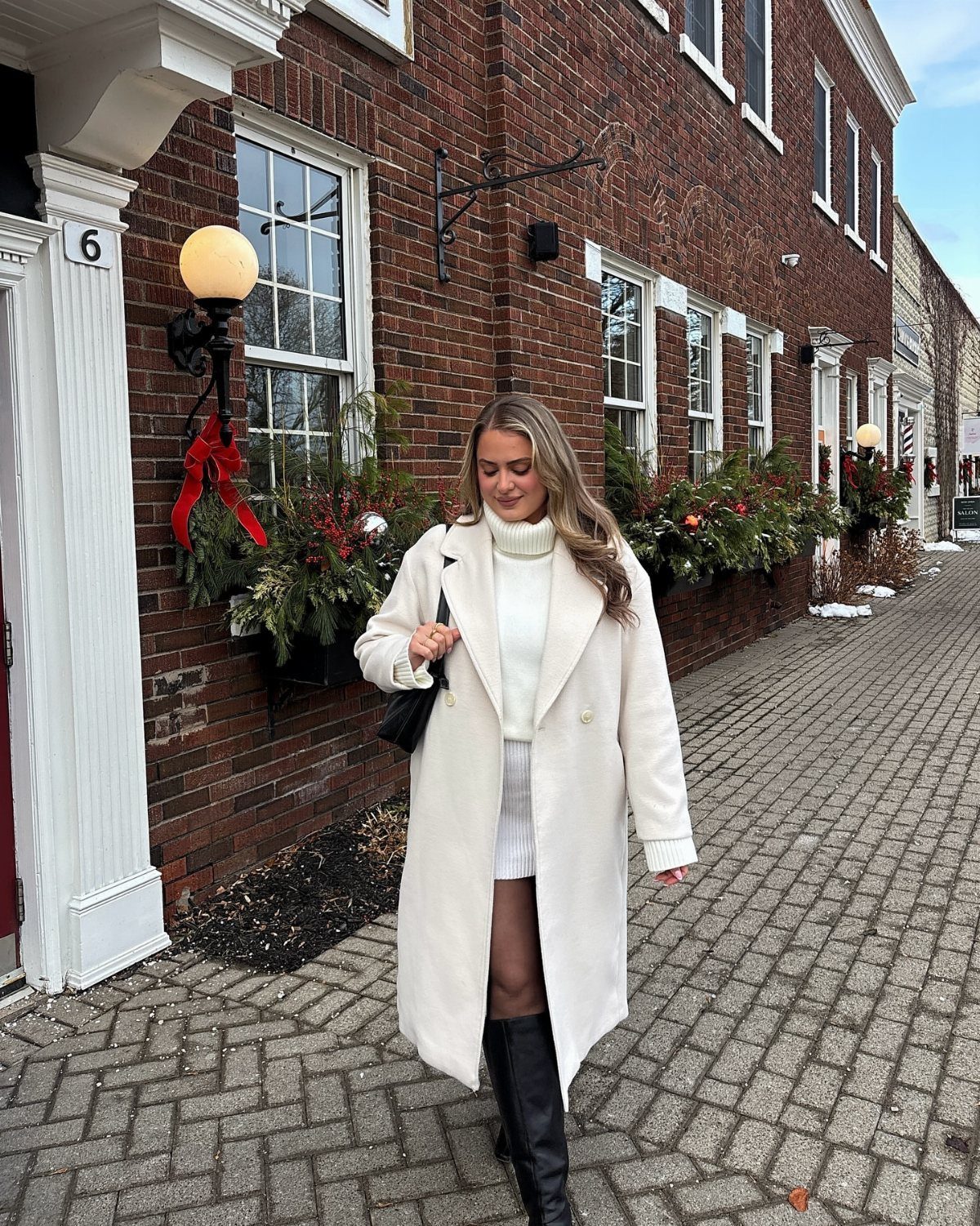
All-white in winter reads intentional, not laundry-day, when the textures differ enough to separate the pieces.
The long coat, turtleneck, and mini skirt here layer smooth over ribbed over smooth, and the sheer tights add a third texture that keeps the eye moving.
Black boots ground the look and handle slush; white footwear would tip into costume.
The mini length needs tights; bare legs break the winter logic even indoors. This suit no one who worries about coffee stains on the subway, but for a holiday walk or a party arrival, the effect is sharp.
12. Capelet with Plaid Trousers
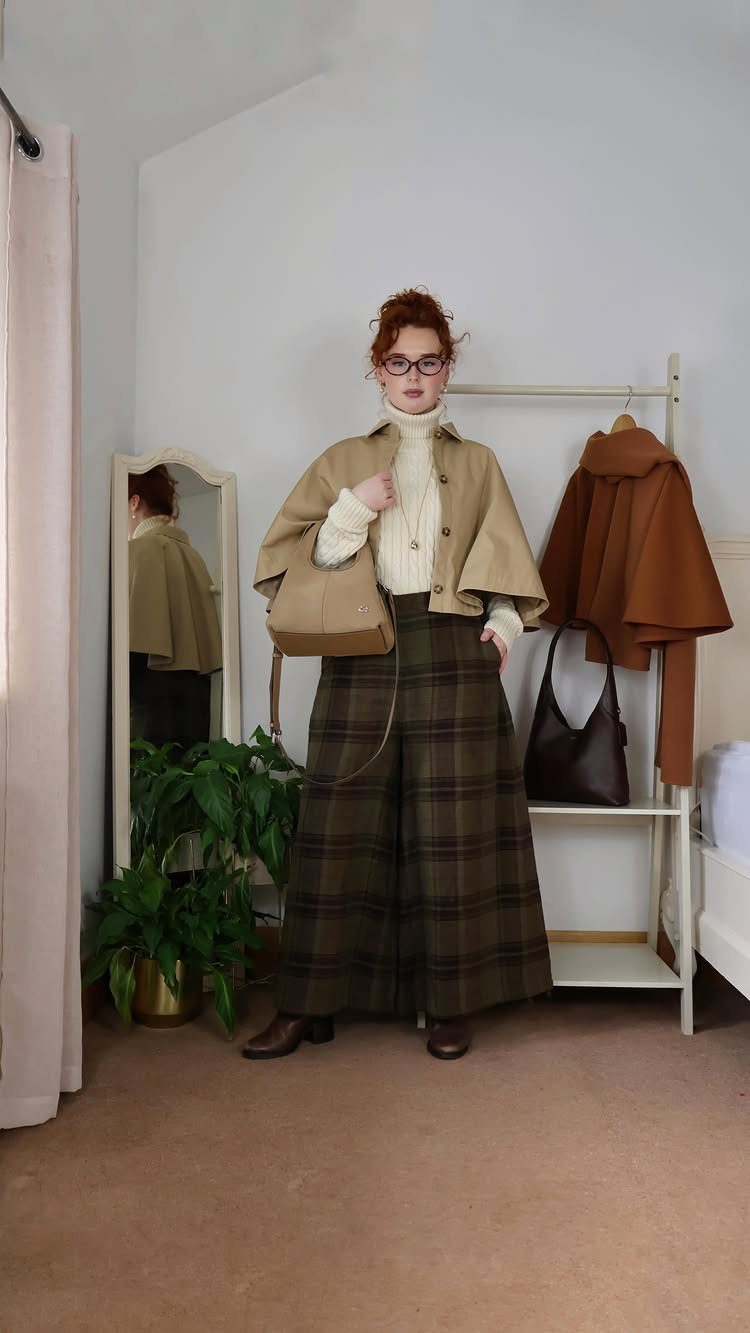
A capelet replaces a coat when you need shoulders covered but arms free; you lose some warmth, so this works for arrival moments or heated interiors rather than full outdoor days.
The plaid trousers here are wide-leg and high-waisted, which balances the volume on top and keeps the silhouette from going shapeless.
Check the capelet closure before buying; some pin, some button, and a gust of wind matters more with no sleeve to anchor it.
A cream turtleneck underneath keeps the neck line clean and repeats the neutral of the capelet. For a simpler version, a plaid coat with black jeans handles the same color story with more coverage.
13. Trench Coat with Leggings and Pumps
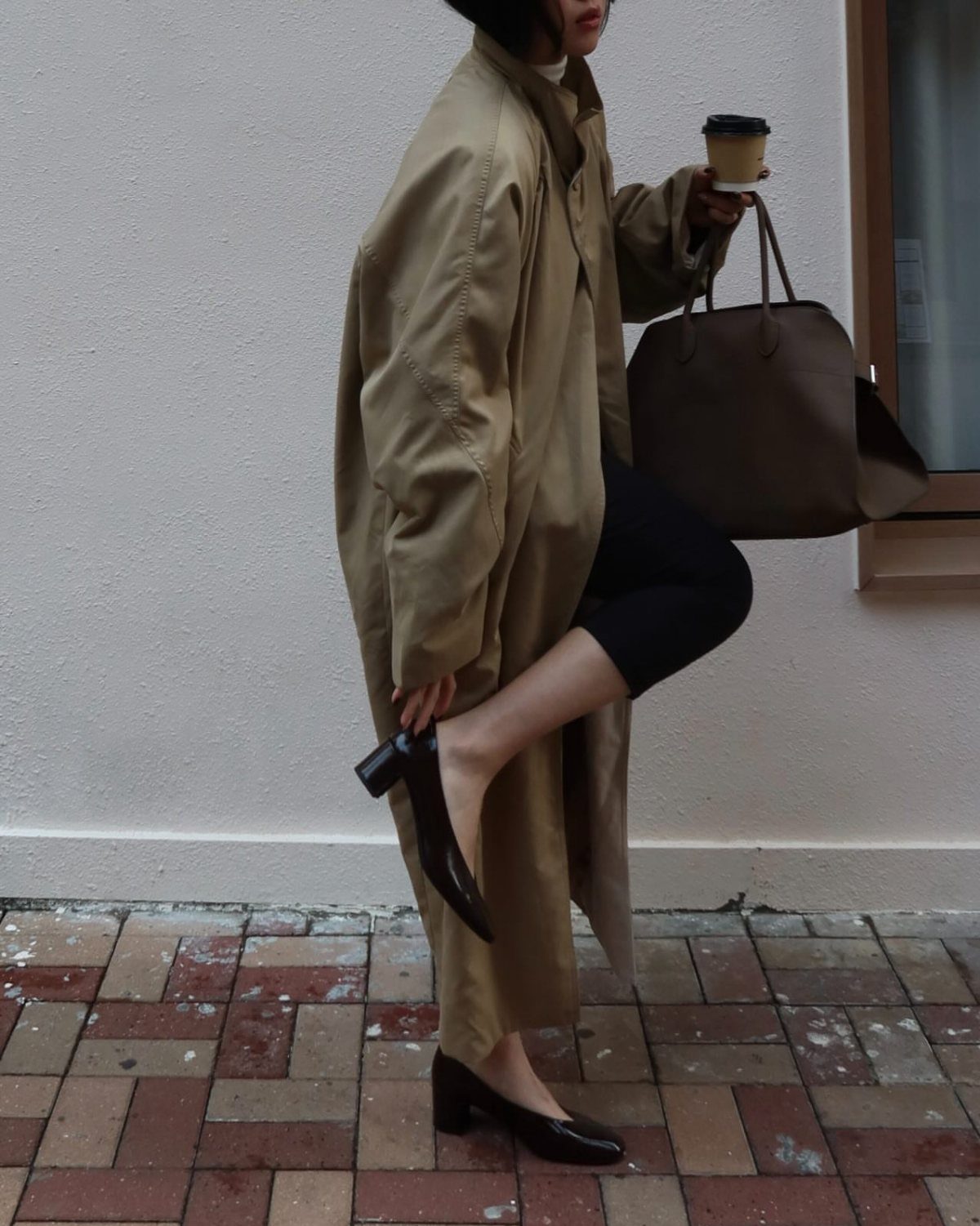
A trench coat over leggings and pumps is the winter outfit for days that start with a commute and end somewhere you would rather not change shoes.
The trench does the work of looking dressed; the leggings handle the sitting and the walking.
Block heels stay wearable longer than stilettos, and the coat length matters more than you think; mid-calf or longer keeps the proportion from reading like you forgot your trousers.
I would check that the trench buttons high enough to close against wind, since leggings offer no warmth of their own.
For a version with more coverage, swap the pumps for boots and add a thin knit underneath. The same trench then handles colder days without a different coat.
Layering Tips
Start every winter outfit from the inside and work out. The layer touching skin should breathe, usually a thin merino or cotton long-sleeve, so sweat does not sit against you when you step indoors.
The middle layer does the actual insulating; this is where cashmere or a dense wool knit earns its keep. Outerwear is the shell, and its job is stopping wind and holding shape.
Texture mixing matters more in winter than other seasons because you are wearing so much more fabric.
Pair smooth leather trousers with a fuzzy mohair sweater, or ribbed knit tights under a wool skirt. Two textures in similar tones read expensive; two textures in clashing colors read like you got dressed in the dark.
Proportion is the part I still get wrong. A long coat over a long sweater over a long skirt shortens legs fast.
I check in a full-length mirror before leaving, and if the eye stops at three horizontal lines, one layer needs to go shorter or switch to a different cut.
Color Coordination
Neutrals do the heavy lifting in a winter wardrobe because they let you build an outfit without solving a color puzzle at 7 a.m.
Ivory, camel, black, and gray all cross-combine without clashing, and a single textured sweater in one of those tones carries more visual interest than a flat color in something brighter.
Monochrome solves the coat problem directly. When your puffer matches your trousers, the coat becomes the outfit rather than an interruption.
This works with any solid color, not just black; a head-to-toe camel or forest green reads just as intentional. Exact matching or deliberate contrast works; near-miss shades look like a laundry accident.
I keep one bright piece for grey days. Winter is the season to wear color that would seem too loud anywhere else.
Accessorizing
A scarf is the most useful winter accessory because it adds warmth you can adjust.
Chunky knits read casual and add texture; smooth wool or silk reads tailored and sits flatter under a coat collar. I own both and choose based on the coat’s own texture, not the outfit underneath.
Gloves are where I spent too long on delicate leather that let wind through.
Unlined leather looks polished for a car-to-door evening; for actual walking, I want cashmere lining or at least a wool layer. Fingerless fur gloves exist, though I find them more useful for photography than for warmth.
Earmuffs save a blowout better than any hat. Fur or knit versions both work; the fur reads dressier, the knit reads sportier, and neither flattens hair at the crown the way a beanie does.
Socks are the hidden layer that determines whether boots stay comfortable all day.
Thick wool socks with ankle boots, thinner merino with loafers, knee-high styles under tall boots for extra warmth where the boot shaft gaps at the calf. The wrong sock and a good boot becomes a blister waiting to happen.
Frequently Asked Questions
What are cute winter outfit ideas?
Sweater dresses with tall boots, wool coats layered over slim knits, and mini skirts with tights and riding boots all work for cold weather without looking like you gave up.
Quilted jackets over turtlenecks, cable knits with jeans, and matching knit sets that read put-together rather than lounge-only all work for winter.
What are some trendy winter outfits for 2026?
Pastel coats with ballet flats, sherpa coats with dressier boots, and all-white monochrome looks with mixed textures are directions worth trying this year.
Long puffers with leather trousers for evening, and trench coats over leggings with pumps for commute-to-dinner days, also appear. Fleece tights and faux fur jackets are two more trends showing up for 2026.