These 12 ideas run from a wool coat over a jumper to a belted leather jacket with tights, and the right one depends on whether your day involves a subway seat or a dinner reservation.
1. Wool Coat Over Jumper and Jeans
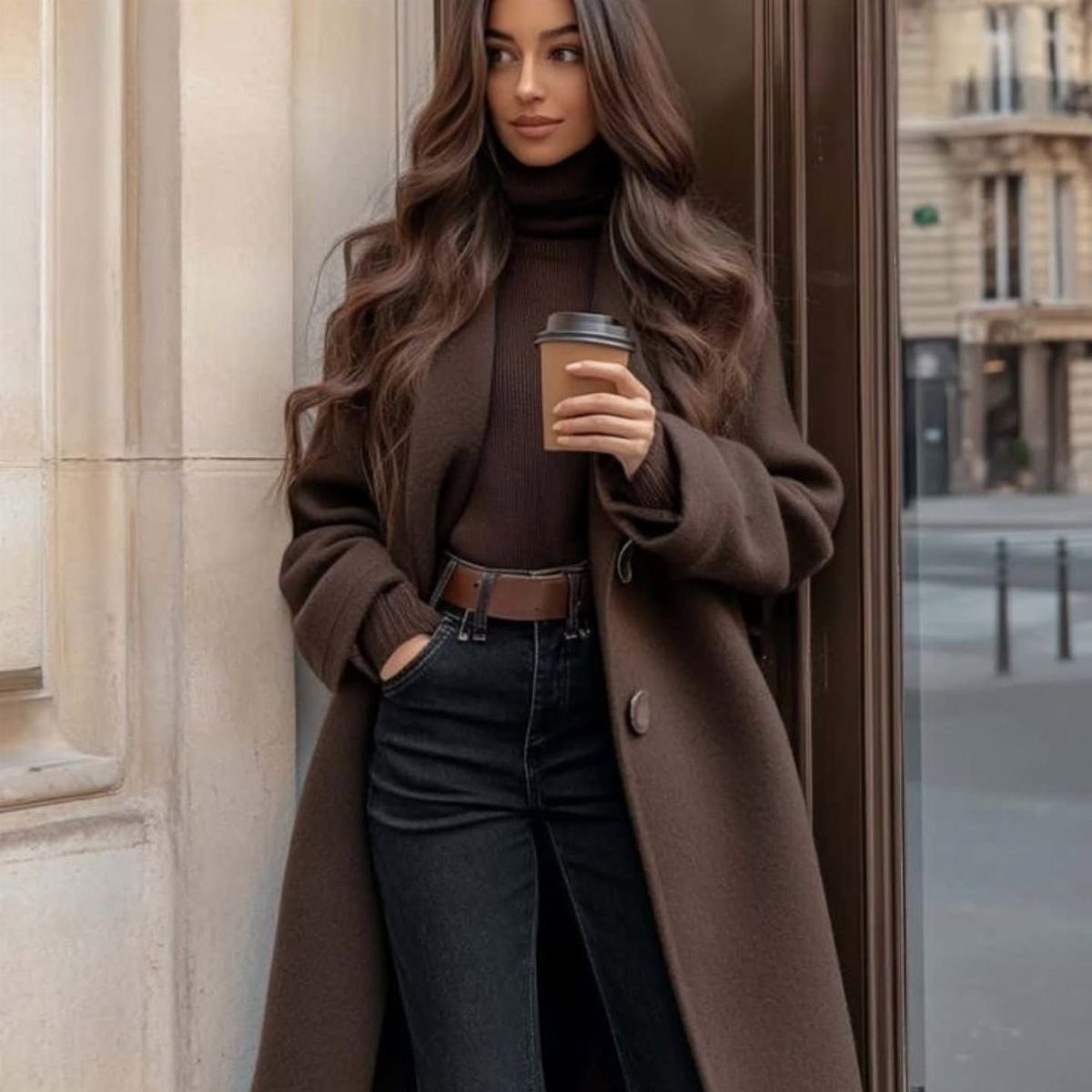
A coffee run in January is the test most winter outfits fail. This one passes because the coat does the work: a long brown wool cut that hits mid-thigh or lower keeps the shape clean even over thick layers.
Under it, a dark turtleneck sweater and black jeans are the base most of us already own.
The upgrade is in what you add after. Long leather gloves change the whole register of the outfit, and a structured bag, something with a proper handle and no slouch, finishes the job.
I keep a pair of black leather gloves in my coat pocket from November through March. They cost less than a new coat and get more comments.
2. Wool Blazer
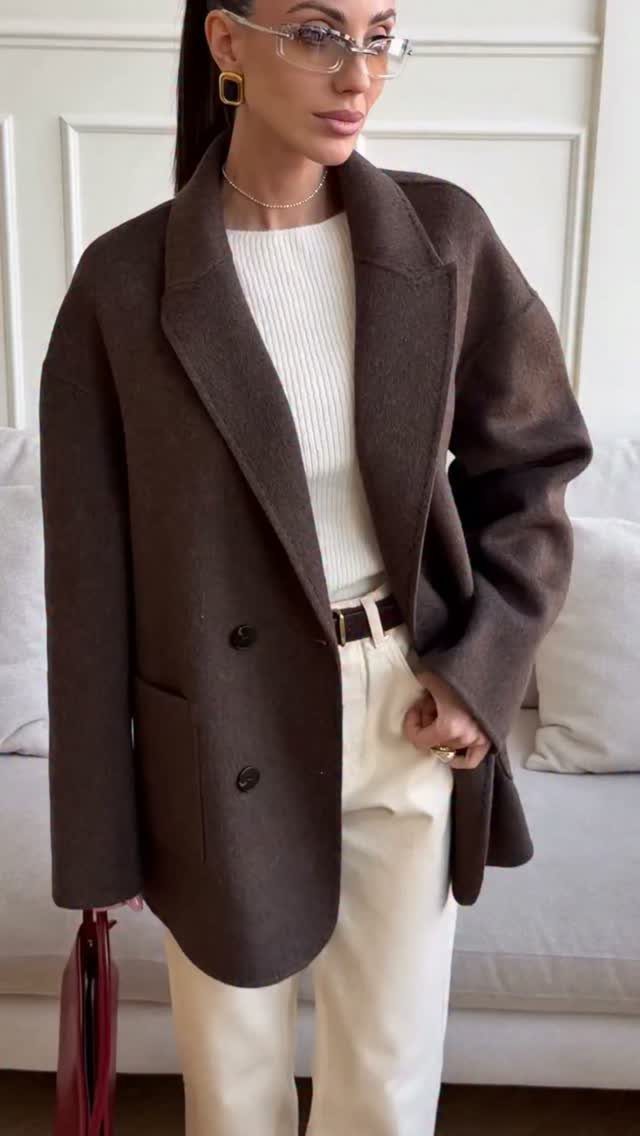
Not every day calls for full length. An oversized wool blazer, worn loose over a thin knit for the office or a cashmere scarf looped twice for dinner out, has the relaxed shape that is trending now.
I reach for this when I need to look put-together but not overdressed.
Fabric weight matters: winter wool, not the lighter stuff sold for spring. It should feel substantial enough to wear as a top layer indoors without looking like you forgot your coat.
3. Fur Coats
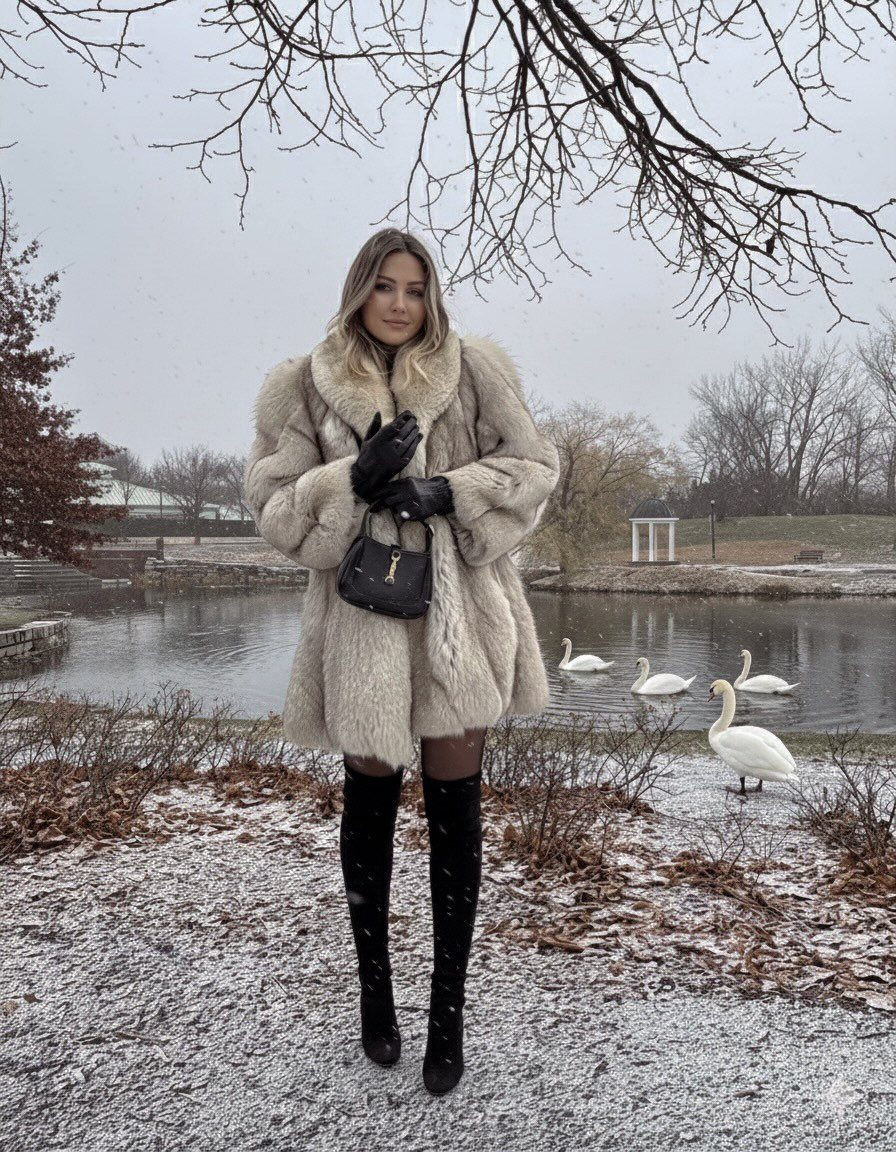
There is no faster way to look like you spent more than you did. A thick, plush fur coat, even in a pale color that would terrify me on a subway, reads as deliberate rather than accidental.
The volume is the point: it frames the face and makes the rest of the outfit almost irrelevant.
I would add a small structured bag, something you can hold rather than wear crossbody, to keep the silhouette vertical.
Faux fur has improved enough that the good versions are indistinguishable from the entry-level real thing; the cut matters more than the fiber.
4. Sweater Dress and Over the Knee Boots
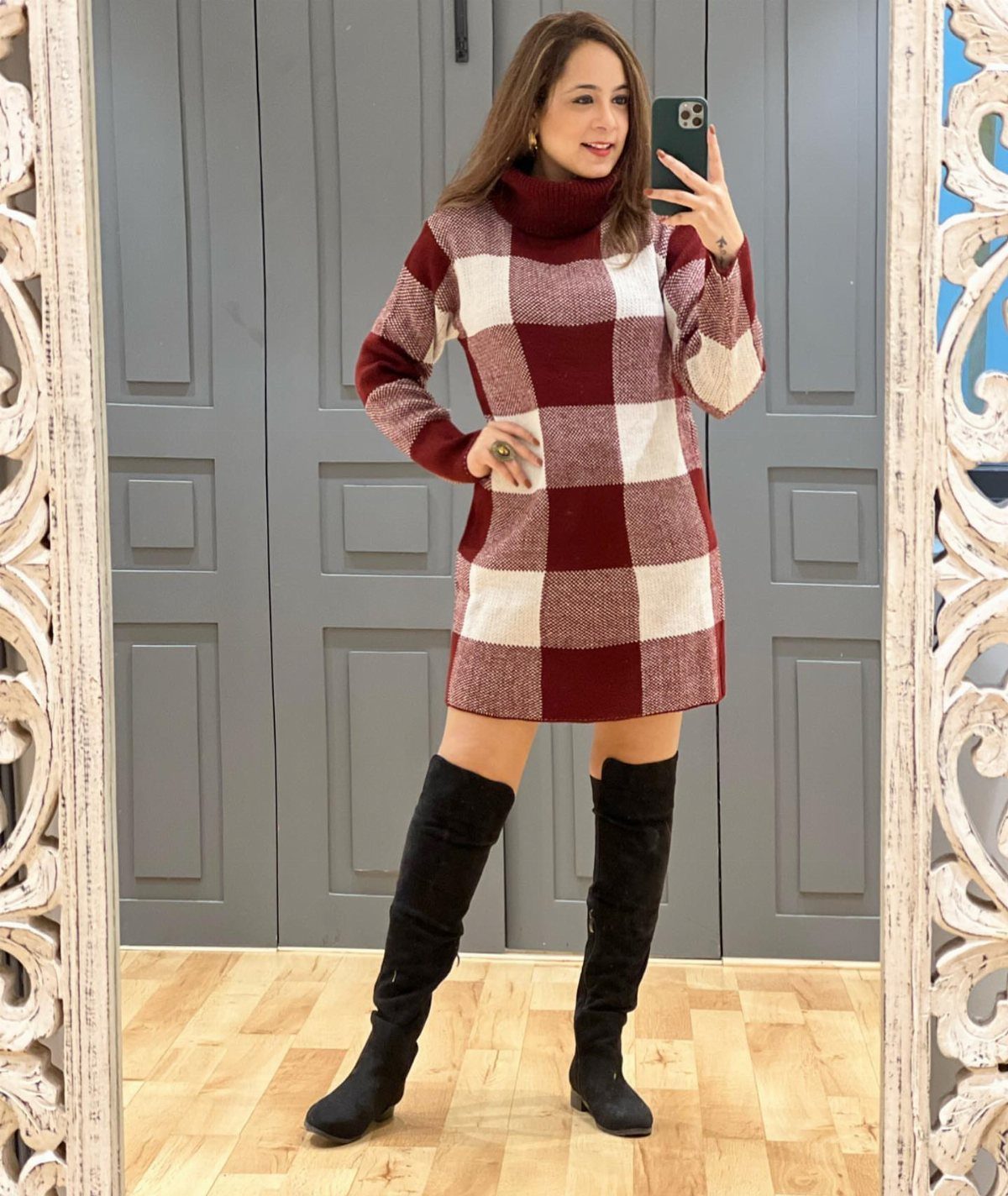
Sweater dresses solve the winter version of the wedding-guest problem: how to look dressed up when every venue is overheated and every path between car and door is iced.
The checkered pattern here is a choice I would not have made myself, but the shape is right. Turtleneck, fitted through the body, short enough that tall boots meet the hem without a gap.
Over-the-knee boots are the leg warmer you can wear to dinner. They need to fit close to the calf; any gap and the look collapses into costume.
Me + Em makes the best knit dresses I have found for this, heavy enough to hang straight and not ride up. I size up in sweater dresses always, for length.
5. Leather Pants + Sneakers
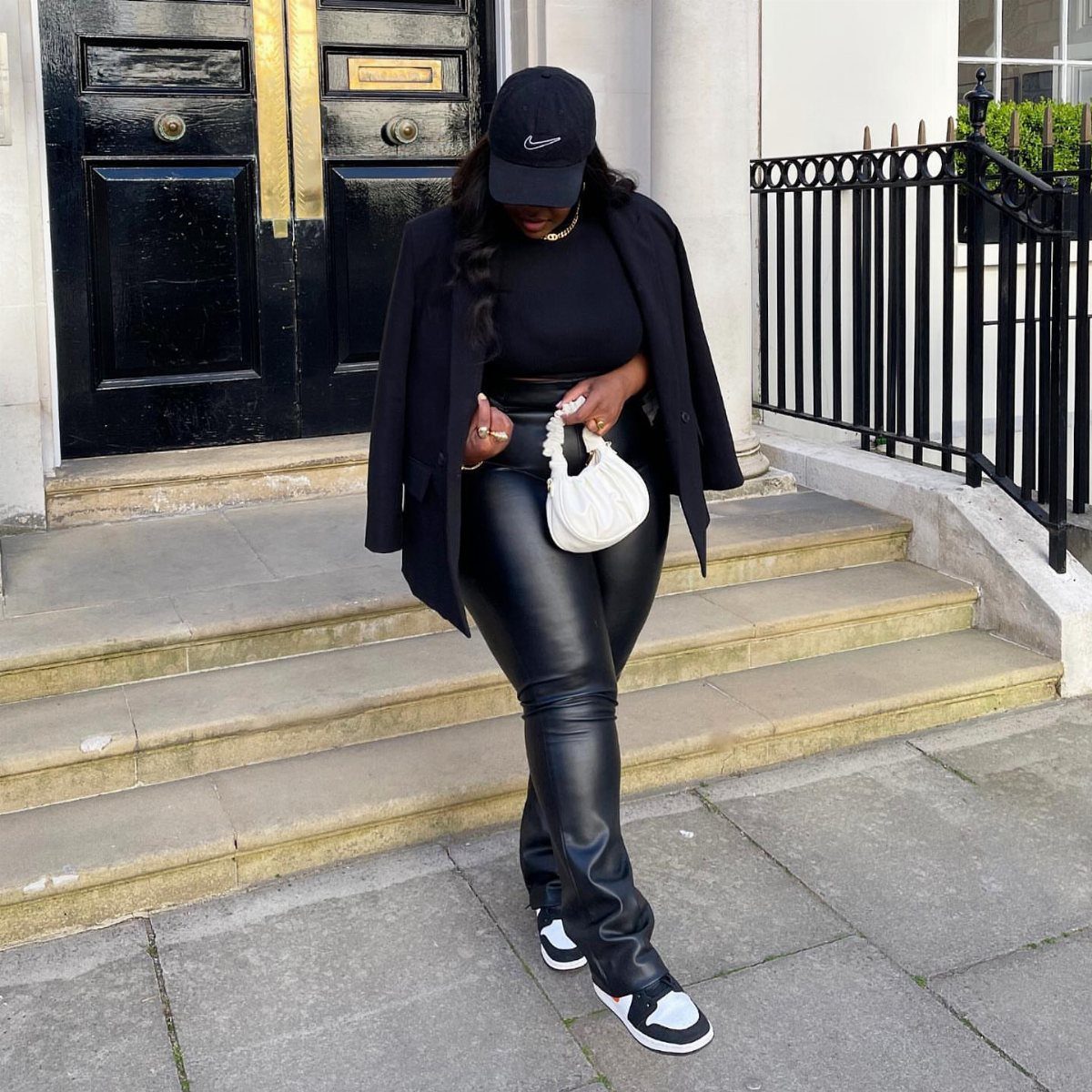
Leather pants in winter are the piece that earns back their cost per wear by March. Black leather pants styled with a black blazer and top plus clean sneakers read casual for Saturday errands.
For evening, I swap in a dress bootie with a proper heel, something that tucks under the hem rather than competing with it.
Finish matters: matte or slight sheen, never high gloss, which cheapens fast. Faux leather has reached a point where the good versions outlast cheap real leather, and they do not stiffen in cold the way polyurethane used to.
I machine-wash mine on delicate and hang dry; the less dry cleaning, the longer the finish holds.
6. Knee-High Boots with Skirt
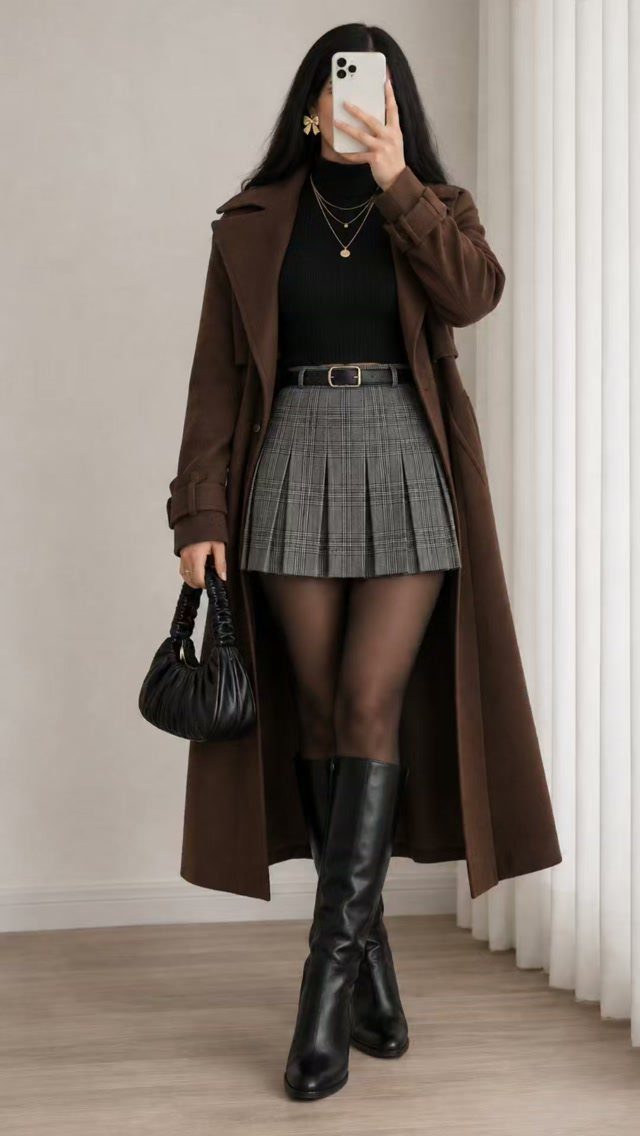
A short skirt in winter only works if the boots do most of the coverage.
Knee-high leather boots, fitted through the calf and ending just below the knee, replace tights as the layer that keeps you warm. A short plaid skirt stays intentional with knee-high boots and a trench over top, not seasonally confused.
Sheer black tights underneath add a layer without bulk, and the black turtleneck keeps the eye moving upward.
I have worn this formula to holiday parties and to work, changing only the coat: wool for the office, something with more drama for evening. The boots are the investment; everything else rotates.
7. Maxi Skirt + Wool Jacket
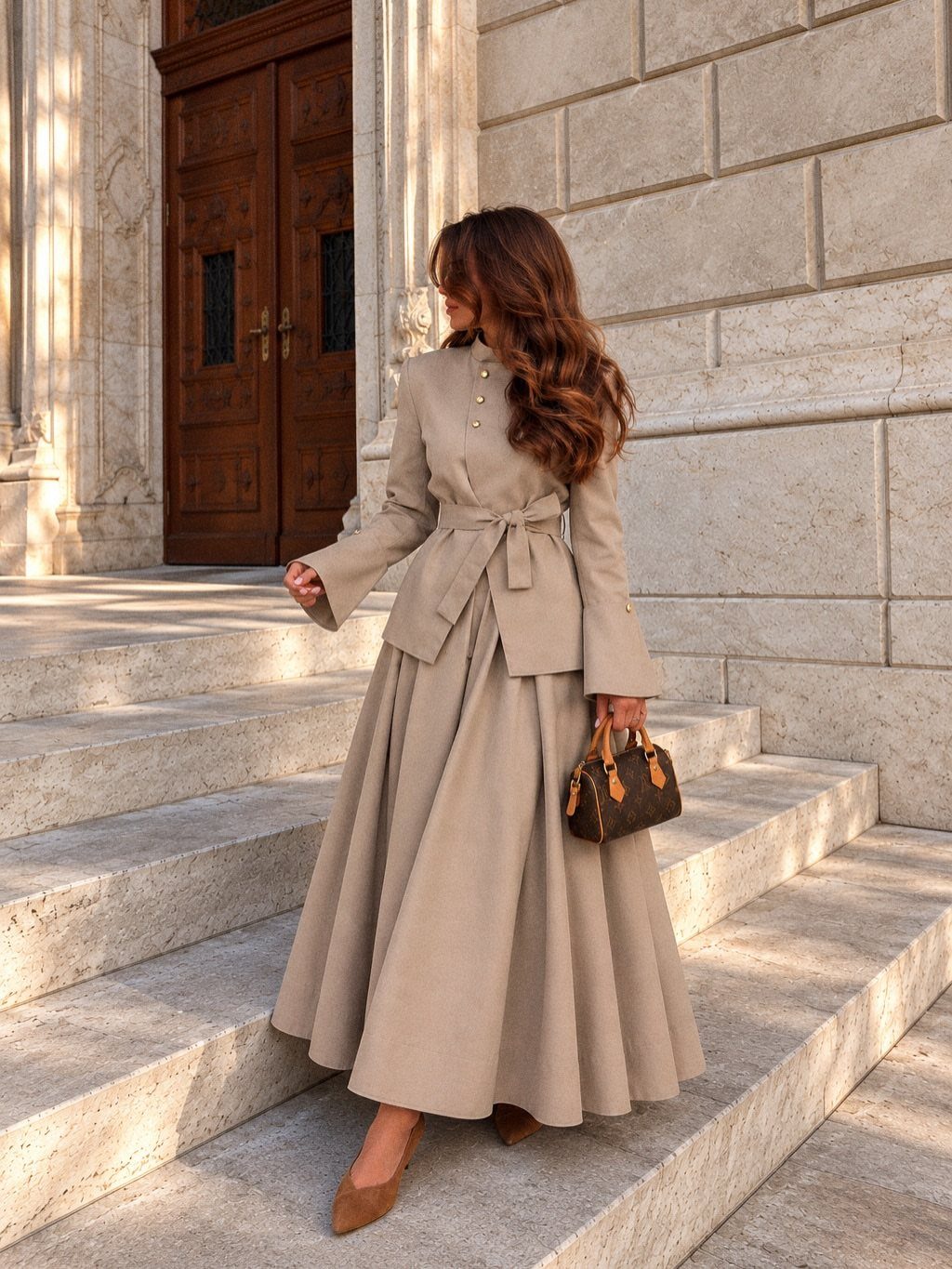
A cropped wool jacket over a maxi skirt keeps the waist defined where a long coat would bury it.
The skirt length does the winter work: thermal tights or fleece-lined leggings hide underneath without changing the line, and the fuller the skirt, the more you can layer.
A matching belted wool jacket buttoned over a maxi skirt is an easy shape to wear; I would add a roll neck underneath once the weather turns cold.
A belted jacket keeps the proportion from going sack-like when you wear a long skirt with a matching top half.
Brown heels and a small bag finish it. This is the outfit I wear when I need to look dressed up but cannot face a dress in January.
8. Chunky Jumper with Wide-Leg Trousers
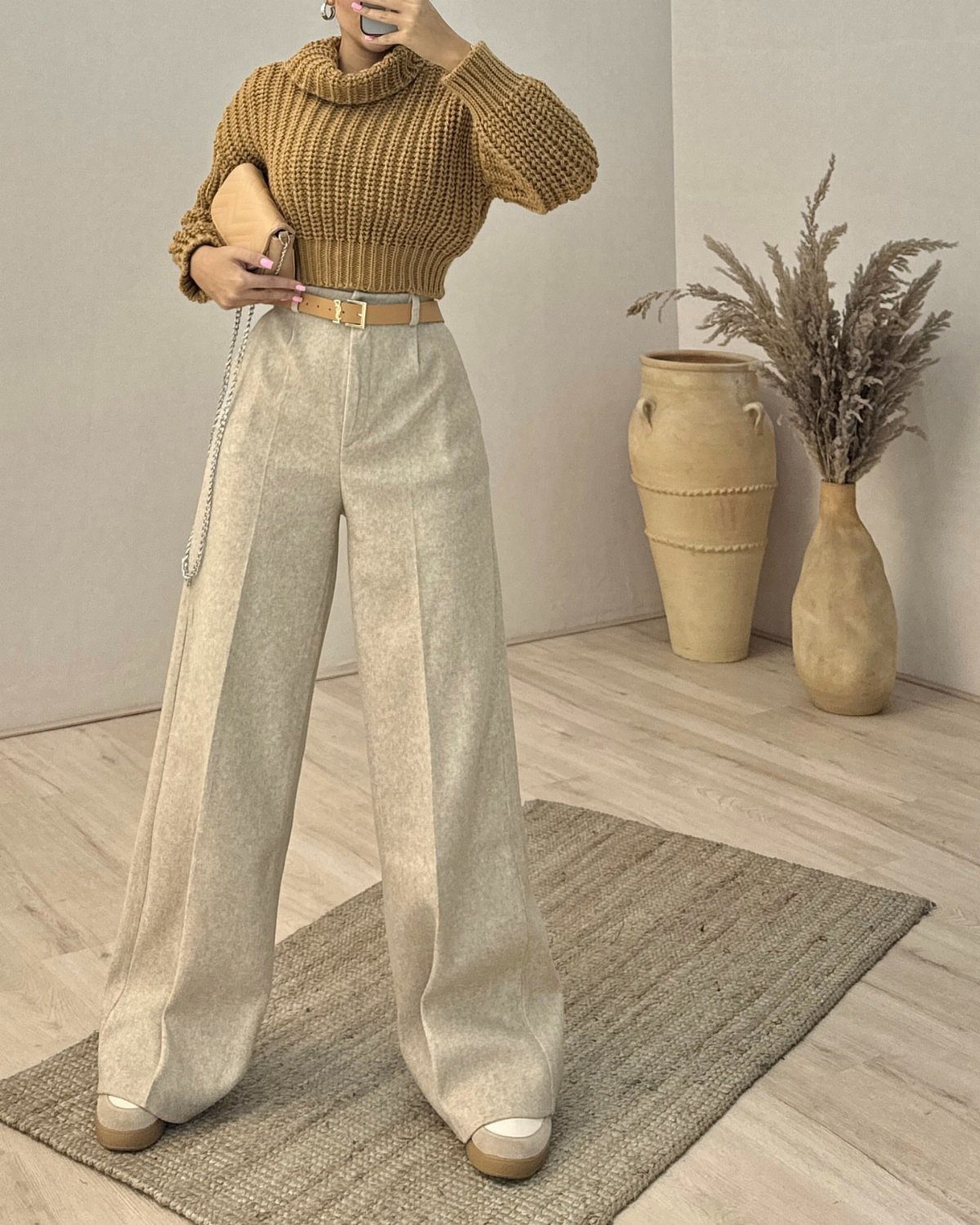
Wide-leg trousers with a chunky knit looks intentional because the volume is balanced top and bottom, not competing.
The hidden layer is the trick: tights underneath fluid trousers seal in heat, and a long-sleeve thermal top disappears under a turtleneck this thick.
You can build the same shape in navy, in gray, in cream; matching camel tones just make the pairing look simpler than it is.
A belt at the waist keeps the trousers high and the sweater from swallowing you. Satin or wool trousers both work; the cut matters more than the fabric.
9. Monochrome Cream Coat and Trousers
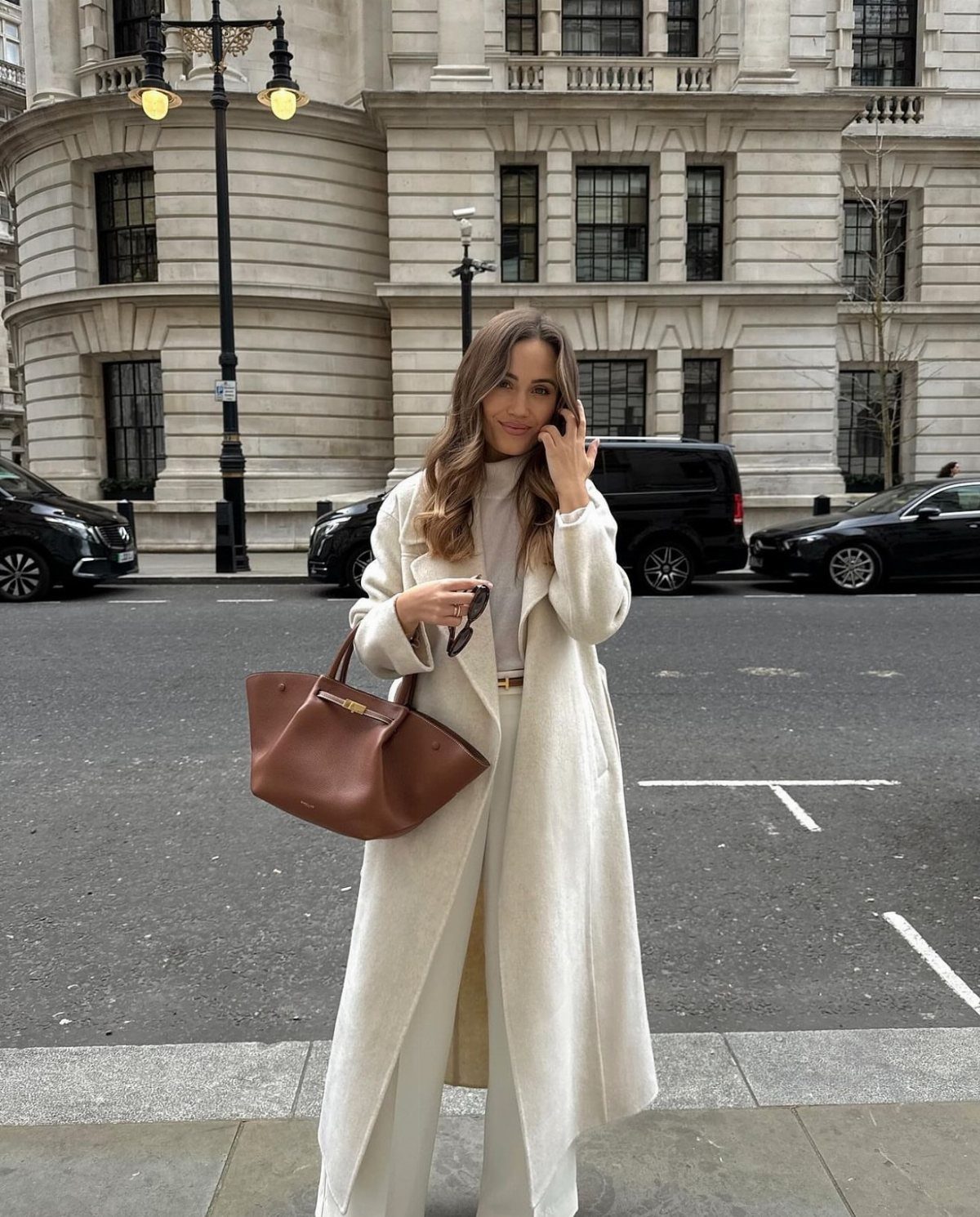
Head-to-toe cream in winter is a discipline: every piece has to be the right weight or the look goes limp.
The long wool coat here is the structure; underneath, the turtleneck and wide-leg trousers continue the line without breaking it. Brown accessories, a bag and sunglasses, keep the cream from reading as bridal.
This is not a look for public transit days or slush. The coat needs to be full-length and heavy enough to wear as the only layer indoors, or the effect fragments.
I would choose this for a meeting or a gallery opening, somewhere the coat comes off and the monochrome still holds.
10. Leather Maxi Skirt and Turtleneck
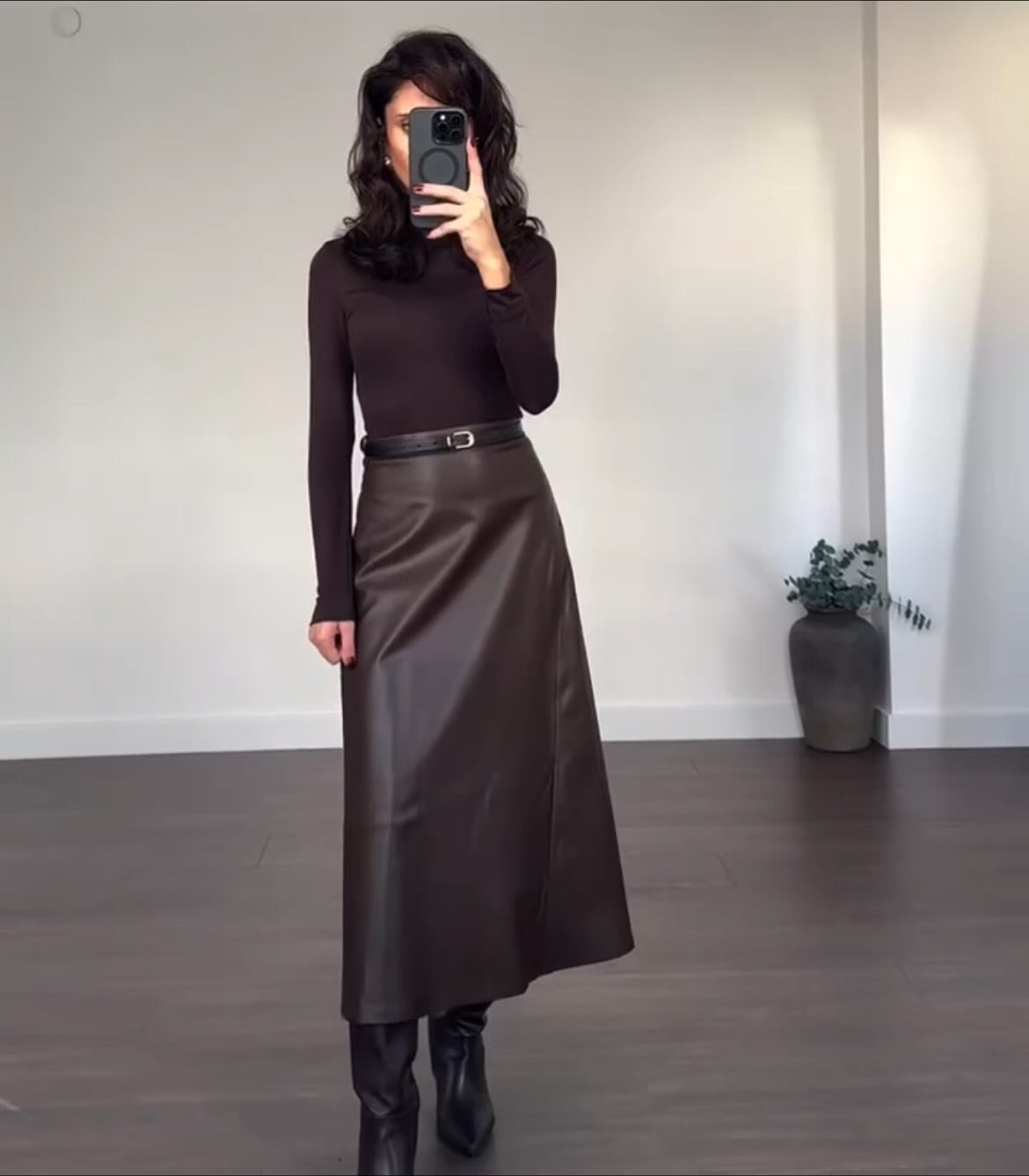
A leather maxi skirt with a fitted turtleneck is the winter version of a slip dress and tee: the contrast of textures does the work.
The skirt here is belted at the waist, which keeps the long line from flattening the figure, and the boots disappear under the hem so the leg length stays continuous.
I have worn this shape with an oversized trench over top, sized down so it does not drown the skirt. Knee-high boots are the alternate shoe; they need to fit close to the leg to keep the silhouette clean.
11. Belted Leather Jacket and Tights
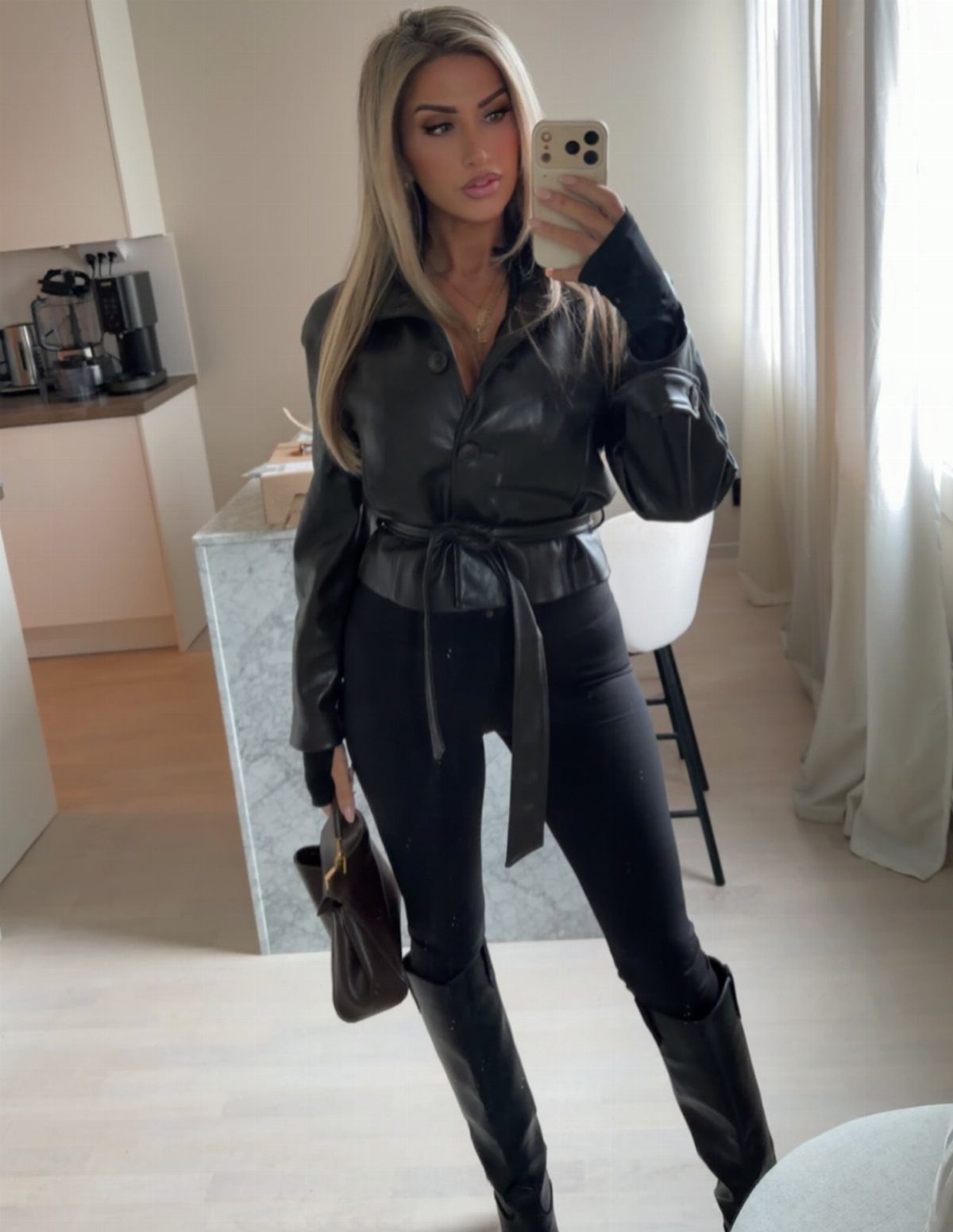
A belted leather jacket worn over tights is the shortcut to looking dressed when you are basically in leggings.
The jacket’s structure provides the outfit; the tights and tall boots extend it into a leg. I would add a roll neck or thin knit under the jacket for warmth, since leather blocks wind but does not breathe heat back.
The belt is the detail that keeps this from looking like you forgot your pants.
Small bag, clean boots, no competing hardware. This is my substitute for a dress on nights when I want coverage without the fuss of a skirt; the jacket length has to hit mid-thigh or the proportion goes wrong.
12. Corduroy Pinafore Dress with Turtleneck
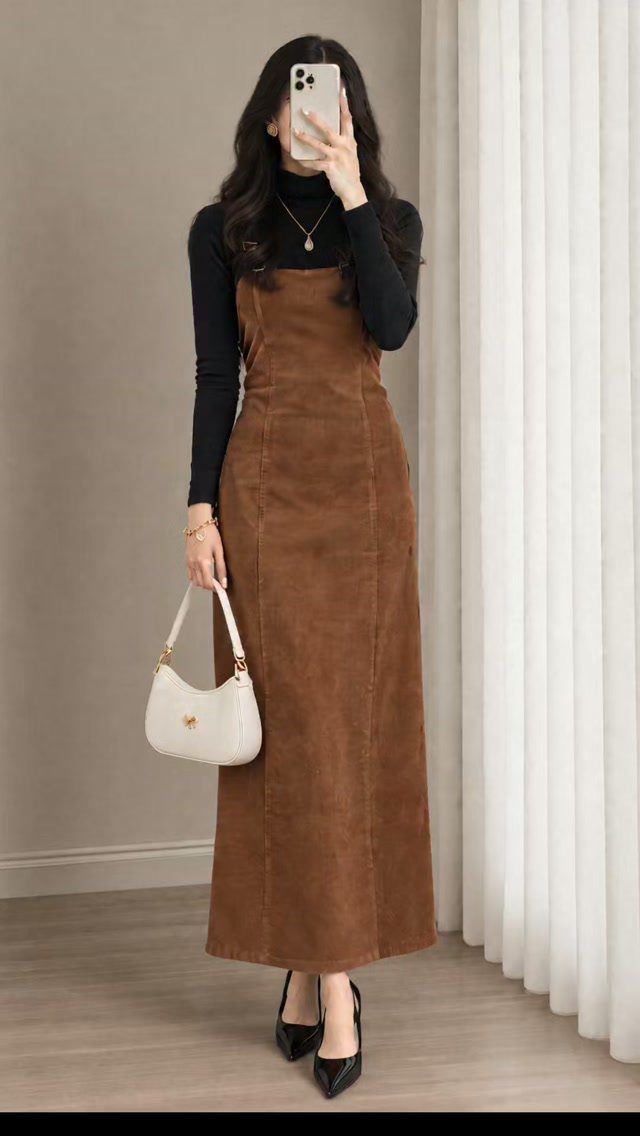
A corduroy pinafore dress over a turtleneck is the rare winter look that reads youthful without trying too hard.
The corduroy gives weight and texture; the pinafore cut keeps the black layer underneath visible at the neck and arms, so the outfit has depth.
I would check the length: maxi on a shorter frame can shorten the leg further, and the dress needs to clear the top of the boot or bunch unflatteringly.
A corduroy pinafore dress over a turtleneck is a day-to-night piece: the same outfit with flat boots and a larger tote works for Saturday errands.
Layering for Warmth
Thermal layers are the part of winter dressing no one sees and everyone needs.
The cold forces choices that summer never asks for. Padded coats keep you alive but rarely look elegant; some layers are purely functional and the visible ones do the style work.
I wear thermal tights under everything from maxi skirts to leather pants once the temperature drops below freezing.
The newer fleece-lined versions are thin enough that they do not add bulk, and they let me wear the same silhouettes I would in October.
Color Palettes
Neutrals are the simplest way to make winter dressing look intentional. Ivory, camel, black, and gray all work together without any one piece fighting another, and the palette lets texture do the variation instead of color.
A light gray wool coat over a cream knit softens blue denim into something that reads fresh against January skies. Brown suede against that cooler palette adds warmth without introducing a true color.
I find a sweater with some texture, a cable or a rib, makes a neutral outfit look considered rather than accidental.
The risk with head-to-toe cream or camel is that one off shade collapses the whole thing; each piece needs to be clean and in good condition, since there is nowhere for wear to hide.
Accessorizing
A scarf is the most useful winter accessory because it adds pattern or color to a coat you wear daily.
Triangle wool scarves have been the shape this year, worn over a sweater and tied in front, or looped under a coat collar.
I keep a pair in my pocket from the first cold morning; the difference between bare wrists and covered ones is the difference between dressed and finished.
A structured bag with a proper handle, not a slouch or a crossbody strap, does similar work. It sits in the hand or at the elbow, which keeps the silhouette vertical and the posture different from the daily commute.
The bag and gloves together are what make a winter outfit look like a decision rather than a default.