Winter street style runs from a cropped puffer over denim to a belted ribbed sweater dress with patterned hosiery, and the deciding factor is what your day actually holds: puddle-splashing boots for slushy commutes, a tailored blazer with dense burgundy lace tights for the office, or a chunky sweater with a long skirt when you want something that reads polished without trying too hard.
The 13 ideas below all build on pieces that work with what you already own, grounded in the textures and proportions that keep a silhouette intentional rather than bundled.
1. Puddle-Splashing Boots
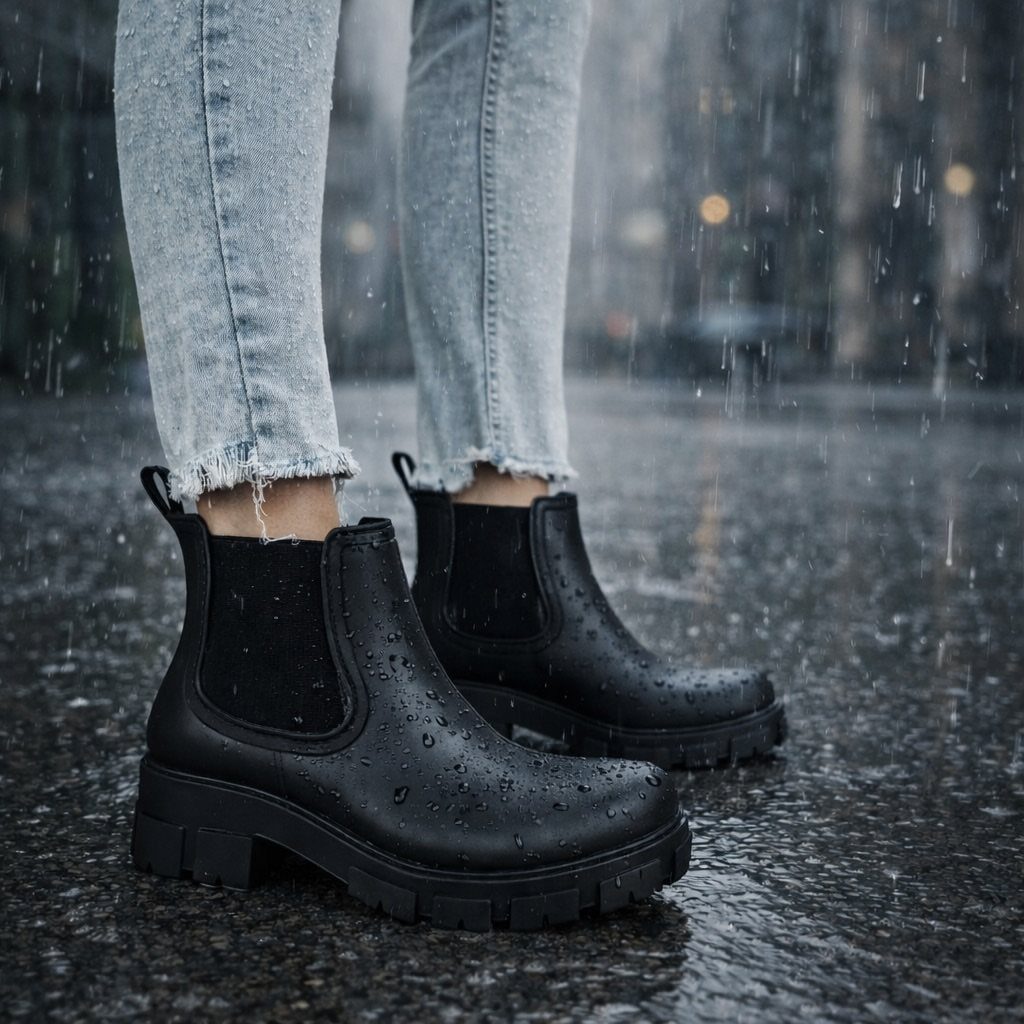
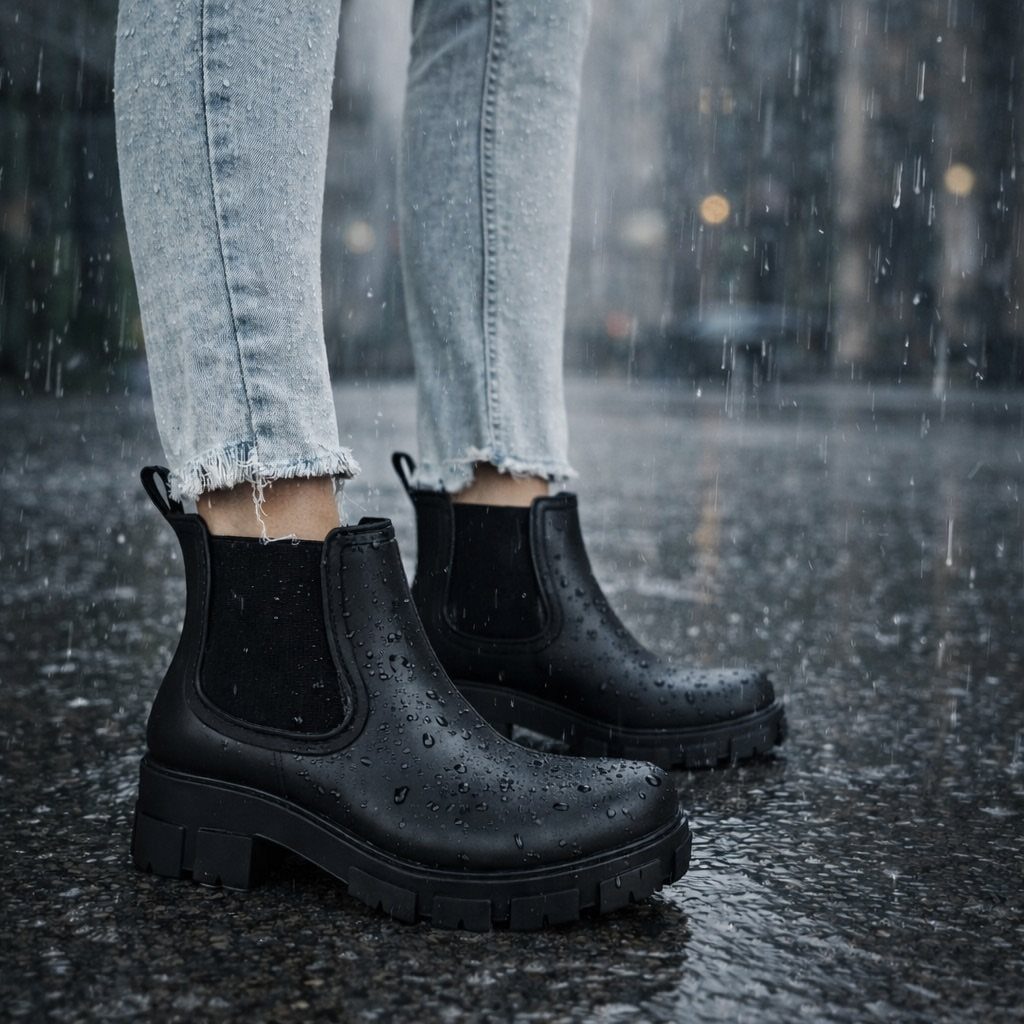
Thick-soled waterproof boots turn a rainy commute into the best part of the outfit.
I look for rubber or treated leather uppers with enough tread to handle slush without sliding, since nothing ruins a look like a bruised tailbone. Minimal hardware on puddle boots keeps the shape reading as intentional rather than utilitarian.
2. Chic Winter Coats
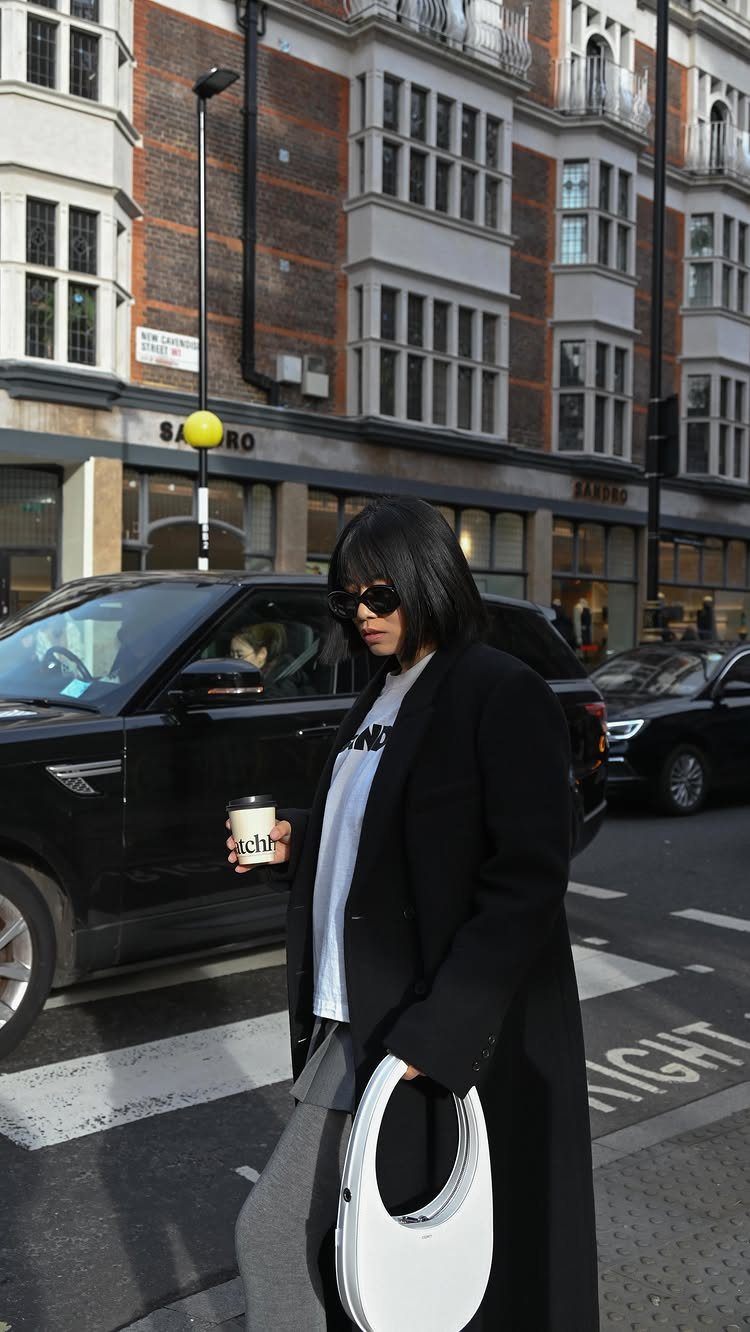
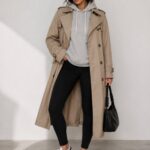
A coat that fits like it was borrowed from someone taller gives winter dressing its attitude. I reach for oversized wool shapes in camel or black most often, though a long trench over thin knits works on milder days.
A white tee, grey trousers and small bag keep everything else quiet underneath a statement coat. The coat does the work.
3. Knits with Leather
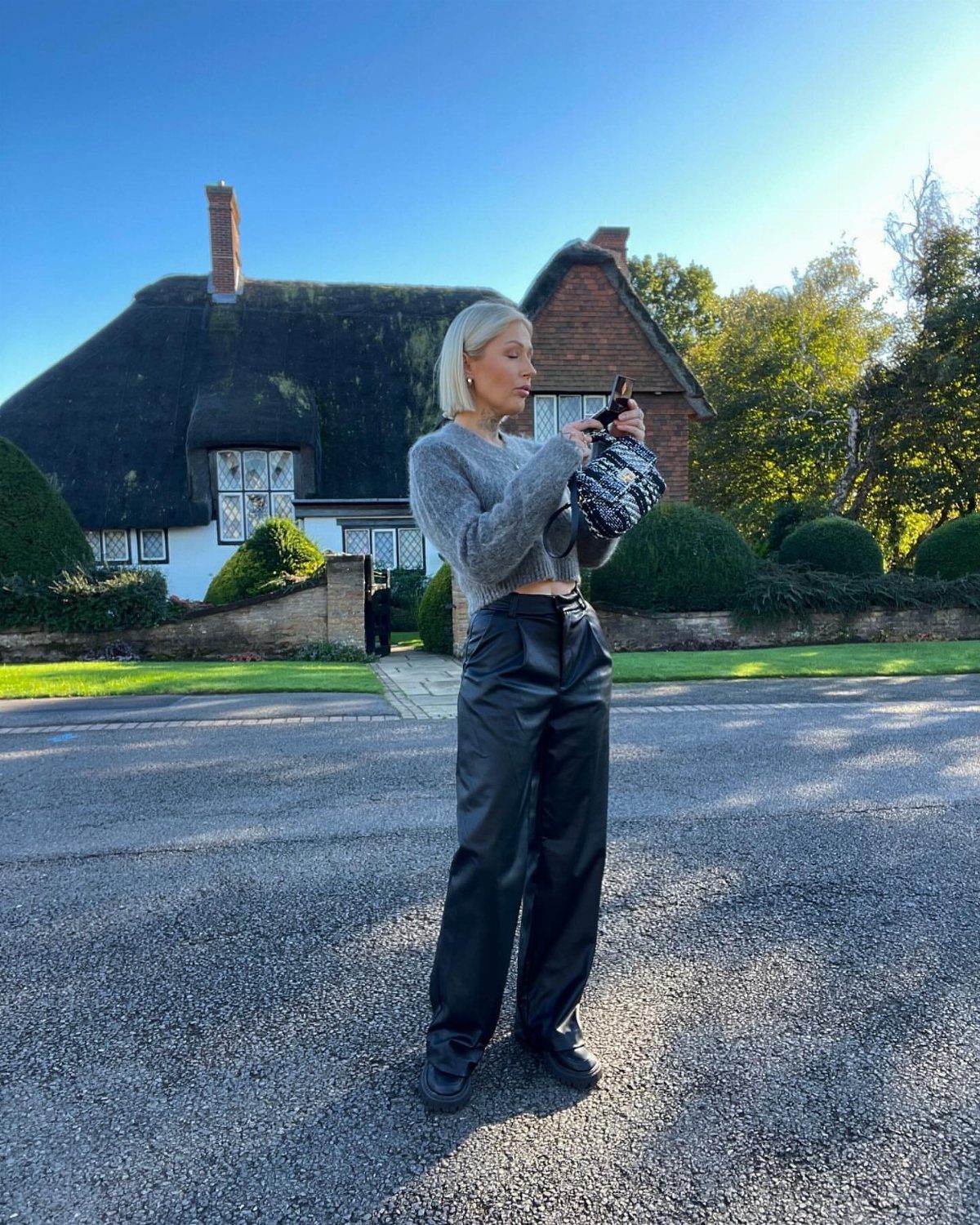
Texture mixing saves winter outfits from going flat. A cropped fuzzy knit against sleek leather trousers creates contrast that reads as considered, not accidental.
I like the sweater slightly shrunken so the leather shows at the waist; the reverse, with a long tunic over leather pants, can feel costumey unless the fabrics are thin.
4. Tailored Trousers with Oversized Sweaters
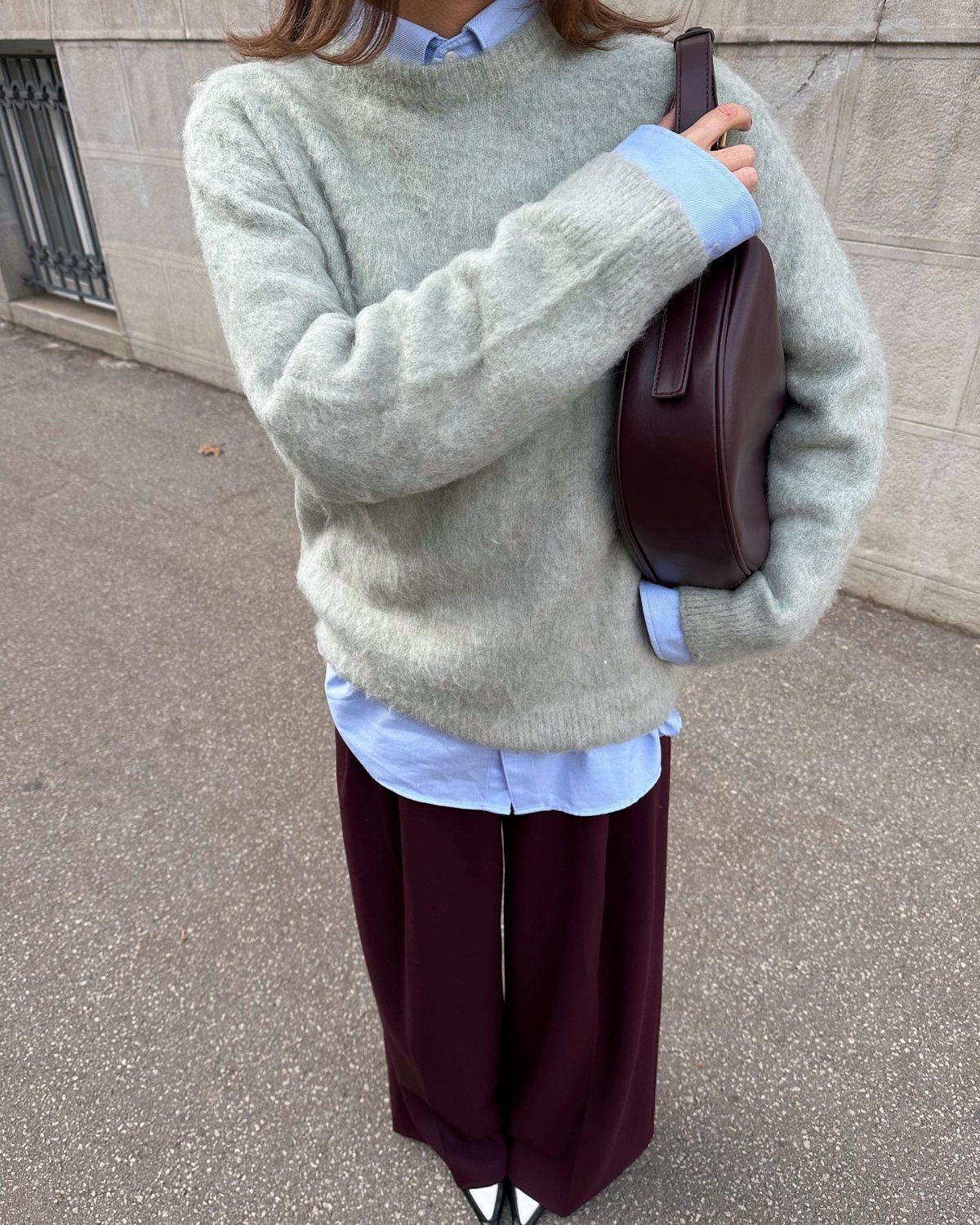
Wide-leg trousers in a deep color ground a fuzzy top that might otherwise read as pajamas. Layering a collared shirt between tailored trousers and an oversized sweater adds structure at the neck and breaks up the softness.
I would skip the shirt on casual days, but the trousers stay: their pressed front line signals intent even under something slouchy.
5. Bright Colors
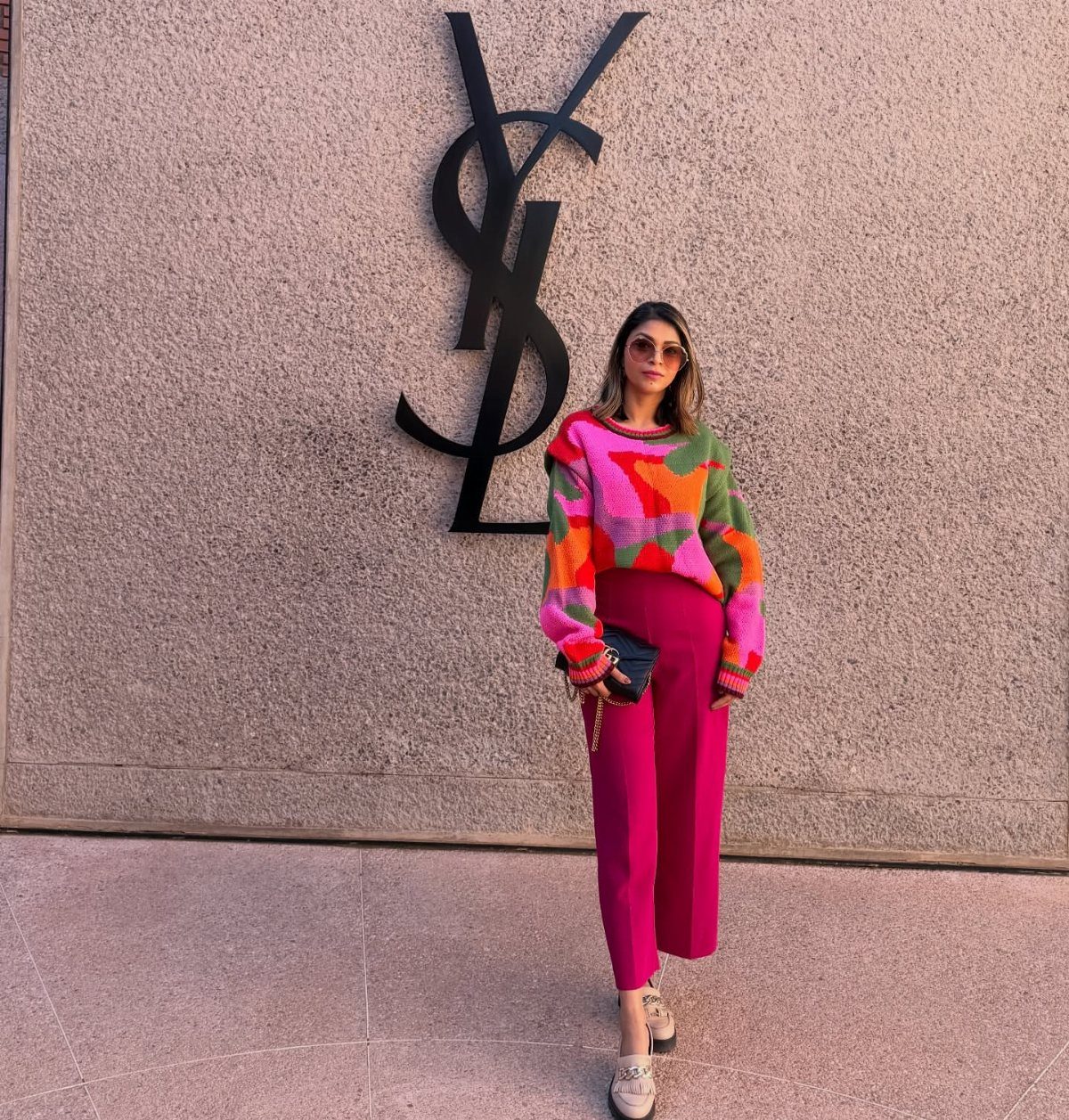
Winter light flatters saturated color more than people expect. One bold piece, like a pair of magenta trousers, carries the whole outfit without requiring you to hunt for a matching coat.
I keep brights away from my face if my skin is winter-pale; below the waist or in a bag lets me ease in.
6. Casual Puffer Jacket Outfits
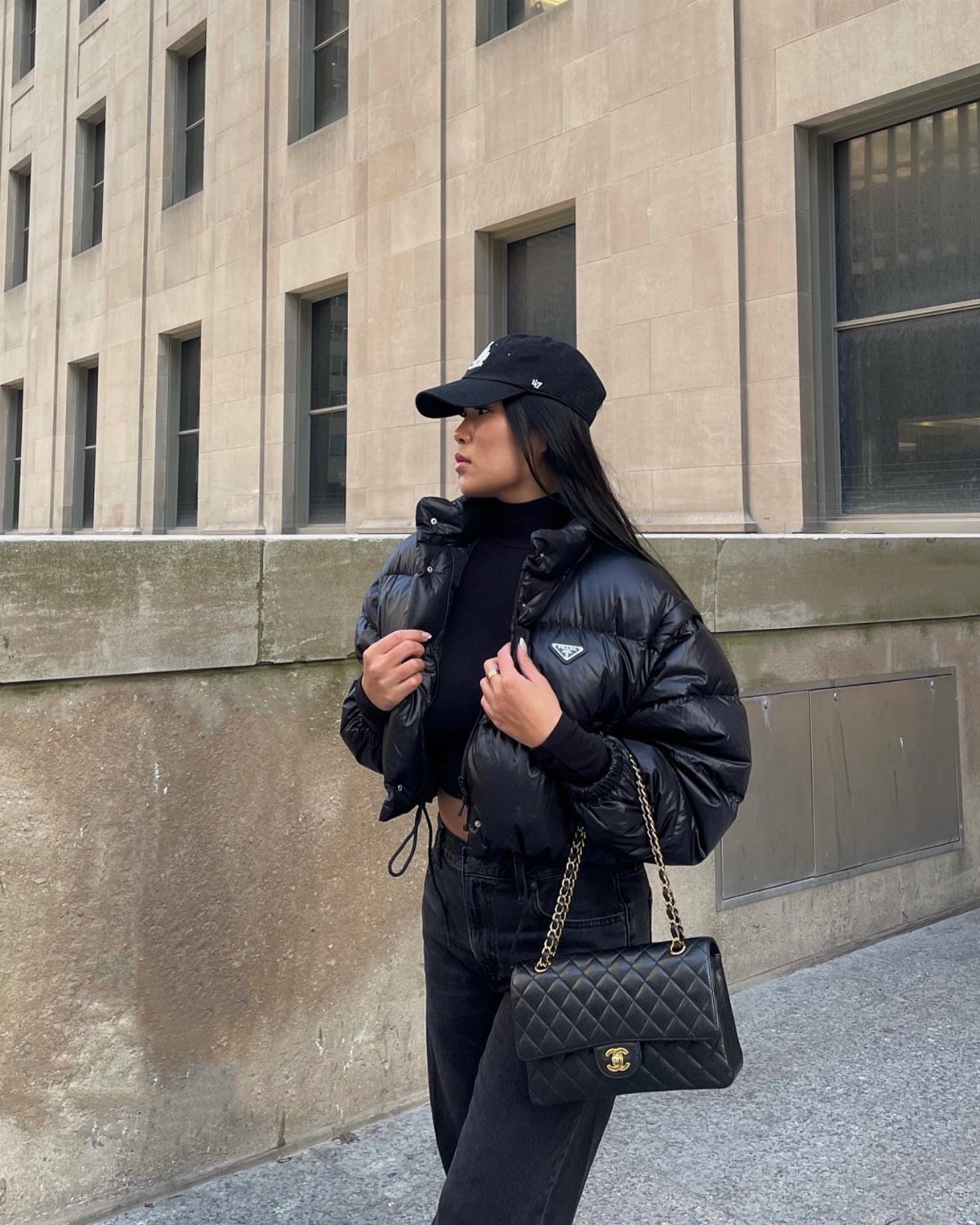
A cropped puffer reads sportier than a long coat and pairs naturally with denim and a thin turtleneck.
A cap and quilted bag in matching tones keep the accessories unified rather than scattered with a puffer. I check that the puffer hits at my natural waist; anything longer competes with the jeans.
7. Chunky Sweaters with Long Skirts
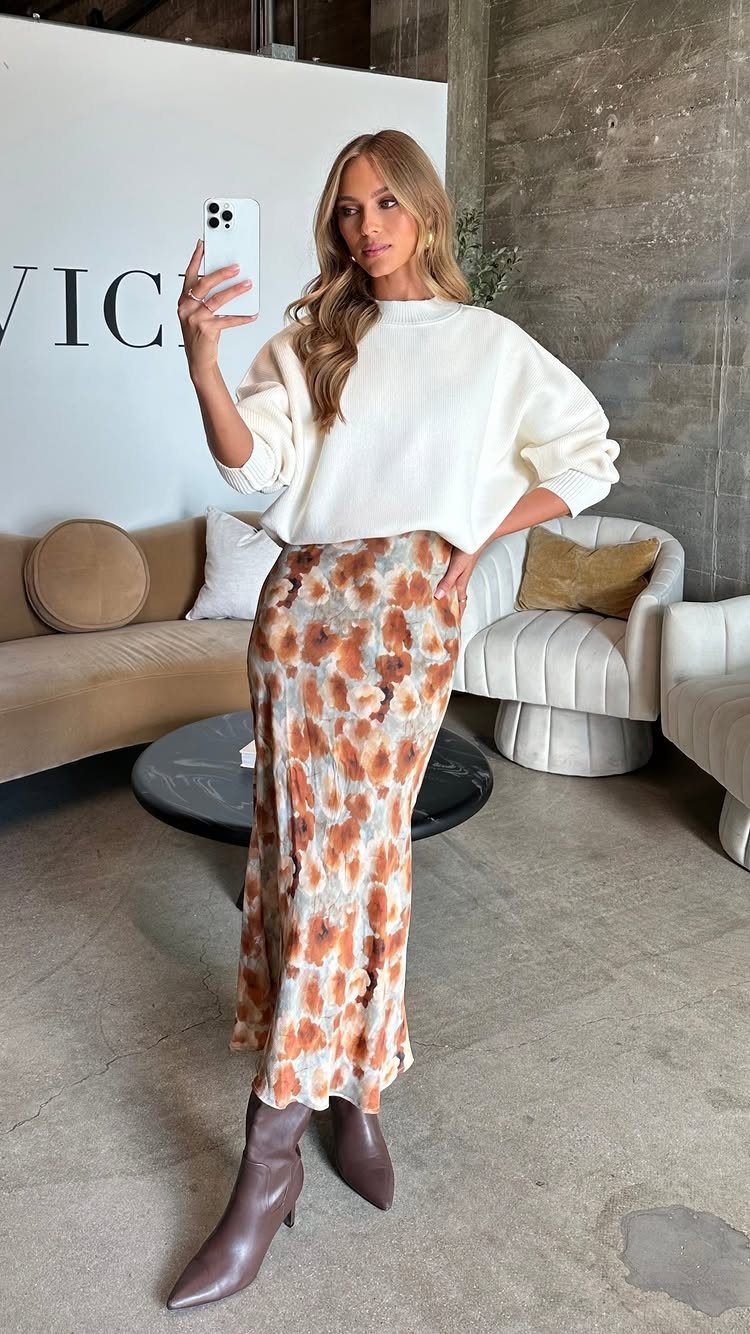
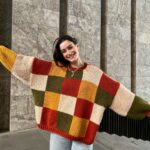
A chunky knit sweater tucks into a satin maxi skirt more easily than you’d think; the sweater needs enough weight to hold the waistband in place without bunching.
I check that the skirt’s print has enough dark ground to read as winter rather than vacation, and I always wear boots that cover the ankle bone since a skin gap between hem and shoe breaks the line in cold weather.
Tights underneath are non-negotiable for warmth, though they stay hidden.
8. Tailored Blazer with Statement Tights
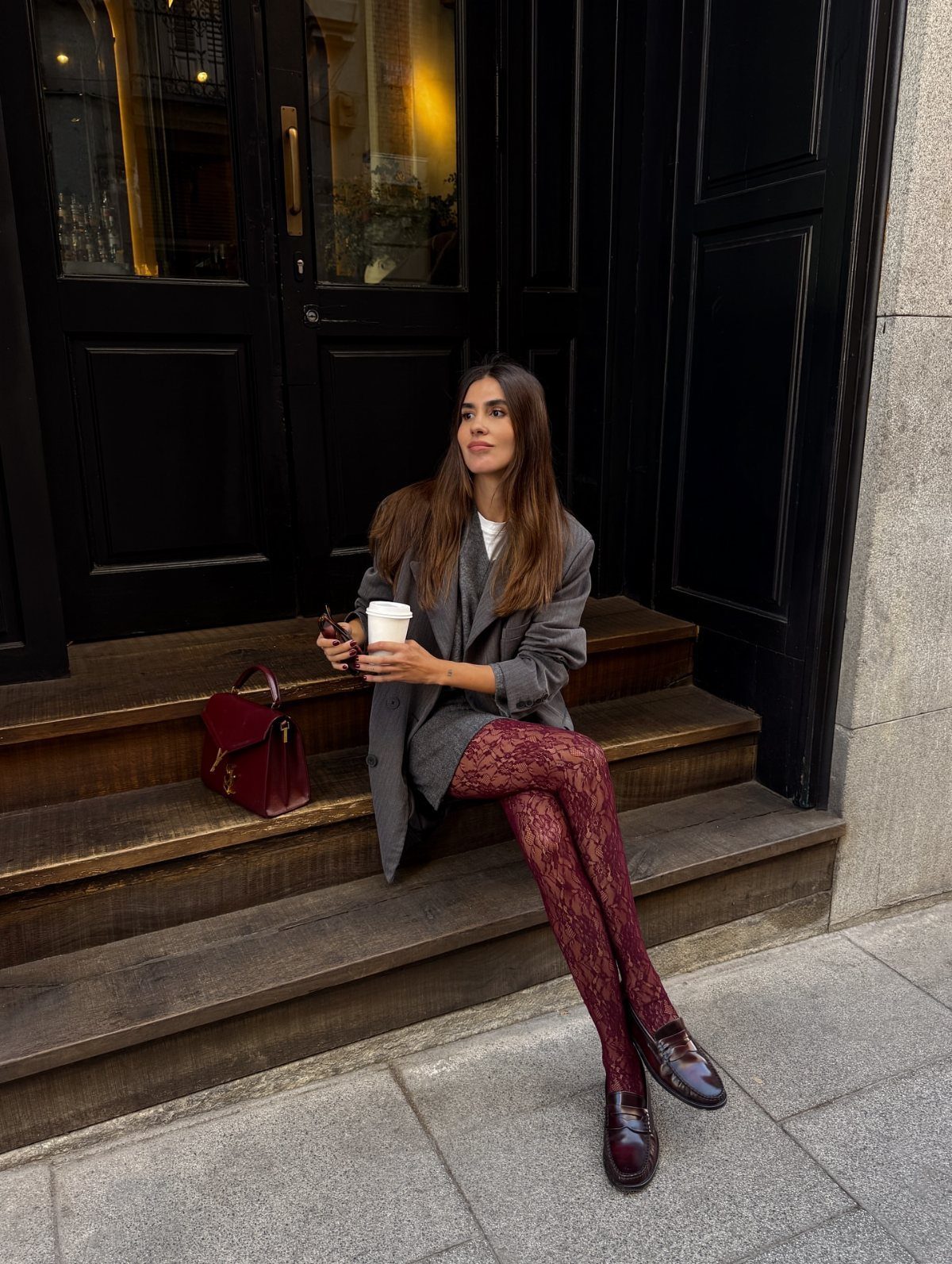
Patterned tights turn a grey blazer and loafers into something that reads as considered rather than borrowed from the office.
A burgundy lace tight works in daytime if the pattern is dense enough to read as a solid from a few feet away; sheer or scattered motifs push it toward partywear.
I would keep the blazer slightly oversized so the tights stay the focus, and I check that the shoe has a closed vamp; an open loafer with lace tights can look like a costume mismatch.
9. Leather Jacket with Wide-Leg Jeans
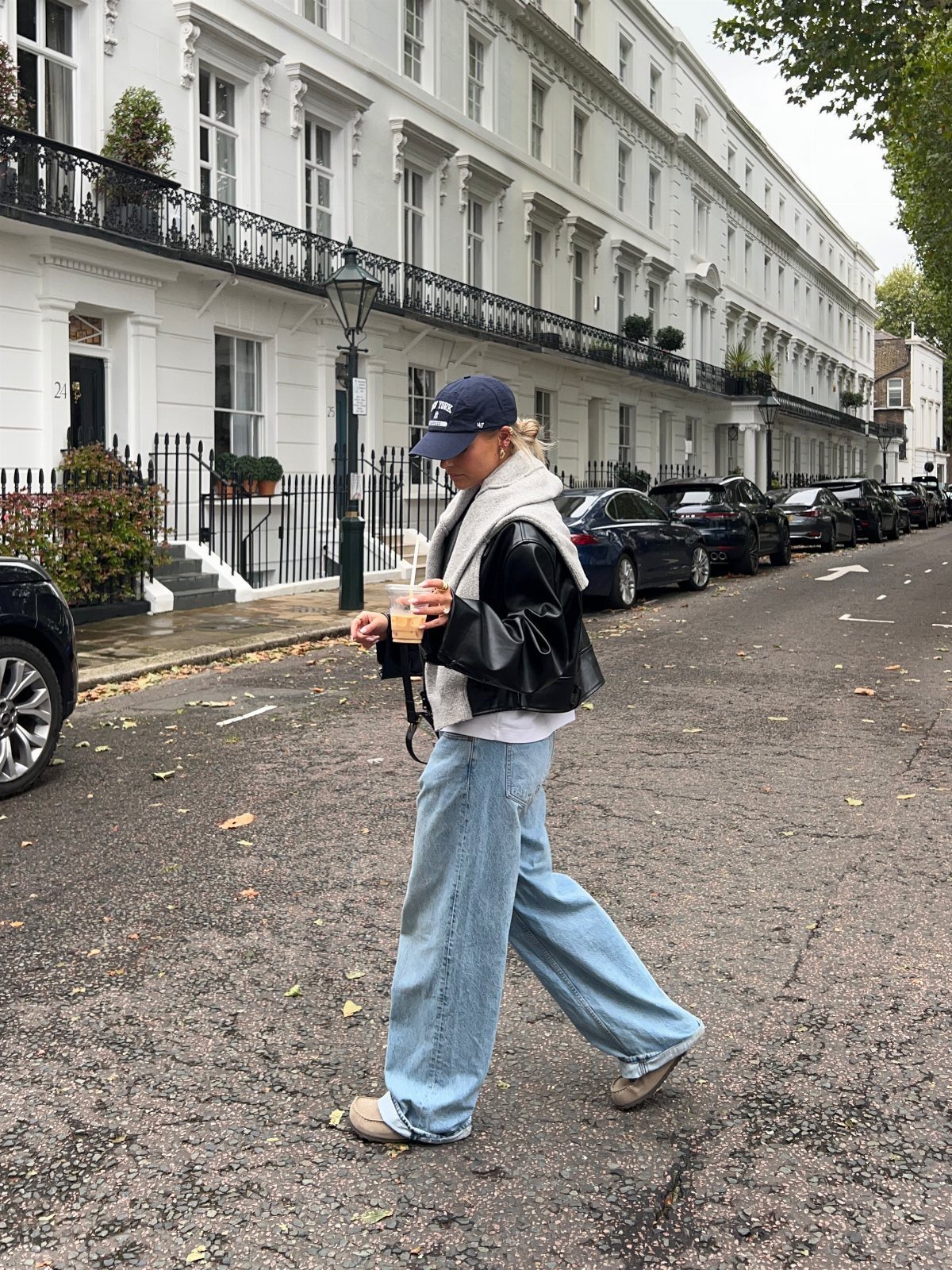
A black leather jacket over wide-leg jeans needs the denim to sit high enough on the waist that the jacket’s hem and the jean waist don’t fight for territory.
A baseball cap and a to-go cup turn this into casual city running, not evening; a thin layer underneath adds warmth without a scarf that would fight the jacket collar.
I find the jacket length matters more here than with skinny jeans: cropped hits at the wide point of the leg and looks balanced, while a longer jacket can swallow the shape.
10. Knit Sweater Dress with Tights
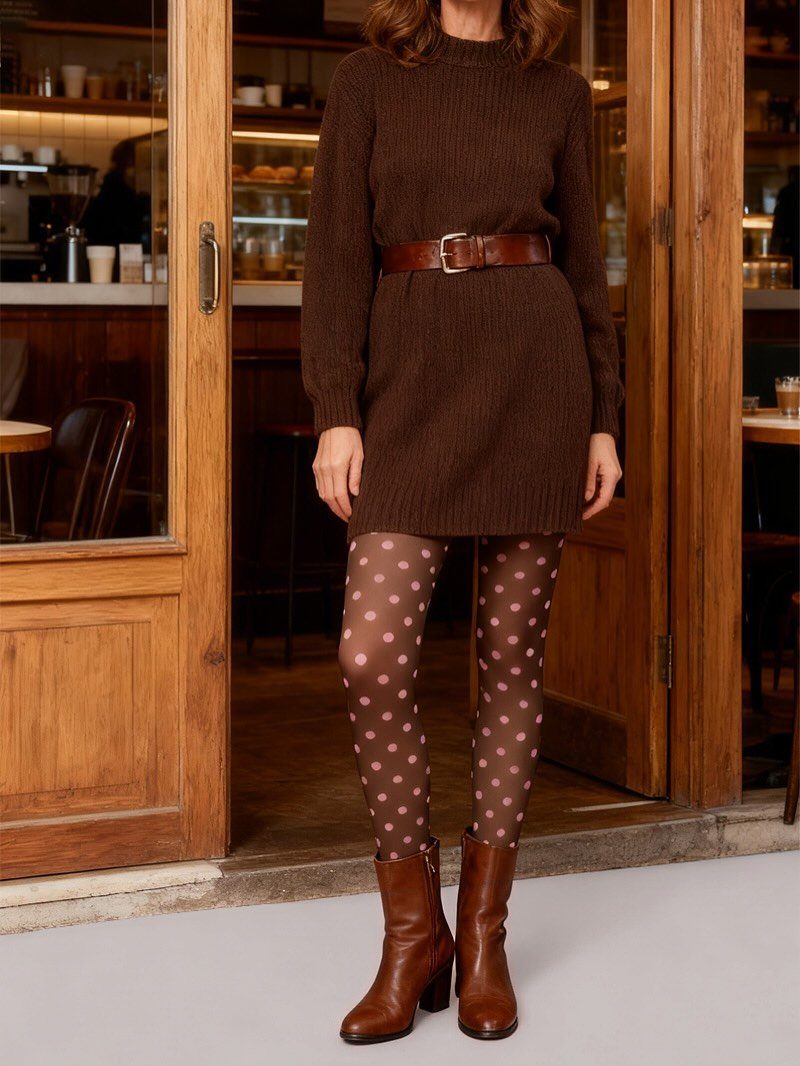
A ribbed sweater dress needs a belt to keep it from reading as a sack; I place mine at the natural waist, not the hips, since the dress fabric has enough bulk to shorten the leg otherwise.
Patterned hosiery works with a solid dress when the scale stays small and the colors talk to each other; brown boots against a brown dress is that conversation.
I check that the dress hits mid-thigh or lower; anything shorter with thick knit risks looking like a tunic that lost its pants.
11. Sweater Vest with Mini Skirt
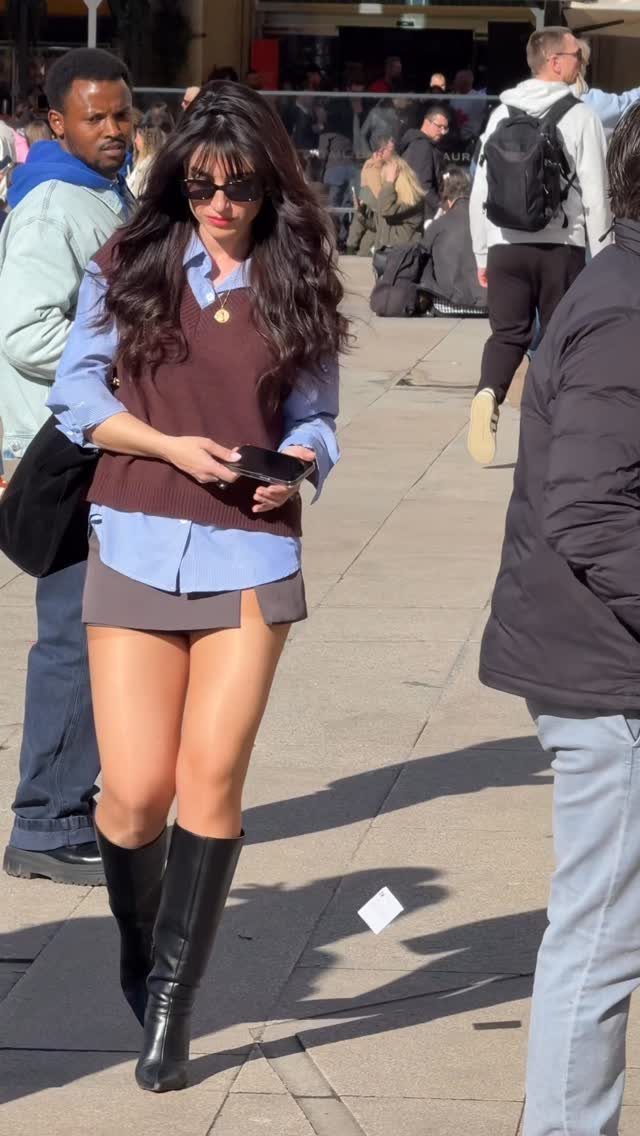
Layering a sweater vest over a collared shirt gives the neck the structure that a bare knit lacks, and the mini skirt keeps the proportion from going librarian.
Tall boots are what make this winter rather than autumn; they need to hit at or above the knee to balance the exposed leg.
I would add tights in a color that matches the boots so the leg line stays continuous, though the photo leaves this open. The vest should be long enough to cover the shirt tail at the sides.
12. Casual Hoodie and Wide-Leg Denim
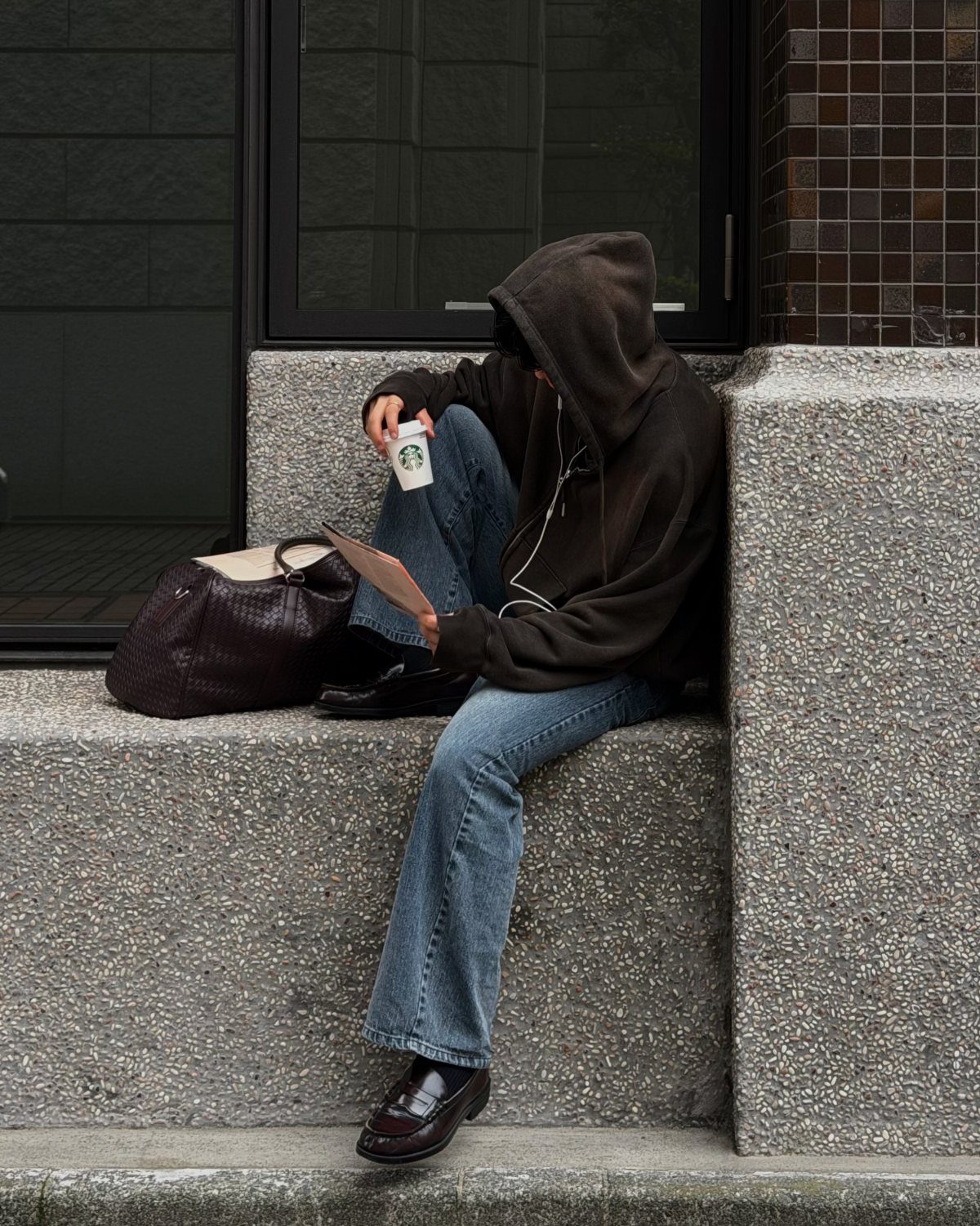
An oversized hoodie with flared jeans and loafers works because the shoe is refined enough to counter the couch-wear energy of the top.
The hoodie needs to be substantial, not the thin kind that pills after 2 washes, since it is doing the visual work of a sweater here.
I check that the jean flare is wide enough to cover the loafer’s heel; a half-visible shoe under a wide leg looks like a sizing mistake.
13. Denim Jacket with Olive Trousers
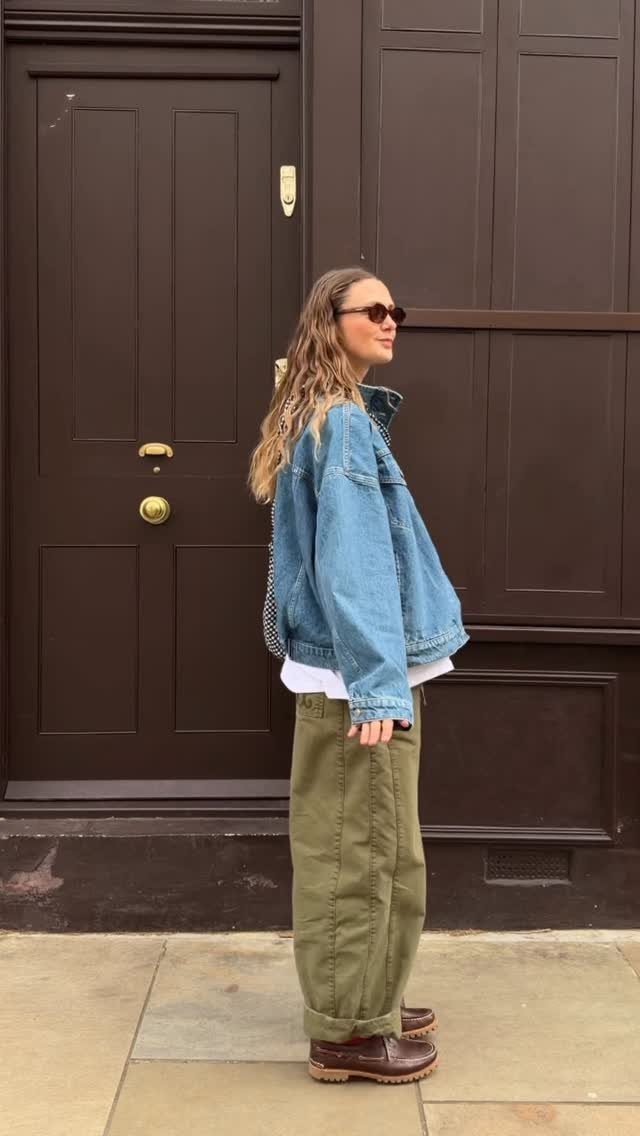
Olive trousers read as neutral in winter light, where khaki would wash out against grey sidewalks and bare trees.
The denim jacket adds the blue note that keeps the palette from going too military; I would choose an oversized wash with some fade rather than dark indigo, since the contrast against olive needs to stay gentle.
A white tee or thin thermal underneath keeps the layers flat enough that the jacket can stay open without bulk. Boat shoes work in milder weather, though I would swap to a loafer or slim boot once the temperature drops.
The trouser cut matters more than the jacket here: too slim and the outfit goes utilitarian, too wide and the denim hem floats. A straight or barely tapered leg hits the right middle.
This is an easy formula to repeat with different neutrals: grey trousers, cream jacket, same structure.
Importance of Layering
Thin layers beat thick ones for winter street style because each piece keeps its shape.
A fitted base layer or thermal sits closest to skin, then a chunky knit, then a structured coat. This order traps heat without the bulk that turns a silhouette into a mound.
Texture mixing is where the look gets interesting.
Wool against denim, cotton against leather, or a knit paired with something sleeker keeps a neutral palette from going flat. The contrast reads as intentional when each layer is visible.
Every piece should earn its place. If a layer doesn’t add warmth or structure, it adds clutter instead.
Choosing the Right Fabrics
Breathable warmth matters more than sheer thickness for winter fabrics. Cozy knits and insulated outerwear work because they hold heat while letting moisture escape; a clammy layer underneath ruins the comfort no matter how thick the coat.
Neutral-colored accessories simplify the rest of the outfit. Black beanies, scarves and boots pair with nearly anything, which matters when you’re building a wardrobe piece by piece rather than buying for single looks.
The texture of the fabric does visual work too. A knit’s fuzz, leather’s sheen, or denim’s matte surface each add depth that color alone doesn’t provide.
Accessorizing for Winter
An oversized scarf adds volume at the neck where a coat leaves off; structured handbags keep their shape against soft outerwear; beanies and berets handle the heat loss that happens through your head.
Leather gloves bridge the gap between a wool coat and whatever you’re holding: coffee cup, phone, subway pole. They look sharper than knit and wear better through a season of salt and slush.
Color choice depends on how much you want the accessory to do.
Neutrals blend and extend an outfit; a bold scarf or hat becomes the single focal point that carries the whole look. Either works, but the decision is worth making deliberately rather than grabbing what’s clean.
Frequently Asked Questions
What are the trendy winter looks for 2026?
Oversized coats in camel or black still carry the attitude, but icy blues are breaking through as the color to watch.
Texture mixing is the main move: fuzzy knits against leather trousers, wool over denim, satin skirts under chunky sweaters. Puffers have gone from purely practical to intentional, especially cropped shapes that hit at the natural waist.
The biggest shift is treating color as a single bold piece rather than a full monochrome look, like magenta trousers against an otherwise neutral outfit.
What to wear instead of jeans in winter?
Wool trousers in a dark tone do the same job as jeans but feel more intentional under an oversized sweater. Wide-leg wool shapes with a pressed front line signal intent even under an oversized sweater.
A long satin skirt with a dark base print carries into winter if you close the ankle gap with boots that hit at least the ankle bone.
Leather trousers against a cropped fuzzy knit need the sweater cut short enough that the leather shows at the waistline.
What makes a woman look wealthy?
Quality fabrics that hold their shape do more than labels ever will.
Leather gloves hold up through salt and slush far better than knit, and they sharpen the line between your coat and your bag or coffee cup. One structured bag that keeps its shape against soft outerwear outperforms three trendy ones.