These outfits build from a simple three-layer color formula using closet staples you probably already own, with a cream trench and knee-high boots for the mornings that need brightening.
Someone with softer contrast lives in the beige cardigan and white trousers; a touch more makes the warm burgundy dress or that muted plaid mini feel intentional instead of trying too hard.
1. Invest in Neutrals
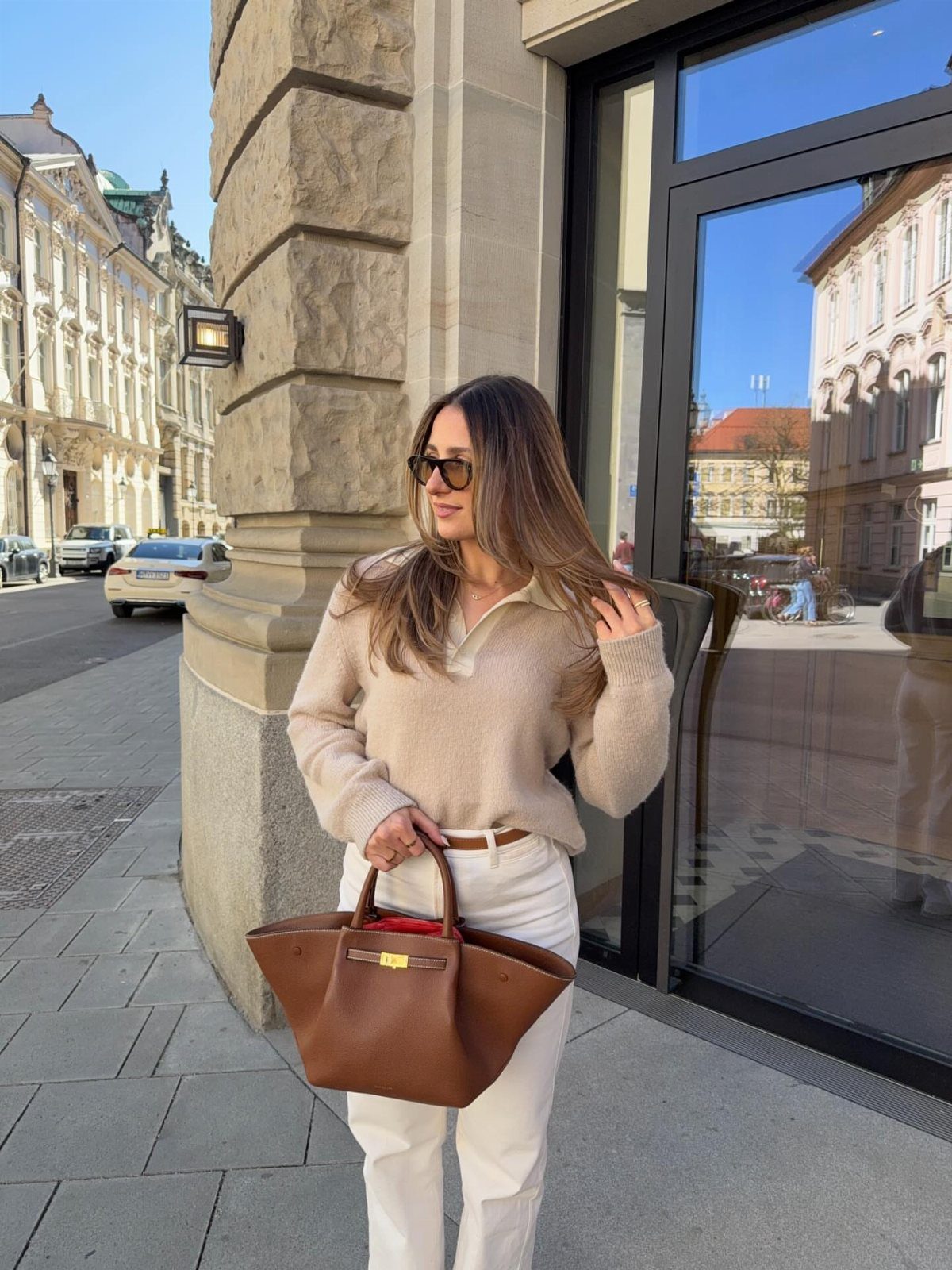
Espresso, beige, and ivory form the backbone of a soft autumn wardrobe.
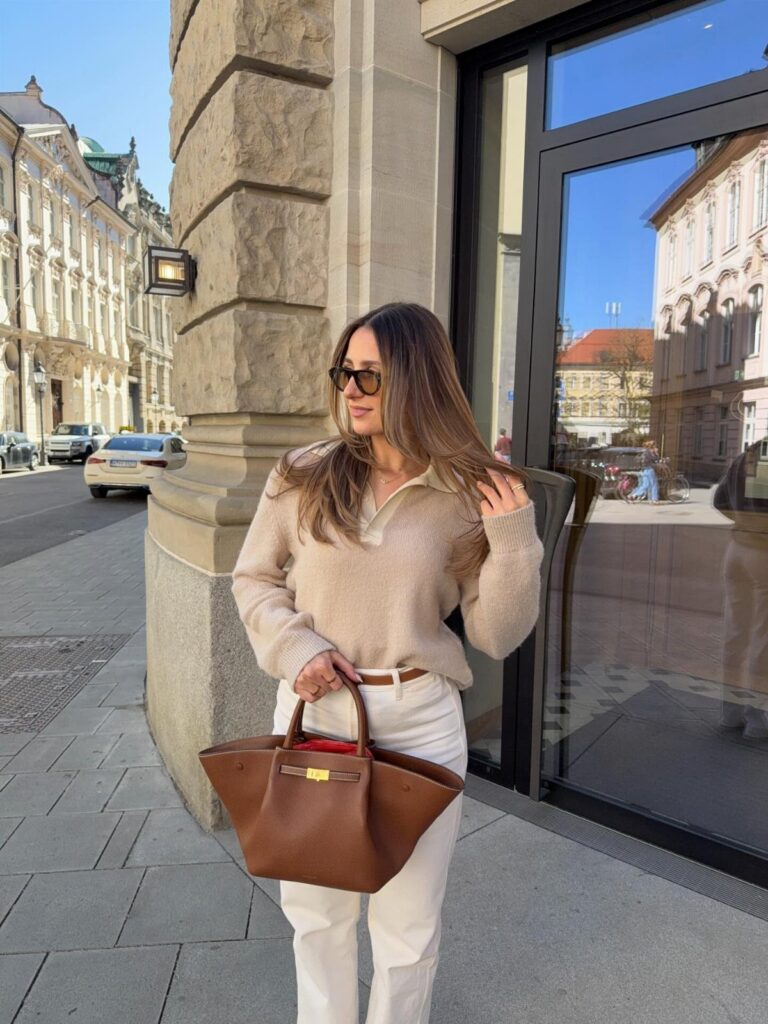
These neutrals ground the palette’s warmer muted tones without competing against them. A structured brown leather bag pulls together a beige knit and white trousers so the whole combination reads intentional rather than basic.
The belt matters here: it bridges the light bottom and the deeper tone of the bag, so the eye moves in one continuous line.
Check that your beige leans warm, not gray, before buying. Cool neutrals sit outside the soft autumn range and will fight everything else you own.
2. A Simple Autumn Outfit Formula
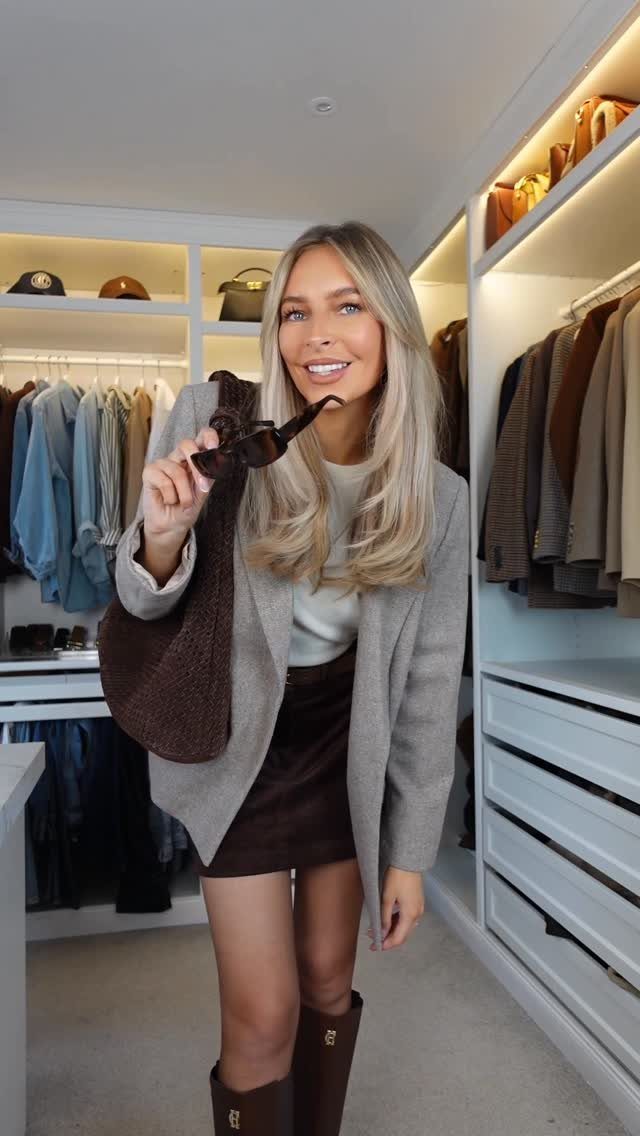
3 layers of color, zero coordination effort. Start with a warm neutral on the bottom: beige, mushroom, or camel in trousers, denim, or a skirt.
Add a muted seasonal color on top, something like dusty rose, sage, or warm ivory. Finish with a third piece in camel or warm brown: a blazer, a scarf, leather trainers.
The tones harmonize automatically because nothing drifts outside the palette. A wool-blend blazer over a cashmere cream tee with a brown mini skirt and matching boots follows the formula exactly.
One creator of this look used matching tights to keep the leg line continuous, which I would copy for shorter hemlines in colder months.
3. Casual Outerwear
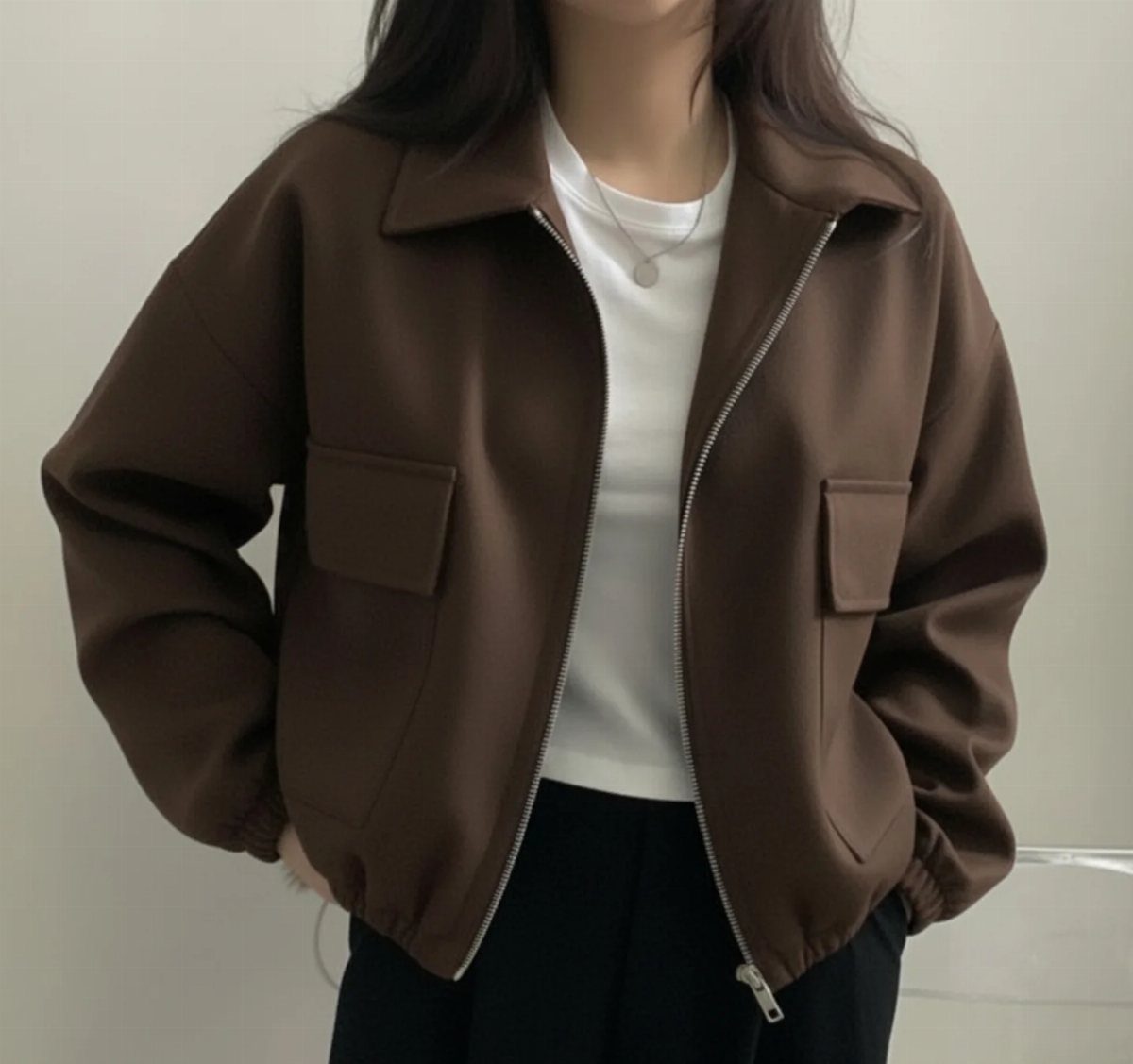
The jacket’s warm tone and practical cut suit soft autumn’s preference for function that still reads put-together. Pockets this size change the silhouette, adding horizontal weight across the chest that balances narrower hips.
One quality outerwear piece in a seasonal color will get more wear than another black jacket you already own.
Navy or olive work if brown feels too heavy for your coloring; camel and warm olive are the alternatives that stay inside the palette.
The coat or jacket is what people see first when the temperature drops, so the color choice carries more weight than it does in summer.
4. Casual Outfit Ideas
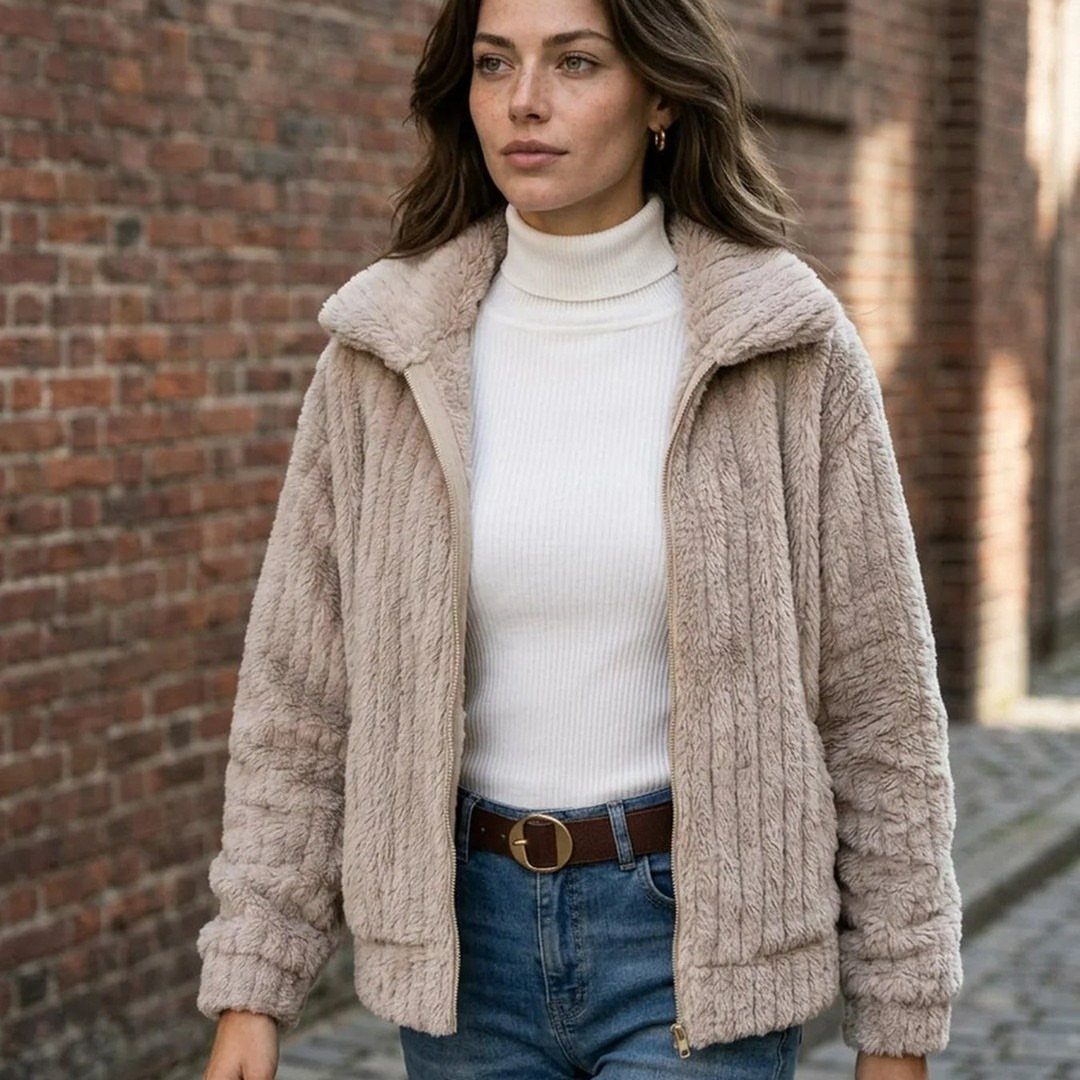
Soft autumn casual dressing works best when you stop reaching for black.
An oatmeal cardigan over an ivory tee with jeans and cream sneakers, or a sage blouse with olive trousers and the same sneakers, keeps every piece in conversation with every other.
The combinations that work: muted sage knits with beige denim, dusty terracotta tops with olive trousers, striped shirts under oatmeal cardigans with cognac loafers.
The utility jacket in olive is worth adding if you do not own one.
It functions as a neutral but carries more interest than another beige layer. Chocolate ankle boots and a cognac pair cover most casual bottoms; one of each saves decision fatigue on busy mornings.
5. Tan Leather Jacket and Midi Skirt
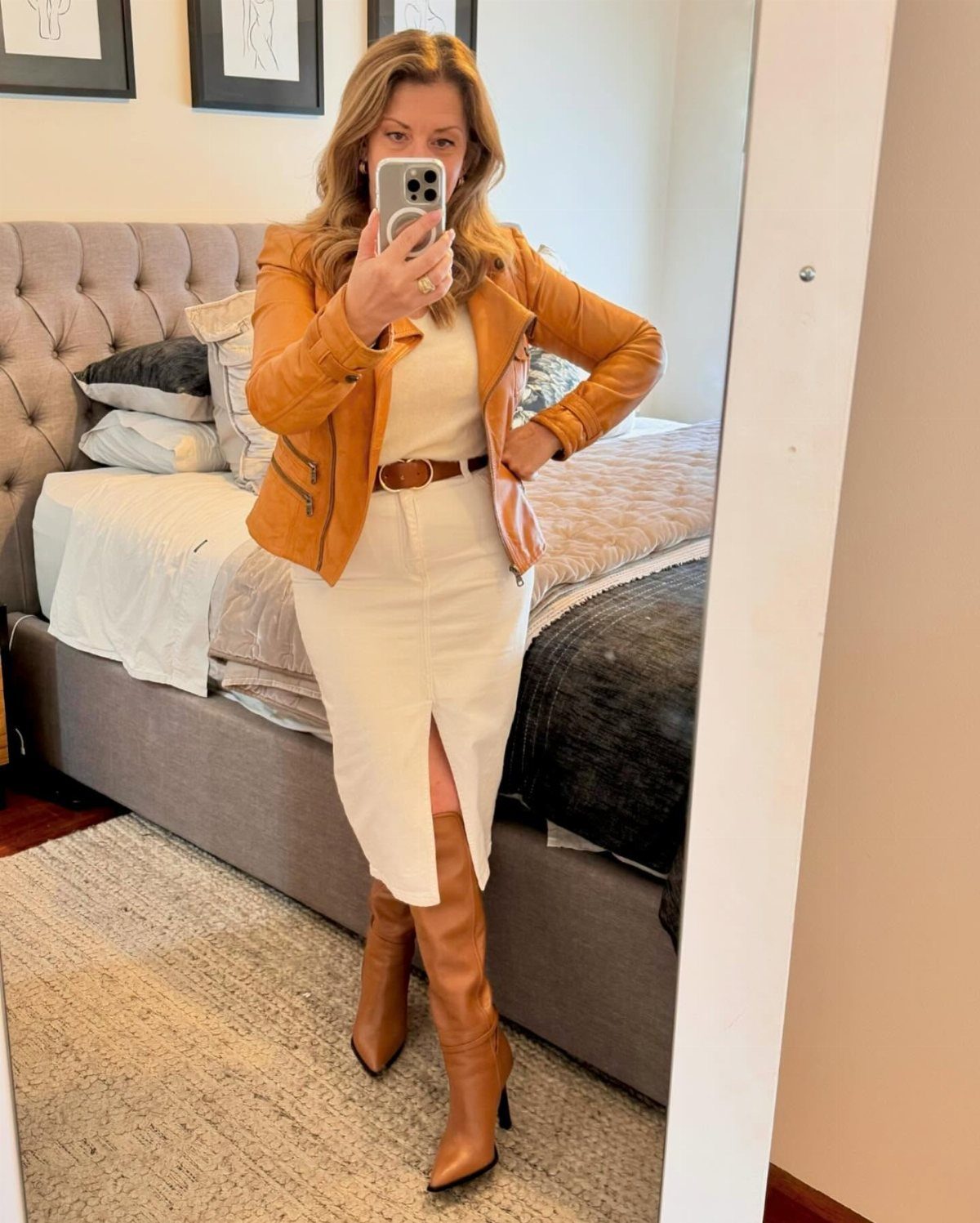
A tan leather jacket over a cream midi skirt with a front slit reads polished without reading office.
The matching tan knee-high boots extend the leg line and keep the palette unified: amber-tan, cream, brown belt, no surprises. Tan leather keeps the polish without the harshness black brings, which suits the muted quality of the Soft Autumn palette.
The slit matters for movement. A straight midi without one can feel restrictive with boots this tall.
Check that your skirt’s cream is warm, not stark, and that the tan of the jacket and boots shares the same undertone. Mismatched tans read as a mistake; matched ones read as a decision.
6. Brown Cardigan and Pleated Mini Skirt
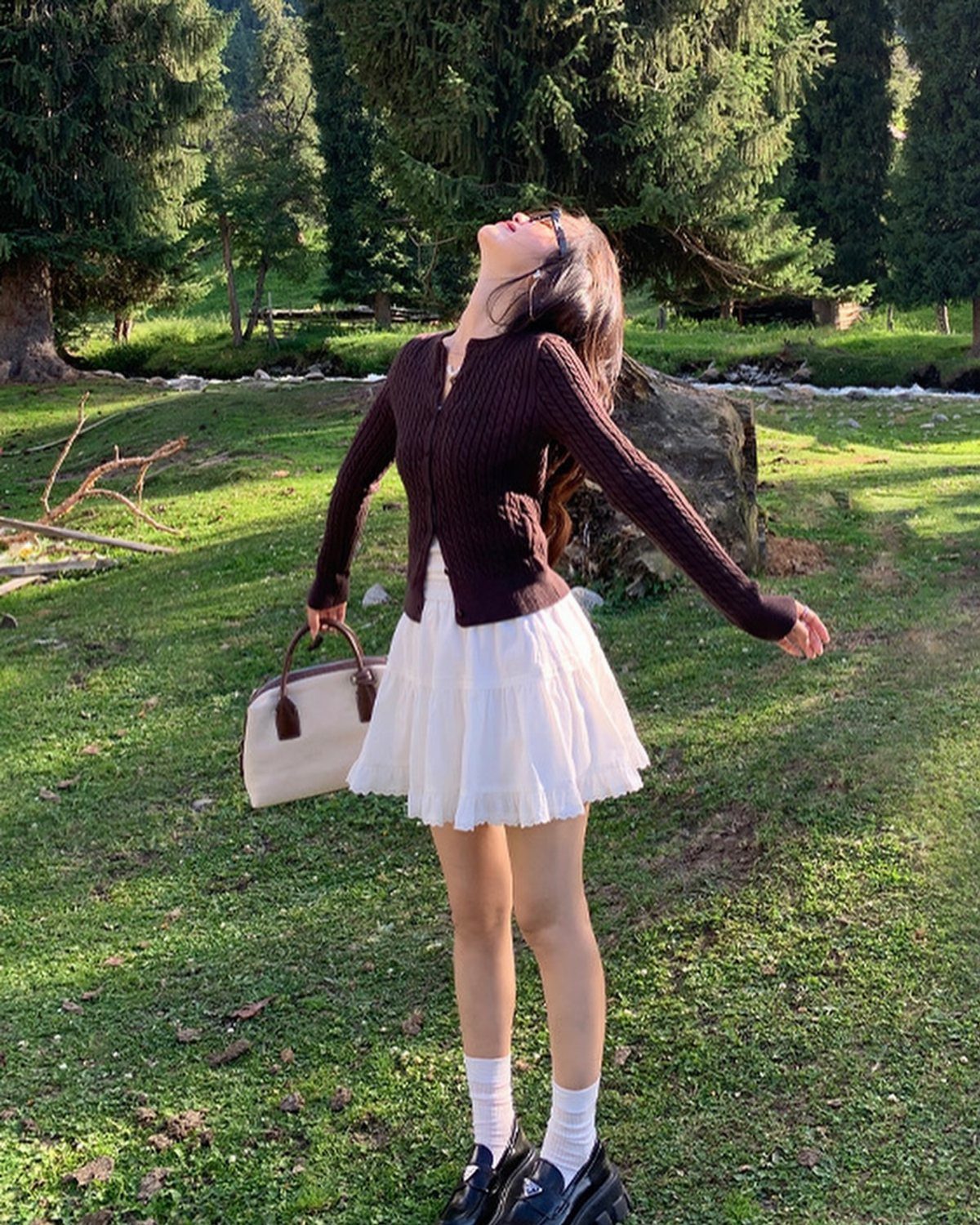
A dark brown knit cardigan over a white pleated mini skirt works because the proportions trade heaviness for airiness.
The cardigan’s weight grounds the look; the tiered skirt’s volume and the bare leg keep it from feeling like winter arrived too early. Cream loafers and a matching bag pick up the skirt’s tone and bridge the 2 extremes.
This combination suits mild autumn days, the kind that start cool and warm by afternoon.
The mini length with loafers rather than boots keeps the season ambiguous in a useful way: add tights and the same outfit extends into colder weeks.
A creator of this look chose a tiered pleat specifically for how it moves in open air, which I notice makes the white feel less formal than a flat pleat would.
7. Striped Knit with Beige Trousers
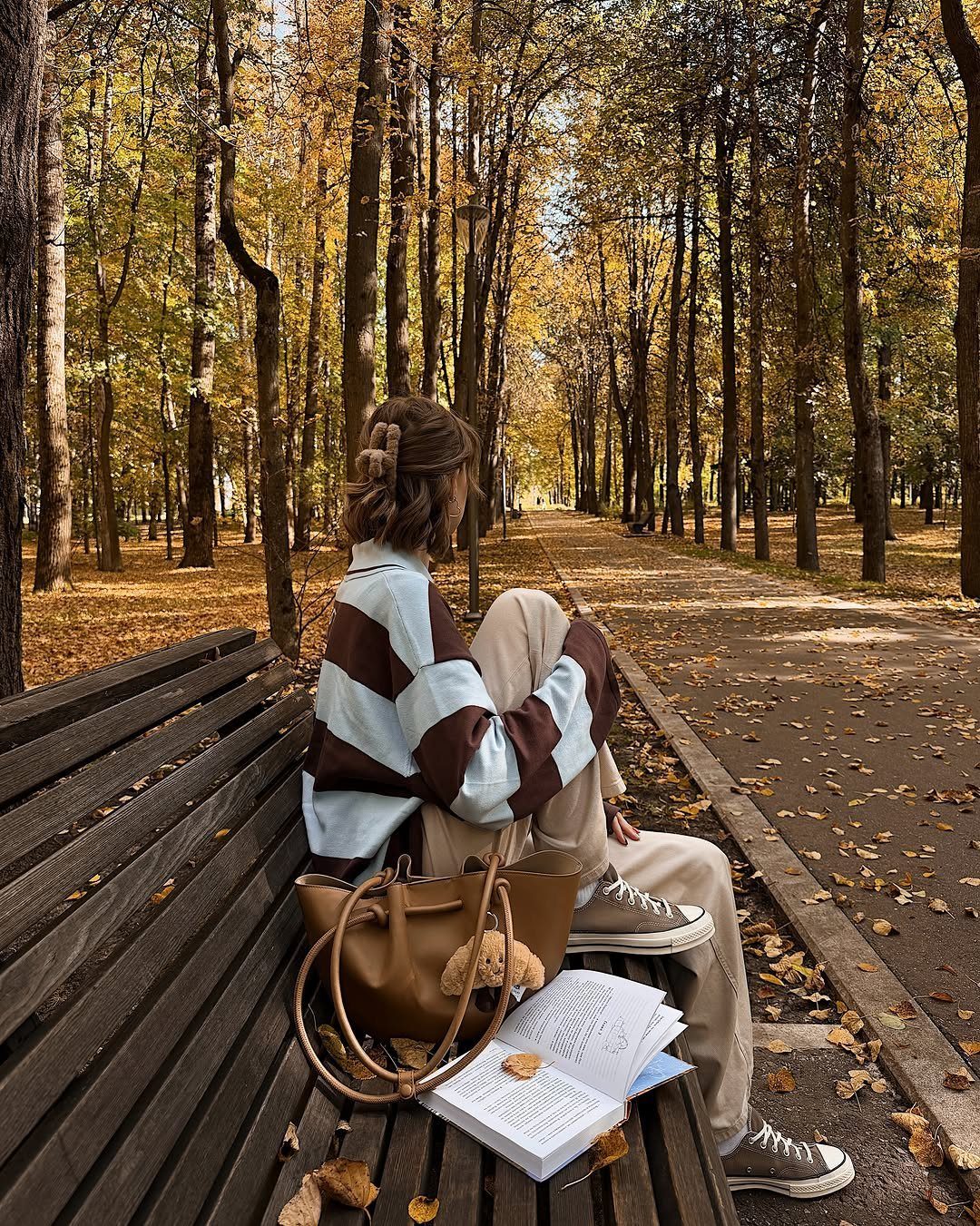
Horizontal stripes in muted brown and soft blue sit comfortably inside the soft autumn range, neither high-contrast nor cool. The beige trousers keep the outfit grounded in neutral territory so the stripe reads as texture rather than statement.
Check the blue before buying: it should lean dusty or slate, never clear or icy.
A warm beige jean or trouser works here the way white denim works in summer, light and fresh without the cool undertone that would fight the sweater. Cognac loafers or cream sneakers finish it without adding a fourth color.
8. Muted Plaid Blanket Scarf
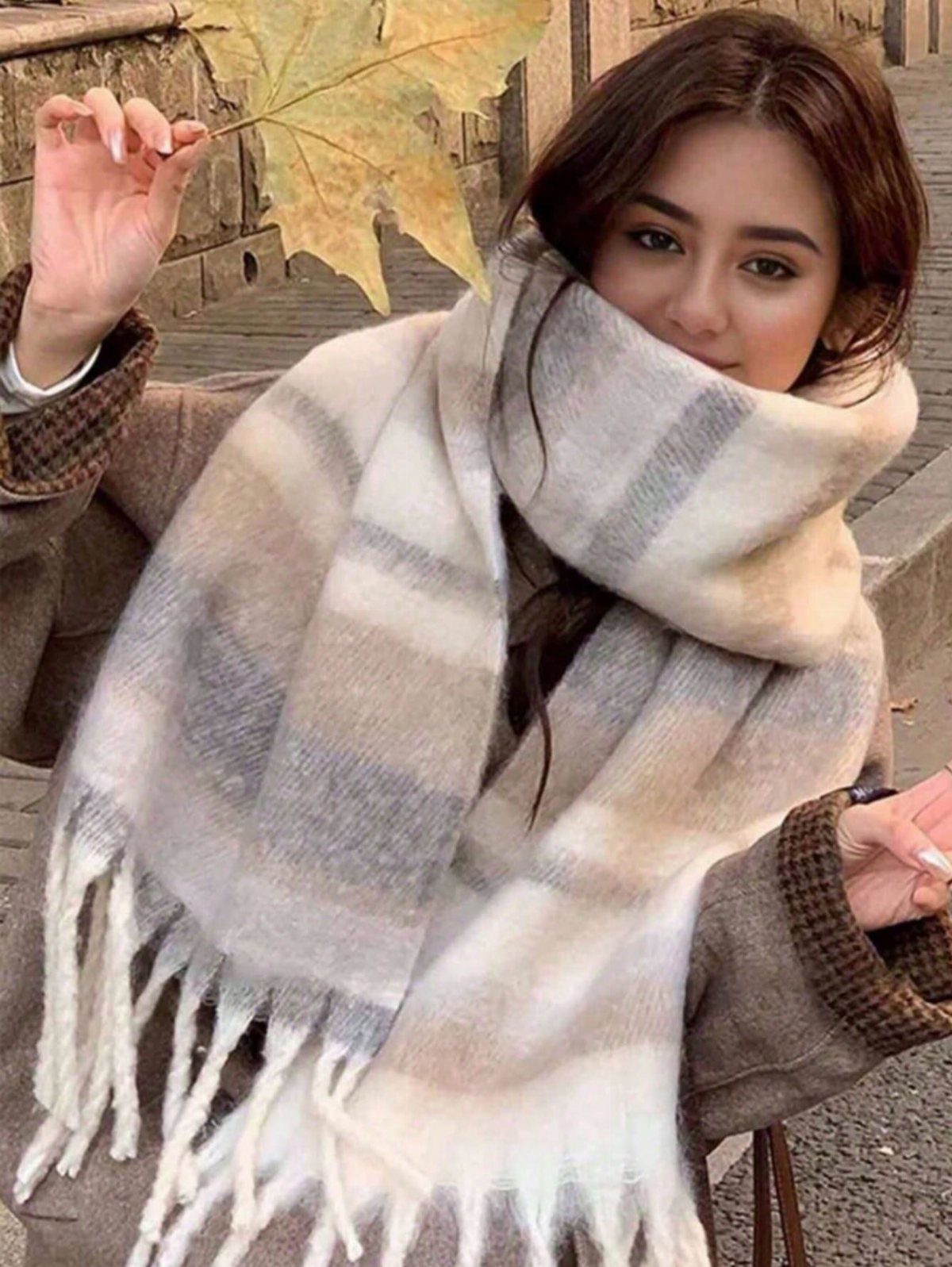
A scarf this large functions as outerwear on mild days and as a color bridge the rest of the time.
The cream, beige, and grey plaid stays muted enough for soft autumn because none of the tones turn crisp or cool; the brown coat underneath supplies the warmth the grey alone would lack.
Fringe adds movement that a solid scarf cannot, which matters when the coat is textured and the palette is quiet.
The proportions work best when the scarf is genuinely oversized, not merely long; it should wrap with volume left over. Check that the grey in the plaid is warm grey, not silver, before committing.
9. Warm Burgundy and Patterned Dresses
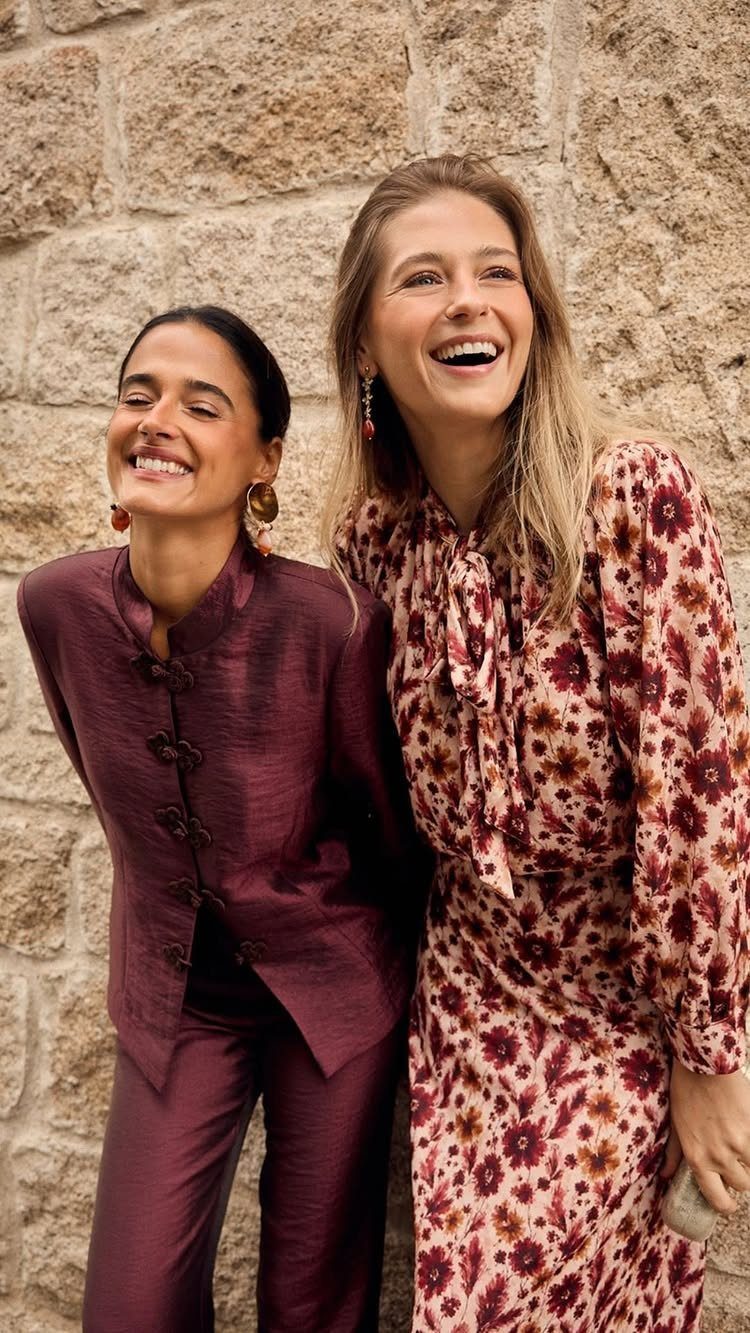
Burgundy carries the depth that soft autumn needs for evening without the harshness of true red or black.
A patterned dress in warm reddish-brown and cream offers the same richness through print rather than solid color, which suits days when a full block of burgundy feels like too much.
A burgundy dress in silk or a small floral print both read warm and autumnal without looking like costume. Both work because the warmth is consistent.
A terracotta or warm rose dress gives a lighter option for daytime; muted teal works for a third dress that still belongs to the same family. 2 dresses in these tones cover most autumn occasions without overlap.
10. Navy Coat with Peach Scarf
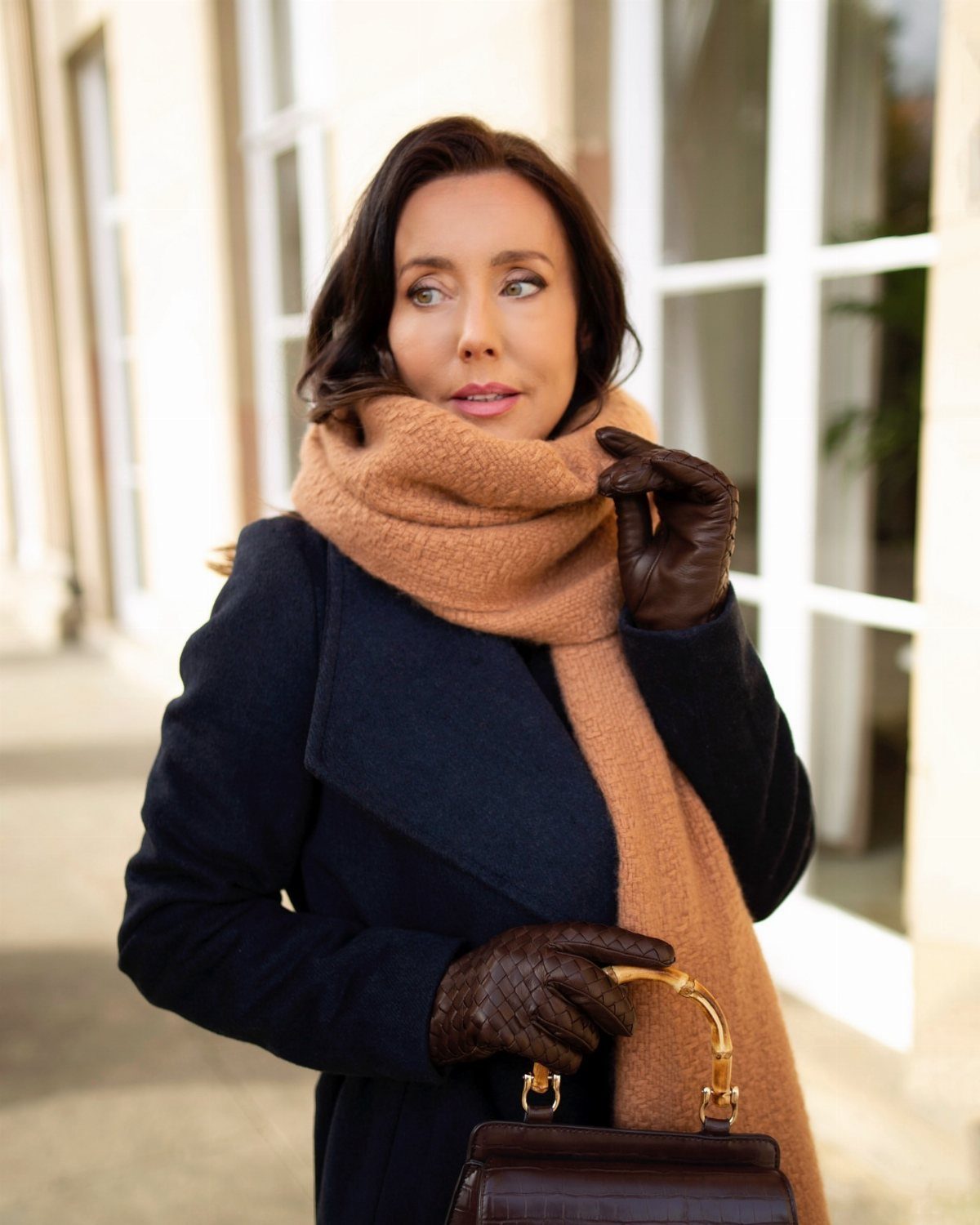
Navy functions as a soft autumn neutral only when it carries enough warmth to avoid reading as corporate blue.
The peach-tan scarf does the corrective work here, pulling the coat’s undertone toward the palette before the viewer’s eye settles on it.
Brown leather gloves and bag keep the accessories in the warm family so the navy does not dominate.
This combination suits someone whose coloring needs the depth of a dark coat but loses warmth against black. The scarf’s peach should stay muted, not bright; think dried apricot, not fresh.
11. Beige Cardigan with White Trousers
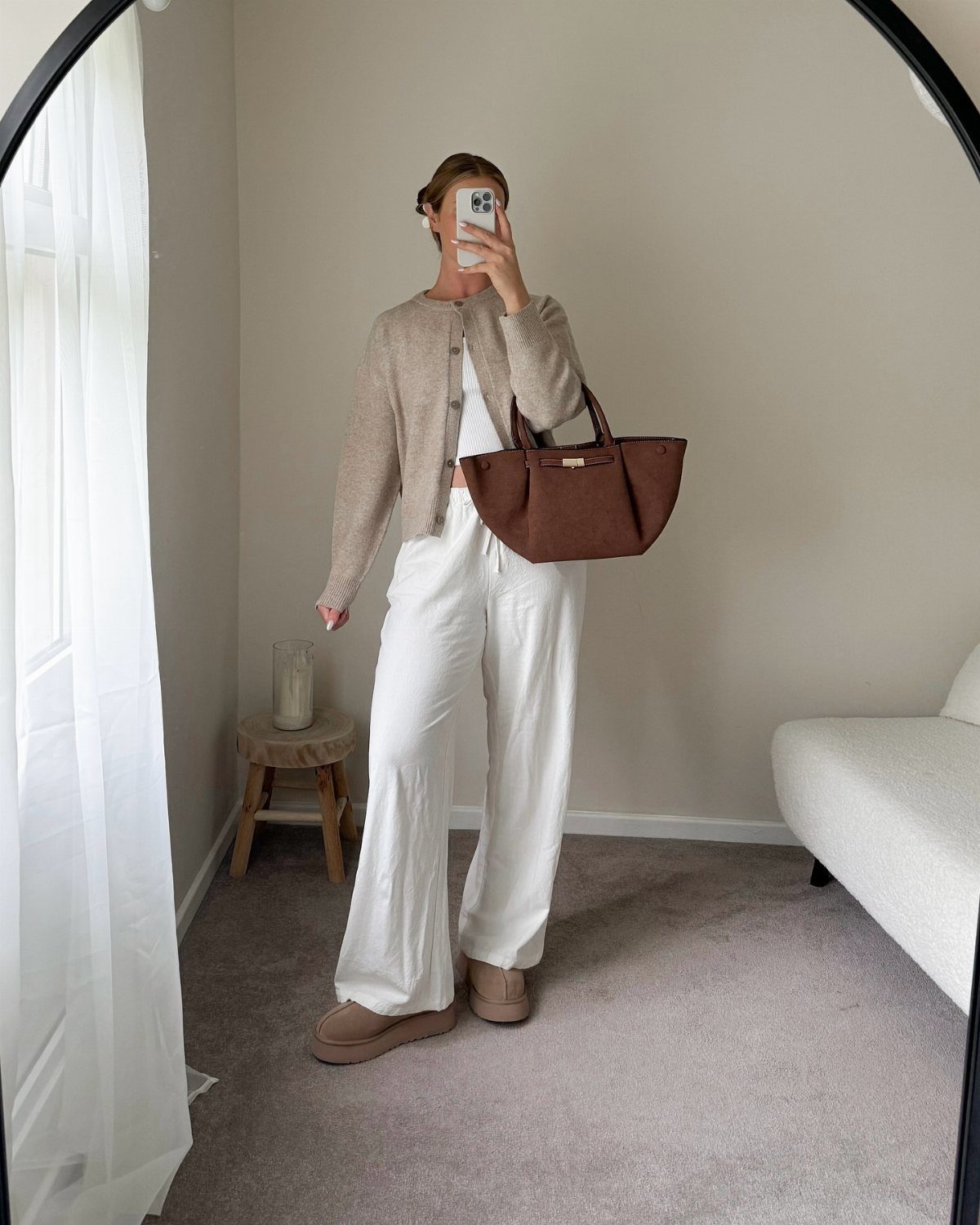
Wide-leg white trousers in warm ivory read as a deliberate base rather than a summer leftover when the cardigan over them is the right beige.
The crop top adds a vertical break that keeps the proportion from feeling like loungewear; a full-length camisole or tee would shift the same pieces toward the casual side of work-from-home.
Platform shoes in tan extend the leg line and repeat the bag’s tone, so the outfit holds together at full length.
Check that your white is ivory or warm cream; stark white against soft autumn skin can read as laundry accident. The cardigan’s beige should match your warmest neutral, whether that leans mushroom or camel.
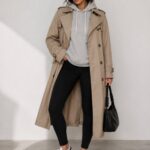
12. Cream Trench with Knee-High Boots
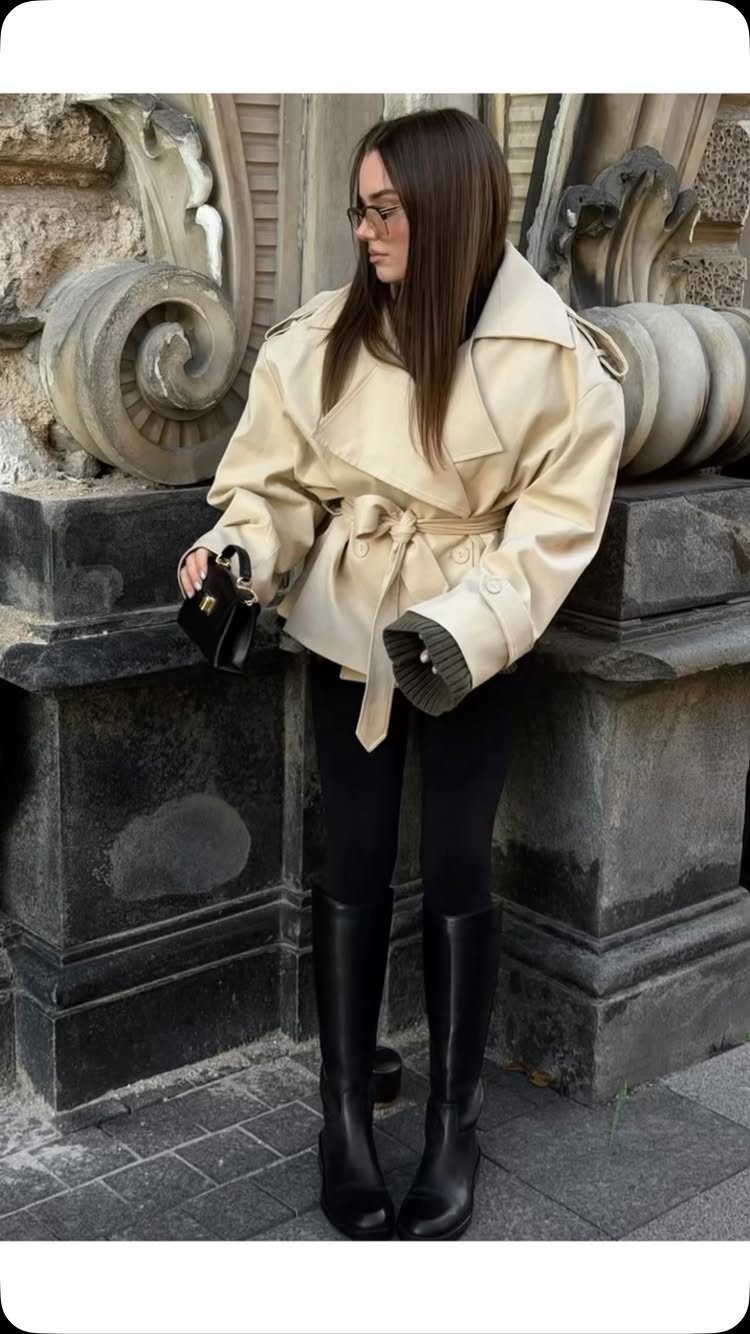
A cream trench in warm ivory carries more use than a beige one because it brightens the face on grey days without the harshness of true white.
The short length here keeps the coat from competing with the boots for attention; a longer trench would need lower footwear to balance it.
Black leggings and black boots create a continuous dark line that the cream floats over, which is a useful trick for soft autumn when the palette runs light on top and deep on bottom.
The belt defines shape without adding another color. For spring, the same trench over sage and camel with loafers repeats the formula in lighter weight.
13. Moss Green Sweater and Satin Skirt
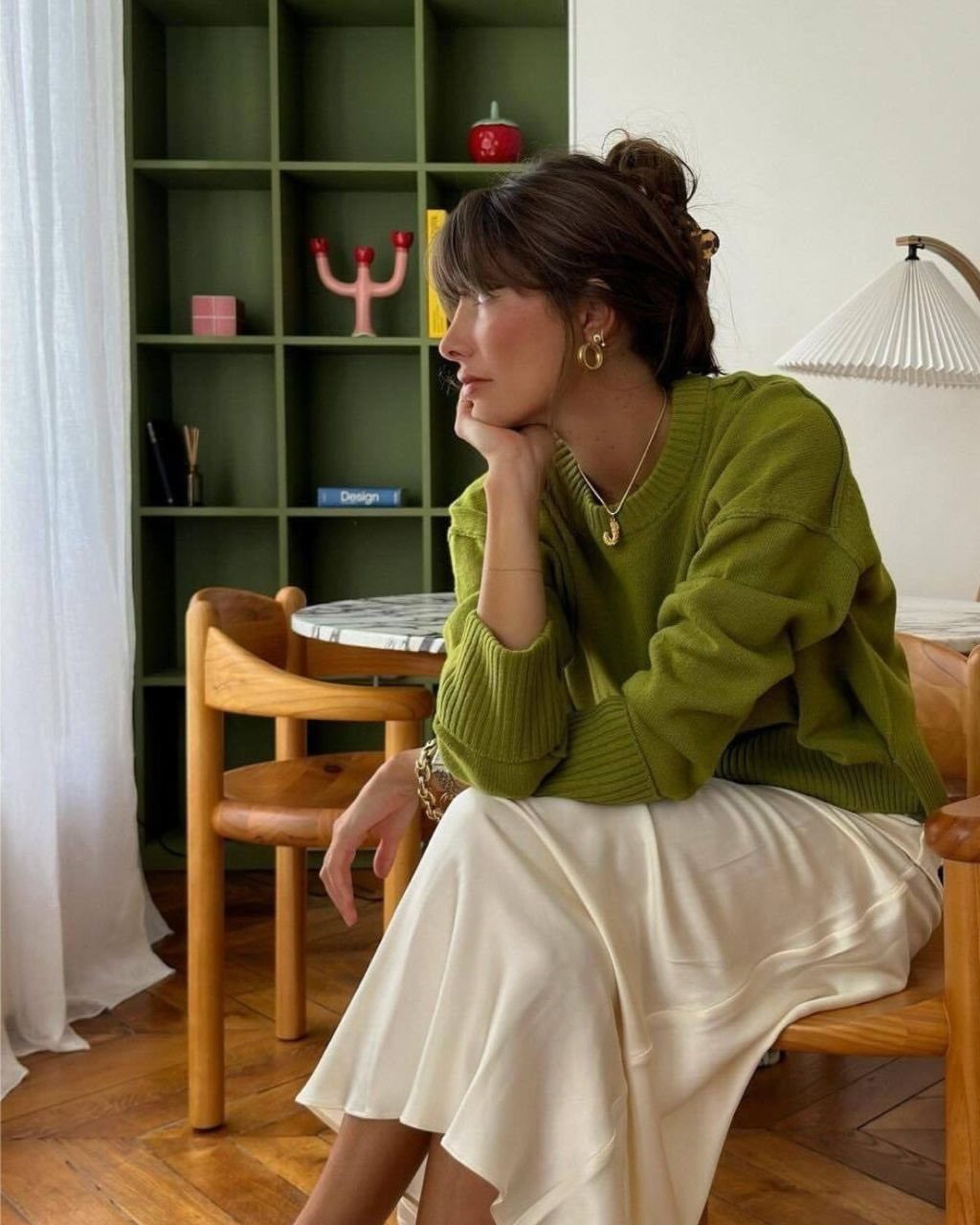
Moss green reads as a neutral inside the soft autumn palette, quieter than olive and less expected than sage. The satin skirt’s sheen catches light the way wool cannot, which keeps a muted outfit from going flat.
Gold jewelry warms both pieces without adding a competing color; small hoops or a thin chain suffice.
I hold the sweater up to daylight before I buy, checking that the green carries enough yellow to warm my skin rather than pulling it toward blue.
A blue-based green sits outside the palette and turns the cream skirt harsh by comparison. The sweater’s texture should be substantial enough to balance the skirt’s dressiness.
14. Olive Green Sweater with Jeans
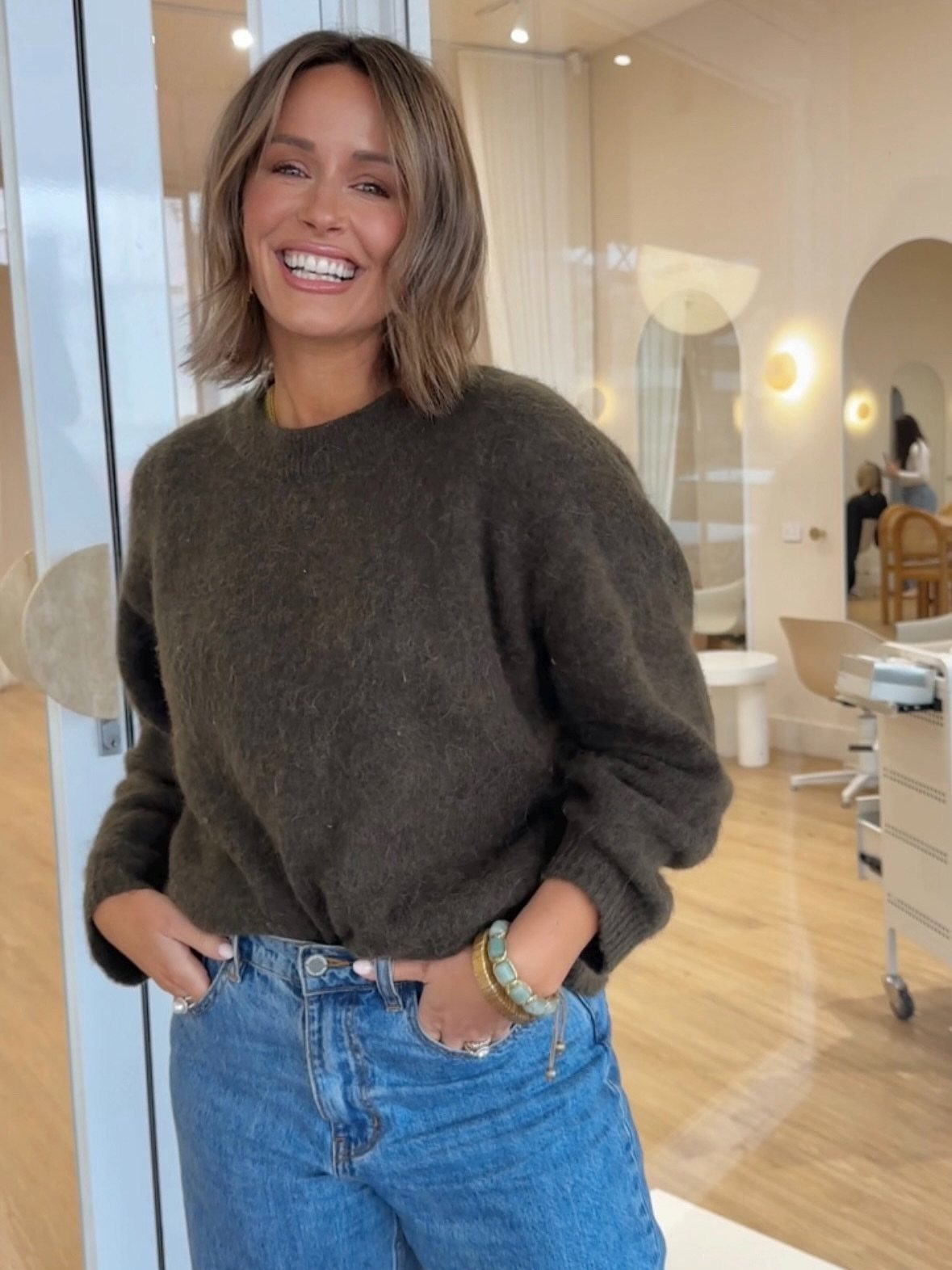
A textured olive knit carries more surface interest than a smooth one, which matters when the pairing is this simple. The fuzz or bouclé weight makes the sweater read as deliberate rather than something grabbed for warmth.
Blue jeans work here because olive functions as a near-neutral; the combination is casual without being careless.
The texture does the styling work, so the cut stays straightforward. A crew or V-neck both work, though the neckline should be deep enough to show some throat or a thin gold chain.
Avoid olive that turns army-green or drab; soft olive keeps the warmth that lets it pair with both denim and the palette’s browns and creams.
15. Brown Sweater and Cream Trousers
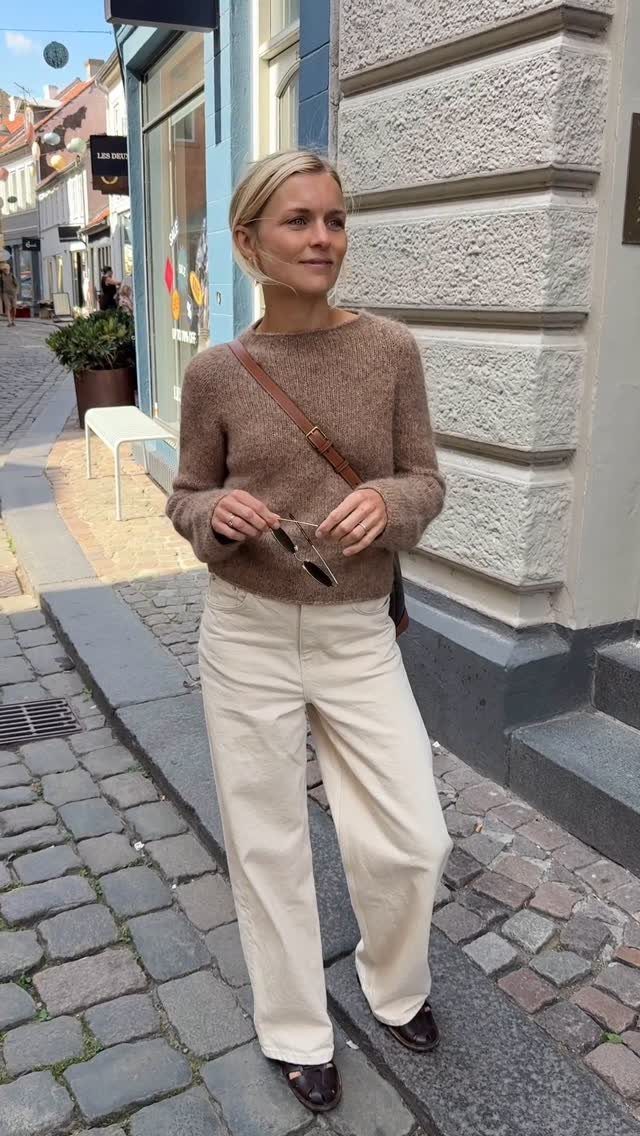
Wide-leg cream trousers in a warm ivory give the brown sweater room to breathe. The proportion is what sells it: the sweater’s slight volume against the trouser’s clean line, neither piece fighting for dominance.
Dark sandals keep the look light enough for early autumn days before the cold fully sets in. Check that the cream carries enough yellow to warm the brown rather than starken it.
The sweater’s fuzz adds texture that flat knits lack, which helps a two-color outfit hold visual interest. Sunglasses as the only accessory keeps the tone unfussy.
16. Patterned Mini Dress and Boots
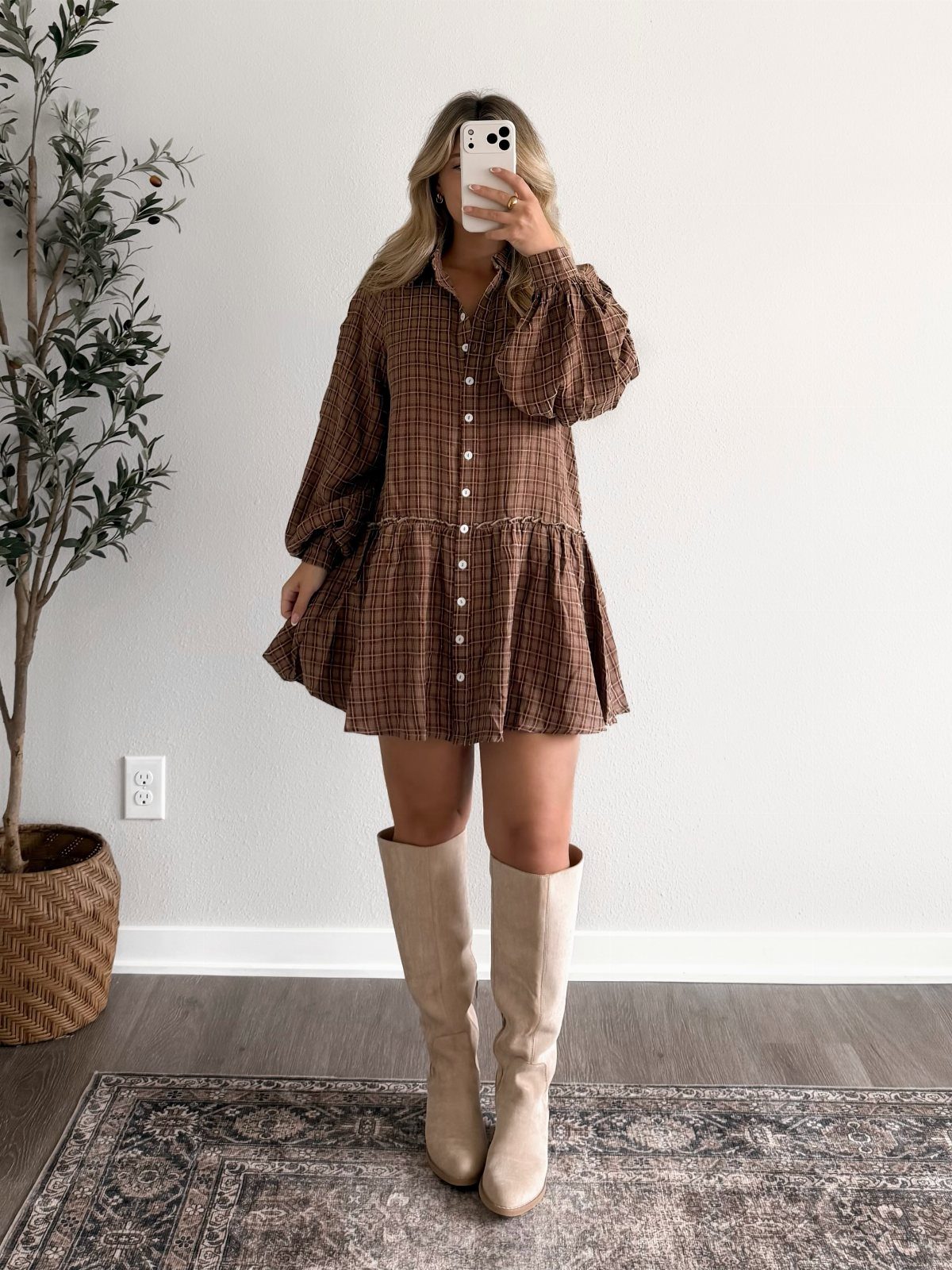
A long-sleeve mini dress in warm brown plaid carries the pattern and coverage that let boots finish it without needing tights. The beige suede boots repeat a tone from the plaid so the leg line extends rather than interrupts.
Knee-high boots with a mini length need the right scale: too slim and the dress balloons; too slouchy and the silhouette collapses.
The plaid’s scale matters too; a check this size reads as texture from a distance and pattern up close, which suits soft autumn’s muted approach.
The mirror selfie shows the full length, which is the check you need before wearing this out: the dress should hit mid-thigh with boots this tall, not shorter.
Identifying Soft Autumn Features
Soft autumn coloring shows up in specific, observable ways. Warm undertones read as golden, peachy, or yellow in the skin, and that skin typically tans rather than burns.
Hair lands in the golden brown, honey blonde, or auburn range. Eyes stay neutral to warm: hazel, warm brown, or golden green.
The facial features themselves matter too.
Soft autumns tend toward blended features rather than sharp contrast between eyes, skin, and hair. Muted eye colors sit quietly rather than popping against the face.
Skin tone ranges from ivory through medium brown, and the undertone may read as neutral-warm rather than overtly golden. This palette is not tied to any particular race or ethnicity; the warm-muted combination is what identifies it.
If your coloring is close but not exact, the palette still works as a styling direction. Colors that cooperate with your skin matter more than passing any test.
Shopping Strategy
Before buying anything, lay out what you already own and photograph the combinations. Each major piece should work in several different outfits.
When you do shop, bring a list of specific gaps, not a mood.
Each new piece should coordinate with at least 3 items already hanging in your closet. This prevents the orphan purchase that matches nothing and sits unworn.
Quality over quantity matters more when the palette is this specific.
A single wool-blend blazer in camel that works with five bottoms outlasts three trend pieces in near-right colors that never quite harmonize. Consider fabric longevity and construction; these pieces are meant to cycle through multiple autumns.
Sustainable options and investment pieces maximize value, but the math only works if the color is correct first. A well-made coat in the wrong brown is still a mistake.
Styling Tips
Neutrals should occupy roughly 70% of what you wear, leaving 30% for accent colors like rust, olive, golden yellow, or soft teal.
Carrying one color through two or three places pulls the look together.
A scarf, bag, and lip color in the same warm tone creates intention without effort. Accessories function as color connectors: a cognac belt can bridge a cream top and brown trousers so the eye moves smoothly between them.
Let your natural contrast level guide the rest.
If your features read softly against each other, keep color transitions gentle. If you carry slightly more contrast, a muted stripe or subtle pattern between neutrals will feel right rather than busy.
The signature color does not need to shout.
Frequently Asked Questions
What is the 3-3-3 rule for clothes?
I first heard the 3-3-3 rule from a stylist friend who was trying to pack light for a two-week trip: three tops, three bottoms, and three layers that all work together, which gives you 27 outfits from nine pieces.
For soft autumn, pick warm neutrals like cream, camel, and mushroom with accents such as olive and rust so every combination stays harmonious.
What is in fashion for Autumn 2026?
The 2025-2026 soft autumn palette centers on earthy, wearable tones: warm beige, camel, soft white, and cream as neutrals, with olive, rust, warm burgundy, golden yellow, and soft teal as deeper accents.
The direction is updated classic rather than trend-driven, with pieces meant to coordinate effortlessly across years.
Can an Autumn wear black?
Black sits outside the soft autumn palette because it reads too dark and stark against muted, warm coloring. Espresso brown, chocolate, dark olive, warm charcoal, and soft navy all function as softer dark neutrals that integrate more naturally.
If you already own black pieces you love, wear them with warm-toned layers or accessories near your face to soften the contrast.
What colors should soft autumn avoid?
Avoid bright white, true black, cool gray, saturated navy, hot pink, clear jewel tones, light pastels, and neons.
These read as too cool, too bright, too dark, or too light against soft autumn’s muted warmth, and can pull the complexion toward washed-out or sallow. Stark, intense colors throw off the subtle balance that defines this palette.
How do you know if you’re a soft autumn?
Look for warm undertones in skin that tans rather than burns, with golden, peachy, or yellow hints; hair in the golden brown, honey blonde, or auburn range; and eyes that stay neutral to warm, such as hazel, warm brown, or golden green.
Features tend to blend rather than contrast sharply, and muted, dusty colors look better on you than bright or cool ones. Seasonal analysis weighs how color interacts with your whole face, not any single feature.