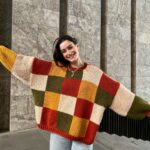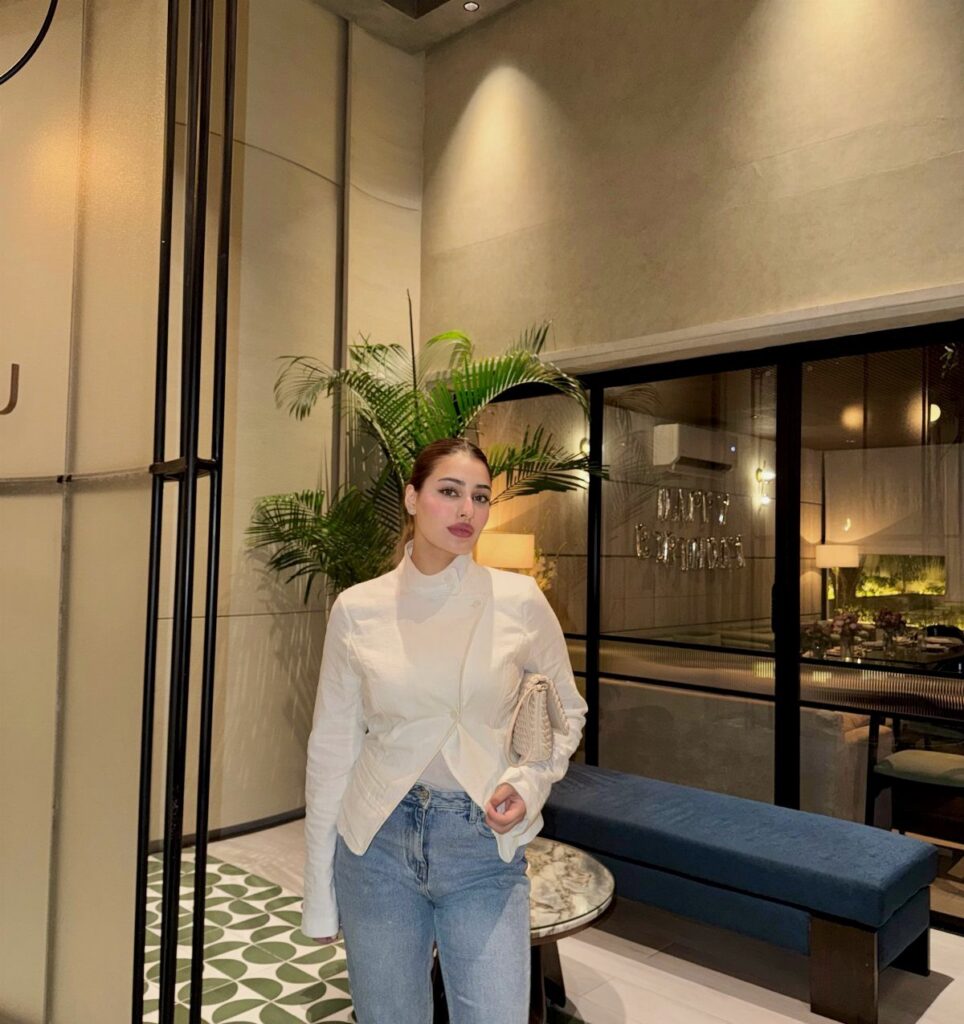
These 14 casual dinner outfits run from dark wash jeans and a cozy knit to leather pants with a chunky scarf, and the right one depends on whether the restaurant runs cold or the walk from the car does.
A sweater dress with boots handles the whole outfit in one step when you would rather skip the layering math.
1. Leather Pants with a Cozy Knit
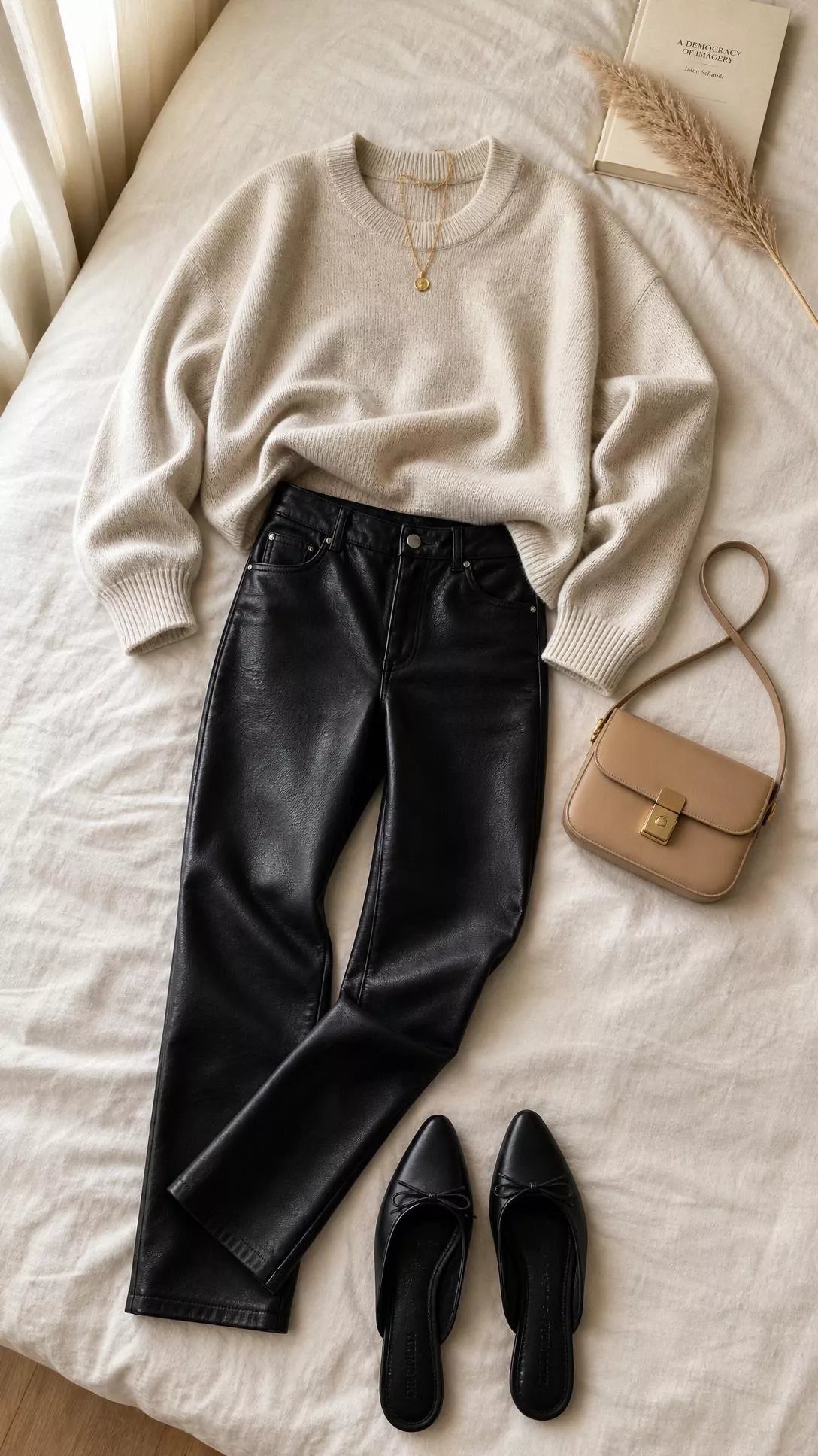
Black leather pants against a cream knit reads as intentional rather than trying too hard.
The knit softens the edge of the leather, and the combination works for a neighborhood spot where you want to look pulled together without arriving in heels and a dress.
I reach for pointed mules in black to keep the line clean, though ankle boots would carry the same idea into colder months. A small crossbody in a warm neutral keeps hands free for the menu and the bread basket.
2. Dark Wash Jeans
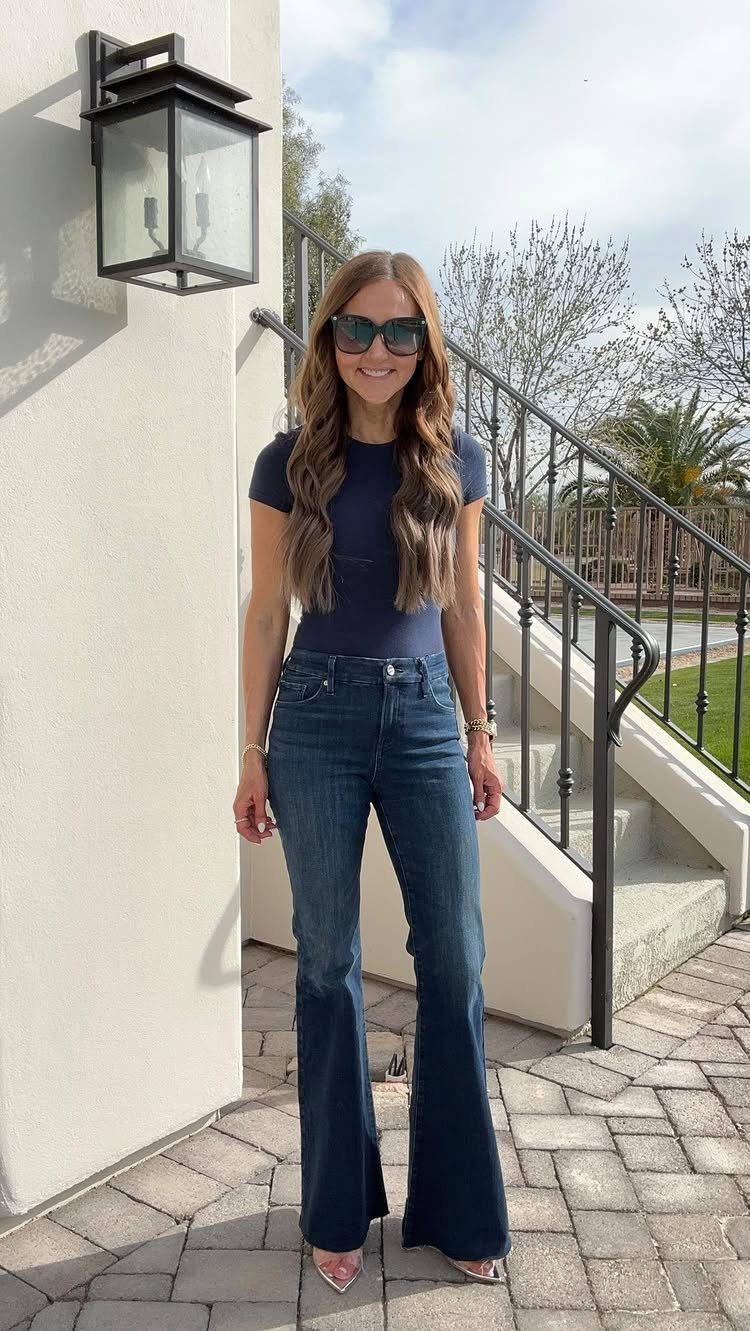
Dark wash denim gives you the most room to maneuver. A navy short-sleeve top keeps it simple, but these jeans would take a silk camisole or a crisp button-down with equal ease.
I like a flare or straight leg for dinner; skinny can feel too day-to-night office, and wide-leg needs the right shoe to avoid dragging. Dark enough to look intentional, not like you came straight from running errands.
3. Knit Sweaters
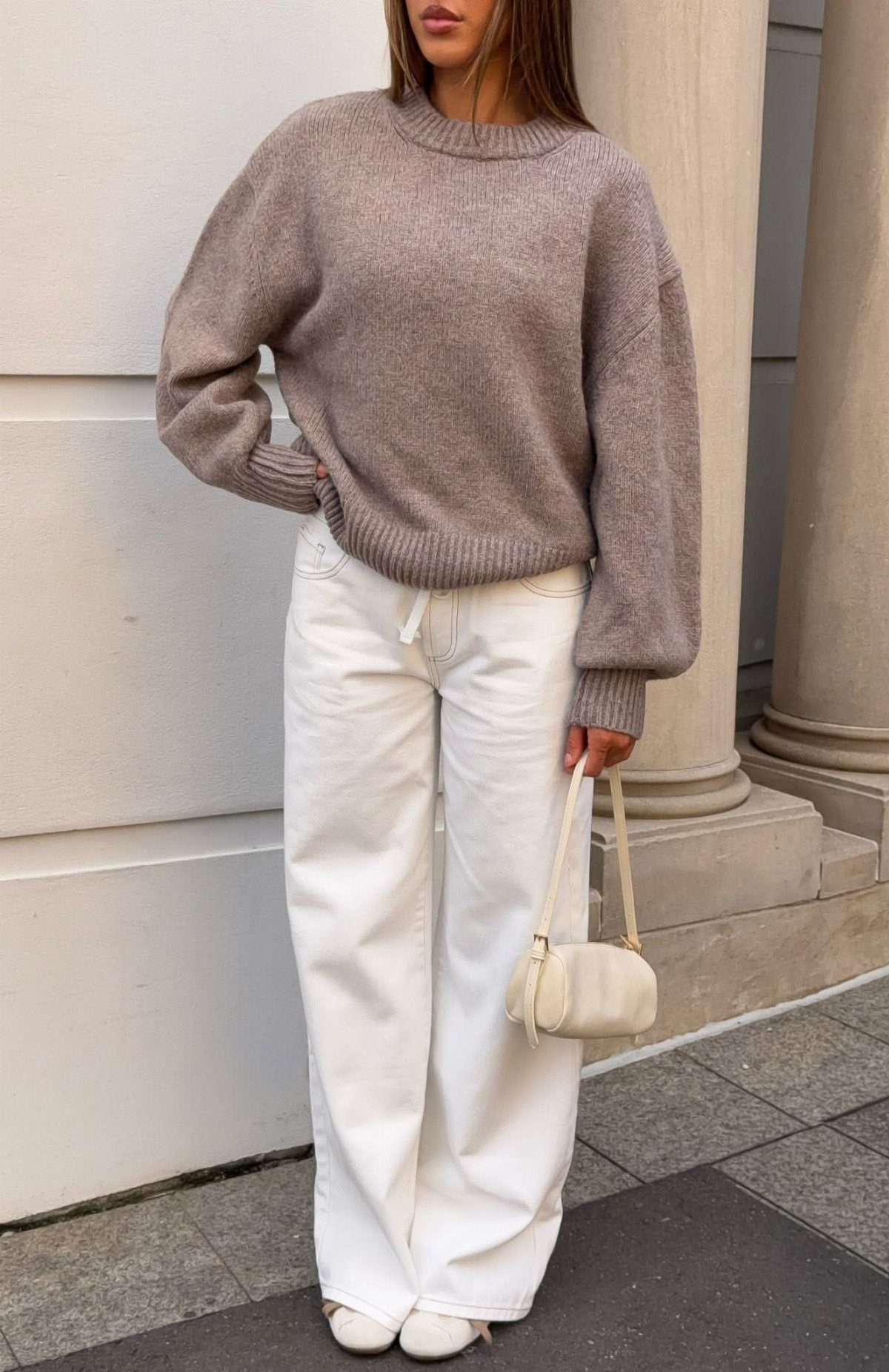
A brown knit with white wide-legs is the kind of pairing that looks thrown-together in the best way. Neutral knits in beige or gray keep the palette quiet so the texture does the work.
I tend toward oversized fits that tuck slightly at the waist or sit clean over trousers; anything too cropped risks looking like you outgrew it.
Mauve is a good middle ground for anyone who finds camel too warm against their skin.
4. Chelsea Boots
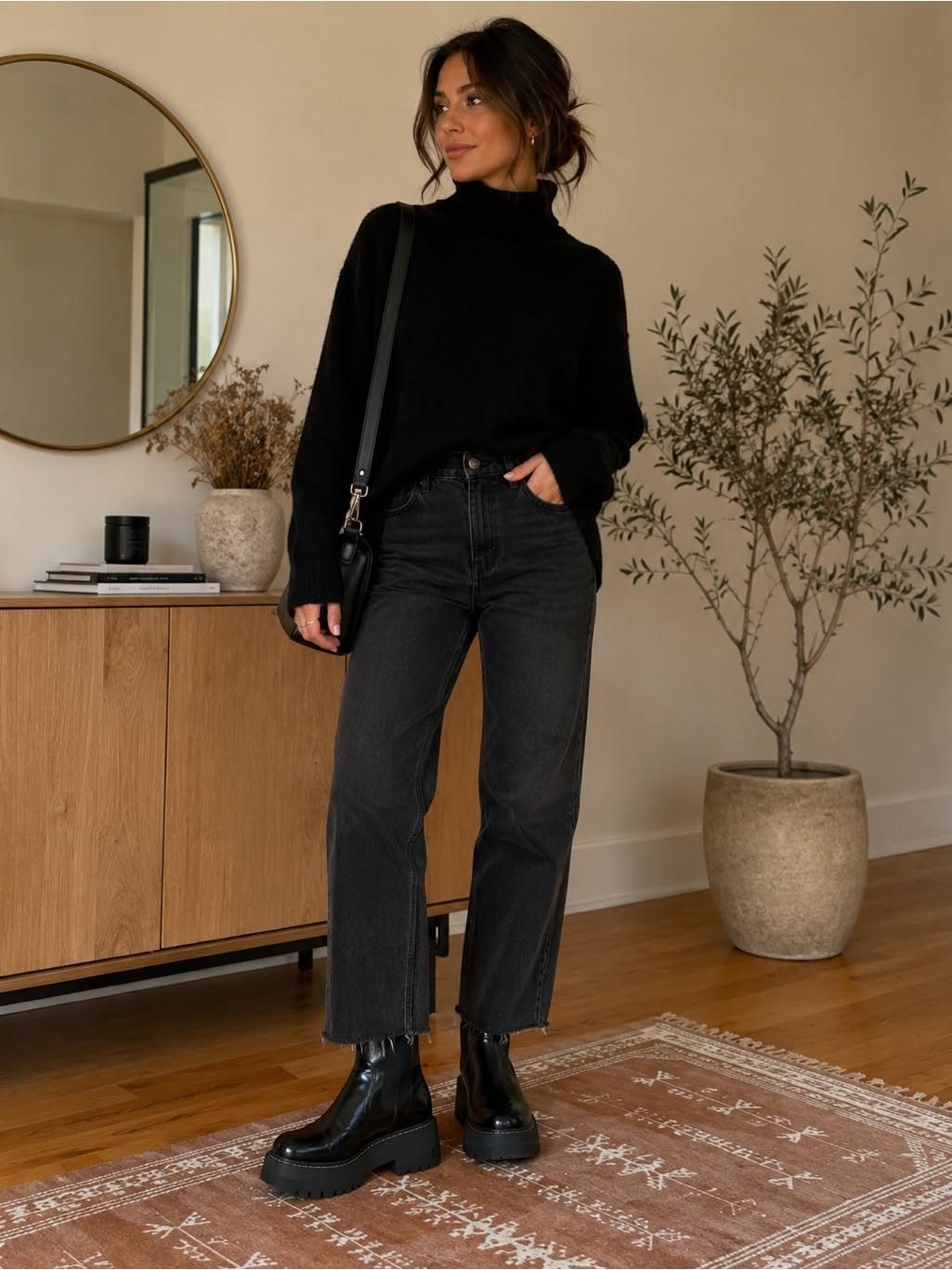
Lug-sole Chelsea boots have become my default for casual dinners when the weather turns. The platform gives you height without the commitment of a heel, and the elastic sides mean no fumbling with buckles in dim restaurant light.
Black leather goes with everything, though I have a pair in dark brown suede that gets more use than I expected. Wear them with cropped jeans, or let them disappear under a longer straight leg.
5. Leather Jackets
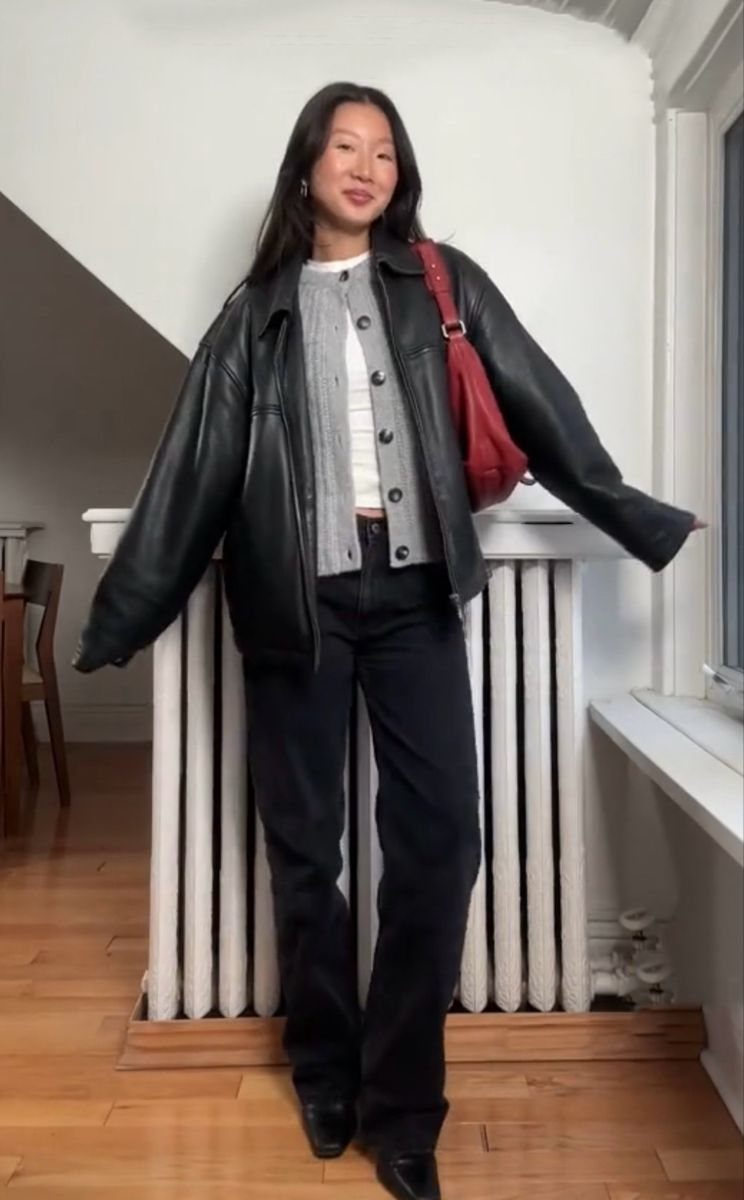
A leather jacket over layers is the move when the restaurant temperature is anyone’s guess. An oversized black cut works because it sits over a cardigan without pulling; size up if you plan to layer this way.
I have found bomber jackets less useful for dinner, since the ribbed waist can ride up when you sit. Leather breaks in and improves, and a slightly worn black jacket often looks better than a stiff new one.
6. Sweater Dresses
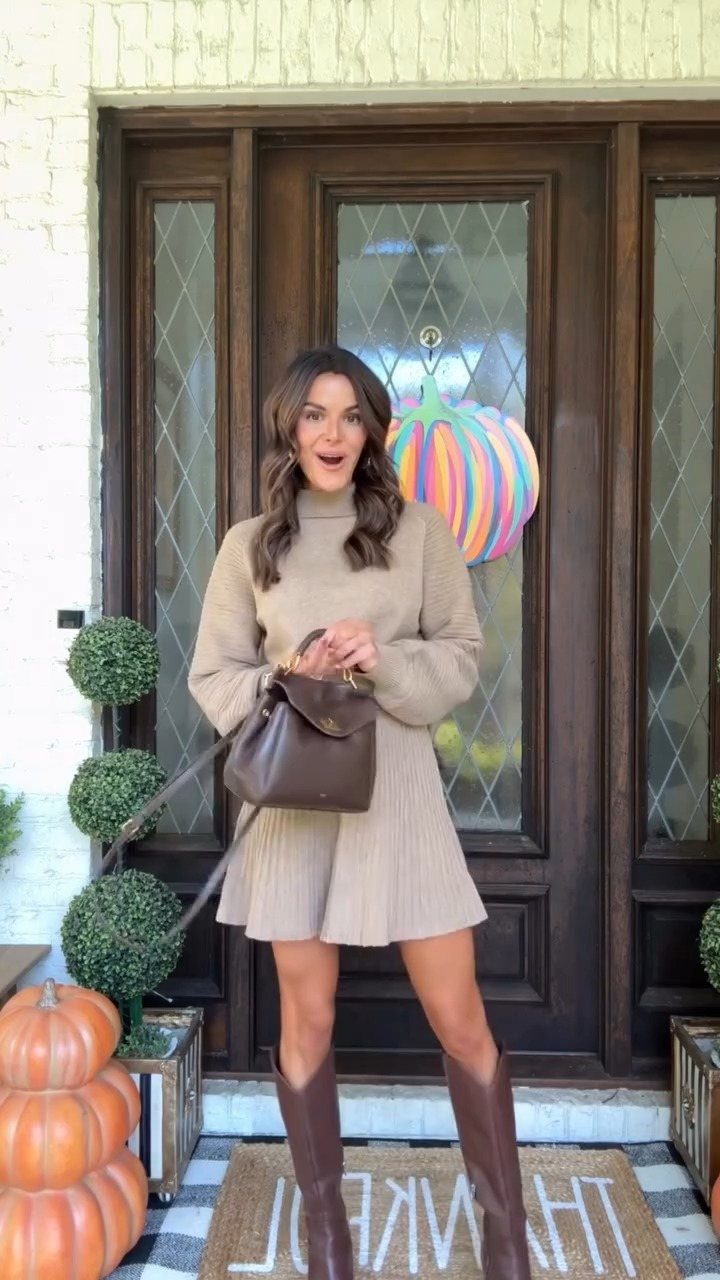
A sweater dress with knee-high boots solves the what-to-wear problem almost on the spot.
A thick beige knit reads as a dress, not a long top; that distinction matters in a restaurant setting. I add a thin belt if the waist disappears, or leave it loose for a straight column shape.
Brown boots add warmth against a beige sweater dress, though I have worn this same shape with white sneakers for a lunch that turned into an early dinner.
7. Trench Coats
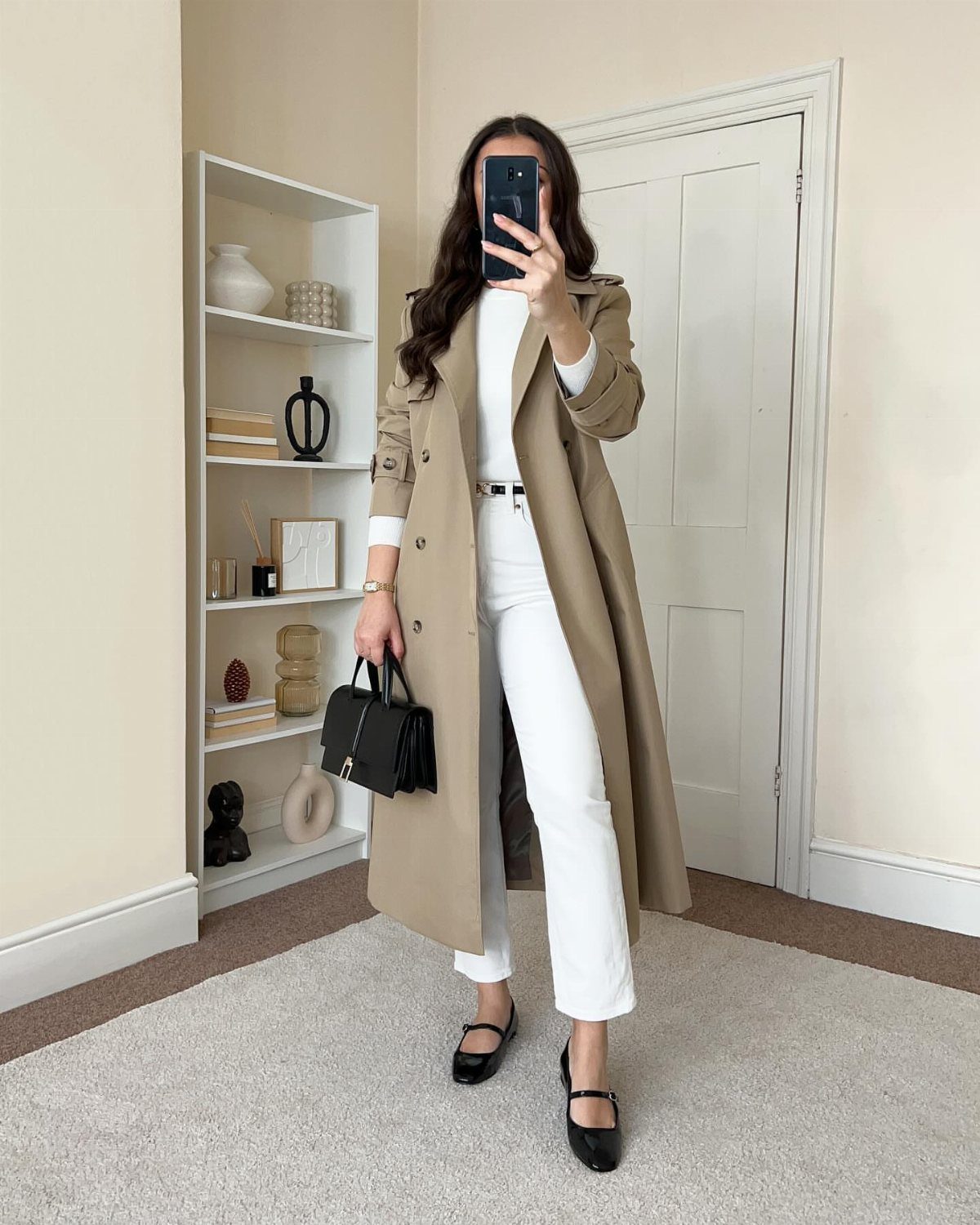
A trench coat in camel or stone turns a simple white top and trousers into something that looks considered.
The length matters more than the color: a midi cut that hits mid-calf keeps the line vertical and works over cropped pants without swallowing them.
I wear mine with Mary Jane flats or low heels; anything higher fights the coat’s utilitarian shape.
For fall dinners, the weight of cotton gabardine is enough until true cold sets in. Leave it open and belted at the back so it moves like a column rather than closing like a raincoat.
8. Sweater and Midi Skirt
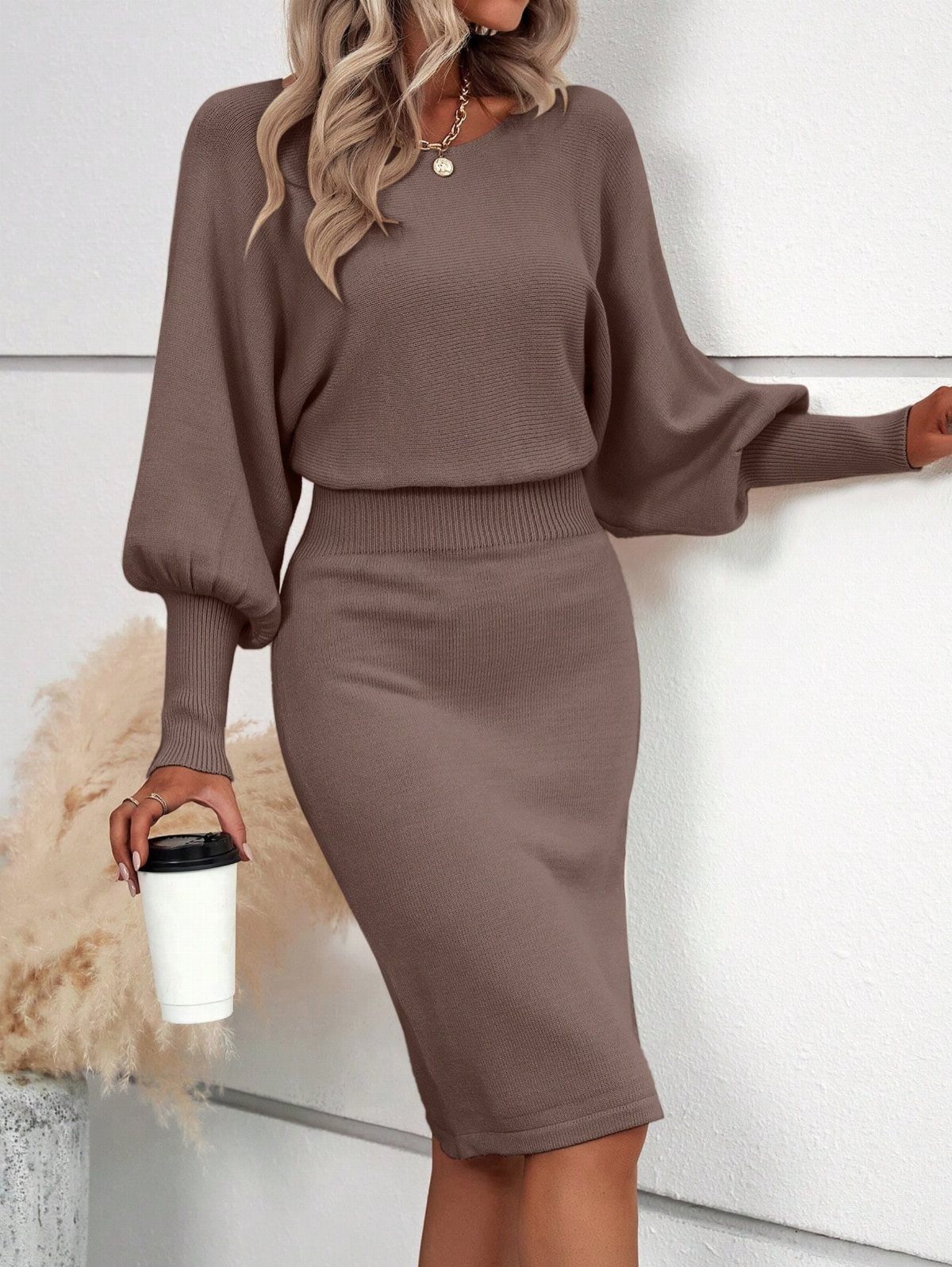
Matching your knit top to your skirt in tone, if not in exact fiber, gives the ease of a dress with more flexibility.
A brown sweater against a brown midi reads as a set without requiring one. I tuck the front slightly or add a thin belt if the sweater is oversized; otherwise the waist disappears and the restaurant chair becomes uncomfortable.
This pairing works with flats or small heels, and the skirt length covers what tights would otherwise have to. For a casual dinner, a ribbed knit skirt holds its shape better than something too fluid.
9. Wrap Dresses
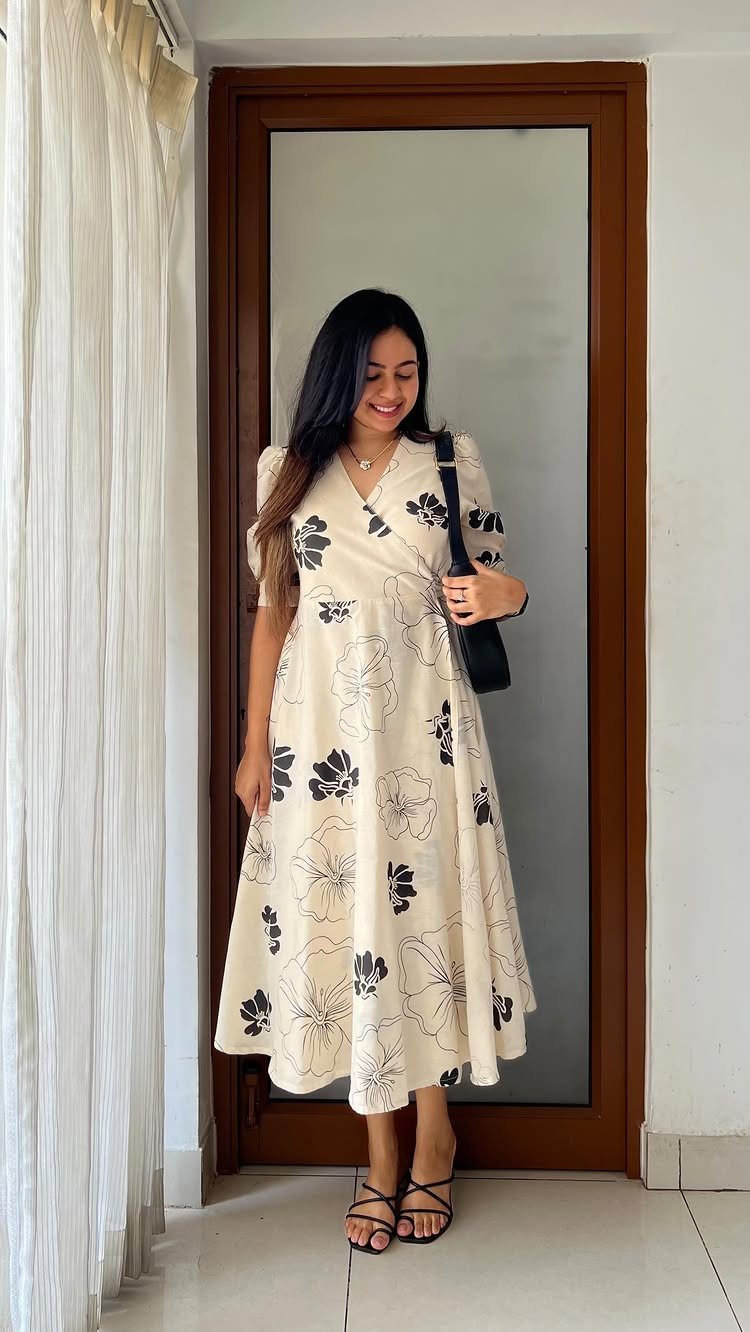
A wrap dress solves the sitting-across-from-someone problem because the shape adjusts to how you fill it.
The cream ground with a dark print keeps it from reading as office wear; the V-neckline does the work of jewelry. I prefer a midi length for dinner, short enough to move in, long enough to feel covered when seated.
Strappy sandals in black ground the print without competing. The real advantage is packing: a wrap dress travels flat and needs no steamer.
10. Chunky Knit Scarves
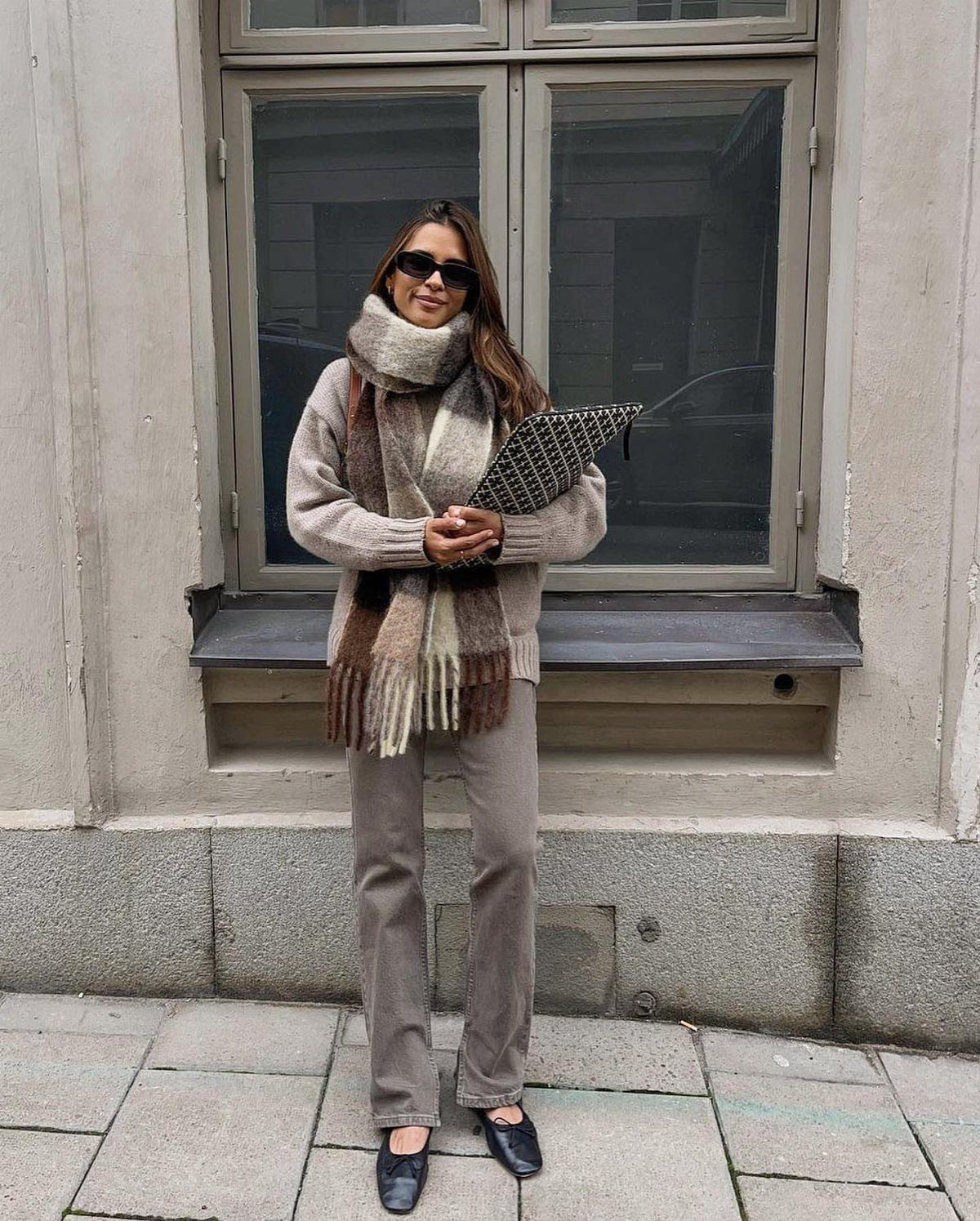
A thick scarf in plaid or neutral fringe turns a beige sweater and gray jeans into a look that reads intentional.
The scale of the knit matters: large enough to loop once and still have ends, not so bulky that it competes with your face across a small table.
I wear mine loose rather than wound tight, more shawl than neck warmer, so I can shed it if the restaurant runs warm. Outside it does the work of a light coat for the walk from the car.
11. Leather Crossbody Bags
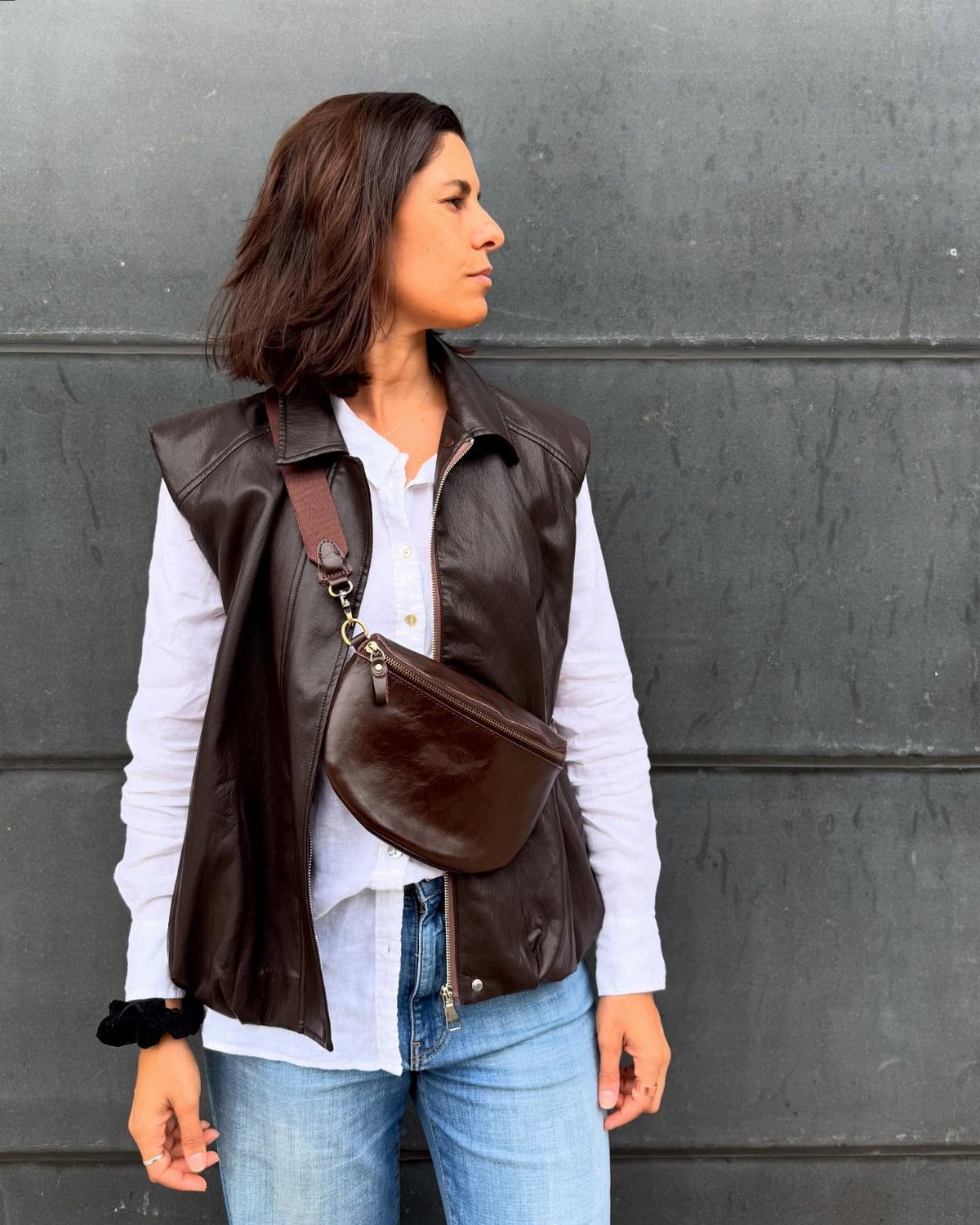
A compact leather crossbody leaves your hands open for the bread basket and the coat check without the bulk of a shoulder bag.
Brown leather against denim and a white shirt warms the whole look; black reads sharper but less relaxed.
I prefer a bag that sits at hip level, not bouncing at waist or thigh, with a strap that adjusts without hardware that catches on chair arms.
The size should hold a phone, keys, and a slim wallet; anything larger and you will set it on the table or the floor, which defeats the point.
12. Minimalist Watches

A small gold watch and a slim bracelet do what earrings cannot: they show when your hands are on the table, which is most of a dinner.
I keep the face clean, no chronograph dials or date windows, and the band narrow enough to sit flat.
The metal should match whatever other hardware you are wearing; mixed metals read as oversight, not choice. At this scale, the watch is jewelry that happens to tell time, not a tool that dominates the wrist.
13. Fall Colors
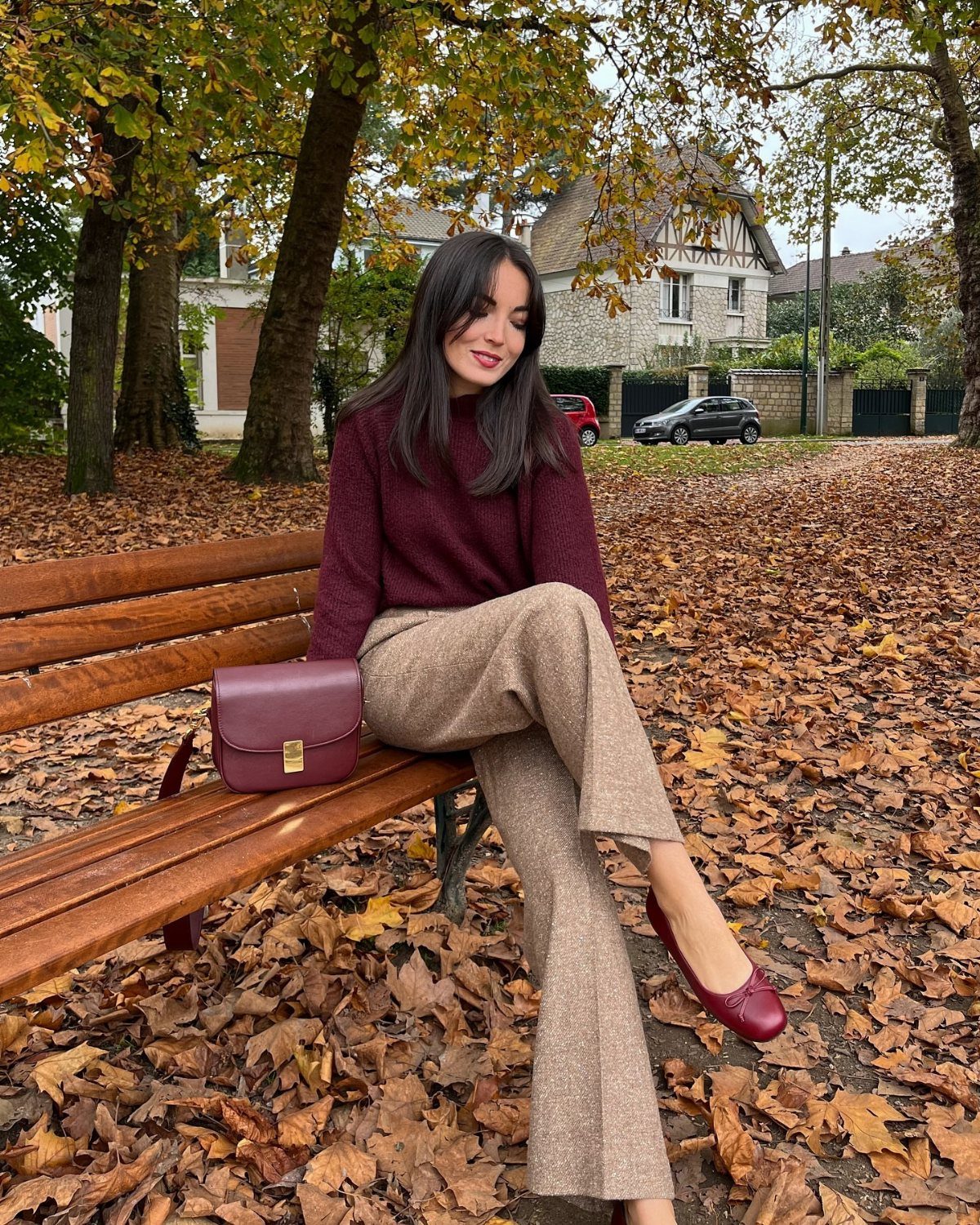
Burgundy against beige flares is the kind of pairing that reads seasonal without looking like you planned it around a leaf pile.
Mustard and olive work the same way, grounding a neutral base in colors that belong to October through December.
I keep the palette to one dominant shade and let the rest stay quiet; two fall colors at full strength fight each other.
A burgundy shoe that picks up the sweater ties it together without needing a matched set. This is the easiest entry point for anyone who finds all-black too harsh once the light changes.
14. Earthy Tones and Cozy Textures
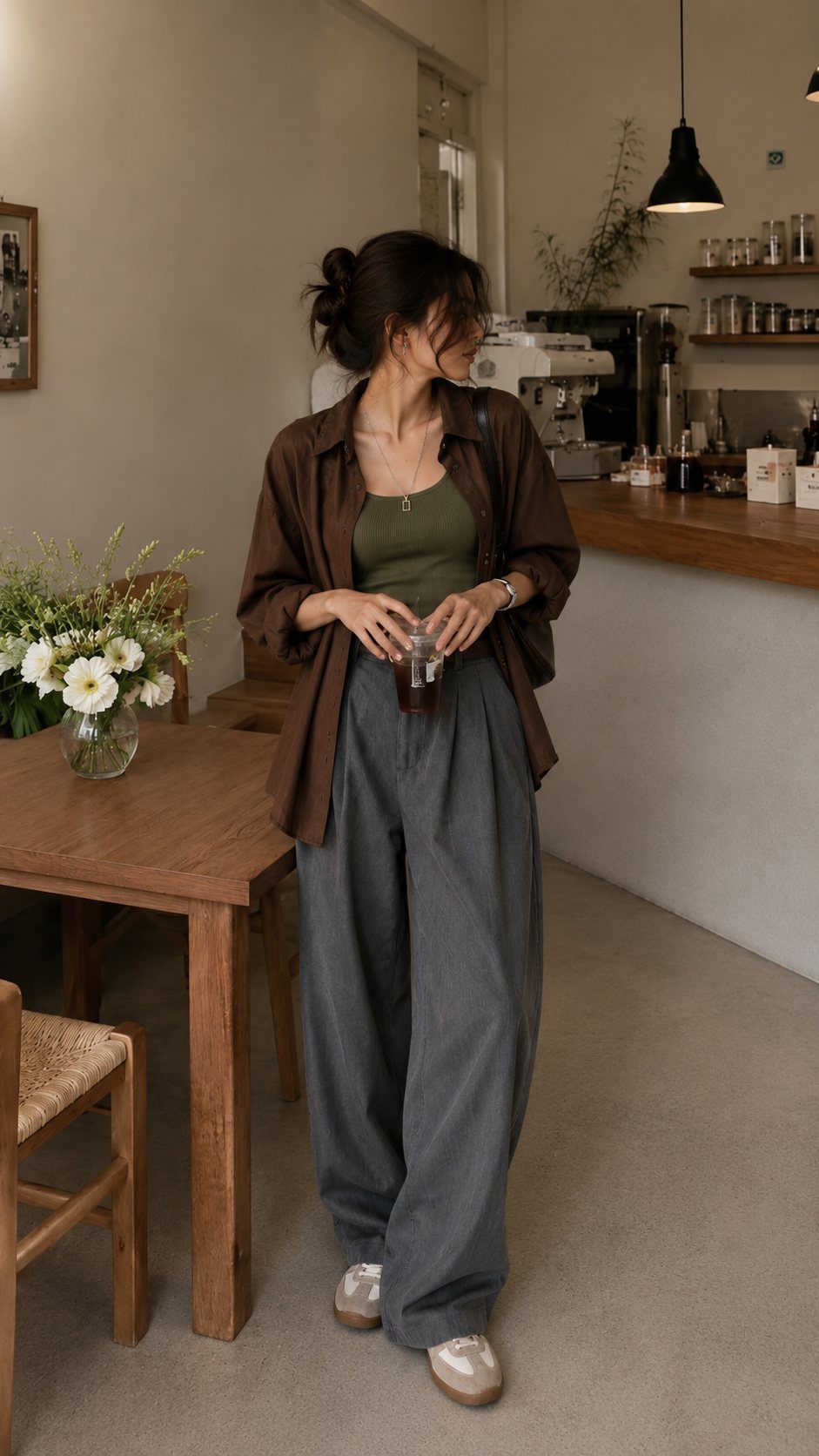
Brown, olive, and grey layered together give the relaxed confidence of someone who dressed for the temperature, not the room.
The open shirt over a fitted top lets you adjust as the restaurant warms; the wide leg keeps the silhouette current without trying. Suede, leather, and knits add the tactile weight that makes a simple outfit feel considered.
I reach for a ribbed or brushed cotton when I want texture without bulk, and save thick knits for outer layers that come off at the table.
Sneakers keep the whole thing from stiffening into something you would not want to sit in through dinner.
Frequently Asked Questions
What do you wear to a casual dinner?
Dark wash jeans with a navy short-sleeve top, or black leather pants against a cream knit, both read as intentional without looking like you tried too hard.
I skip anything that digs in at the waist after a second glass of wine, which means flare or straight leg cuts instead of stiff skinnies that still feel like the office.
How can I look dressy but casual?
Polished textures in relaxed shapes do the work: a trench coat over a simple white top and trousers, or a brown knit with white wide-legs that looks thrown-together in the best way.
I find that one elevated piece, like leather pants or a silk camisole with dark denim, lifts the whole outfit without requiring heels or a full dress. The balance lives in the materials, not the formality.