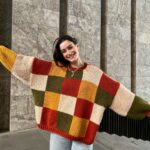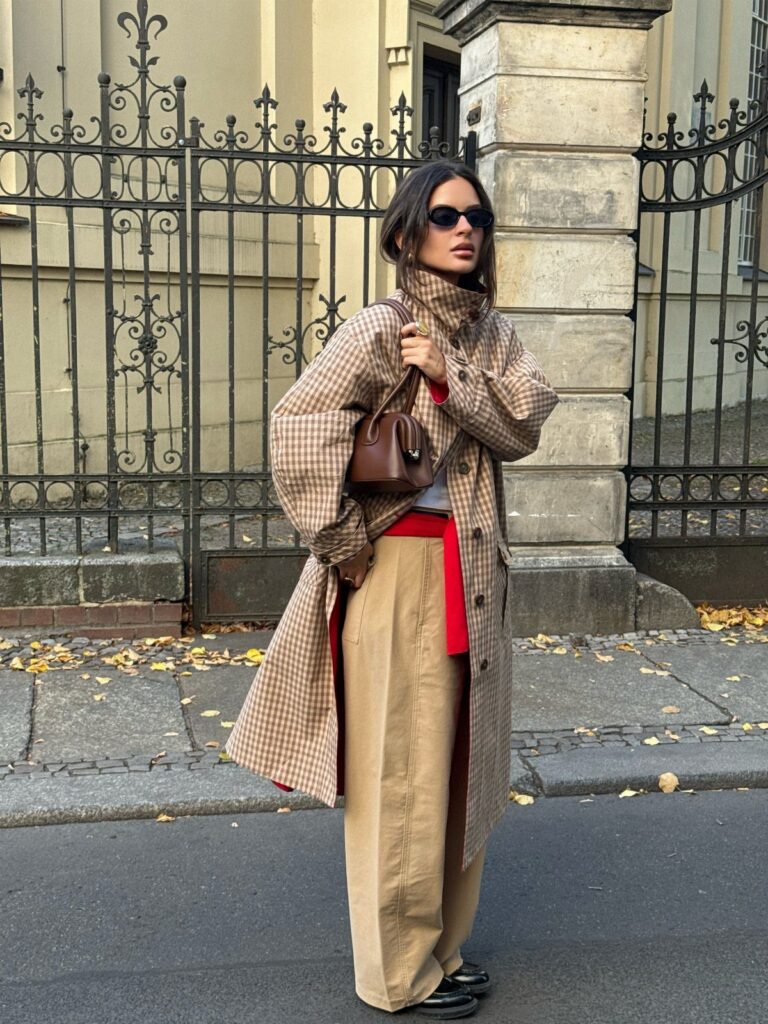
These 12 fall layering outfits range from a quick sweater knot to a full cape silhouette, and the one that belongs to you depends on how many times your day demands you add or remove a layer.
The Sézane Clyde trench runs slightly oversize, which solves the shape problem in 2 moves: belt it for structure, leave it open when you are walking between temperatures, and the houndstooth check handles the rest.
1. Layer Up on Knitwear Instead of a Scarf
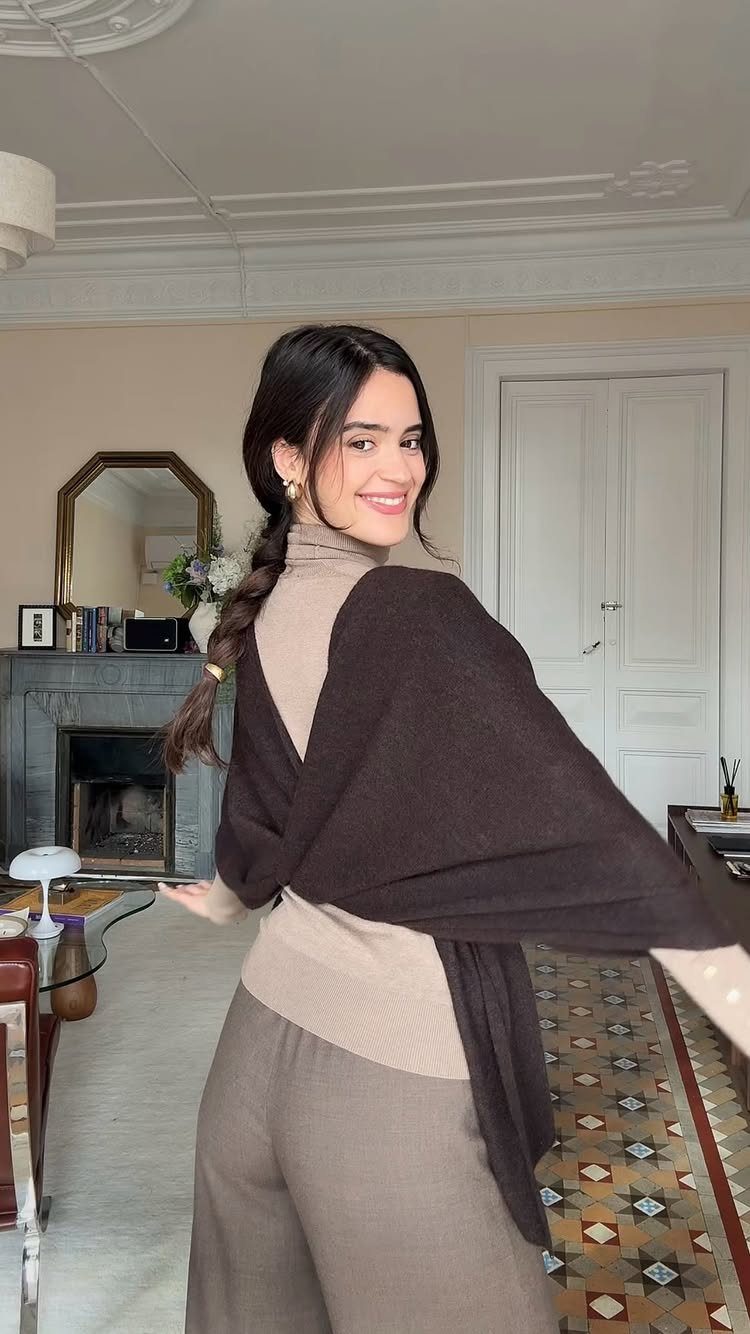
Two sweaters beat one when the temperature drops and you do not want to fiddle with a scarf.
Drape the second knit over your shoulders, knot the sleeves loosely at your collarbone if they are long enough, and you have a shawl that stays put through coffee runs and commutes.
The weight matters: choose something soft but not so heavy that it pulls the base layer out of shape.
This is the move for mornings that start cold and land warm by noon, since the extra layer comes off without the bulk of a coat.
2. Sézane Clyde Trench Coat
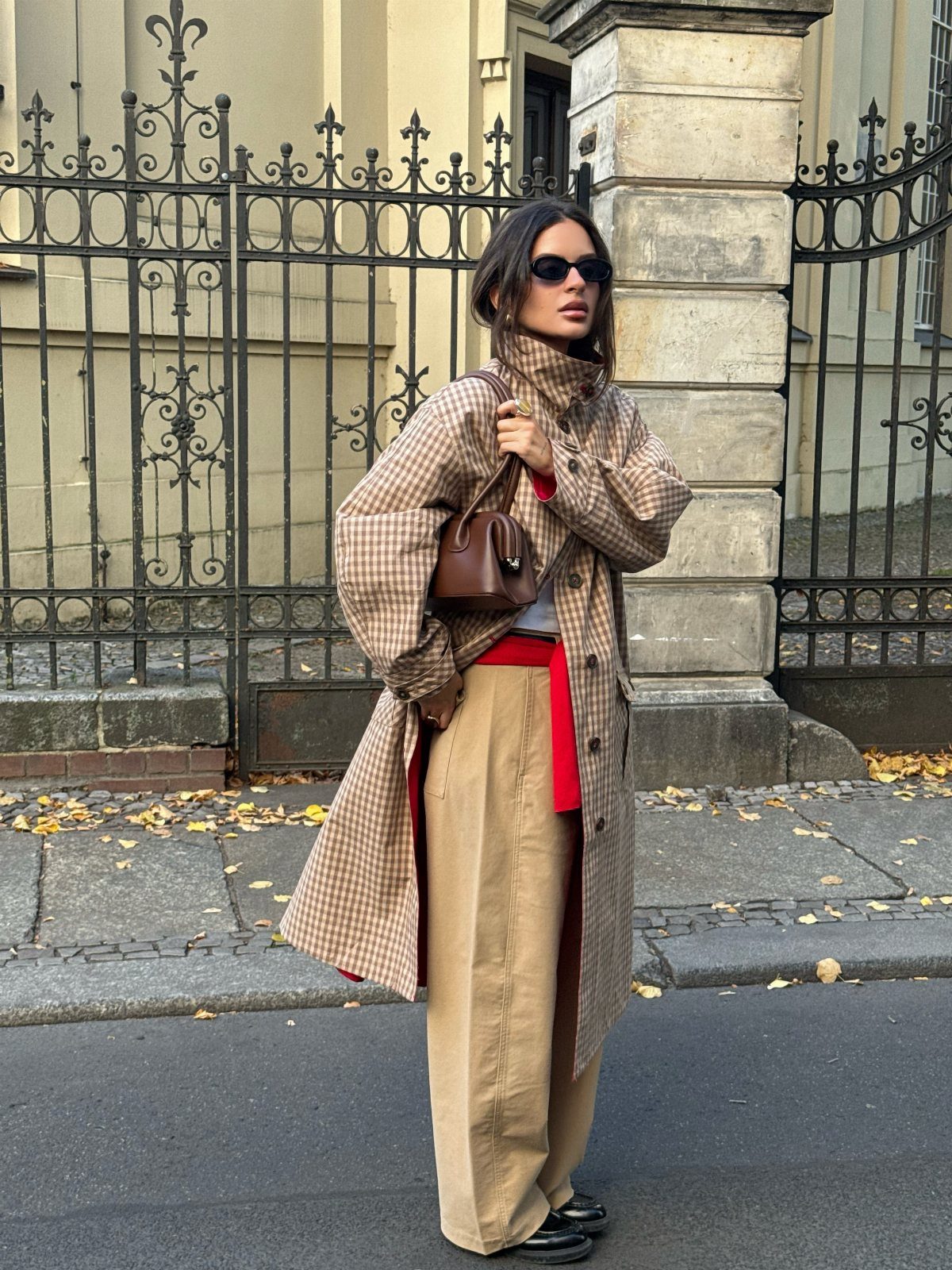
A houndstooth trench reads more interesting than solid camel but still functions as a neutral. The Sézane Clyde runs slightly oversize, which means it layers cleanly over a knit set or a thin sweater without binding at the arms.
Belt it when you want shape; leave it open over jeans and loafers when you are walking between appointments. The check pattern does the styling work, so the rest of the outfit can stay quiet.
3. Jeans with a Contrasting Layer
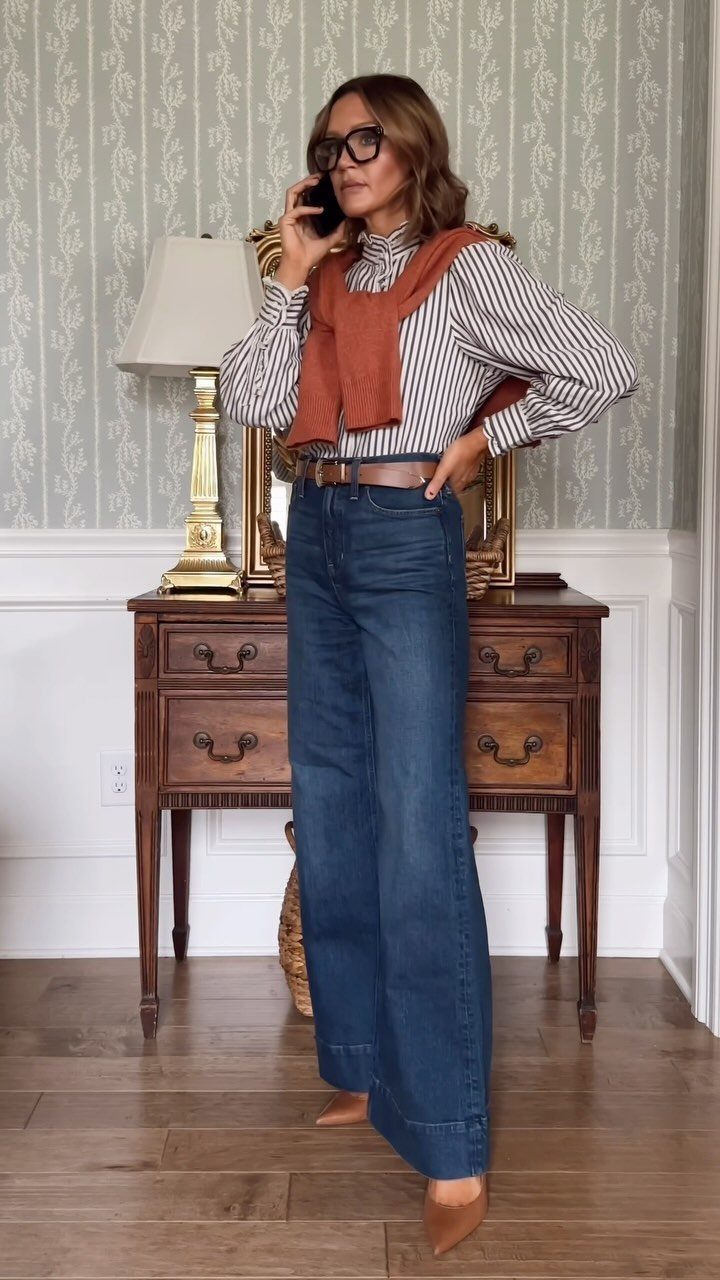
A contrasting layer keeps denim from going flat. An orange sweater does the job against a striped top and wide-leg jeans, though a sheer dress or lace-trimmed slip would push the same idea further for evening.
What to decide first: whether you want the contrast at your shoulders or your hem. Shoulder drapes read casual; a long layer over the legs needs the right length to avoid shortening your line.
4. Ribbed Turtleneck Under a Button-Down
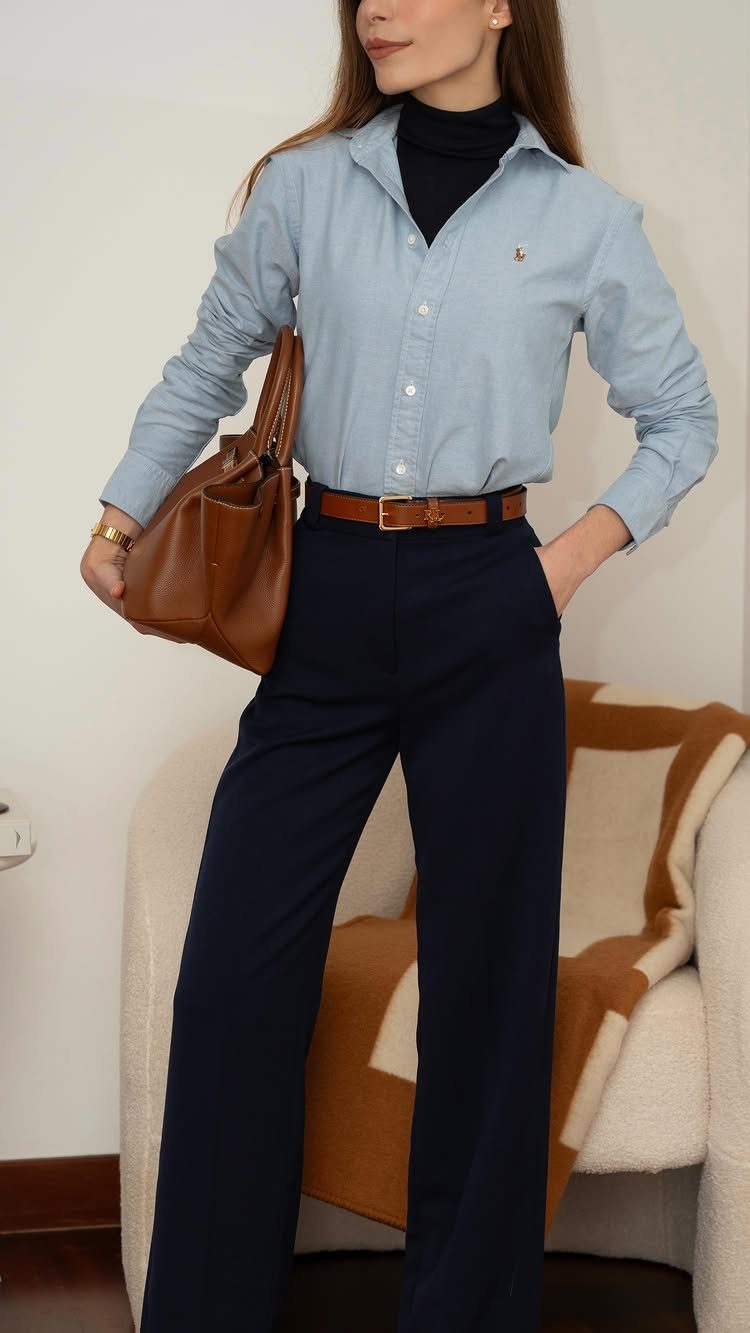
The thin ribbed turtleneck is the piece that makes this work. Too thick and the button-down gapes at the placket; too thin and you lose the warmth you are after.
A fitted black version under a pale blue shirt and dark trousers gives you the put-together feel of a blouse without the February shiver.
Add a blazer on top when the office runs cold. This is the move for anyone who wants to look dressed without committing to bare arms until May.
5. Leggings
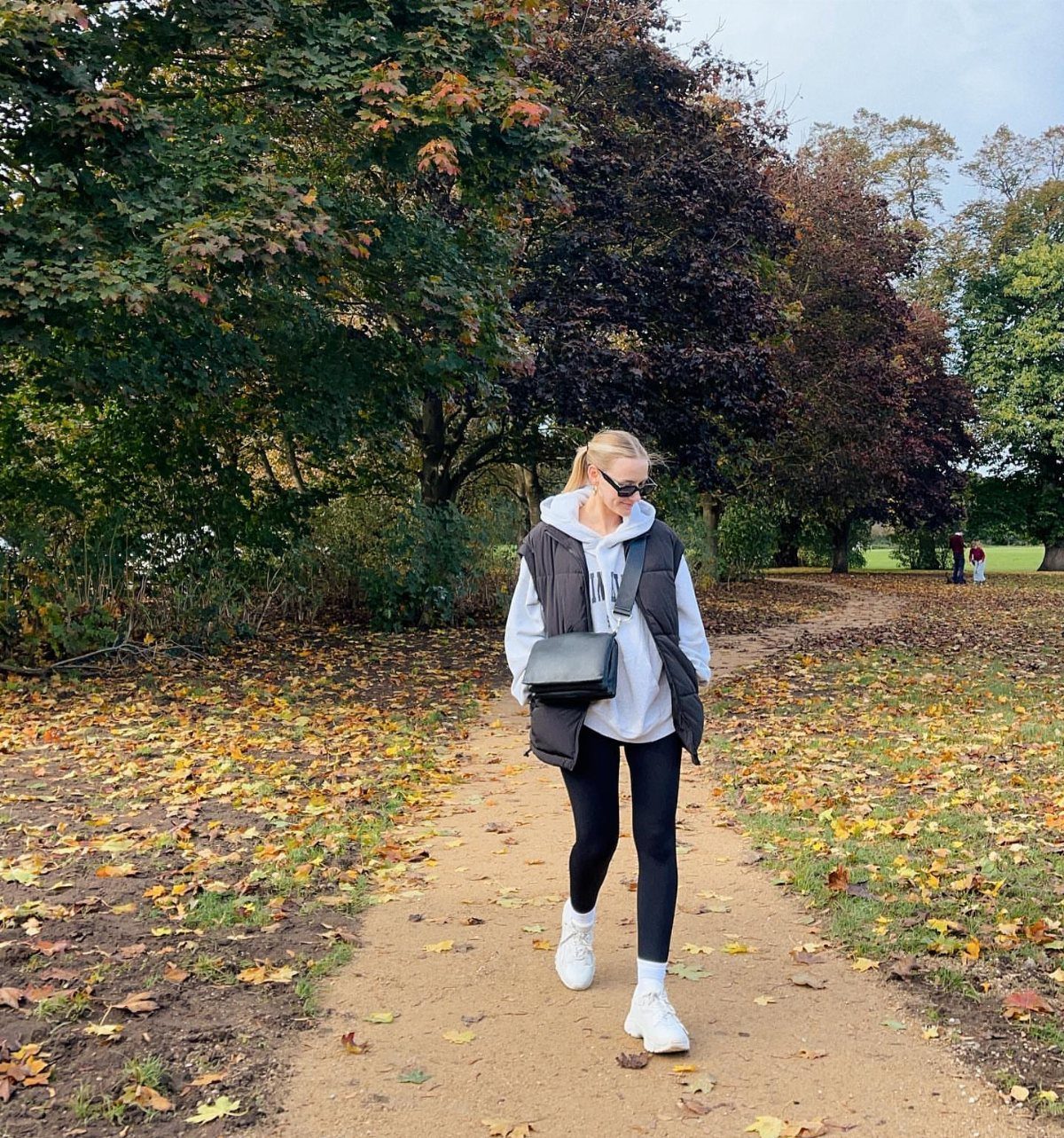
Leggings under an oversized hoodie and puffer vest give you warmth without the stiffness of jeans.
The ones worth buying have a wide waistband that does not roll and enough weight that you are not adjusting coverage every time you sit.
Black keeps the look streamlined; white sneakers and sunglasses finish it for a Saturday walk through leaves. Wear them under a tunic or sweater dress if you need to look slightly more assembled.
6. Add Mid-Weight Layers for Warmth
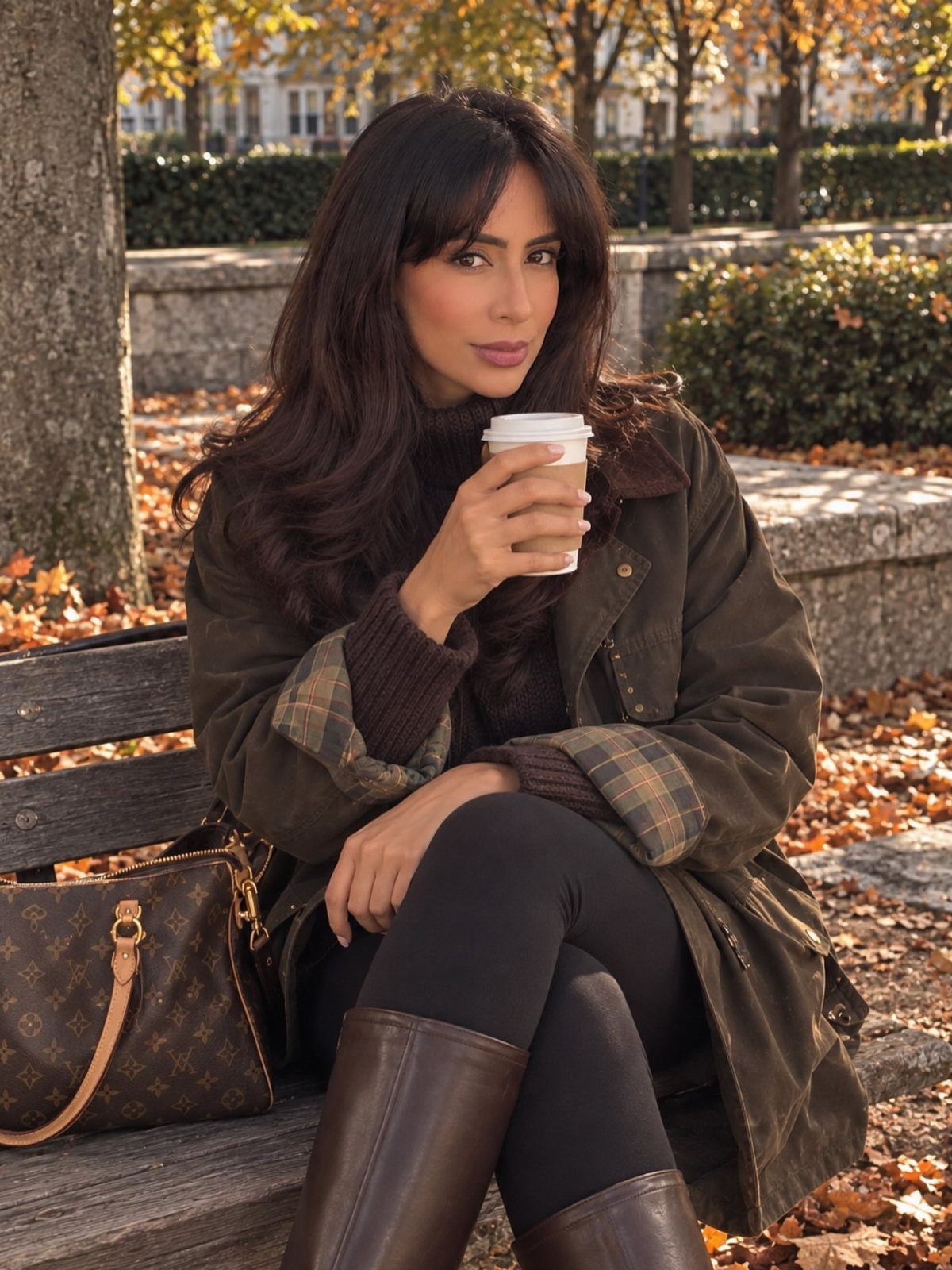
A chunky knit under a waxed jacket solves the problem of fall days that feel like 3 seasons before lunch.
An olive jacket at mid-weight layers over the sweater without the bulk of a full winter coat. Tall boots fill the gap between leggings hem and ground so you are not managing cold ankles.
If the knit is thick, keep the base layer fitted so you are not swimming in fabric. This combo suits anyone who spends weekends outside and wants to look intentional about it.
7. Cape Jacket Over Layers
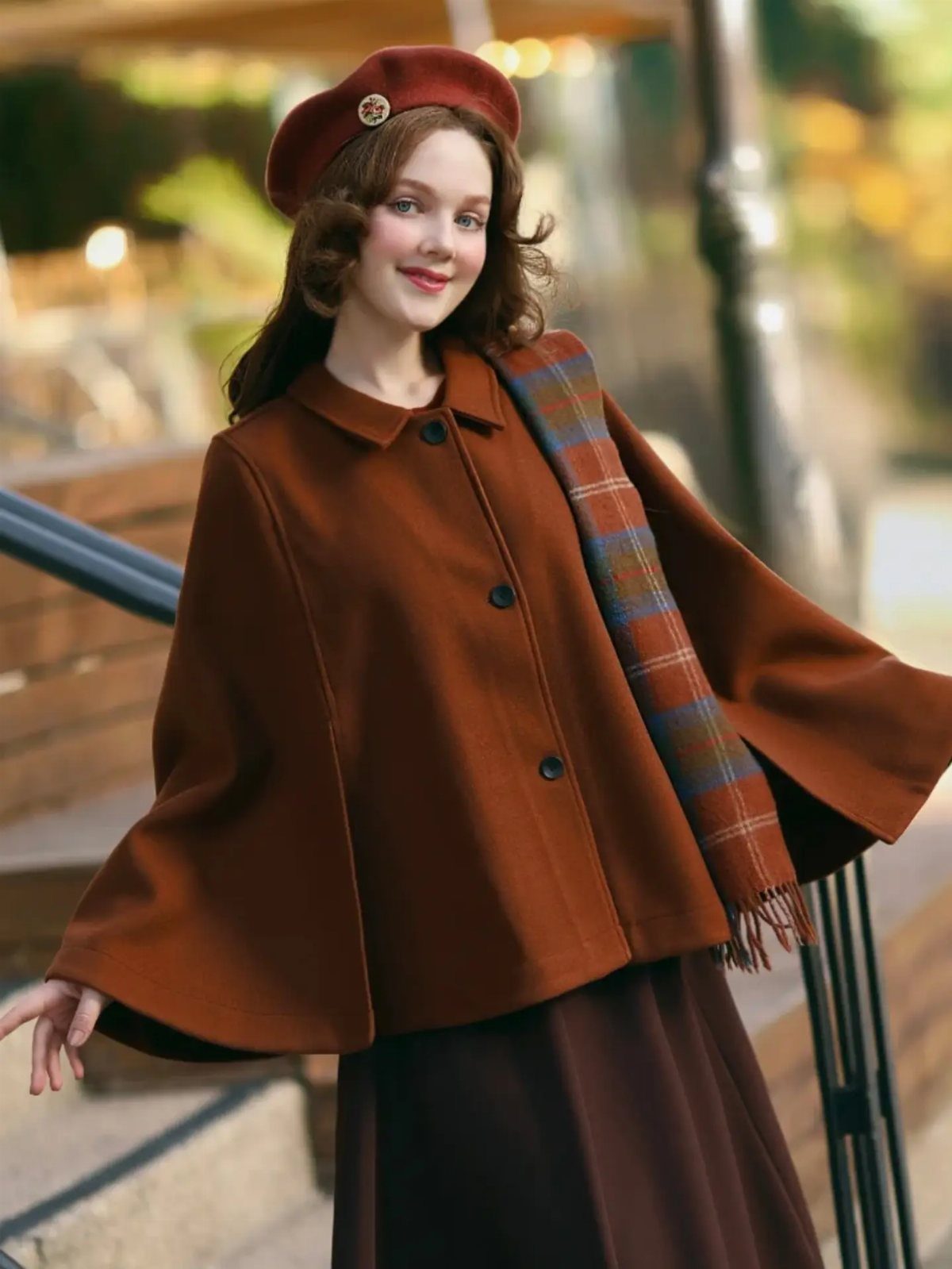
A cape jacket turns any autumn outfit into something that looks considered without much effort.
Keep the layers beneath slim: a fitted button-down or thin knit stays flat under the volume, and working in one color family, like rust with chocolate brown, keeps the shape from overwhelming you.
A beret and plaid scarf add texture without fighting the cape’s line.
This silhouette suits anyone who wants warmth without the restriction of sleeves. The open sides mean you need a real layer underneath for insulation, so add a thick scarf or save it for milder days.
8. Denim Jacket Over Button-Down Shirt
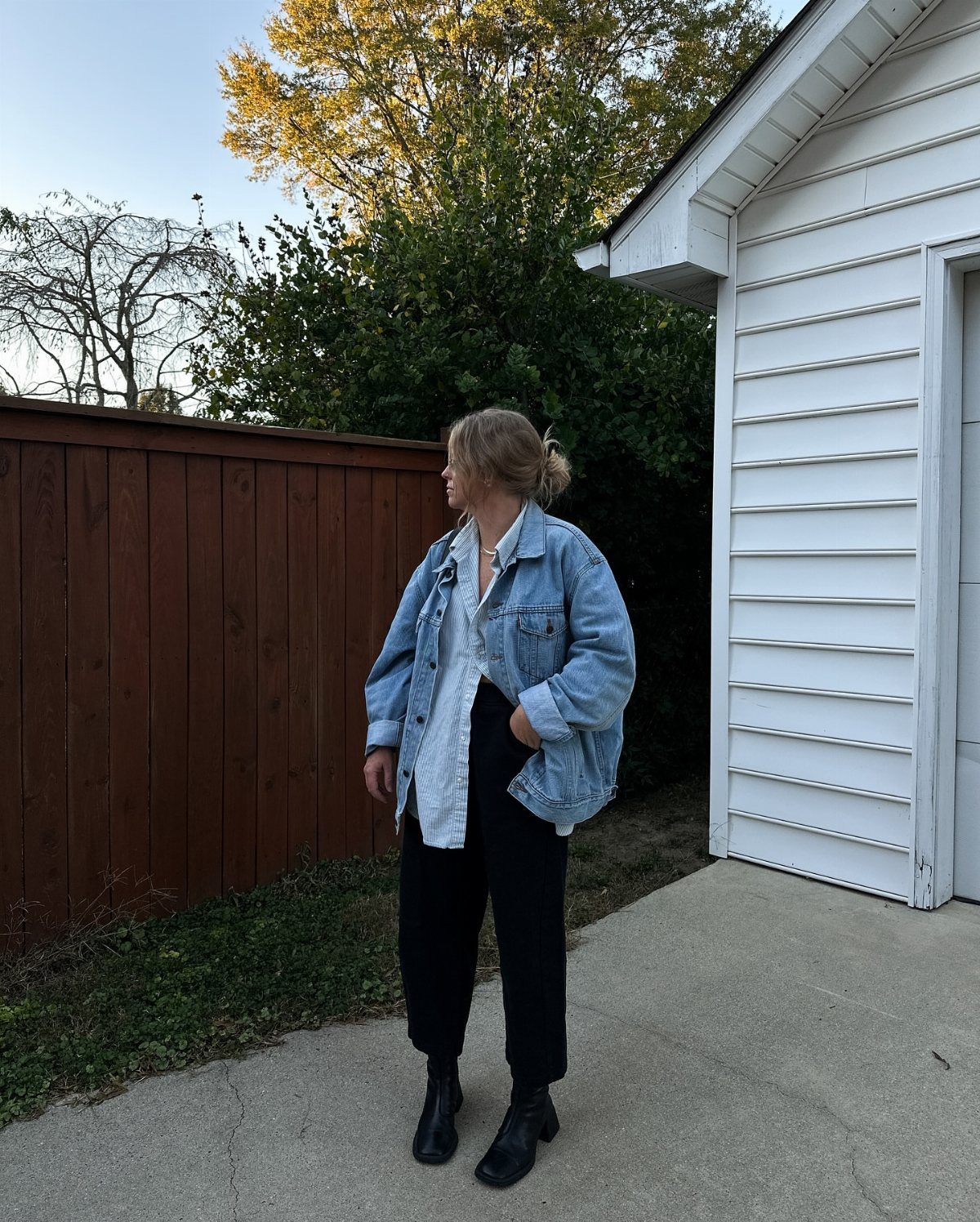
A denim jacket over a button-down reads pulled-together in a way that a denim jacket over a tee does not.
The collar gives the look structure, and the contrast between the casual wash and the crisp shirt underneath is what makes it work for lunch or a casual office.
Black trousers ground it so the double-up top half does not feel like weekend cosplay.
Stripes under light blue denim is the classic move, though a solid white or pale pink shirt would push it toward evening. Keep the shirt untucked and the jacket unbuttoned; anything else gets stiff fast.
9. Leather Jacket Over a Turtleneck
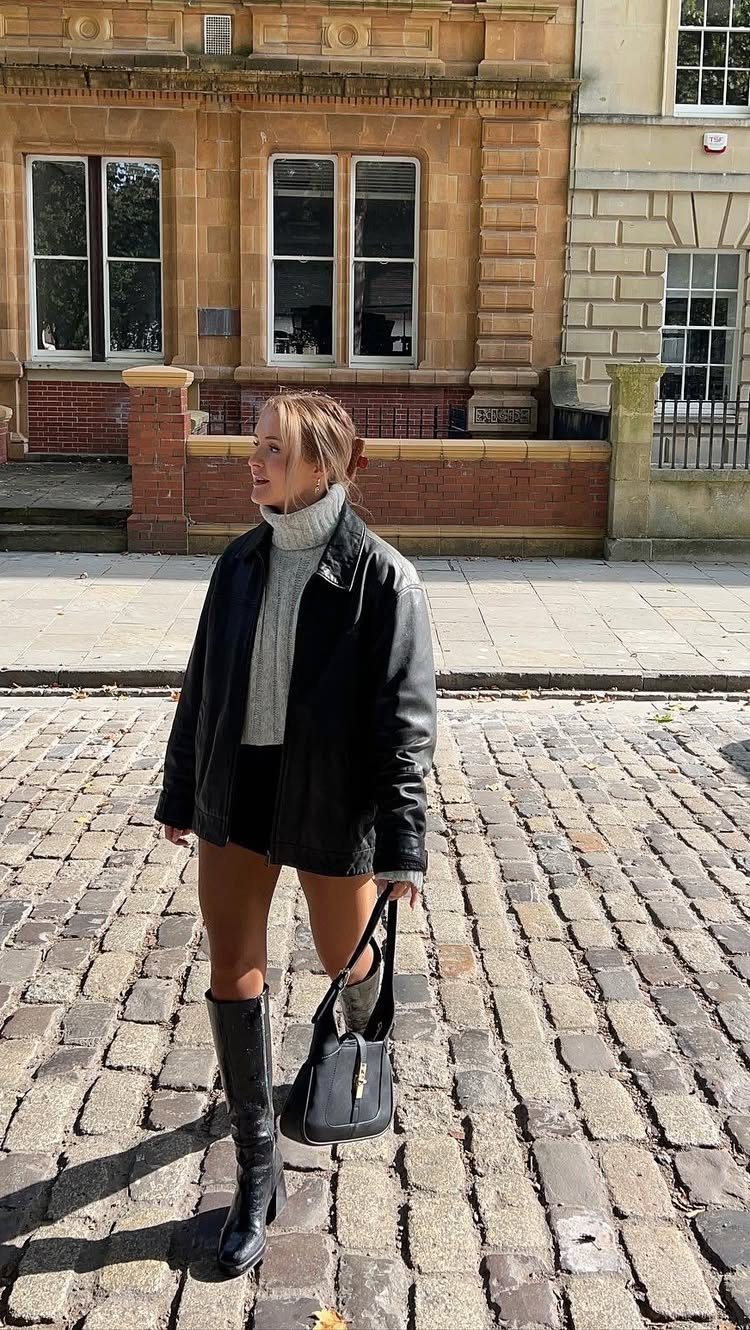
A leather jacket over a turtleneck is the combination that got me through years of October mornings when I needed to look like I had a plan.
The turtleneck fills the neck gap so you are not chasing a scarf, and the leather blocks wind better than wool. Grey under black keeps the palette quiet and lets the textures do the work.
Fit matters more here than with other jackets. The turtleneck should sit close to the body, and the leather needs enough room that the knit does not bunch at the sleeves.
A mini skirt and tall boots finish the look for city walking; swap in straight trousers and loafers if your day involves sitting.
10. Layered Tops with Sweater Tied Around Waist
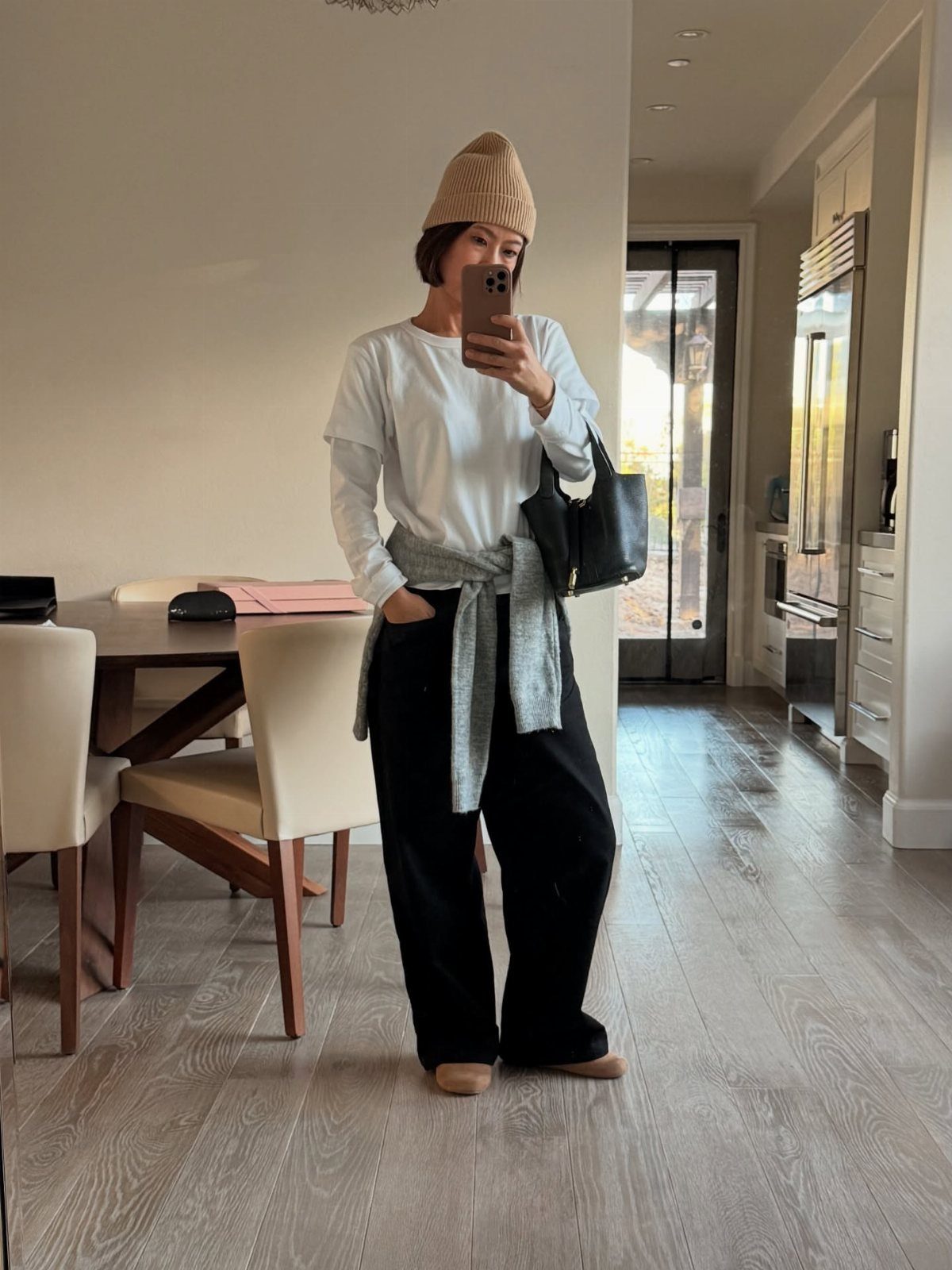
Tying a sweater around your waist adds a layer you can actually use when the temperature shifts, and it breaks up a line of solid color at the same time.
What to check before you try it: the sweater should be lightweight enough that the knot sits flat, and the hem of your top layer needs to hit at or above your hip so the tie does not drag everything down.
This is the move for days that start at 55 and end near 70.
11. Slip Dress Layered Over a Top
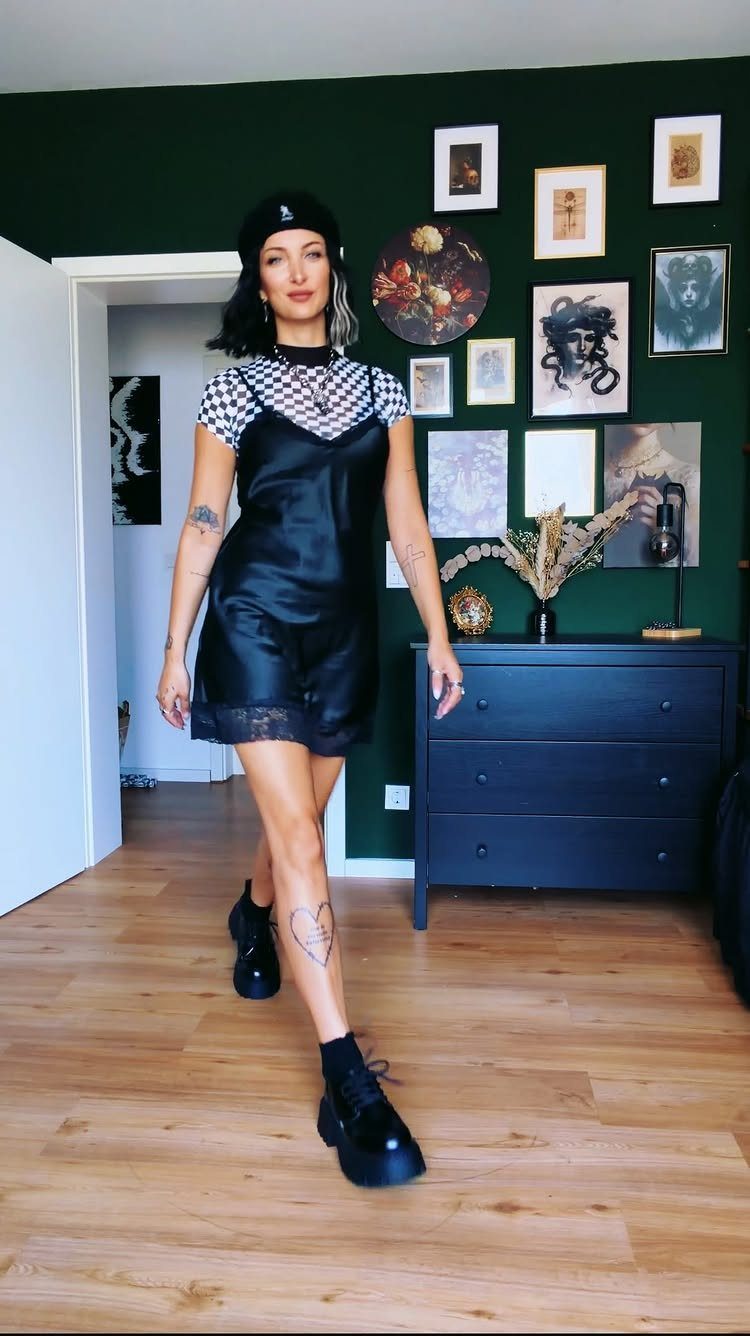
Layering a slip dress over a shirt turns 2 pieces you already own into something that reads as a deliberate choice.
The satin catches light differently than the fabric beneath, so a check or stripe under black satin gives you depth without trying for pattern-mixing. A beret pulls the look toward French rather than grunge.
The shirt needs to be fitted; anything blousy bunches under the slip and reads as a mistake.
Tuck it in or choose a cropped version so the waistline stays clean. Chunky shoes ground the dress and keep the whole thing from feeling too delicate for daytime.
12. Knit Sweater and Tights with Mini Skirt
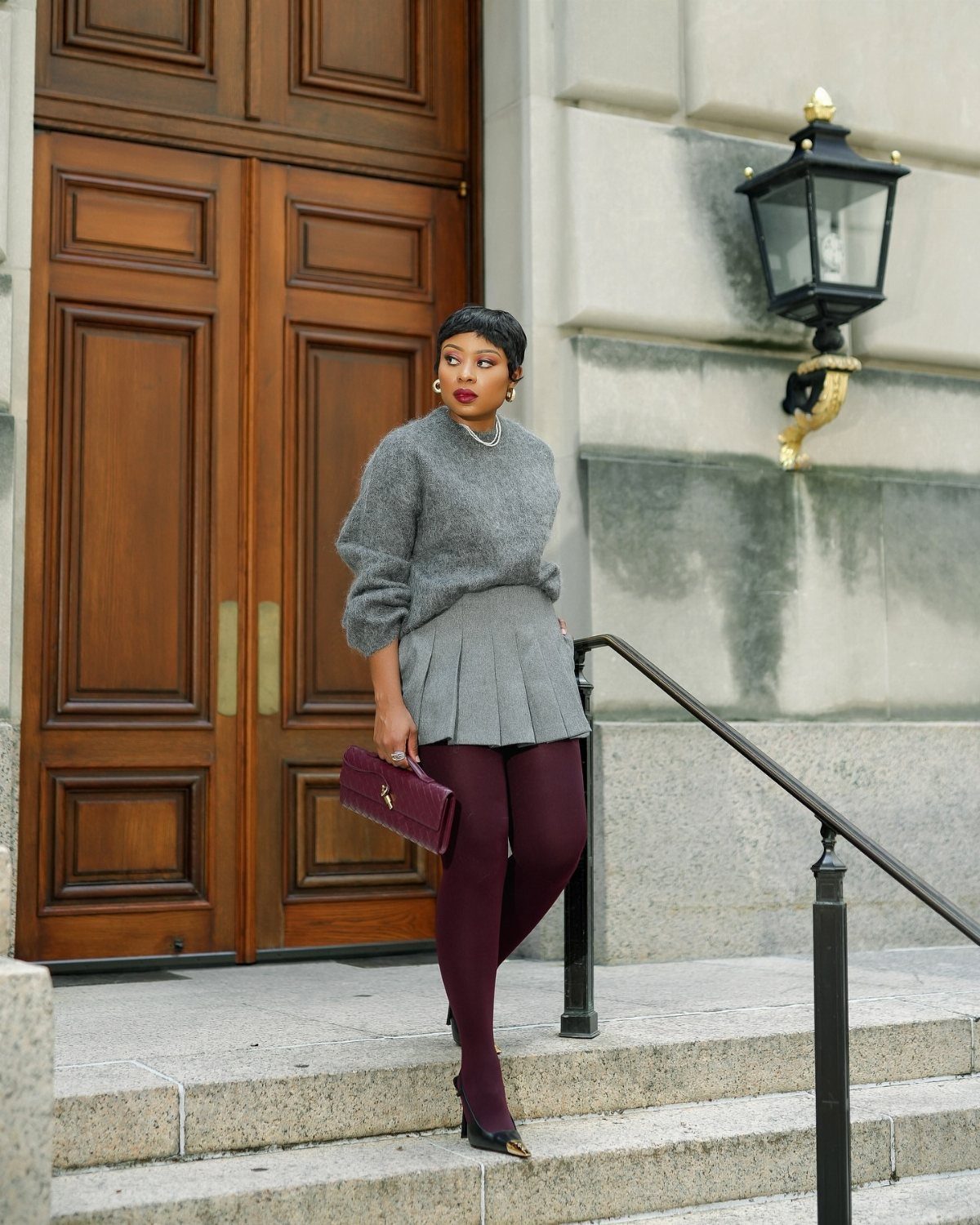
Burgundy tights with a grey knit and mini skirt is the combination that made me stop defaulting to black hosiery every October.
The color adds warmth to a neutral palette without demanding the rest of the outfit compete with it, and the pleated skirt keeps the line moving where a straight hem would go static.
The sweater should hit at the waist or tuck; anything longer shortens the leg line that the mini is giving you.
Heels help, though loafers would keep it walkable. This is the look for a dinner out or an office that runs creative, not one where you will be climbing stairs all day.
Importance of Layering
Fall mornings in most of the US can feel like a different season than the afternoon, which is exactly why a single heavy coat fails.
Layering lets you peel back to match the thermometer instead of sweating through a meeting or shivering at a bus stop.
The practical side is only half of it.
Each layer you add is another chance to adjust proportion, texture, or color. A base layer that fits close to the body keeps the silhouette clean; everything over it builds the shape you want.
One turtleneck can sit under a dress, a cardigan, a denim jacket, or a coat, and each pairing reads as a different outfit without a new purchase. That is how you stretch a closet you already own.
At Maria McManus, the art of layering came to life in shades of grey. And for particularly cold days, the memo was to embrace textures—and pile on the jackets.
— Vogue
Mixing Colors and Patterns
Color mixing in layers works best when you decide what role each piece plays.
A neutral base, like the grey knit or the pale blue shirt from the list, lets a brighter or darker second layer do the visual work without competing.
Colors opposite each other on the wheel give you contrast, while adjacent ones keep the look quiet and continuous.
Texture does more of the heavy lifting than pattern alone. The rule is simpler than it sounds.
If the fabrics feel good together when you hold them, they will probably read that way on the body. Do not force a print mix unless you already own both pieces and can test them in daylight.
Comfort in Layering
Breathability in your base layer matters more than most people check for.
Cotton, silk, or a thin merino against your skin wicks moisture outward so you are not damp when the afternoon warms. Start light and build up: camisole or thin tee, then the long-sleeved layer, then the jacket or coat.
The layers you add need to come off easily. A sweater that knots at the waist or drapes over the shoulders travels with you; a coat that requires a bag to store does not.
Check sleeve length at each step. A base layer sleeve that bunches under a fitted leather jacket or a button-down placket that gaps over a thick turtleneck means the combination fails before you leave the house.
Move your arms, sit down, bend forward. If anything rides up or binds, swap the piece before you commit to the day.