These ideas run from a baseball cap upgrade to a full tweed set, and the right one depends on whether your spring day starts cool and sunny or already feels like July.
1. Comfortable Pants
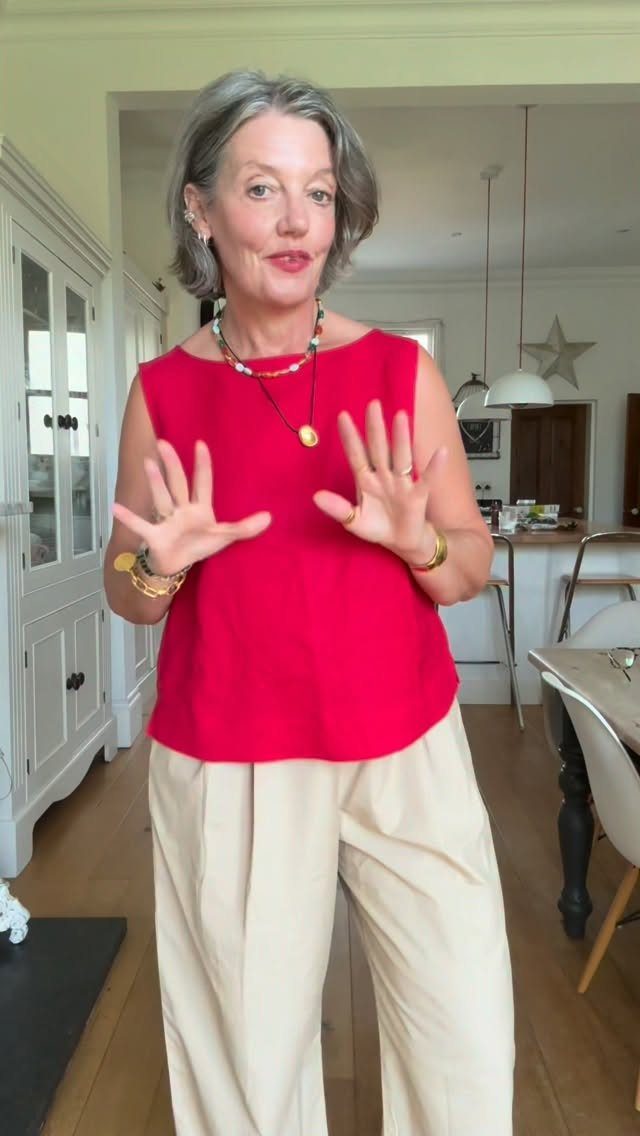
Loose pleated pants in a neutral tone give you room to move without looking like you gave up. I reach for mine on days when fitted denim feels like a commitment I cannot make.
A high waist and straight fall from the hip keeps the silhouette intentional rather than sloppy. A bright sleeveless top balances the volume below; a tucked-in tee would do the same work.
Lightweight linen or cotton blends breathe on warmer afternoons and layer cleanly under a cardigan once the temperature drops. Check that the waistband has enough structure to hold its shape through a full day of sitting and standing.
2. Spring Sweaters
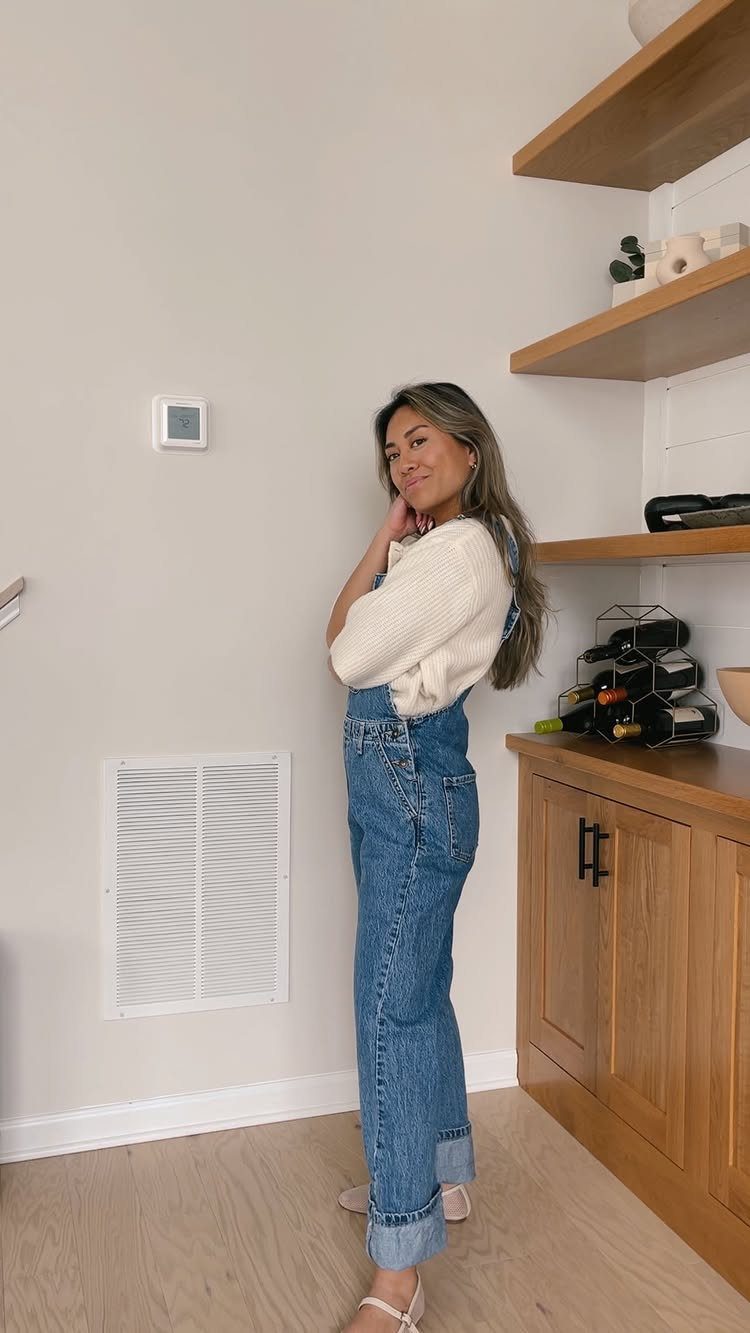
A thin knit under overalls is the spring uniform I return to every April. The cream sweater visible here has enough texture to read as deliberate, not leftover from winter.
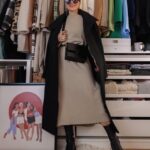
Vogue’s street-style coverage notes that even a "boring" grey basic gets new life against a calf-hair coat and draped midi skirt, which tells me the sweater’s real job is to let the pairing do the work.
Emily Henderson’s rotation of 5 spring sweaters confirms this: the piece itself is rarely the statement.
Choose ribbed or finely woven cotton over wool. It should slide under straps without bunching, and you should be able to push the sleeves to your elbow without stretching the cuff.
Ahead, discover eight foolproof early spring outfit ideas to guide your best-dressed season yet.
— Vogue
3. Co-ord Sets
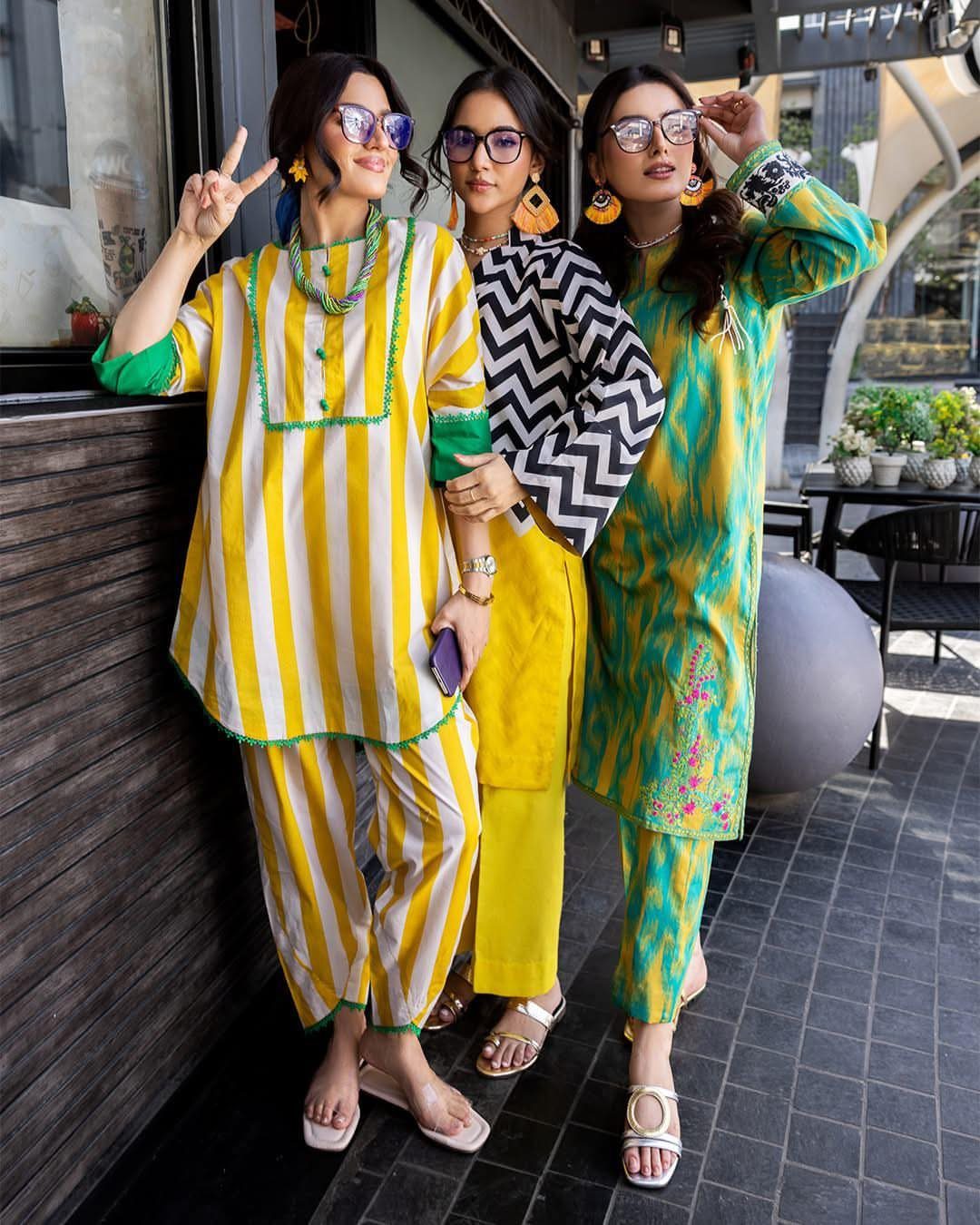
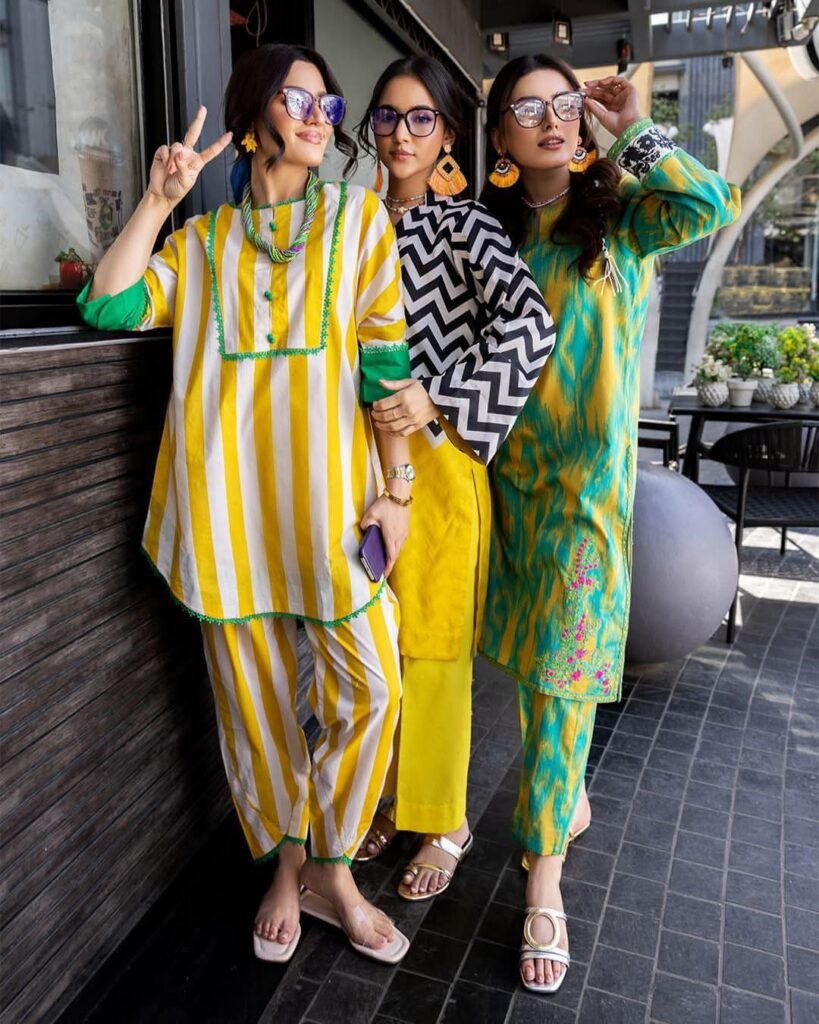
Matching printed tunics and trousers remove the morning decision of what goes with what. The same formula in different colorways suggests the set matters more than the specific pattern.
The cut is generous through the torso and leg, held in place by a single vertical seam or a subtle waist definition rather than cling. Flat sandals and sunglasses finish it; the look does not require heels to feel complete.
I would check the fabric weight before buying.
A printed cotton or silk blend travels well and resists the wrinkling that makes coordinated pieces look accidentally uniform. Jewelry can break the match if you prefer, though the women here commit fully with statement earrings.
4. Cinch Jeans
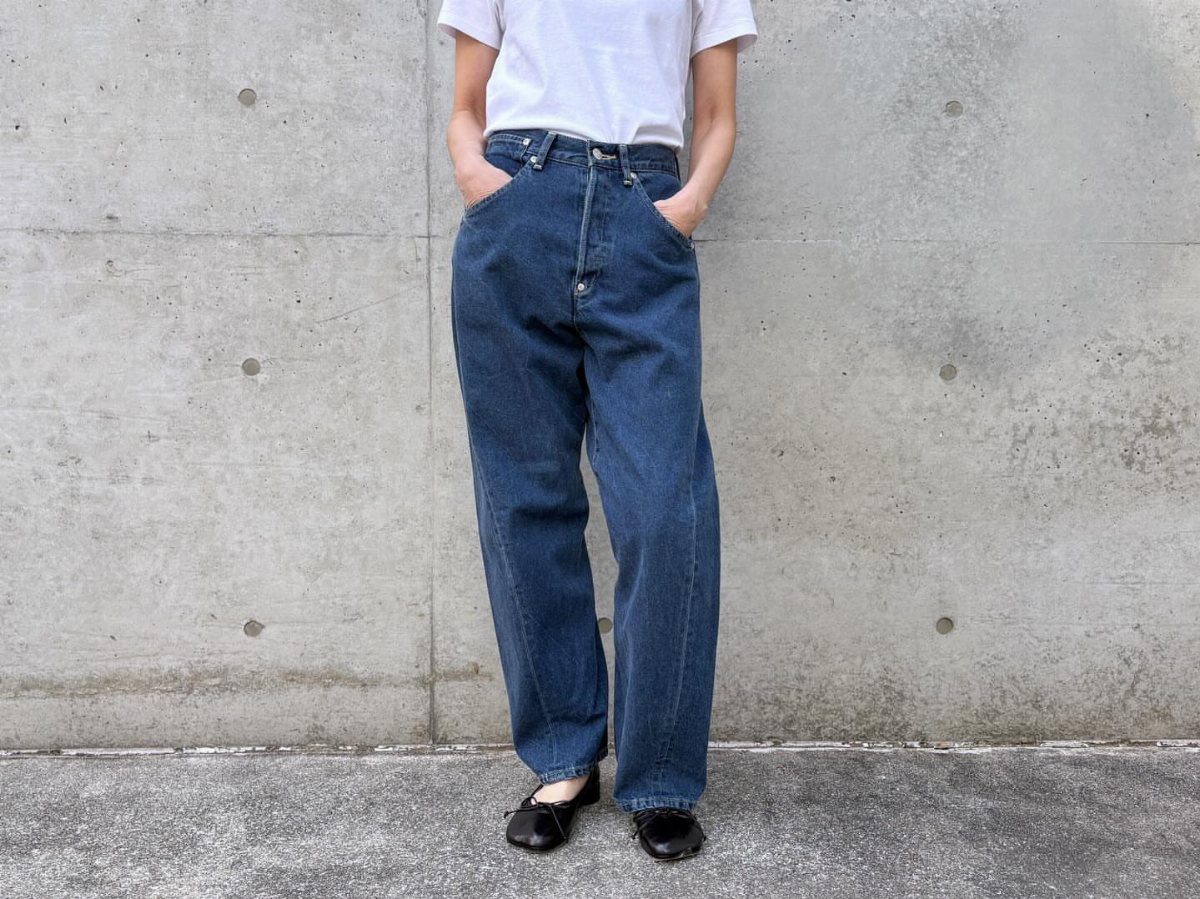
A pair that cinches at the narrowest point of the torso then drops straight to the ankle lengthens without requiring a heel.
This cut suits me better than skinny styles on days when I want to tuck in a shirt and still feel like I can sit down.
The denim weight appears medium, which means the leg keeps its shape through the day rather than collapsing into creases.
A front tuck or a cropped top shows the waistband; a longer tee would hide the one detail that makes these jeans function. Check that the back rise is high enough to avoid gaping when you bend.
5. Striped Button-Down with Baseball Cap
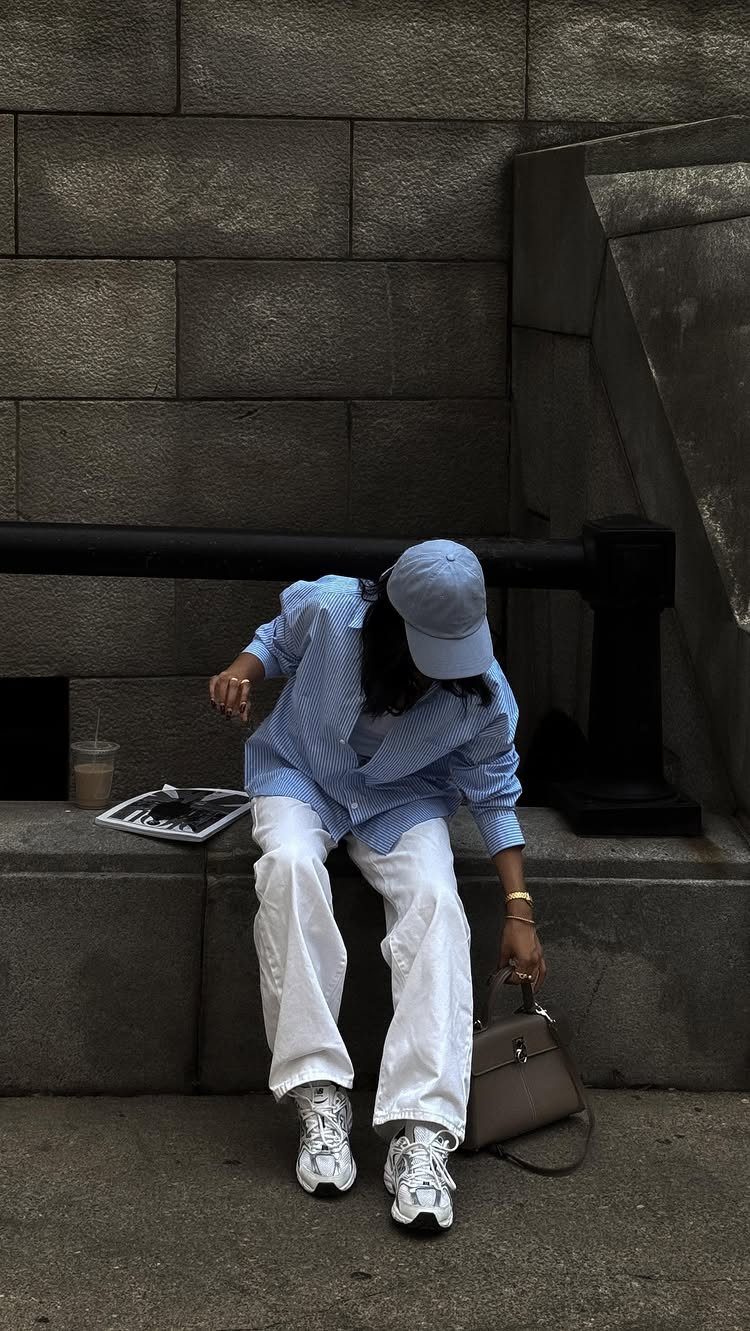
An oversized blue-and-white striped button-down with white wide-leg trousers reads coastal without requiring a location change. The baseball cap in a matching blue pulls the shirt color down to eye level, which unifies the outfit without a belt or jewelry.
The shirt is deliberately large, with sleeves rolled past the elbow and the hem falling below the hip. This only works if the trousers are equally relaxed; fitted pants would make the top look borrowed.
I would verify the stripe scale against your frame.
A stripe too narrow can jitter on camera; too wide reads nautical costume. The cap should sit comfortably over your hairline, since this outfit depends on wearing it, not carrying it.
6. Tailored Vest with Jeans
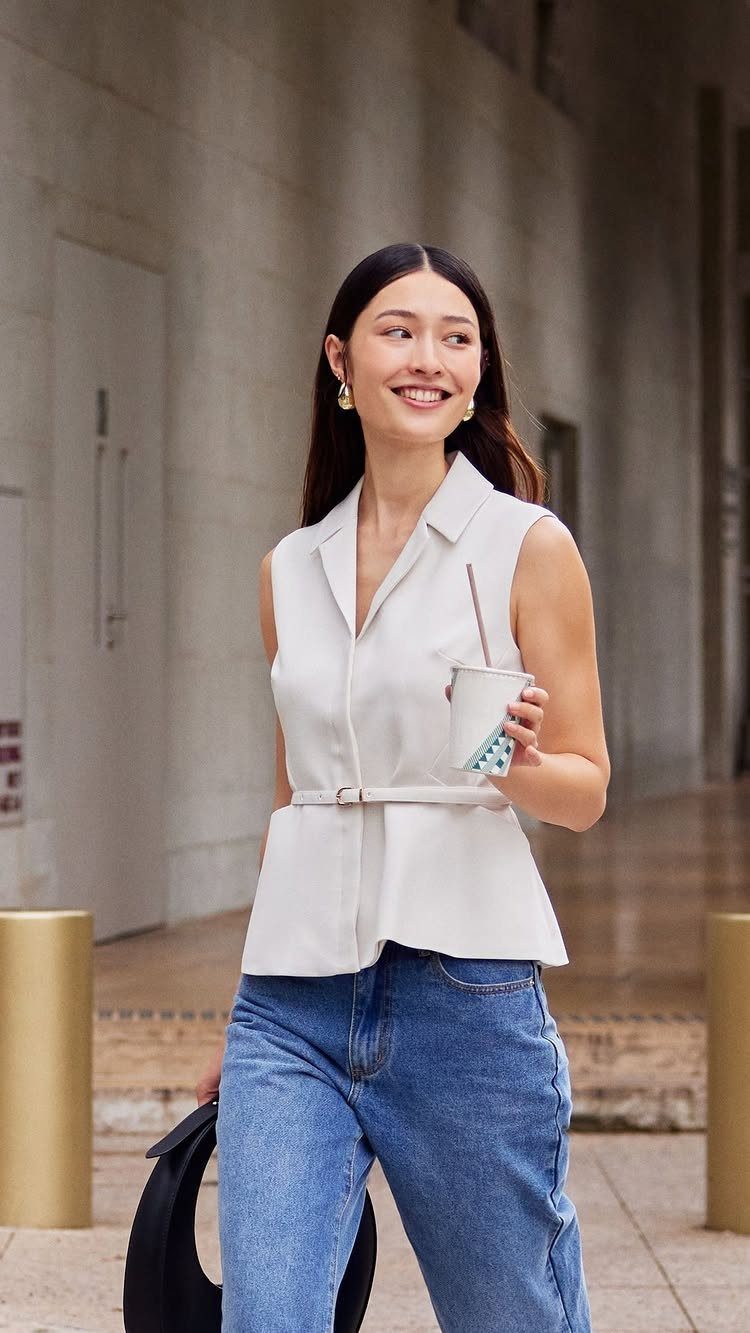
A sleeveless tailored vest belted over classic blue jeans gives you the structure of a blazer without the sleeves you will not need by noon.
A cropped white version cinched with a matching fabric belt creates a waist where a boxy vest would not.
The denim underneath is straight-leg and mid-rise, simpler than the vest so the eye stops at the tailoring. This pairing works for errands or a casual meeting because the vest signals intention while the jeans keep it approachable.
Too high and it pinches; too low and the vest reads as an unfinished jacket. A fully lined interior prevents the outer fabric from clinging to your shirt or skin as the day warms.
7. Light Blazer with Wide-Leg Jeans
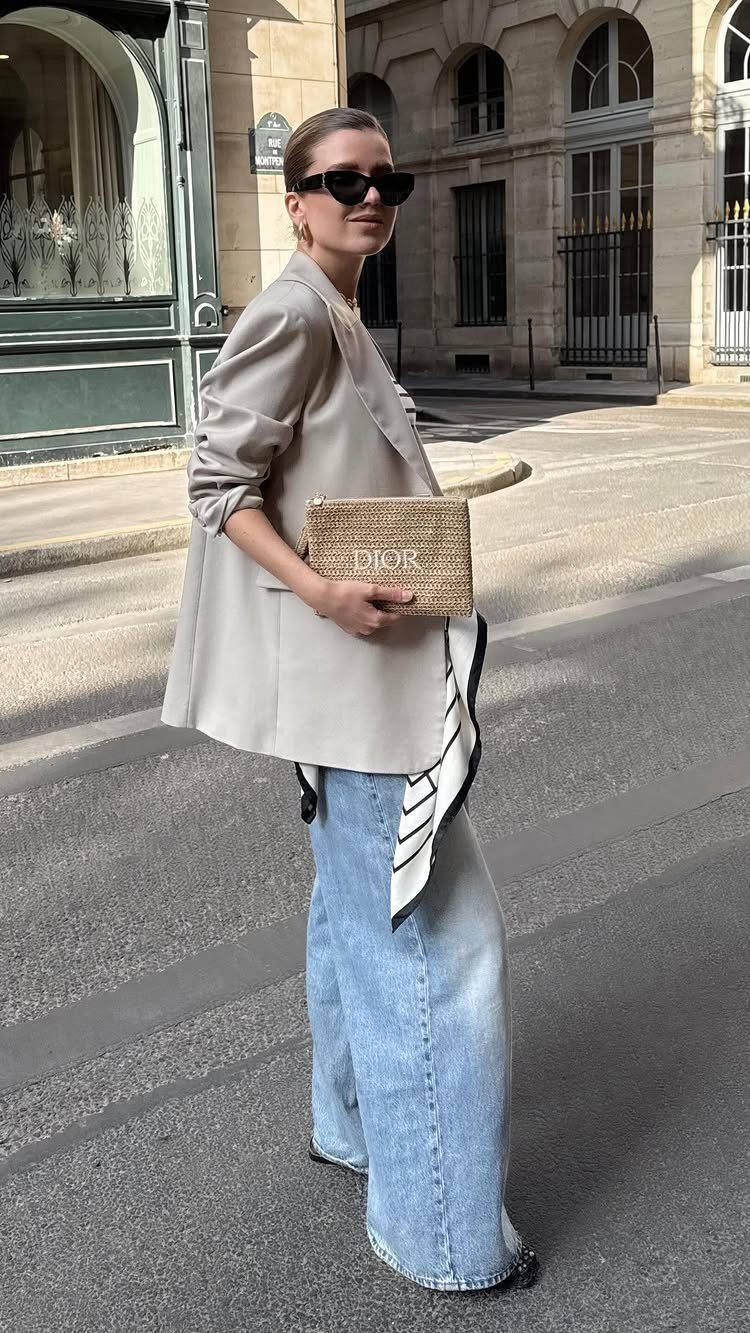
A blazer in a light neutral, worn open over full-leg denim, gives you the polish of a suit without the formality of matching pieces.
The straw clutch here reads summer, but the same jacket would carry a leather bag into September.
The jeans need to sit high enough that the blazer hem does not bisect your frame awkwardly. Check the shoulder: an unstructured or lightly padded cut keeps this from looking like office wear you forgot to finish.
I would choose a grey that leans warm rather than cool, since the light wash of the denim already brings enough blue.
8. Textured Tweed Jacket and Trousers
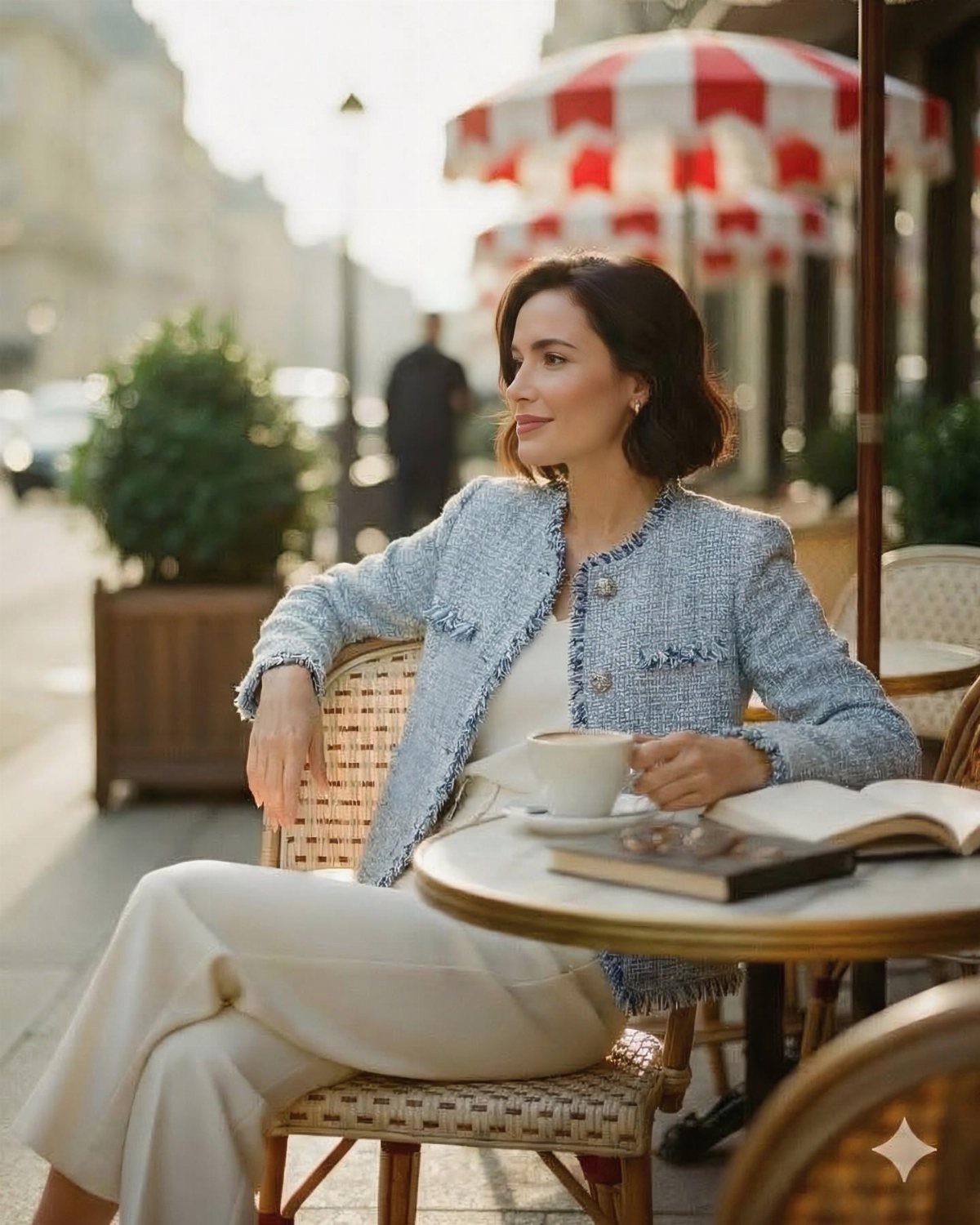
Tweed in a pale blue, paired with cream trousers rather than a matching skirt, updates a fabric that can feel country-club by default. The jacket’s texture does the visual work; the trousers stay plain and tailored to balance it.
This combination suits a morning that starts cool and ends warm, when a full suit would overstay and a cardigan would underdeliver. The cut should be close through the shoulder with enough length to cover a tucked-in shirt.
9. Transitional Trench Coat
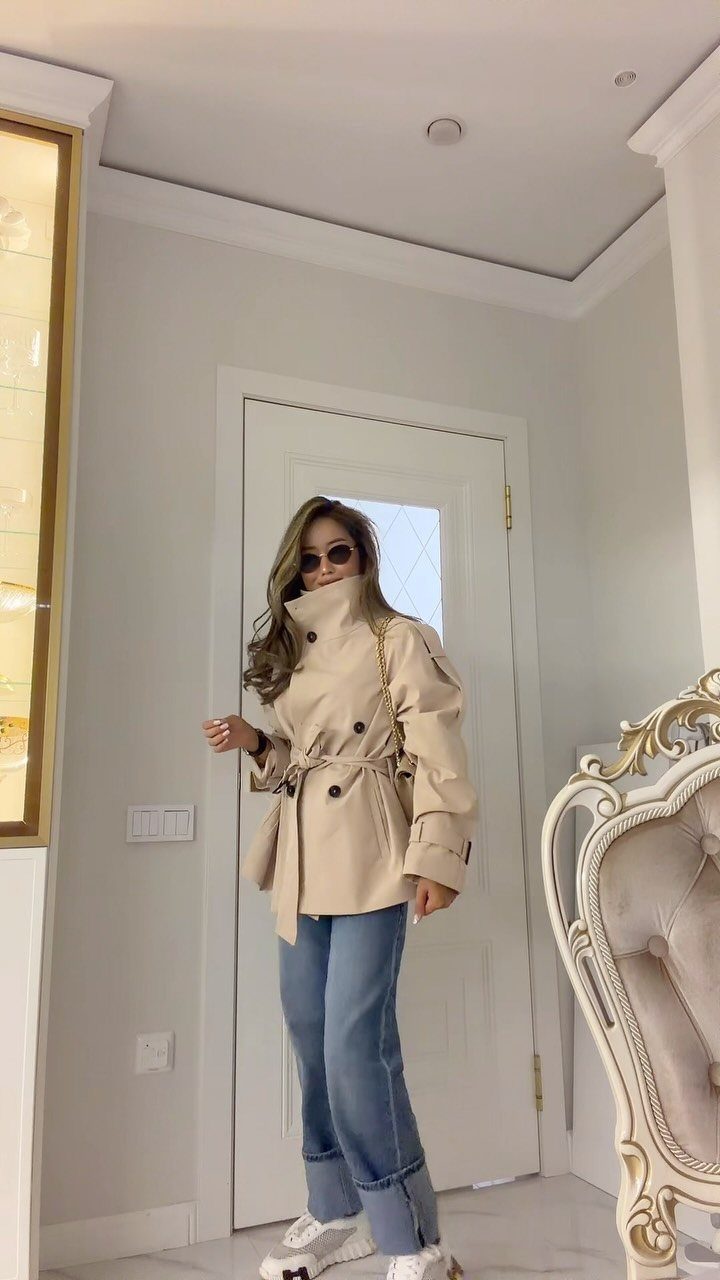
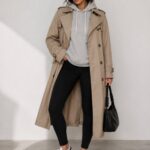
A short cotton trench in khaki, belted over wide-leg cuffed jeans, handles the day when the forecast says 55 and sunny but the morning still feels like March. Cotton breathes better than synthetic blends once the afternoon warms.
The cropped length here keeps the proportions modern; a full-length trench would swallow the wide leg beneath it. Cuffs on the jeans add the structure that the shorter coat no longer provides.
Sneakers ground the look for travel or a full day on your feet. I would check that the belt hardware lies flat; bulky buckles read costume on a shorter cut.
Layering Techniques
A faux leather jacket in pale yellow sits right for the weeks when your winter coat feels like overkill but a cardigan would leave you cold.
Worn open over a lightweight dress, the shape stays neat enough that cream leather loafers finish without fighting for attention.
The real test of a spring layer is whether it earns its place through a full day. Cotton trenches and unlined blazers breathe once the afternoon warms; synthetic linings trap heat and leave you carrying the thing by two o’clock.
The shoulder line should stay clean over just a tee, since that is how you will wear it half the time.
A cropped length changes the proportion math. Where a full trench covers everything beneath it, a shorter cut leaves your leg line visible and demands more from what you pair it with.
Color Trends
Icy blue reads as the clean start the season promises, and a co-ord set in the shade multiplies how you wear it.
The shirt works with barrel-fit or flared jeans once you split the pair; the shorts go just as well with a boxy tee and cropped bomber for days when the full match feels like too much.
Embroidery detail on a solid keeps the color from reading flat.
I would watch how the blue photographs before committing. A shade too close to sky washes out against summer light; one too saturated fights with the soft neutrals it is meant to refresh.
Test it in natural light, not store fluorescents, since that is where you will actually wear it.
Comfort Vs. Style
The pieces that read as relaxed without looking like you stopped trying share one thing: a single point of structure.
An oversized button-down keeps the collar and cuffs precise even when the body drapes. Without that anchor, volume becomes sloppiness.
A belted vest over jeans works this balance directly. The tailoring gives you the posture of a blazer; the missing sleeves and denim beneath keep you from overheating or feeling dressed for the wrong room.
Fabric weight is where comfort lives or dies. An outfit that needs constant adjusting never feels easy, however good it looked in the mirror.
Frequently Asked Questions
What is the fashion for spring summer?
Light layers, breathable fabrics, and pieces that handle temperature swings carry spring and summer dressing.
I reach for thin cotton knits that slide under overalls, linen or cotton-blend pants that breathe through warm afternoons, and cropped trenches or unlined blazers that layer cleanly without trapping heat.
The pieces that work hardest are the ones that move from a cool morning into a sunny afternoon without needing to be carried by two o’clock.
What is the perfect outfit for spring?
A thin knit sweater under overalls is the spring uniform I return to every April, since the cream sweater has enough texture to read as deliberate while the pairing does the real work.
A dress with a lightweight layer over it, like a pale yellow faux leather jacket worn open, also handles the season’s uneven temperatures without looking mismatched.
One piece with structure and one that moves easily keeps the outfit neat as the weather shifts.