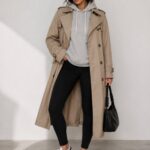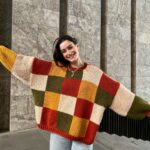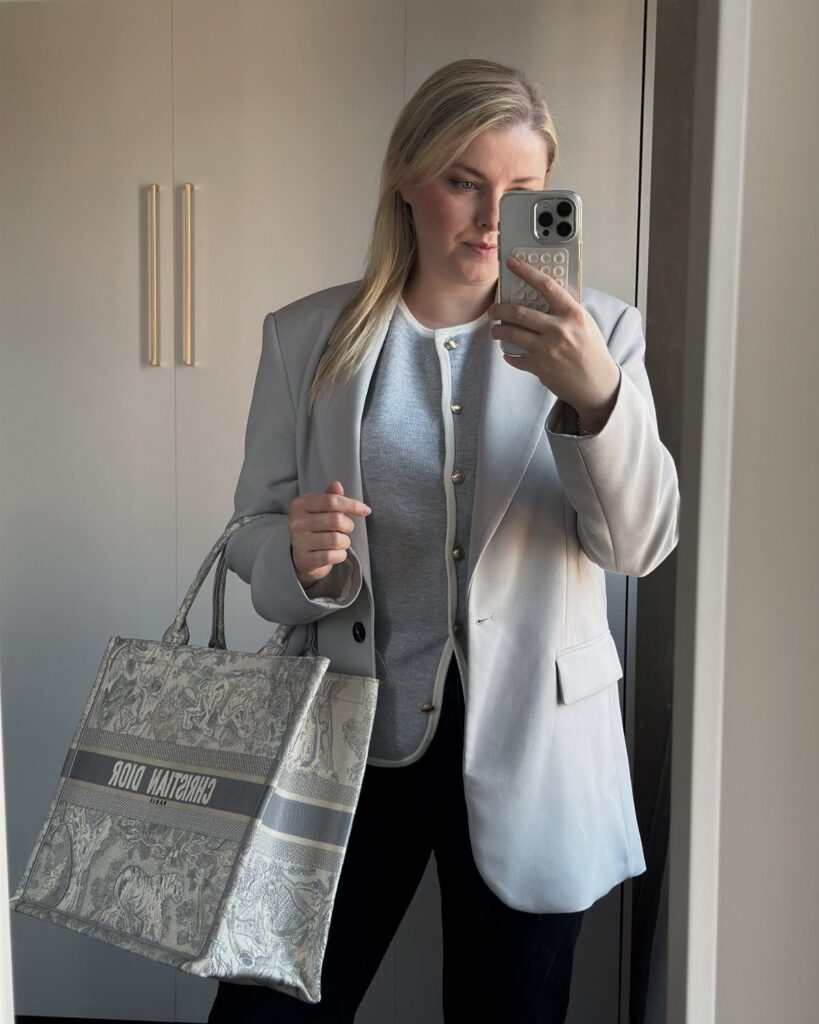
These 5 ideas run from a single pair of black jeans to a full draped-sweater look, and the one that belongs to you depends on whether your September still hits the 90s or your mornings already start in the 40s.
A 2-inch heel hits the same useful middle height in both boots: enough lift to keep your cuff clear of wet leaves and puddles on rainy mornings, but not so much that you feel overdressed once the pavement dries out.
1. Black Jeans
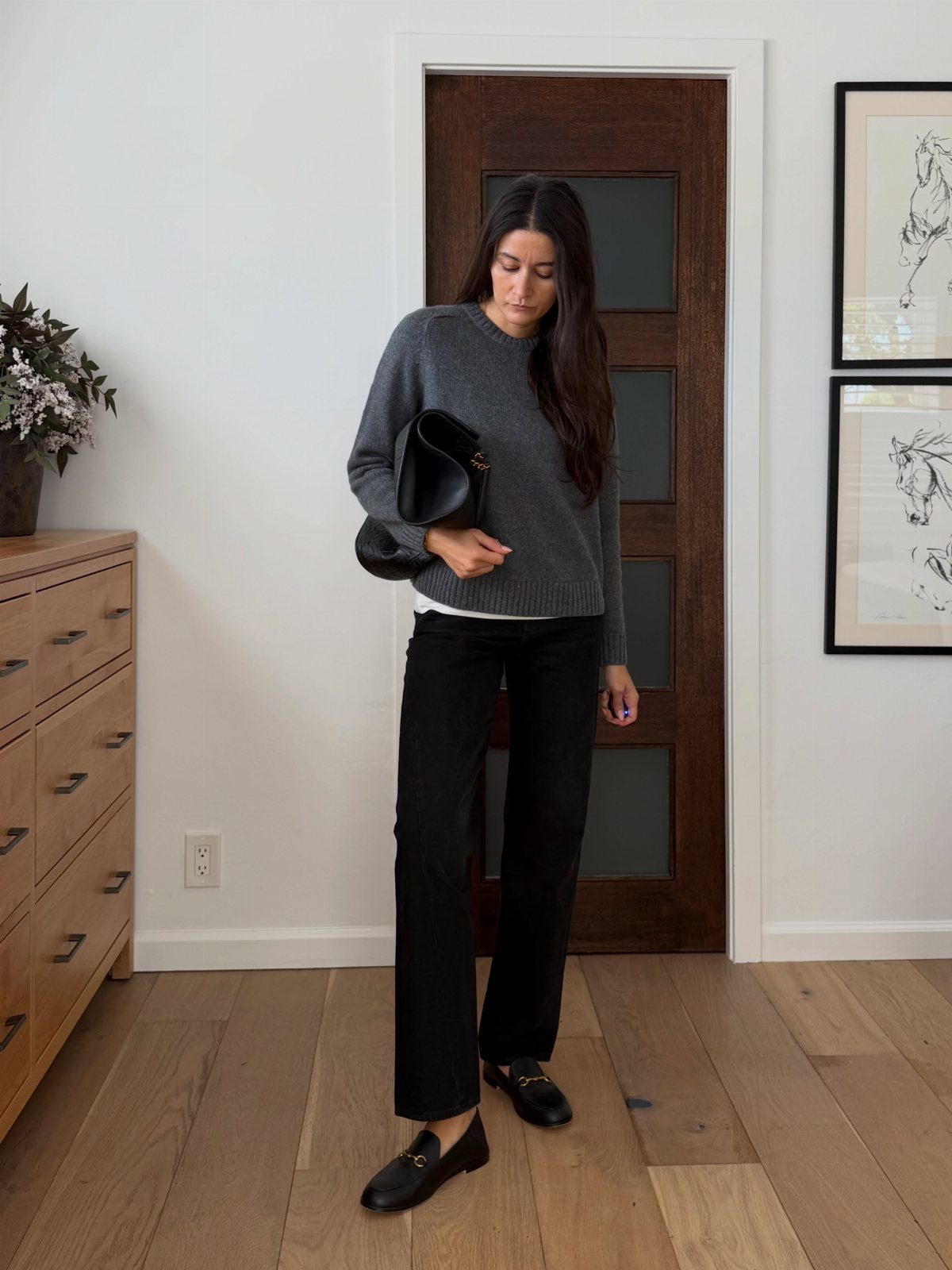
Black jeans carry you through those September mornings that start cool and land warm by noon. A slim cut without being tight matters when you are adding and subtracting layers all day.
I reach for mine with a thin thermal knit or a light sweater, then swap in a heavier top if the forecast drops.
The wash matters: a true black, not a faded grey, keeps the line cleaner with loafers or boots. If you own one pair of dark denim for fall, this is the weight and color to check for.
2. White Ankle Boots
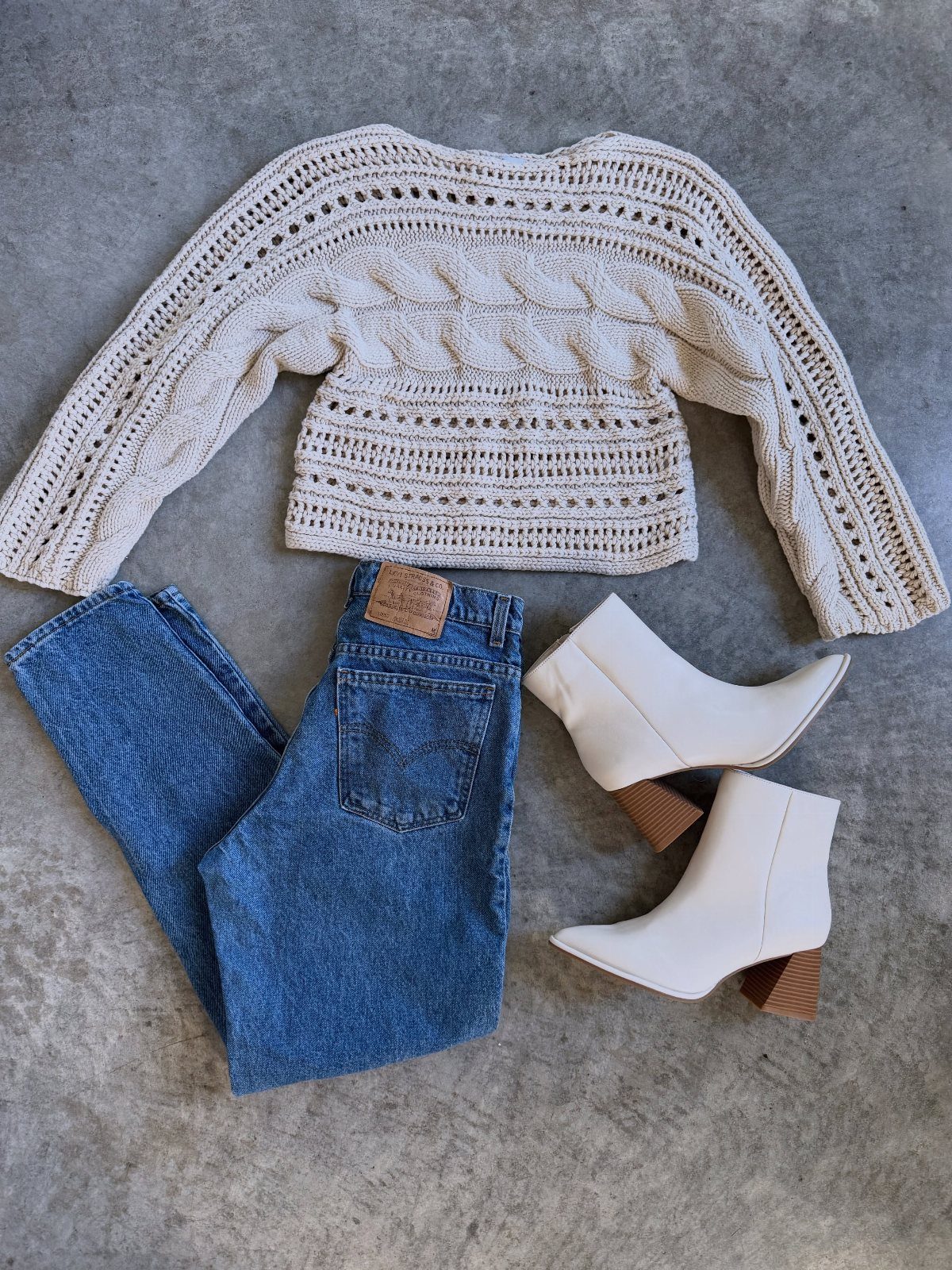
White ankle boots sound like a spring item until you try them against dark denim in October. A stacked brown heel and western lines read autumn rather than summer.
The heel height, maybe 2 inches, keeps them practical for walking on uneven sidewalks through leaf litter.
I would wear these with straight-leg jeans that break right at the boot shaft, or with a midi dress and tights once the air turns crisp.
The cream upper picks up the softer light of the season; dirt shows, so a quick wipe after each wear is part of the upkeep.
3. Bobble Sweater
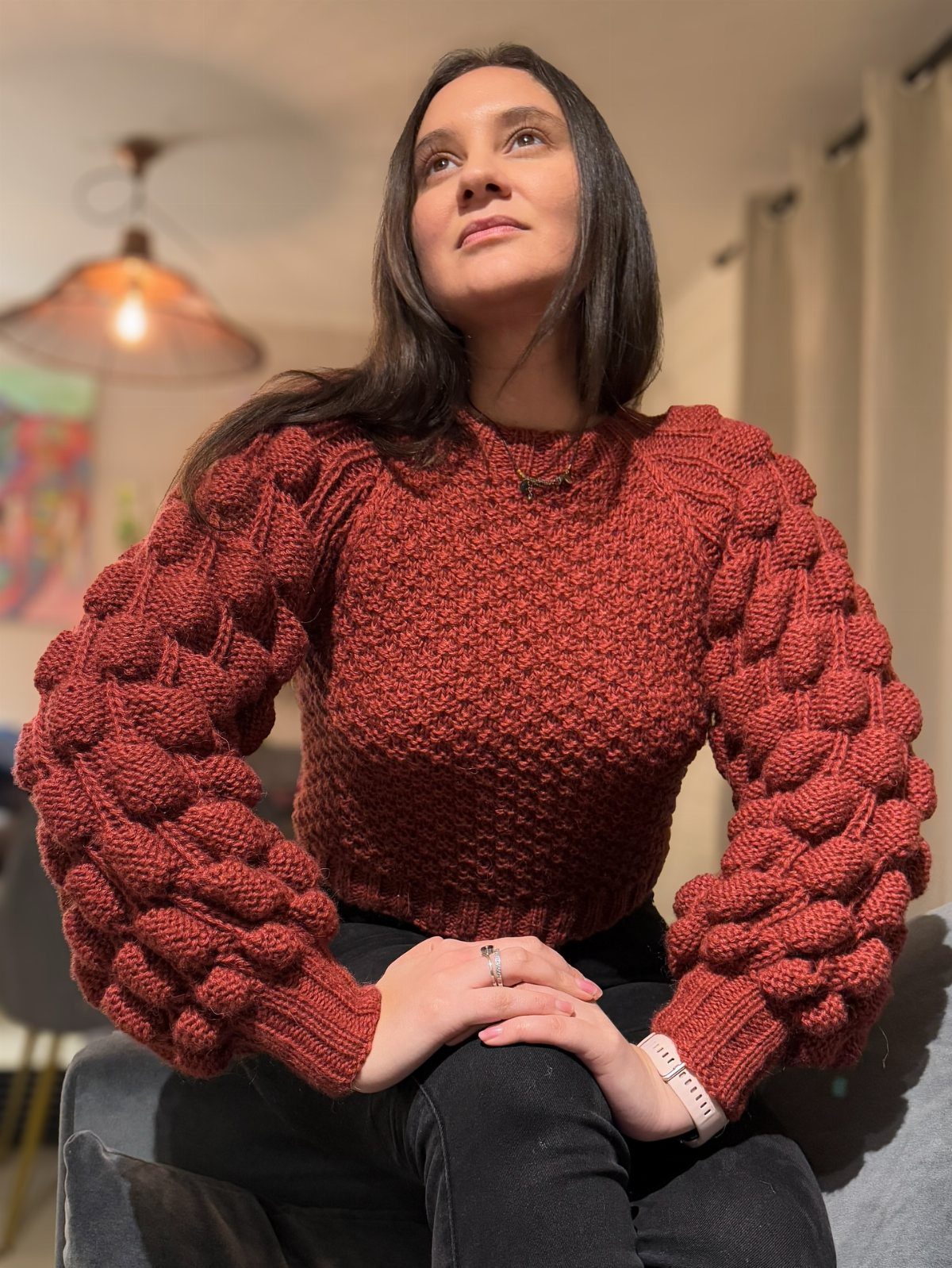
A bobble sweater gives you texture without bulk, which is the exact problem transitional dressing needs solved. Rust sits in that narrow range between summer coral and winter burgundy.
The sleeves carry the detail: raised knit bobbles that catch light and add interest to an otherwise simple shape.
I would check that the body stays relatively flat; too much texture all over and you cannot layer a jacket over it.
The weight looks light enough to push up to the elbow if an afternoon warms, heavy enough to stand alone on a cool morning. Size small in this cut runs true, with enough room for a thin layer underneath.
4. Leopard Print Sneakers
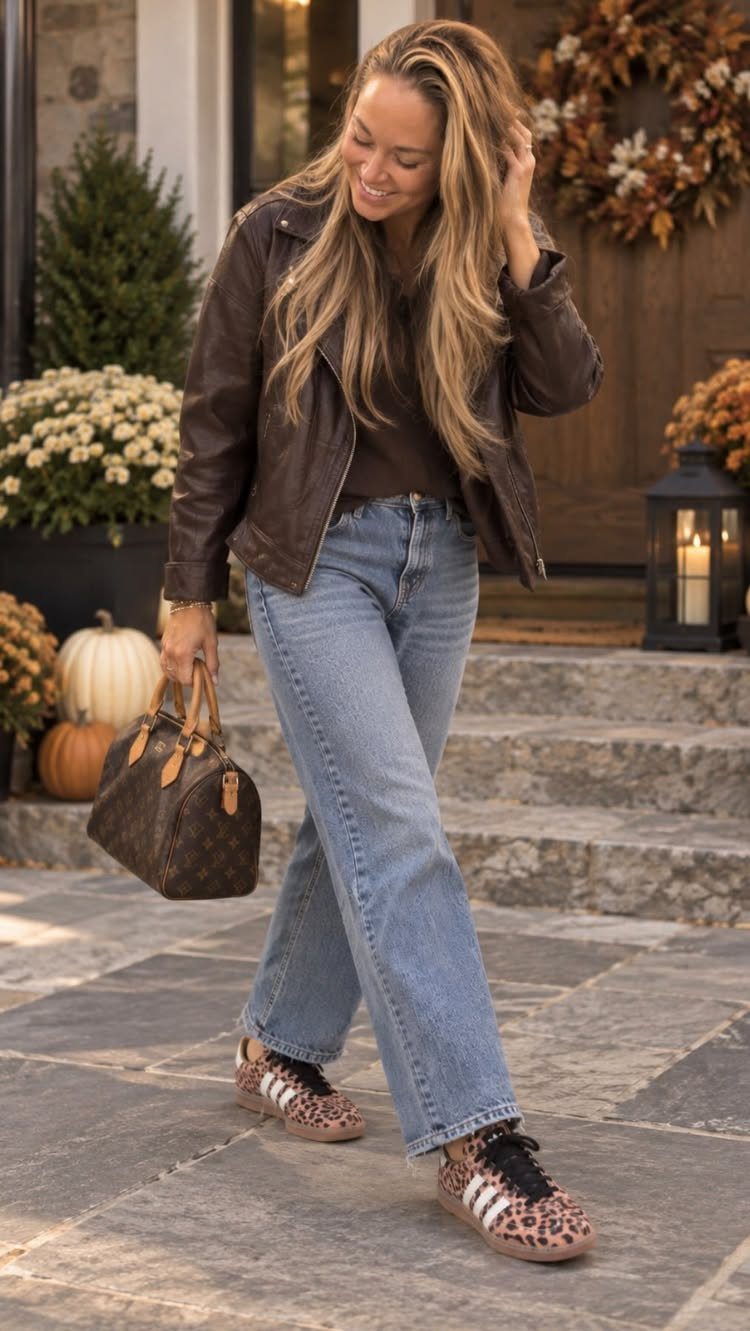
Leopard print sneakers do the work of a statement piece while staying as comfortable as any running shoe. The Adidas sole tells you something about the support you are getting.
I treat these as a neutral that happens to move: they carry the same colors as tortoiseshell, so they pair with black, brown, cream, or olive without clashing.
The jacket and jeans are a standard fall uniform; the sneakers replace a plain white pair and the whole outfit shifts from basic to deliberate.
Calf hair texture, if you find it, adds depth that reads richer in autumn light than smooth leather or canvas.
5. Sweater Draped Over Black Trousers

Draping a sweater over your shoulders is a move that only works if the sweater is the right weight and the shoulders are wide enough to hold it.
A grey knit thin enough to sit without sliding, paired with black trousers that have enough structure to balance the soft line across the back.
I would check 2 things before trying this: does the sweater collar lie flat or does it bunch, and do the sleeves hang even or do they swing forward with every step.
If either answer goes wrong, the effect is messy rather than intentional. The trousers need a clean waistband since the eye goes straight there; a tucked or fitted top underneath keeps the silhouette crisp.
Adapting to Weather Changes
A base layer thin enough to forget about is what makes the rest possible. A thermal knit or fitted long-sleeve tee in a natural fiber, worn close to the body, traps heat without adding visible bulk.
Midday sun in the 90s means you need a top layer you can actually carry.
Trousers with structure, like the black pair in the list, hold their shape through temperature swings better than leggings or thin denim.
The fabric needs enough body to sit away from the skin; that small gap is what lets air move when you are warm and traps it when you are cold.
Boots with a 2-inch heel keep your foot farther from hot pavement than flats do, and the air gap matters more than you would think.
In the 40s, that same small lift keeps your cuff clear of the damp and debris that come with fall rain.
Frequently Asked Questions
What to wear for fall transition?
A thin thermal knit or light sweater with black jeans handles the temperature swings best.
White ankle boots against dark denim read autumn rather than summer, and a bobble sweater in rust gives you texture without the bulk that makes layering impossible.
What is a transitional outfit?
An outfit built to add and subtract through a day that might start cool and hit peak heat by noon.
The base layer sits thin and close to the body in a natural fiber, the top layer is something you can actually carry when the sun peaks, and the pieces in between are chosen for weight and texture rather than a single fixed temperature.